
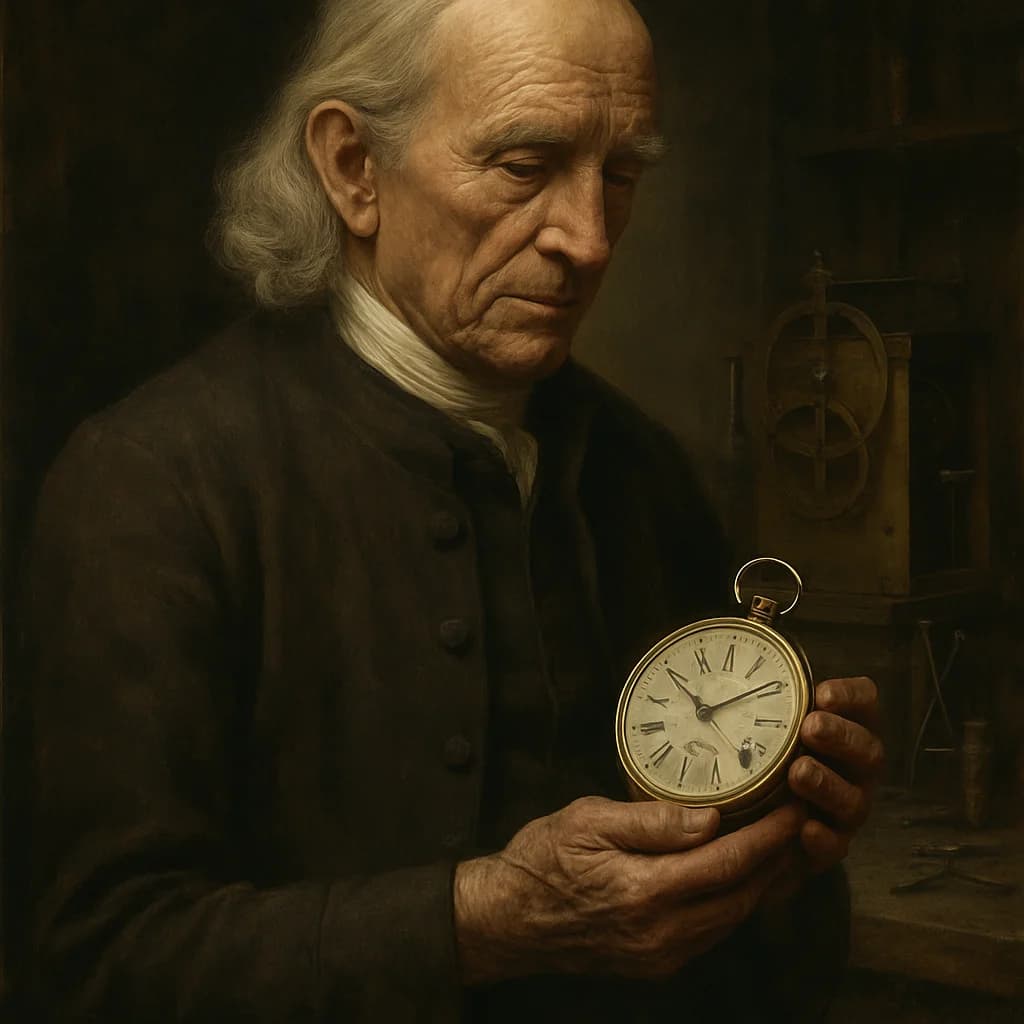
John Harrison
The man who solved longitude spent his final years watching the Royal Navy kill sailors rather than admit a carpenter's son had outsmarted their astronomers.
John Harrison learned clockmaking from his father in a Yorkshire village, but by 1714 he was tackling the greatest scientific challenge of his age: how to determine longitude at sea. Ships were dying by the thousands because they couldn't pinpoint their east-west position. Parliament offered £20,000 (millions today) to whoever could solve it.
The establishment assumed the answer lay in astronomy, mapping the heavens with mathematical precision. Harrison thought they were idiots. Time was the key. If you knew exactly what time it was in London while at sea, you could calculate your longitude. The problem was that no clock could keep accurate time on a pitching, rolling ship through temperature changes and salt air.
So Harrison built one. Then another. Then a third. His fourth marine chronometer, completed in 1759, was a masterpiece of engineering: a pocket watch that lost only seconds over months at sea. It worked perfectly. The Board of Longitude, dominated by astronomers who'd spent decades chasing star charts, refused to pay him. They demanded more tests, moved the goalposts, split hairs over technicalities. For twenty years, they stonewalled the carpenter's son who'd made them look like fools.
Meanwhile, the Royal Navy continued using dead reckoning and prayer. Ships still crashed into rocks they thought were hundreds of miles away. Sailors still died of scurvy on voyages that stretched weeks longer than necessary because captains couldn't navigate efficiently. Harrison finally received his prize money in 1773, but only after King George III personally intervened, disgusted by the Board's pettiness. Harrison died three years later, vindicated but bitter, knowing that institutional pride had cost more lives than his clocks could ever save.
Harrison's marine chronometers were so precise that Captain James Cook used one to map the Pacific Ocean, calling it "our never-failing guide" and "our trusty friend."
Why untold: His story is overshadowed by the scientific romance of longitude itself, obscuring how class prejudice and institutional pride delayed life-saving innovation for decades.
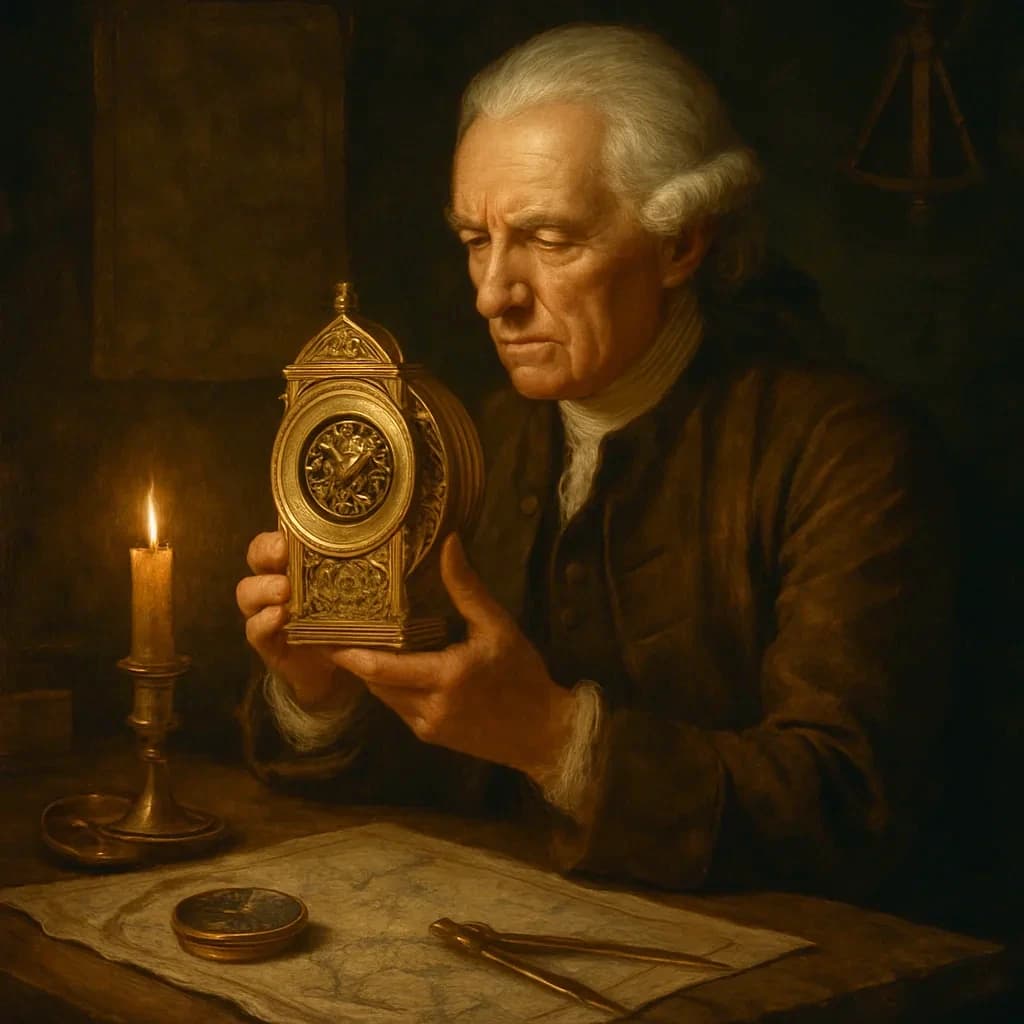
Forty Years for a Clock the Navy Ignored
John Harrison spent forty years building clocks that could save lives at sea, then watched the Royal Navy almost ignore his invention while sailors died for want of knowing where they were.
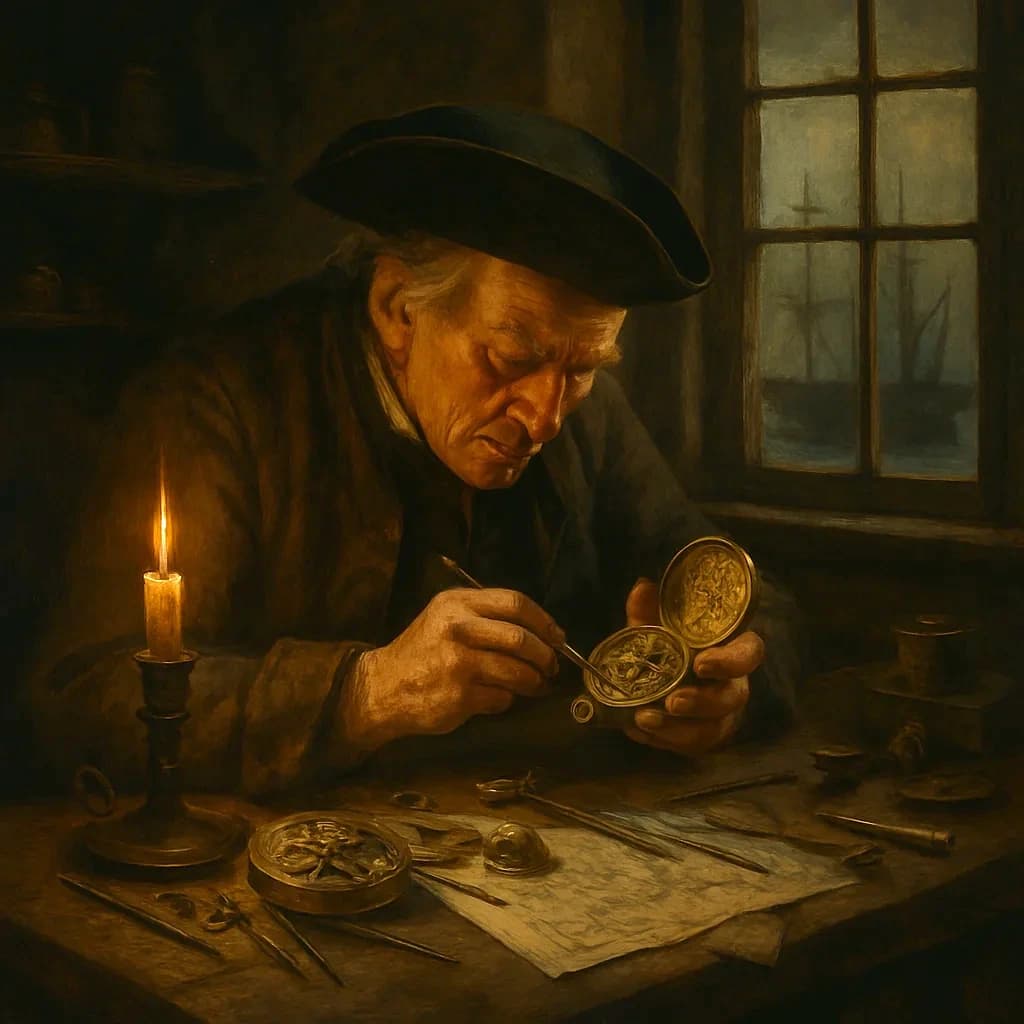
A Clockmaker Had Six Months to Decide Who Ruled the Seas
In 1784, a Swiss clockmaker was given six months to build a timepiece that would decide whether Britain or France controlled the seas.
- Dava Sobel, Longitude: The True Story of a Lone Genius Who Solved the Greatest Scientific Problem of His Time (1995)
- Derek Howse, Greenwich Time and the Longitude (1997)
- William J.H. Andrewes, ed., The Quest for Longitude (1996)