
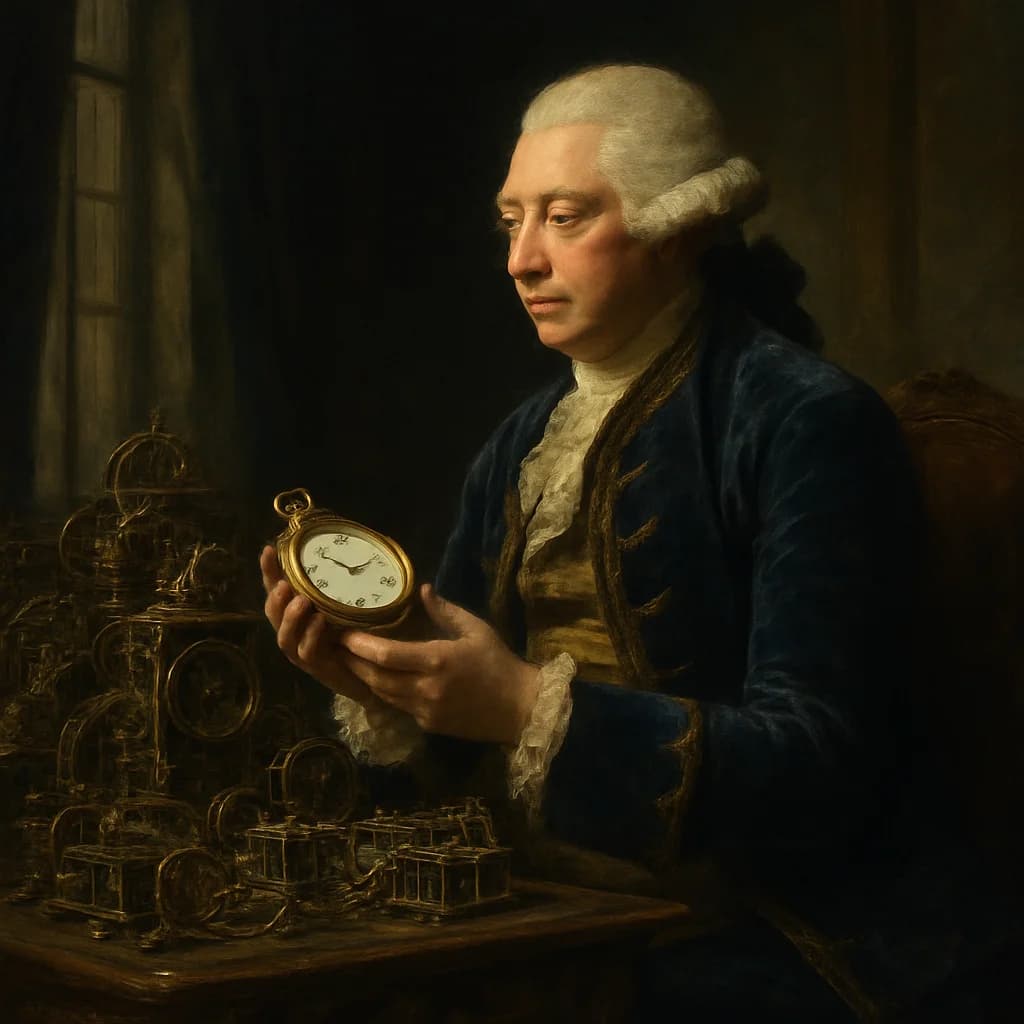
George III
The king who lost America spent his evenings dismantling and rebuilding clocks with the obsessive precision of a master craftsman.
George III collected timepieces the way other monarchs collected mistresses. While his ministers fumbled through the loss of thirteen colonies, the king retreated to his private workshops, surrounded by springs, gears, and pendulums that made perfect sense in ways his empire no longer did. He could repair the most intricate chronometers but couldn't repair the growing rift with his American subjects.
This mechanical obsession wasn't mere hobby. It reflected a mind that craved order in an age of revolution. George personally championed John Harrison's marine chronometers, understanding better than his admiralty that precise timekeeping meant naval supremacy. While Lord North fumbled colonial policy, George pored over longitude calculations and tested timepieces against astronomical observations from his private observatory at Richmond. He corresponded with clockmakers across Europe, debating gear ratios and temperature compensation with the same intensity he brought to constitutional crises.
The irony runs deeper than just a king who understood time but misread history. George's support for precision timekeeping helped Britain dominate global trade routes, yet his inflexibility on American taxation destroyed the very empire those navigational advances had built. His workshop journals reveal a man who could calculate longitude to the minute but couldn't calculate the cost of the Stamp Act.
By 1788, as his first bout of mental illness struck, George's servants found him in his workshop at four in the morning, methodically winding every clock in the room. He had lost track of time itself, yet remained convinced he could still control it. The king who gave Britain mastery over global time zones would spend his final decades adrift in his own temporal confusion, the victim of a clockwork mind that had wound itself too tight.
George III owned over 600 timepieces and personally tested marine chronometers by comparing them against astronomical observations, making him one of the most technically knowledgeable monarchs in the science of navigation.
Why untold: His reputation as the king who lost America overshadows his genuine contributions to the scientific revolution in timekeeping and navigation.
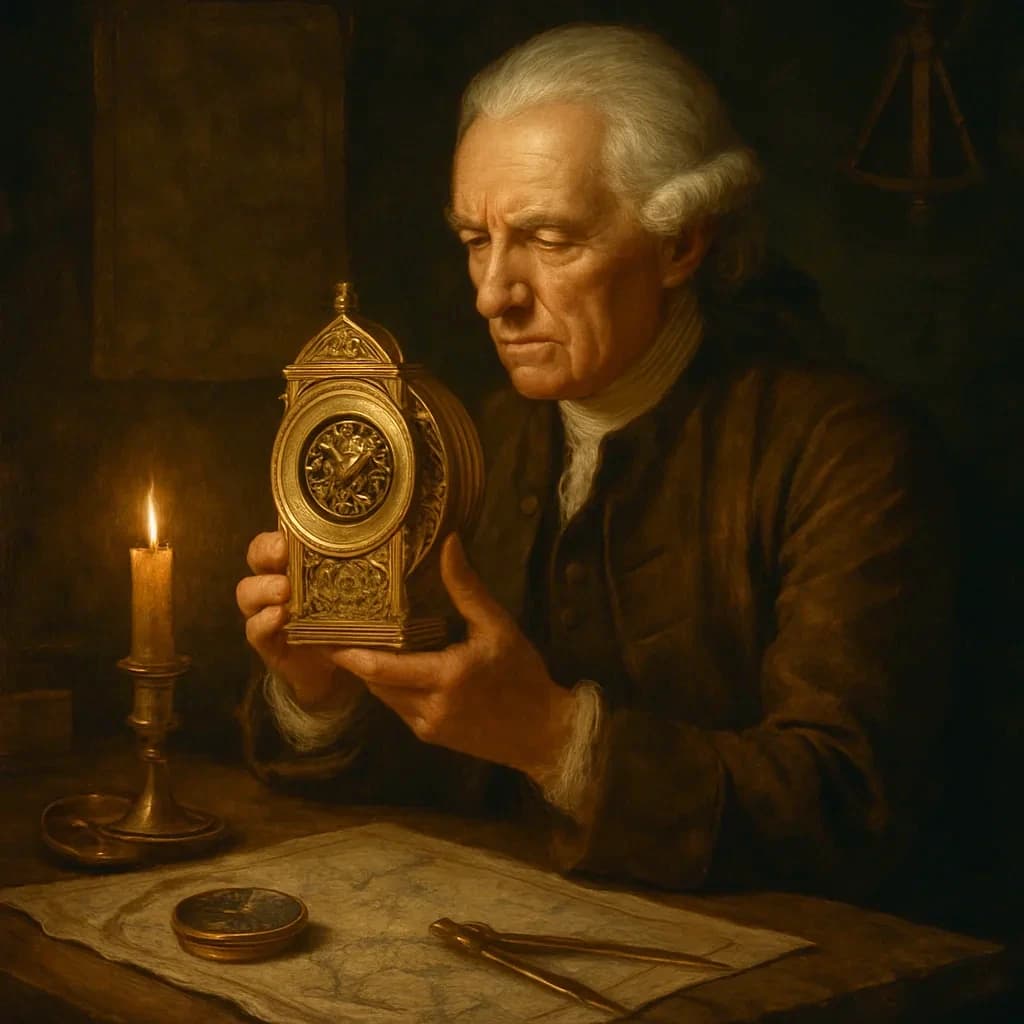
Forty Years for a Clock the Navy Ignored
John Harrison spent forty years building clocks that could save lives at sea, then watched the Royal Navy almost ignore his invention while sailors died for want of knowing where they were.
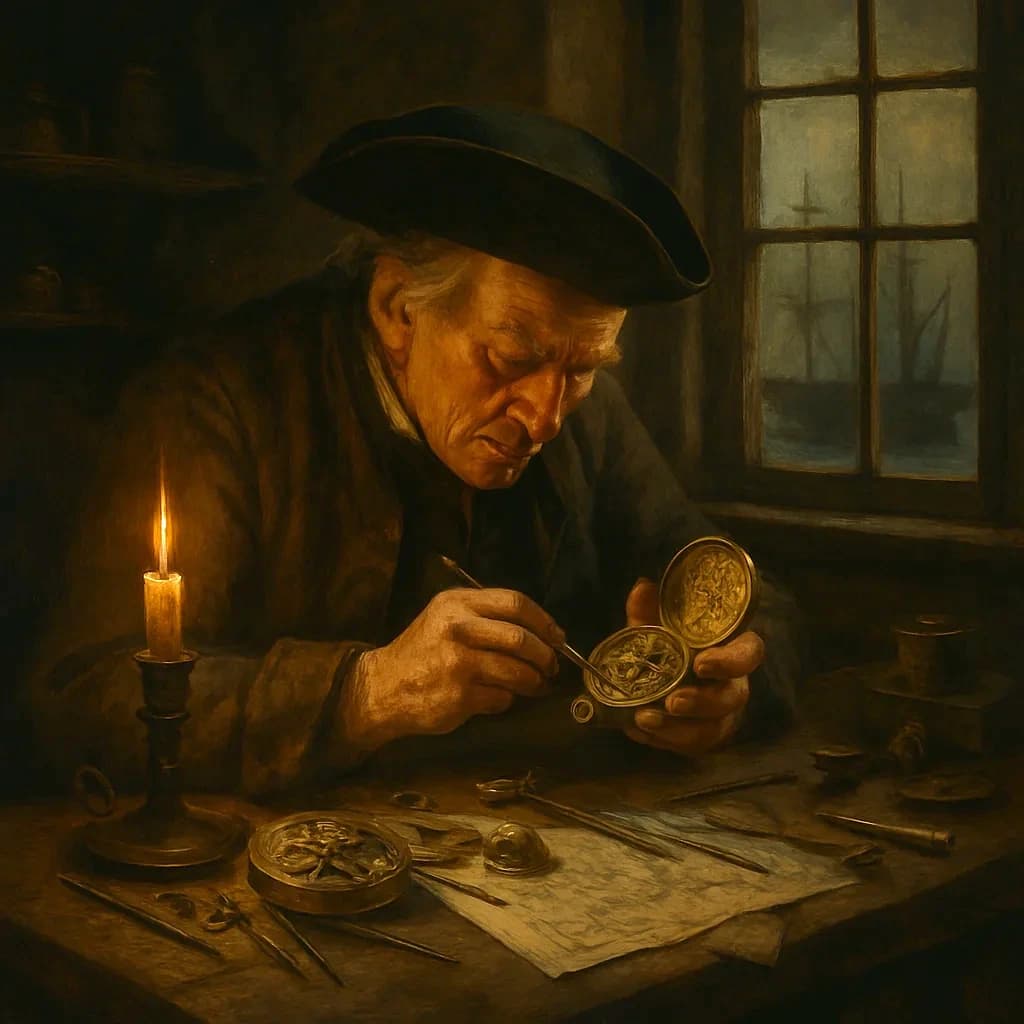
A Clockmaker Had Six Months to Decide Who Ruled the Seas
In 1784, a Swiss clockmaker was given six months to build a timepiece that would decide whether Britain or France controlled the seas.
- Brooke, John. King George III. London: Constable, 1972.
- Sobel, Dava. Longitude: The True Story of a Lone Genius Who Solved the Greatest Scientific Problem of His Time. New York: Walker Books, 2007.
- Fraser, Flora. The Unruly Queen: The Life of Queen Caroline. London: Macmillan, 1996.