
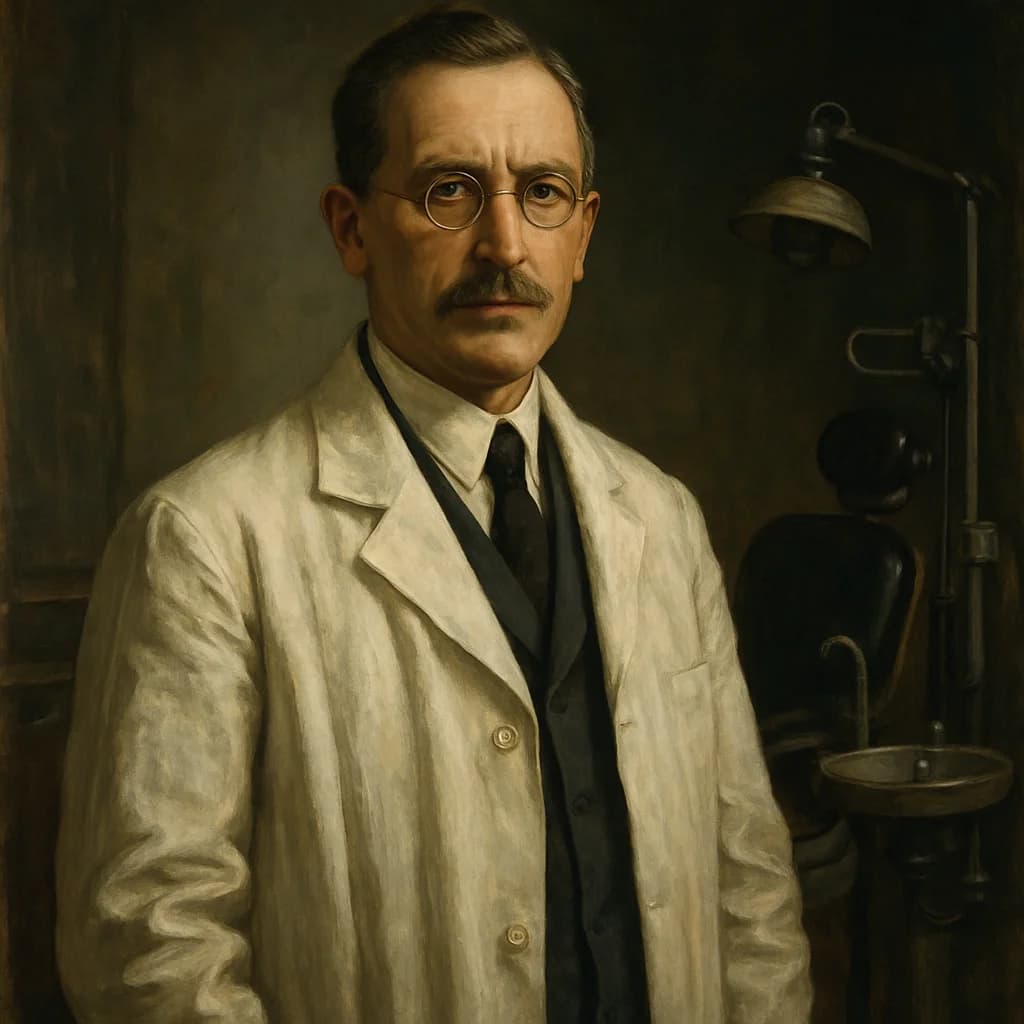
Hugo Blaschke
The man who saved Hitler's speeches also helped prove he was dead, and spent decades pretending neither had ever happened.
Hugo Blaschke arrived in Berlin in 1911 as a young dentist with American training and revolutionary ideas about oral surgery. By 1933, he had built the most prestigious dental practice in Germany, treating industrialists, actors, and politicians with techniques learned during his studies in Philadelphia and New York. When the Nazi Party rose to power, Blaschke found himself with an unusual patient: Adolf Hitler, whose chronic dental problems were affecting his public speaking.
The Führer's mouth was a disaster. Rotting teeth, infected gums, and poorly fitted bridges made him nearly incomprehensible during early rallies. Blaschke spent years rebuilding Hitler's dental structure, installing gold crowns and precision-fitted bridges that transformed the dictator's delivery. The work was so extensive that Blaschke kept meticulous dental records: impressions, X-rays, detailed charts of every filling and crown. He took professional pride in solving complex oral reconstructions, treating Hitler like any other difficult case requiring multiple surgeries and custom prosthetics.
After the war's end, those same meticulous records became the key evidence proving Hitler's death. Soviet forces had recovered charred dental remains from the Chancellery bunker, but needed confirmation of their authenticity. Blaschke's assistant, Käthe Heusermann, had helped with Hitler's treatments for years and could identify the distinctive bridgework under interrogation. Blaschke himself, captured by the Allies, reluctantly verified the dental evidence that closed the book on any Hitler survival theories.
Released from prison in 1948, Blaschke quietly resumed his dental practice in Nuremberg, never speaking publicly about his wartime patients. He spent his remaining decades as an ordinary dentist, treating routine cavities and gum disease, the extraordinary chapter of his career sealed away like a classified file. He died in 1959, taking his detailed memories of the Third Reich's most powerful mouth to his grave.
Blaschke's dental work on Hitler was so extensive that the Soviets could identify the dictator's remains solely from his distinctive gold bridgework and porcelain crowns.
Why untold: Blaschke's role was classified by both Soviet and Allied intelligence agencies who wanted to control the narrative around Hitler's death.
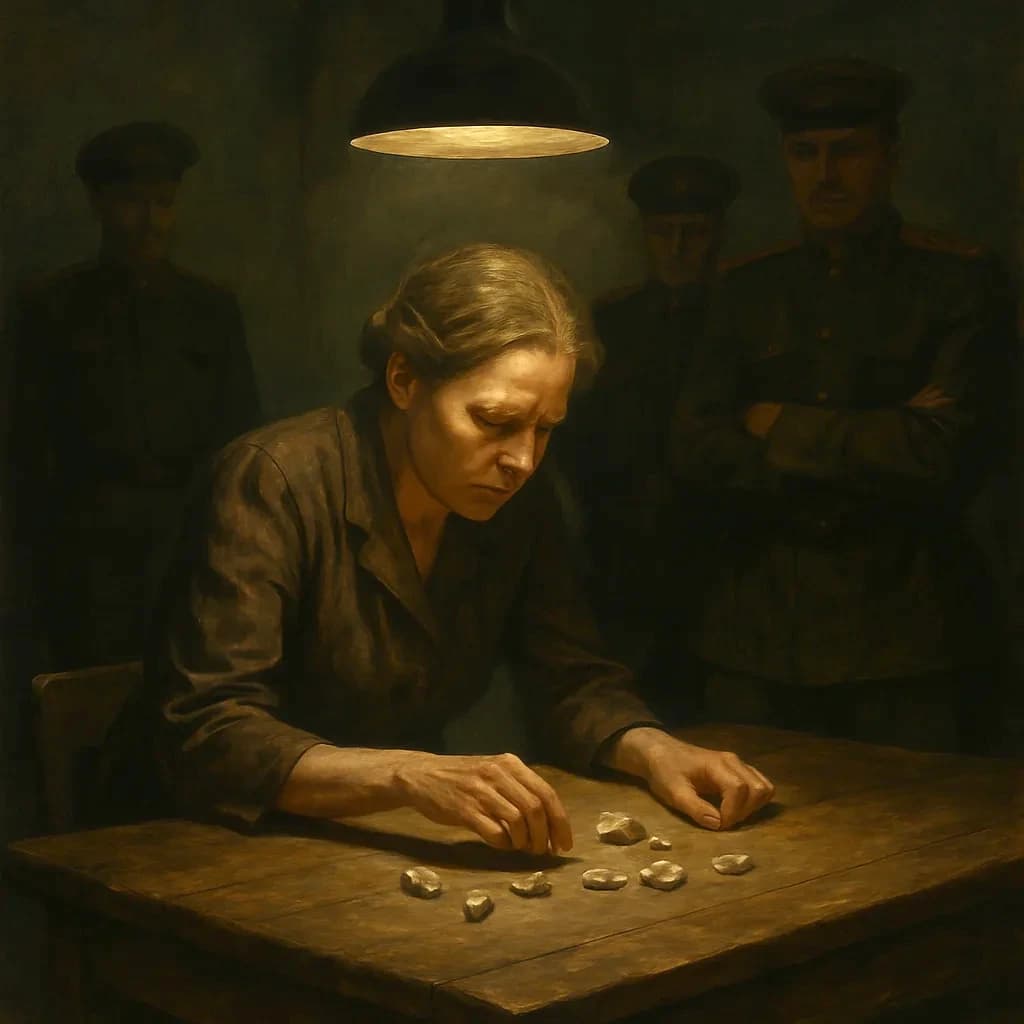
She Could Prove Hitler Died by His Teeth
The Allies thought capturing Hitler's dentist would finally prove the Führer was dead, until his assistant started talking.
A Brooklyn Dentist's Glue Gave Hitler His Voice
A Brooklyn dentist's experimental denture adhesive would help Hitler mesmerize millions, because nobody could understand what the man was saying.
- Rosenbaum, Ron. Explaining Hitler: The Search for the Origins of His Evil. Random House, 1998.
- Beevor, Antony. The Fall of Berlin 1945. Viking, 2002.
- Kershaw, Ian. Hitler: A Biography. W. W. Norton, 2008.