
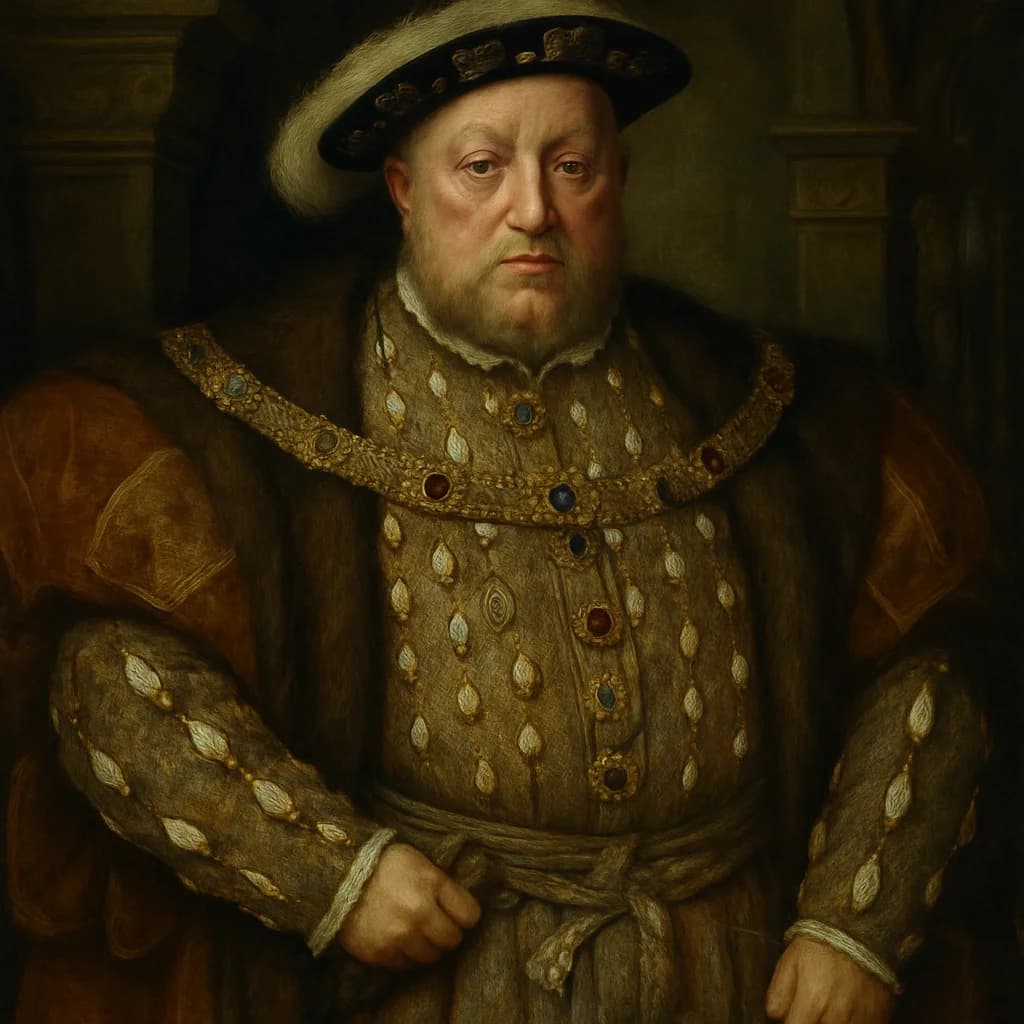
Henry VIII
The king who changed the world's religion because he couldn't get an erection.
Henry VIII's medical records read like a horror novel. By 1540, the once-athletic king was taking regular doses of mercury for what court physicians delicately called 'the French pox': syphilis. The treatment was worse than the disease. Mercury poisoning causes paranoid delusions, violent mood swings, and progressive brain damage. It also, crucially, causes impotence.
The irony was exquisite. Here was a man who had broken with Rome, executed two wives, and torn apart a thousand-year-old religious tradition, all in pursuit of a male heir. Yet the very disease that drove his desperate remarriages was slowly destroying his ability to produce children at all. His court physicians knew this. They watched their king's mind fracture under mercury's influence, saw him transform from Renaissance prince to bloated tyrant. But they said nothing.
Hans Holbein the Younger painted Henry's portrait in 1540, capturing not just the king's physical bulk but something darker. Holbein had witnessed Henry's transformation firsthand: the mercury-fueled rages, the paranoid accusations, the slow dissolution of reason. When Holbein died suddenly in 1543, he left behind more than royal portraits. Hidden in his workshop were medical sketches documenting Henry's deterioration, sketches that would have meant treason if discovered.
The king who reshaped English Christianity died in 1547, his body a testament to mercury's devastation: legs ulcerated, mind shattered, unable to walk. His physicians had kept him alive just long enough to destroy the old world. The Reformation's architect was, quite literally, mad as a hatter, and mercury was the poison that made both the madness and the religious revolution possible.
Henry VIII's leg ulcers, which plagued him for decades, were likely caused by mercury poisoning from syphilis treatment, the same mercury that may have triggered the paranoid rages that led to his wives' executions.
Why untold: Medical historians avoided discussing Henry's syphilis because it challenged the narrative of the Reformation as a theological revolution rather than the desperate acts of a diseased mind.
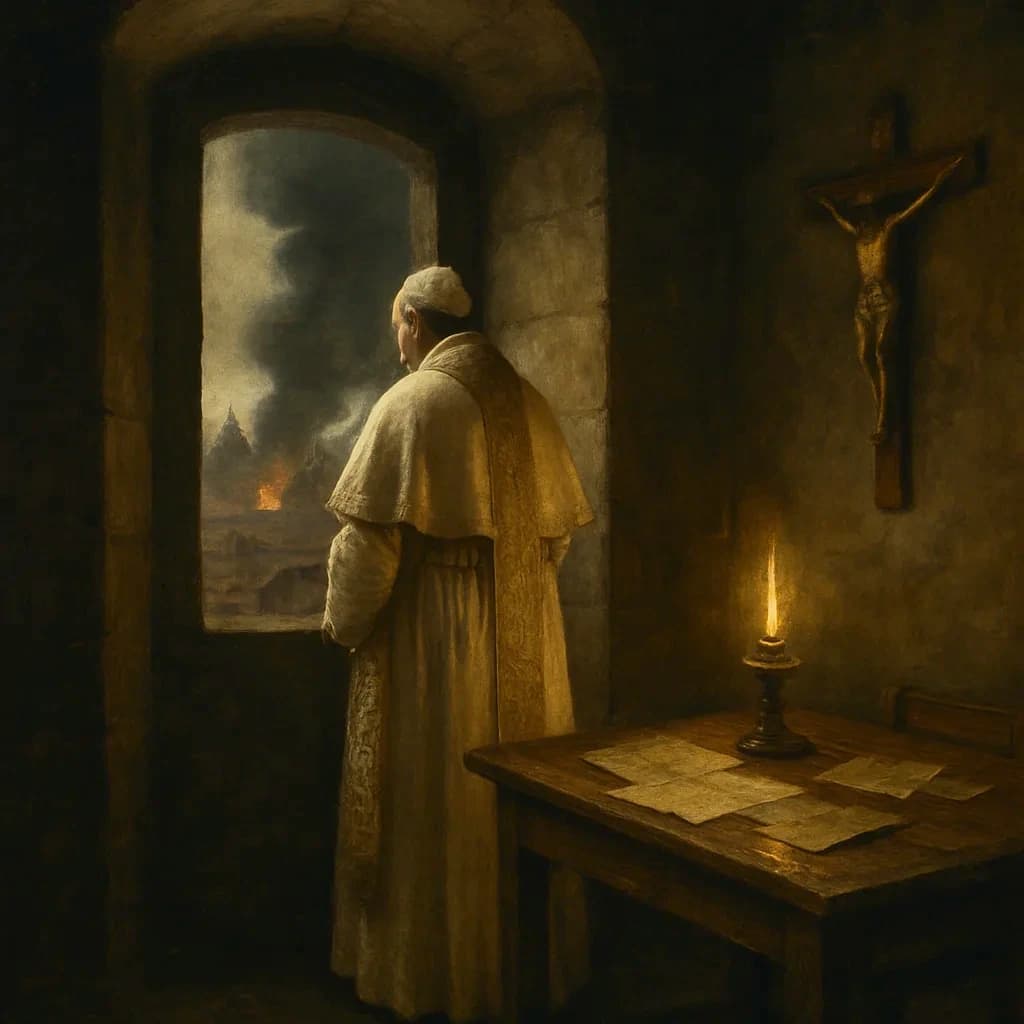
Hungry Soldiers Sacked Rome and Kept Ireland Catholic
A Swiss mercenary rebellion in 1527 ended up preserving the Catholic faith in Ireland for five centuries.
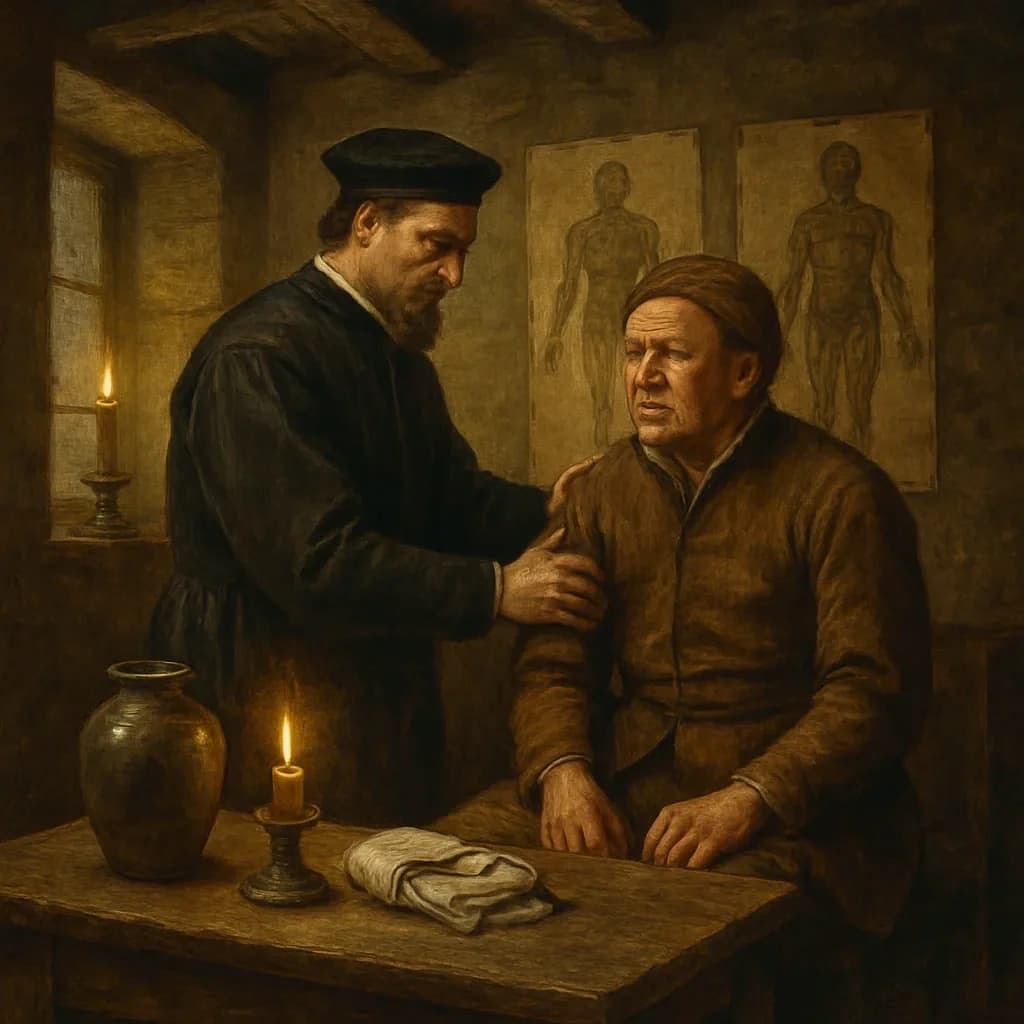
Doctors Treated Syphilis With Mercury for Four Centuries
For four centuries, European doctors treated syphilis with mercury, and killed nearly as many patients as the disease did.

A Window Problem Led a Monk to Calculus
A Yorkshire monk solved an equation in 1150 that wouldn't be officially discovered for another 500 years.

The War England Forgot to End for 300 Years
For three hundred years, England and Scotland were technically still at war, all because no one remembered to sign the peace treaty.
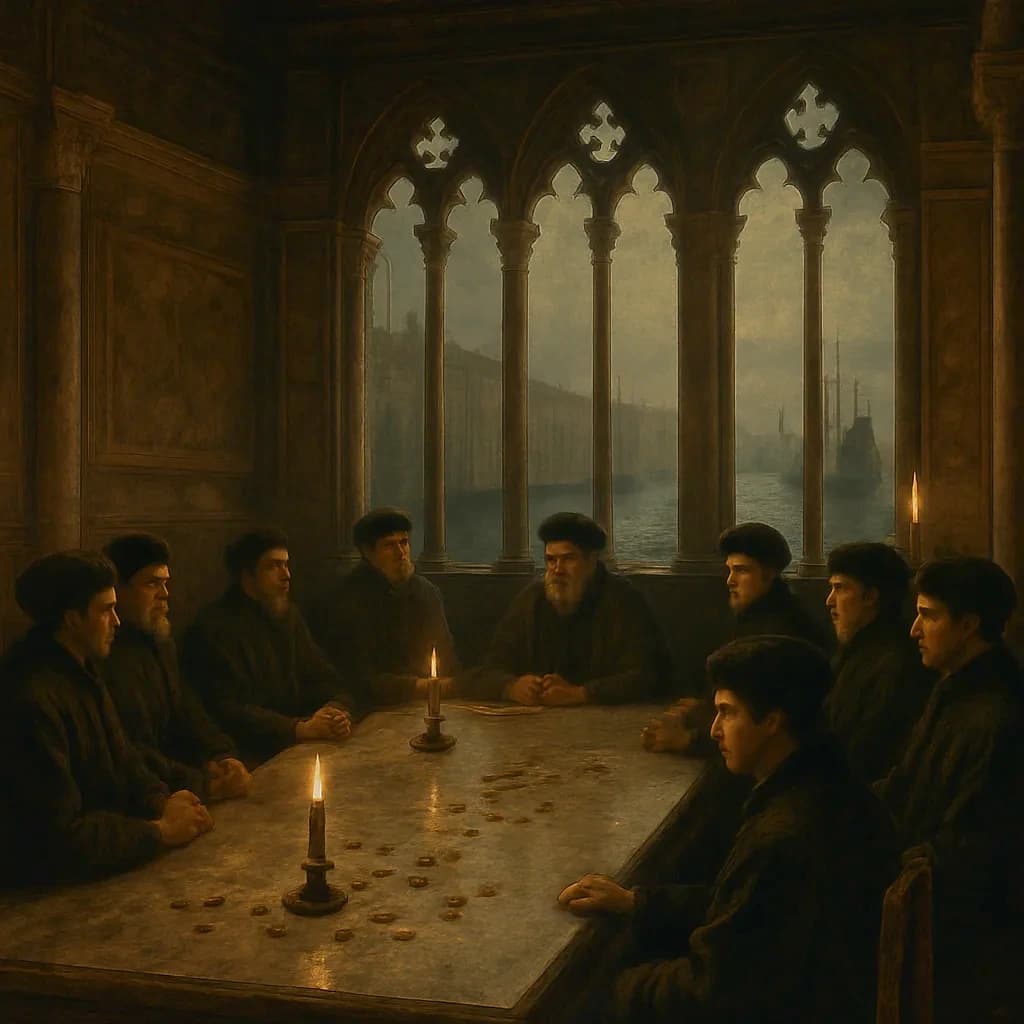
Forty-Three Beans Chose the Holy Roman Emperor
A Venetian merchant's son counted dried beans to choose the most powerful man in Europe.

England's First Legal Bible, Quietly Erased
The first English Bible printed in England carried a fake author's name, a dead man's banned translation, and a license that doomed it almost the moment it appeared in 1536.

The King's Painter Hid a Curse in Cromwell's Portrait
When Hans Holbein died, he left behind more than masterpieces. He left a coded message that would topple a king.
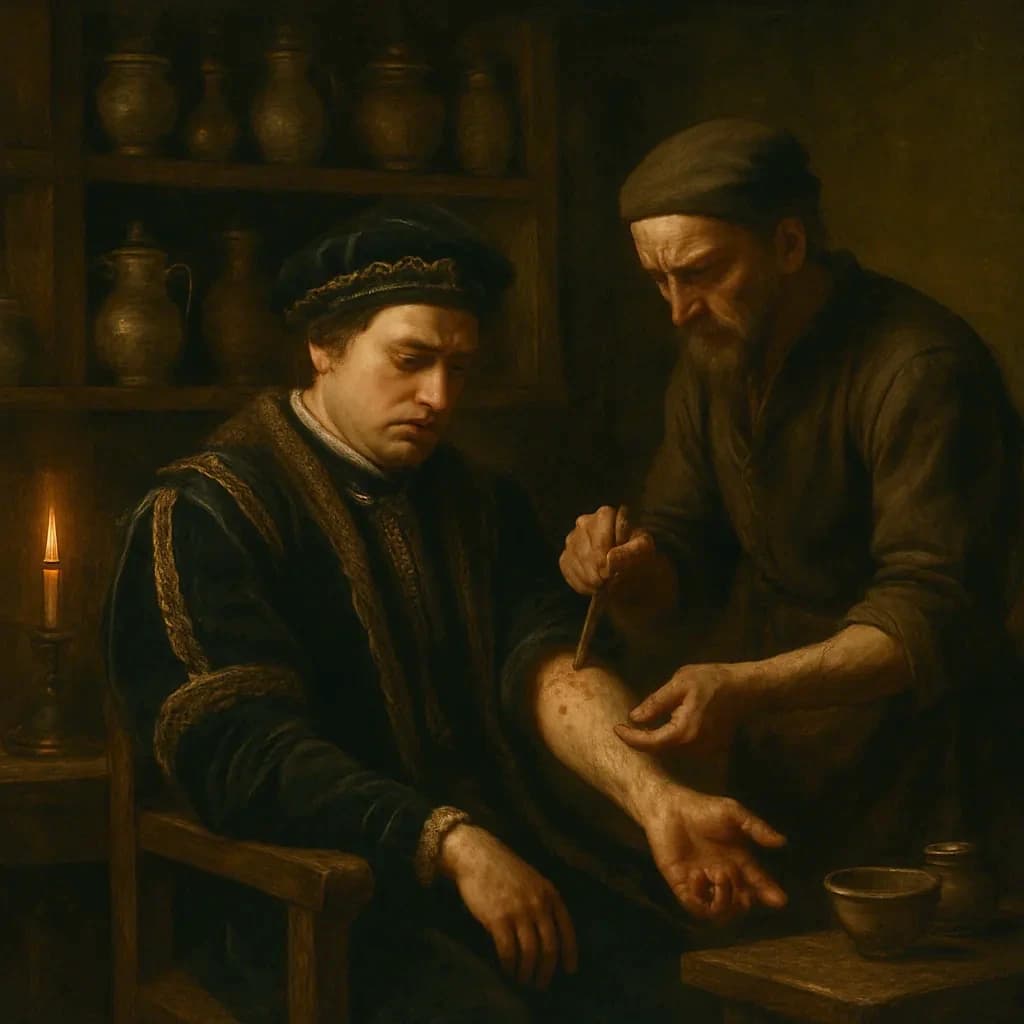
The Only Cure for the French Disease Drove Men Mad
In 1516, mercury was the only cure for the French Disease, and the men who took it slowly went mad.
- Kyra Cornelius Kramer, 'Blood Will Tell: Syphilis and Henry VIII's Wives' (2011)
- Robert Hutchinson, 'The Last Days of Henry VIII' (2005)
- Susan Maclean Kybett, 'Bonnie Prince Charlie: A Biography of Charles Edward Stuart' (1988)