
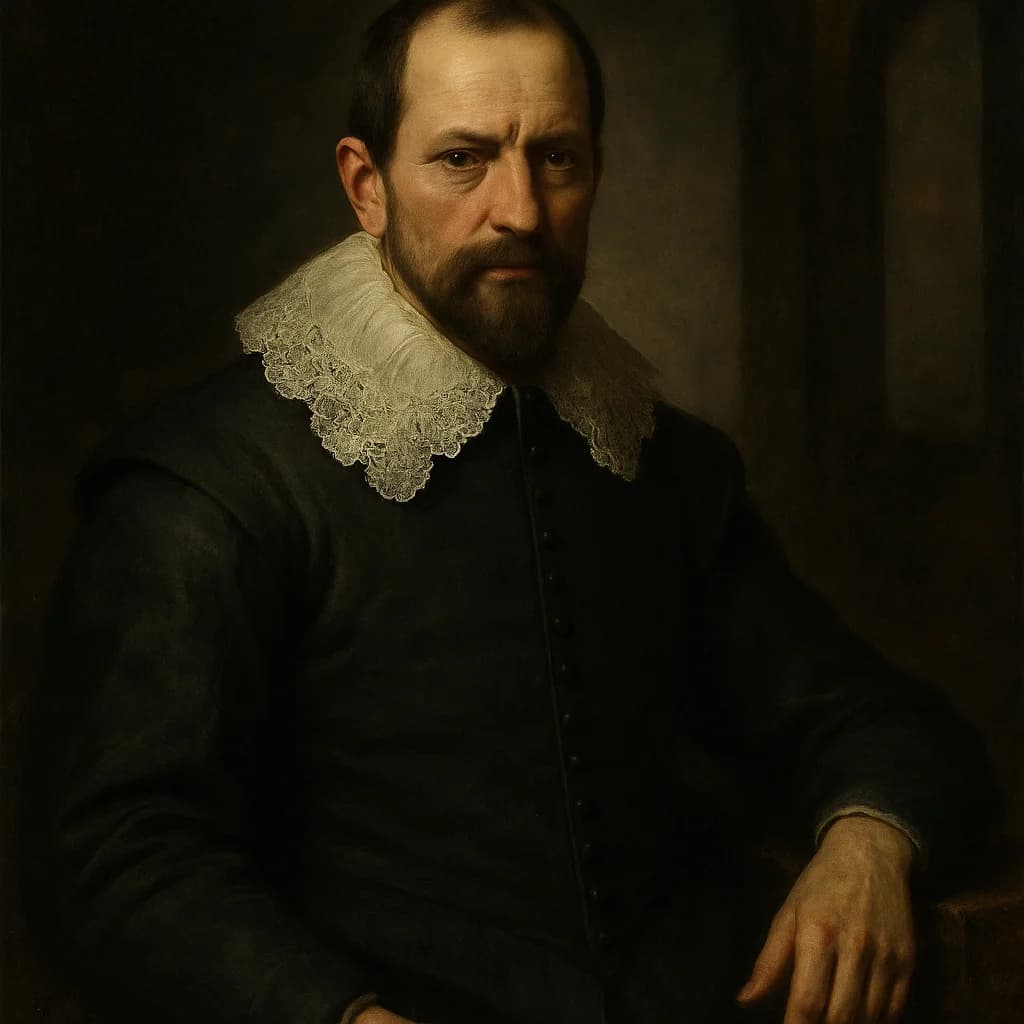
Heinrich Matthias von Thurn
The man who launched the Thirty Years' War spent most of it losing.
Heinrich Matthias von Thurn was a Bohemian count with a talent for catastrophe that far exceeded his talent for anything else. Born in 1567 to a family of Italian-Bohemian nobles, he spent decades accumulating grievances against the Habsburg emperors who ruled over Bohemia: grievances about land, about religion, about the slow erosion of Protestant rights that he and his allies watched happen in real time. By 1618, he had decided that patience was for other people.
On May 23rd of that year, Thurn organized and led the confrontation at Prague Castle that would become known as the Defenestration of Prague. He was not the man who did the throwing (that honor belonged to others), but he was the architect, the instigator, the one who decided that the correct response to imperial overreach was to hurl two Catholic governors and their secretary from a third-floor window. The men survived the seventy-foot fall, Catholics claiming angels had cushioned their landing, Protestants pointing out they had landed in a garbage heap. Either way, Thurn had his incident. What he did not have was any coherent plan for what came next.
The war he ignited did not go well for him personally. He led Protestant forces to the gates of Vienna in 1619 (close enough that the emperor reportedly began packing), but failed to press the advantage, a decision that would haunt the Protestant cause for a generation. At the Battle of White Mountain in 1620, the Bohemian revolt collapsed in under two hours. Thurn escaped. His allies were executed in the Old Town Square. He spent the following decades wandering Europe like a man looking for a war that still wanted him, fighting for the Dutch, the Swedes, the Transylvanians, collecting titles and defeats with equal enthusiasm. He died in 1640, in Tallinn of all places, in Swedish service, still technically at war with the empire he had antagonized twenty-two years earlier.
The conflict he started would not end until 1648. Eight years after his death. He missed the ending by nearly a decade.
Thurn was formally condemned to death and had his estates confiscated by the Habsburgs in 1621, yet he lived another nineteen years (continuously employed by their enemies), never setting foot in Bohemia again.
Why untold: Thurn's story gets flattened into the single dramatic moment of the defenestration, obscuring the long, tragicomic career of military failure that followed, which is, in many ways, the more revealing part.
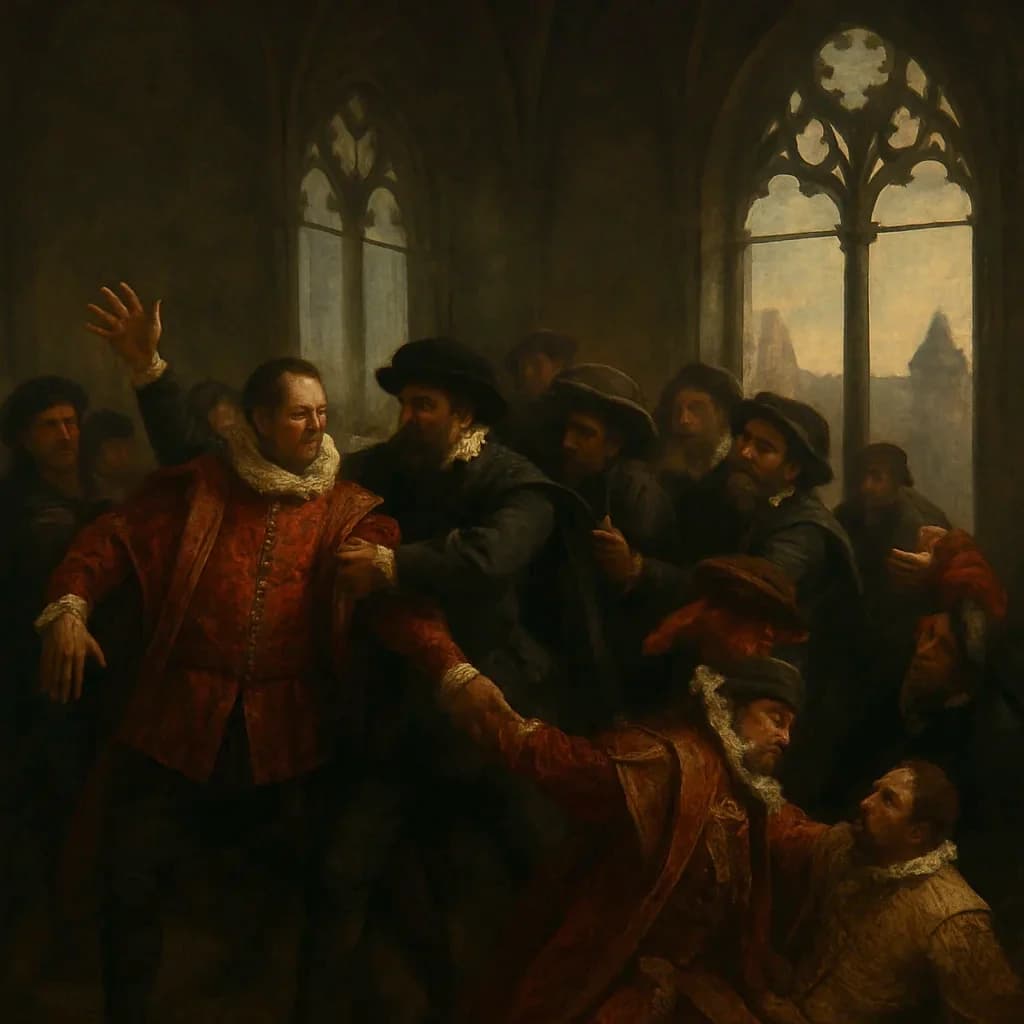
The Prague Defenestration That Sparked a 30-Year War
Two Catholic officials and their secretary were hurled from a castle window by Protestant nobles in 1618, launching a war that killed a third of Europe.
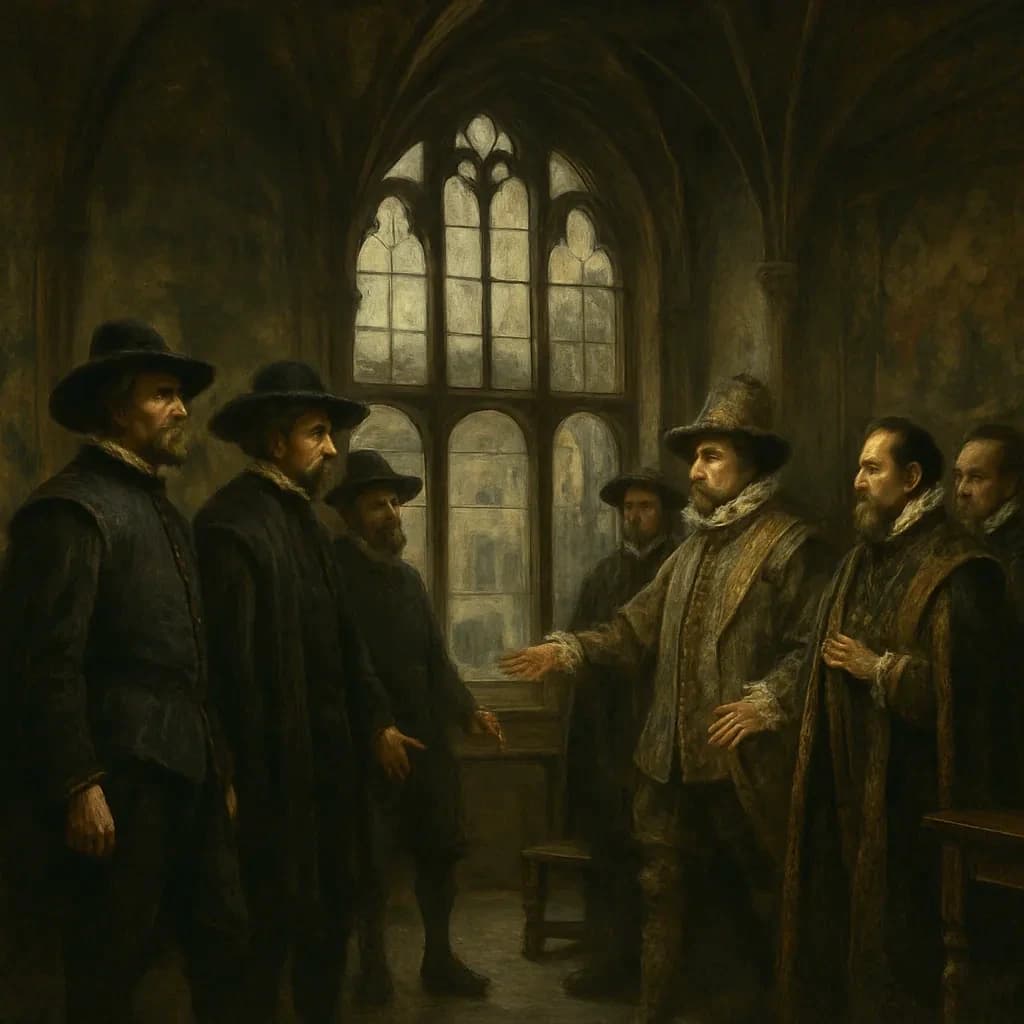
Prague, 1618: A Wrong Window Launched the Thirty Years' War
Three Protestant nobles planned to throw two Catholic officials from Prague Castle's window in 1618, but they chose the wrong room, the wrong window, and lit the fuse on the Thirty Years' War.
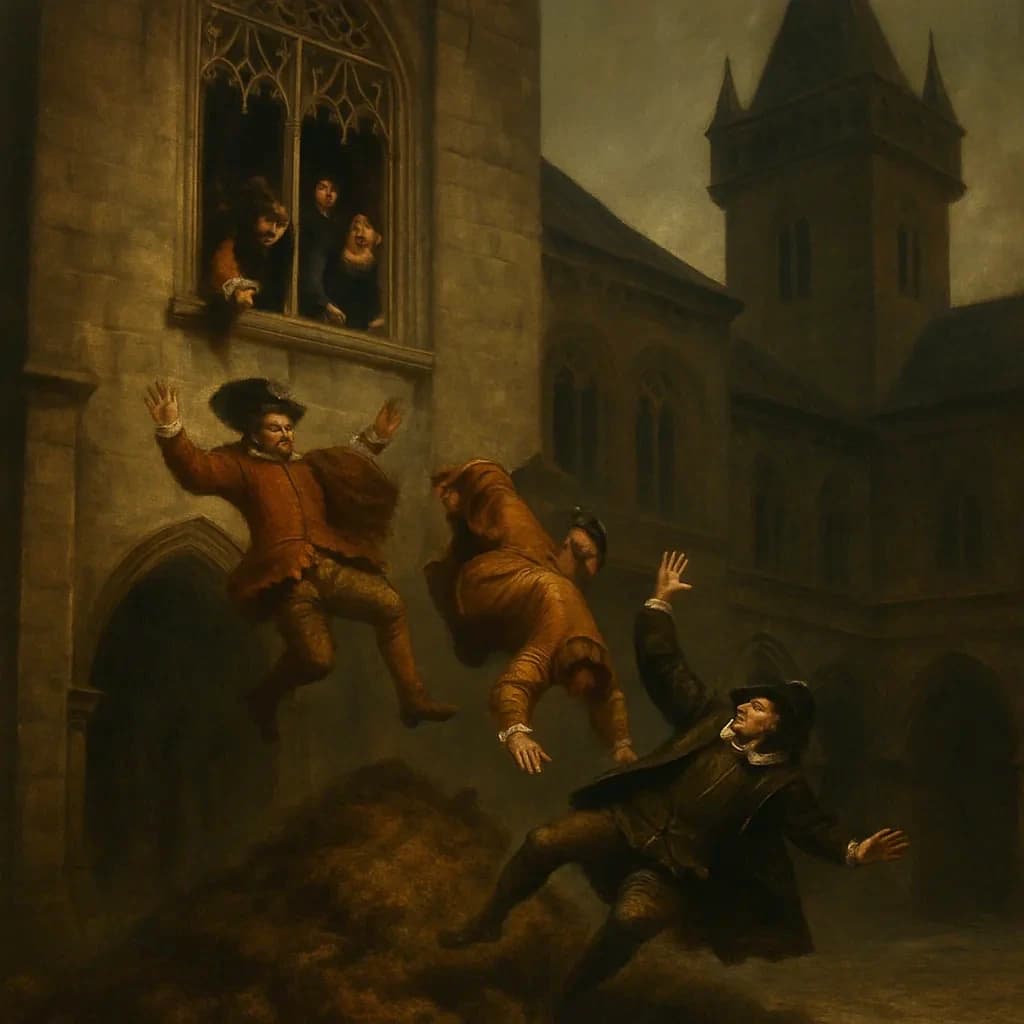
A Prague Window Started Thirty Years of War
A Prague window cost the Holy Roman Empire its unity, sparking thirty years of religious warfare across Europe.
- Peter H. Wilson, 'The Thirty Years War: Europe's Tragedy' (Harvard University Press, 2009)
- C.V. Wedgwood, 'The Thirty Years War' (Jonathan Cape, 1938)
- Josef Polišenský, 'The Thirty Years War' (University of California Press, 1971)