

Bi Sheng
He invented movable type four hundred years before Gutenberg, and history spent centuries giving the credit to someone else.
Bi Sheng was a commoner. Not a court official, not a scholar-bureaucrat, not a man whose name was supposed to survive. He worked during the reign of Emperor Renzong of the Song dynasty, somewhere between 1040 and 1048, and what he did in that window of time was build the first movable type printing system in human history: small, individual characters made from baked clay, set into an iron frame, pressed onto paper, then disassembled and reused. Gutenberg wouldn't arrive at roughly the same idea until around 1450. The gap is not a footnote. It is four centuries.
What's strange is how we know about Bi Sheng at all. He left no writings, no official record, no court appointment. The only reason his name survived is that a man named Shen Kuo (a polymath and government official) happened to acquire Bi Sheng's clay type blocks after his death and described the process in his 1088 work, *Dream Pool Essays*. Shen Kuo wrote about the invention the way you might describe a clever neighbor's workshop project: admiringly, specifically, almost casually. Without that single passage, Bi Sheng disappears entirely. He came within one man's curiosity of being no one.
Here is the paradox the Untold Archives story circles: Bi Sheng's invention did not transform Chinese society the way Gutenberg's press transformed Europe. The reason is linguistic. Chinese writing requires thousands of distinct characters. Classical texts might demand ten thousand or more. Movable type, genius as it was, remained laborious in that context. Woodblock printing, which could reproduce an entire page as one carved unit, stayed dominant in China for centuries. The technology was real. The cultural infrastructure to make it explosive simply didn't match. The invention that would eventually reshape the world landed in the wrong linguistic soil to ignite immediately.
He was, in the most specific sense, ahead of his time in a way that punished him with obscurity. A craftsman who solved a problem the world wasn't ready to recognize as solved.
Bi Sheng's original clay type blocks were preserved by Shen Kuo's family for generations after his death, physical objects that outlasted almost any biographical detail about the man who made them.
Why untold: Because he left no official record of his own and survived history only through a single secondhand account, while European-centric narratives of printing history defaulted to Gutenberg as the origin point for over five centuries.
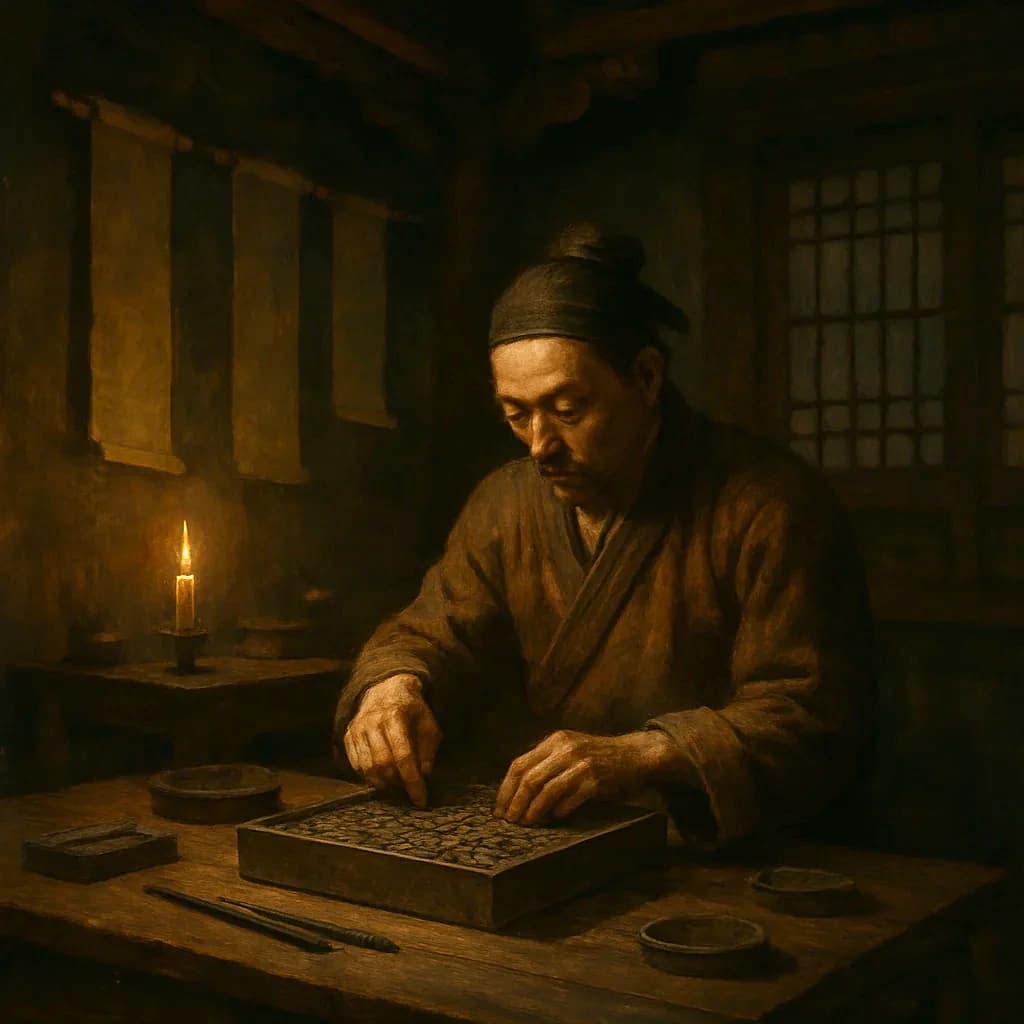
The Scribe Who Carved Letters Out of Clay
A Chinese scribe's writing brush never ran dry, and somehow this changed how the entire world remembered things.
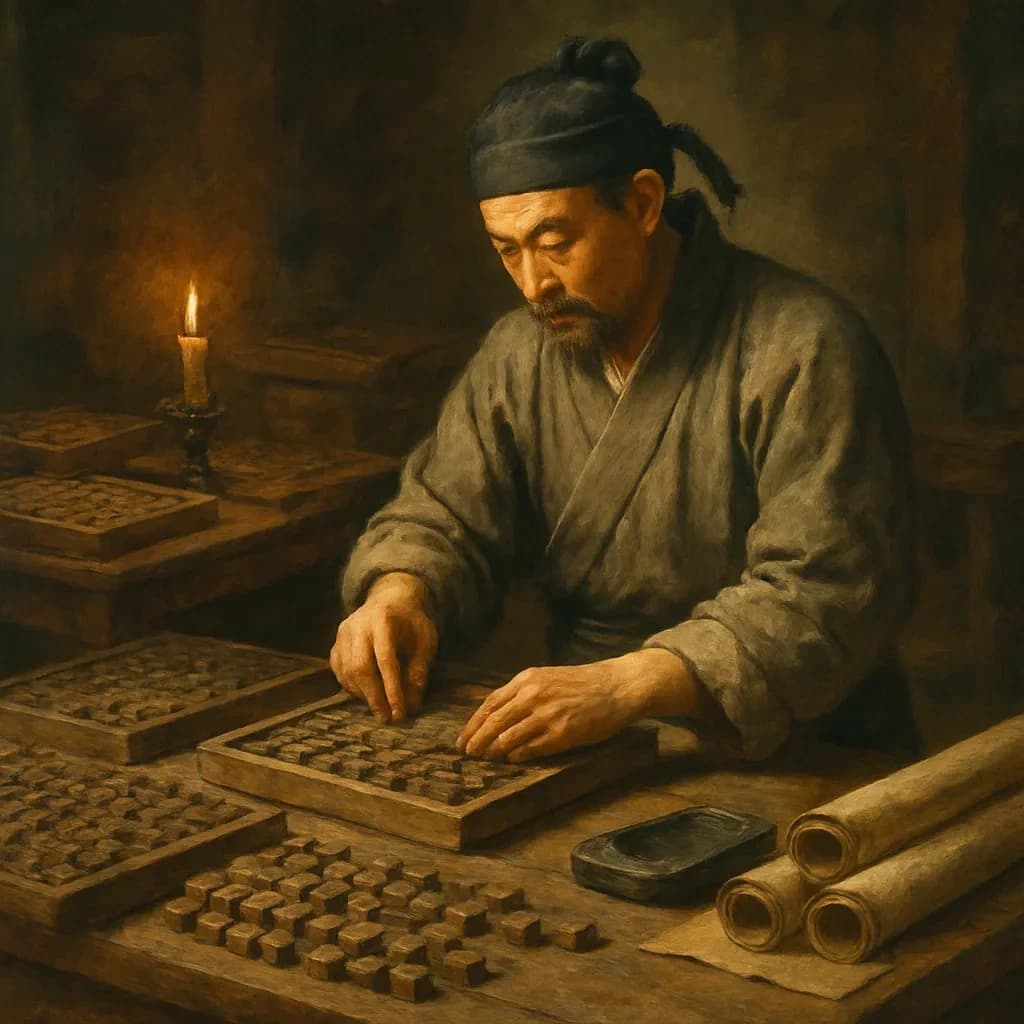
China Invented Printing It Couldn't Use
A Chinese blacksmith named Bi Sheng built something in 1139 that would eventually destroy the very culture that made it possible.
- Shen Kuo, *Dream Pool Essays* (夢溪筆談), c. 1088, Volume 18: primary source describing Bi Sheng's movable type process
- Thomas Francis Carter, *The Invention of Printing in China and Its Spread Westward*, Columbia University Press, 1925
- Lucille Chia, 'Printing for Profit: The Commercial Publishers of Jianyang, Fujian (11th-17th Centuries)', Harvard University Asia Center, 2002