
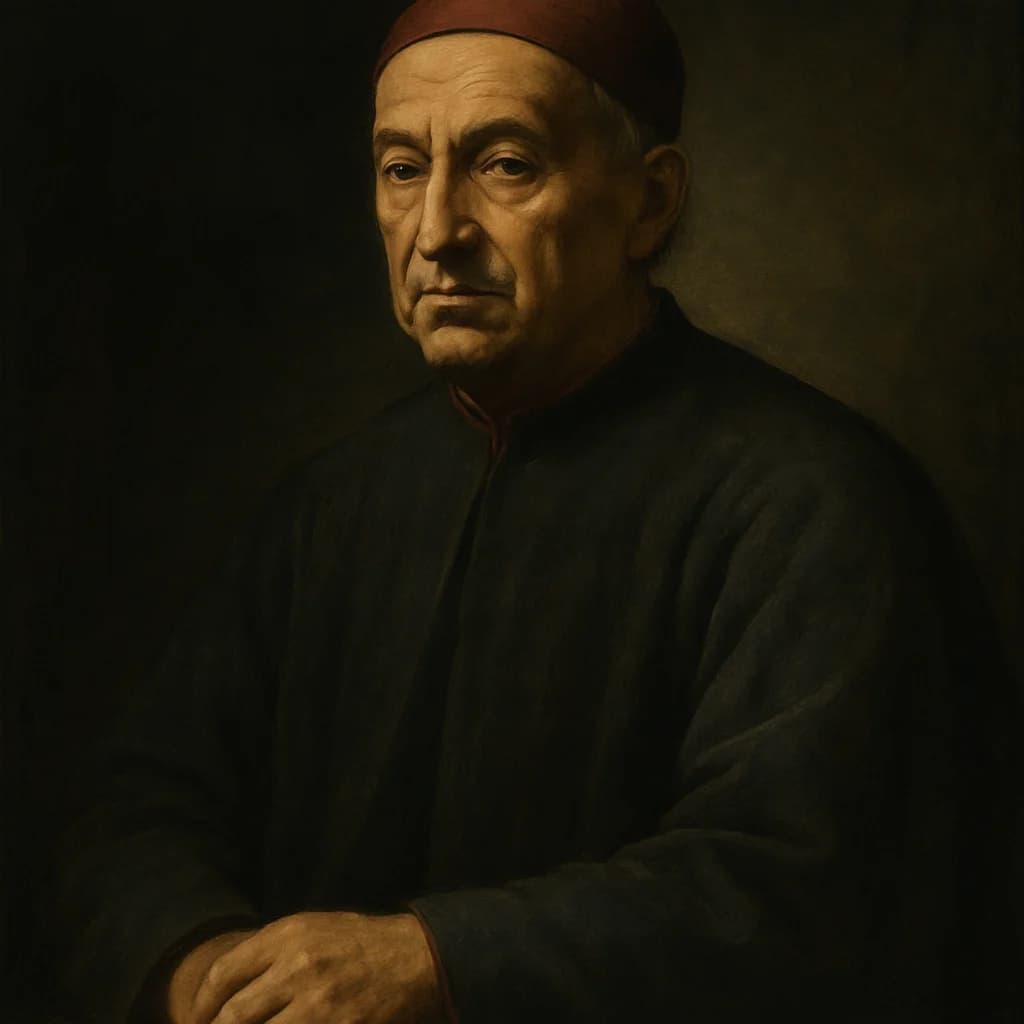
Cosimo de' Medici
He never held a single official title, yet he ran a republic for thirty years from inside a bank.
Cosimo de' Medici understood something most powerful men never do: the office is a trap. Titles invite scrutiny. Elections invite opponents. Crowns invite assassins. Better to be the man who lends the crown its gold and collects the interest quietly. When Cosimo returned from exile in 1434 (he had spent the previous year hiding in Padua and Venice after Florence's ruling oligarchs sentenced him to banishment, terrified of exactly what he would become), he came back not as a conqueror but as a neighbor. He threw no one in a dungeon. He just restructured the tax rolls.
That detail about the taxes is the whole story, really. The catasto, Florence's wealth assessment system, required citizens to declare their assets. Cosimo's allies controlled how those declarations were evaluated. Families who opposed him found their assessed wealth climbing steeply. Families who cooperated found the arithmetic surprisingly favorable. No violence required. No decree. Just paperwork, applied with patience. Within a decade, the men who had exiled him were bankrupt, and Cosimo was funding the construction of San Lorenzo, the Uffizi's architectural ancestor, and a Platonic academy that would eventually help drag European philosophy out of the medieval period. He commissioned Donatello's David (the first freestanding nude bronze since antiquity) not for a church, but for his own private courtyard. A statement dressed as interior decoration.
What gets lost in the Renaissance pageantry is how strange and solitary his actual power was. He had no army. The Medici bank had branches across fourteen cities, which meant Cosimo had information (about debts, about politics, about who owed whom) before any government did. He was effectively running an intelligence network disguised as a financial services firm. Pope Eugene IV owed him money. So did the Sforza in Milan, the Este in Ferrara, half the crowned heads of Europe. Cosimo didn't need soldiers when the alternative was calling in your loans.
He died in 1464, and Florence gave him a title posthumously, the only one he ever received: Pater Patriae. Father of the Fatherland. The same honor Rome had given Cicero. He would have appreciated the irony: recognized at last, by a city that had once chased him into a barn, for the thing he had always been.
Cosimo de' Medici personally financed the Council of Florence in 1439, which attempted to reunite the Catholic and Eastern Orthodox churches, partly out of genuine theological interest, and partly because hosting Byzantine scholars gave him first access to manuscripts that had been lost to Western Europe for centuries.
Why untold: Because the Renaissance gets narrated through its artists and its art, Cosimo's role as the political and financial architect who made it structurally possible gets absorbed into the spectacle he funded.

He Brought Plato Back to Europe After a Thousand Years
A single meeting between a disgraced Byzantine scholar and a Florentine banker in 1438 didn't just save Greek philosophy. It laid the intellectual architecture of the Renaissance.
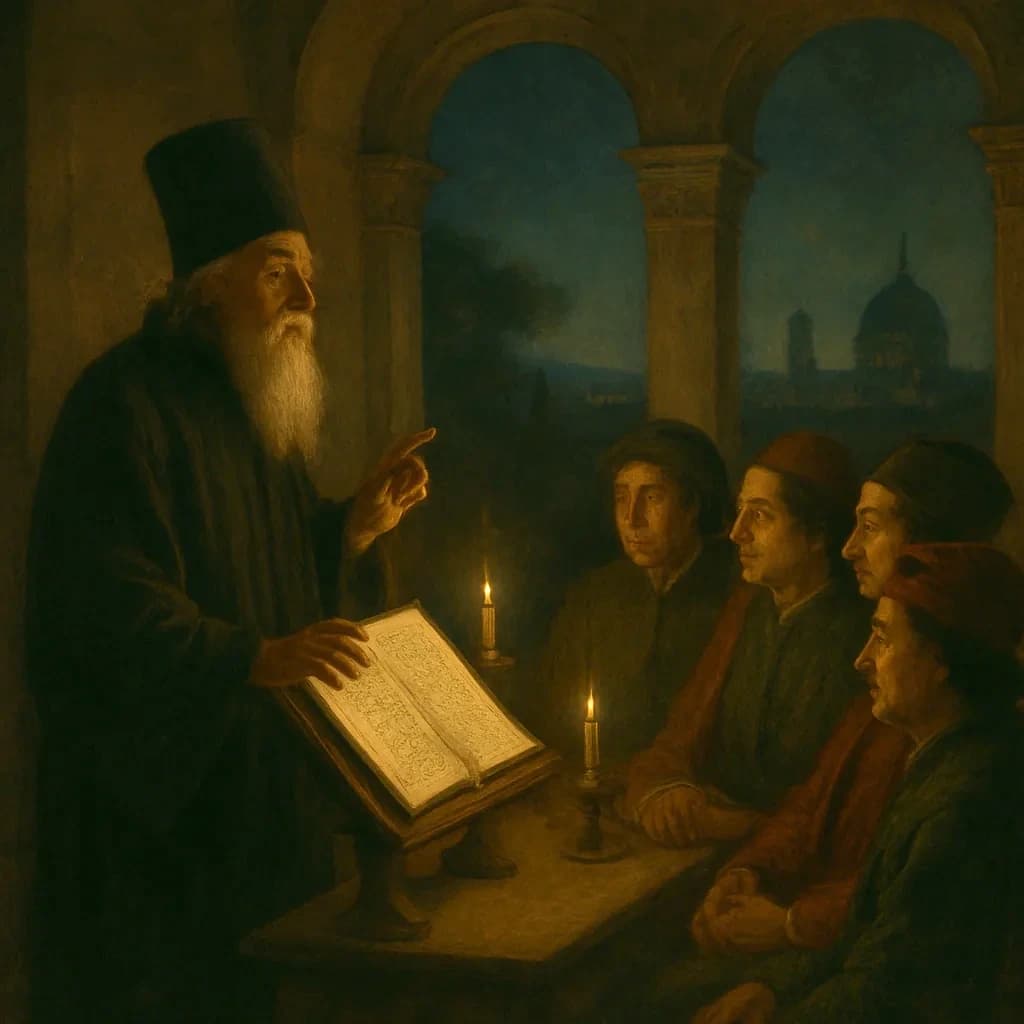
How a Byzantine Monk Gave Florence Plato Again
A Byzantine monk carried the entire intellectual inheritance of the ancient world out of a collapsing empire, and nobody noticed because he looked like a gardener.
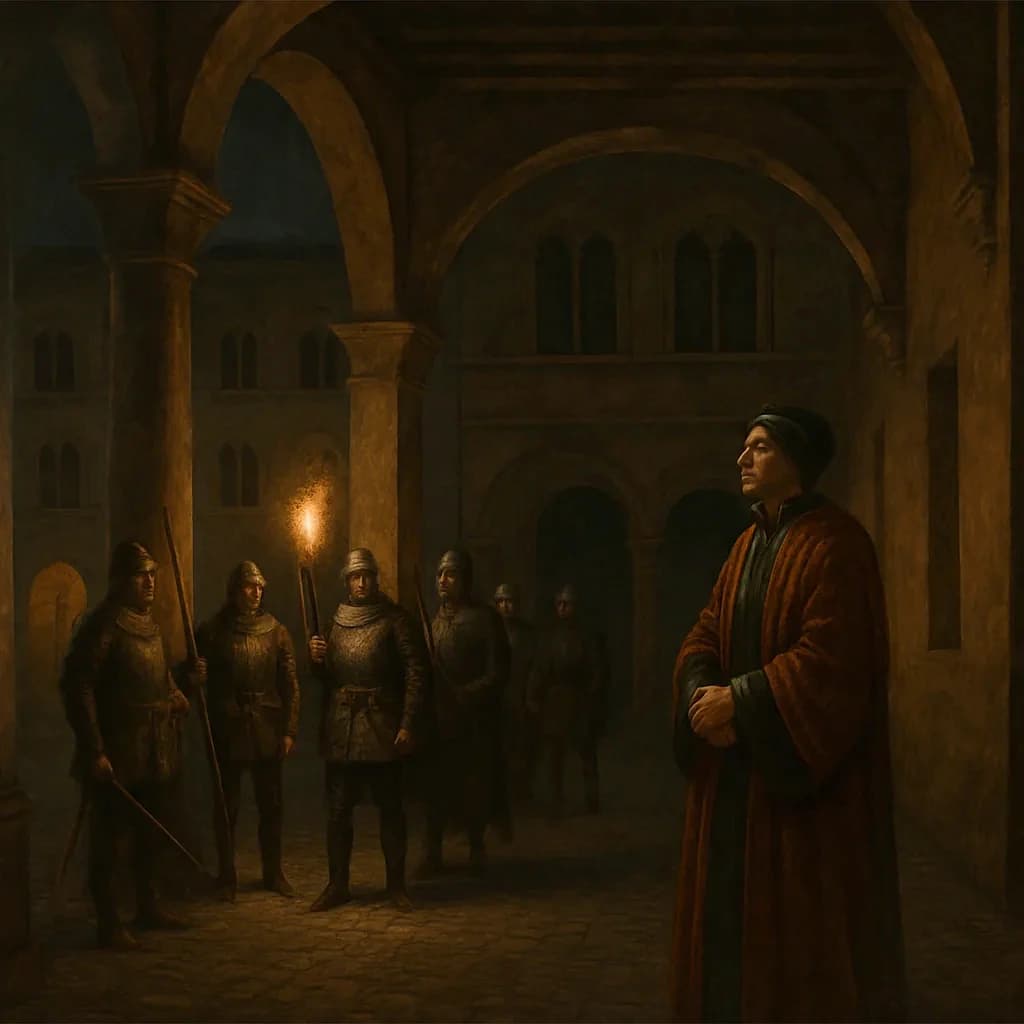
He Freed Four Hundred Hostages by Going Fishing
Florence's entire city council sat as prisoners in 1432. And the man who freed them did it by going fishing.
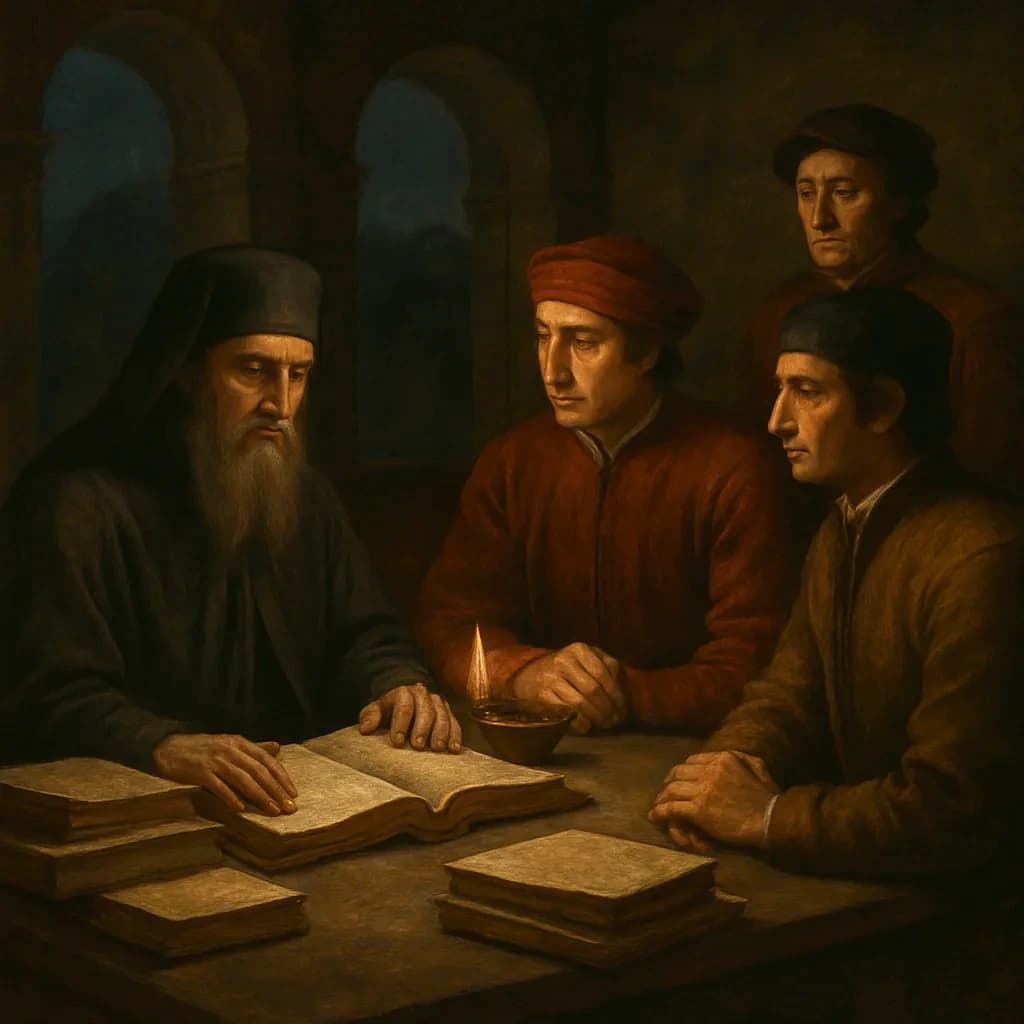
Greece Didn't Perish: It Moved to Florence
A Greek scholar reached Florence carrying no gold and no weapons, only what was packed inside his own head.
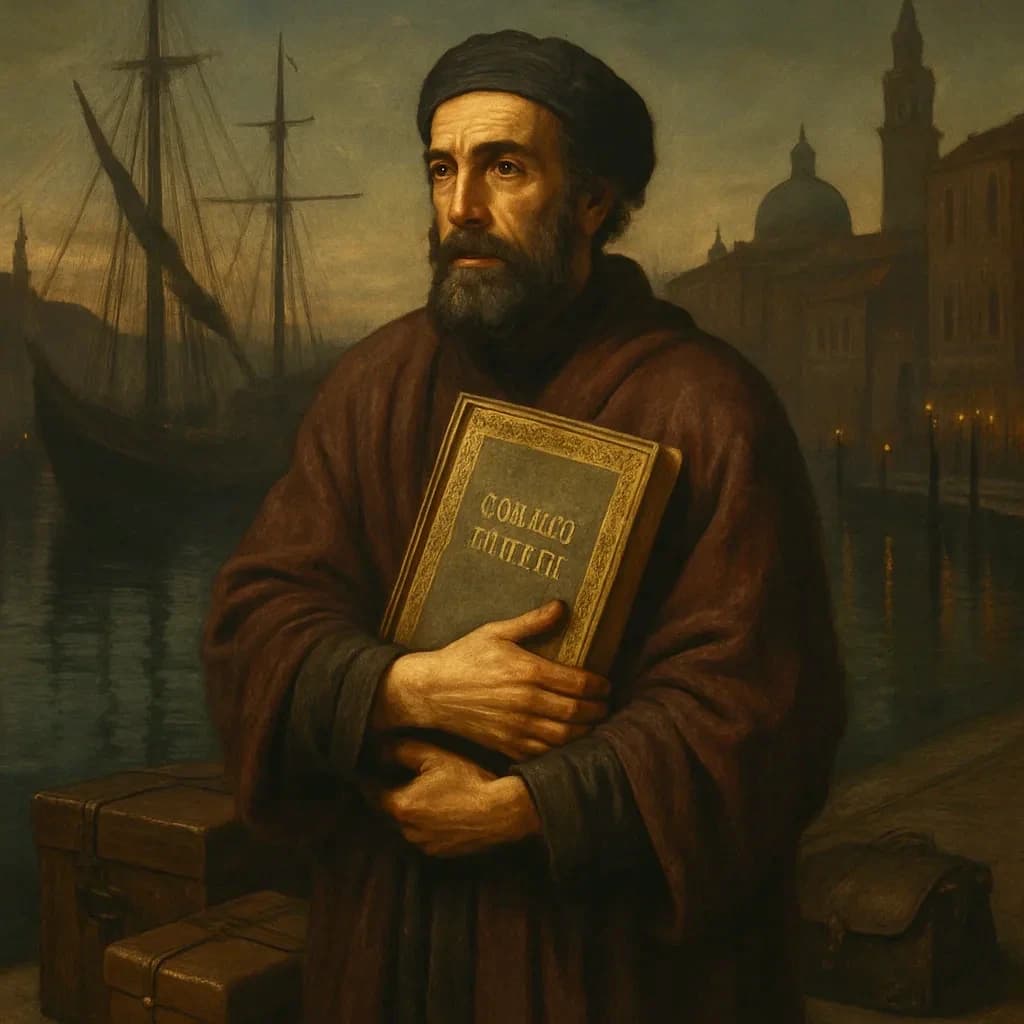
The Manuscripts Byzantine Refugees Smuggled Out of Constantinople
As Constantinople fell in 1453, a Byzantine scholar carried something out of the dying city that would quietly reshape Western civilization: not gold, not relics, but a stack of ancient Greek manuscripts nobody in Europe knew existed.
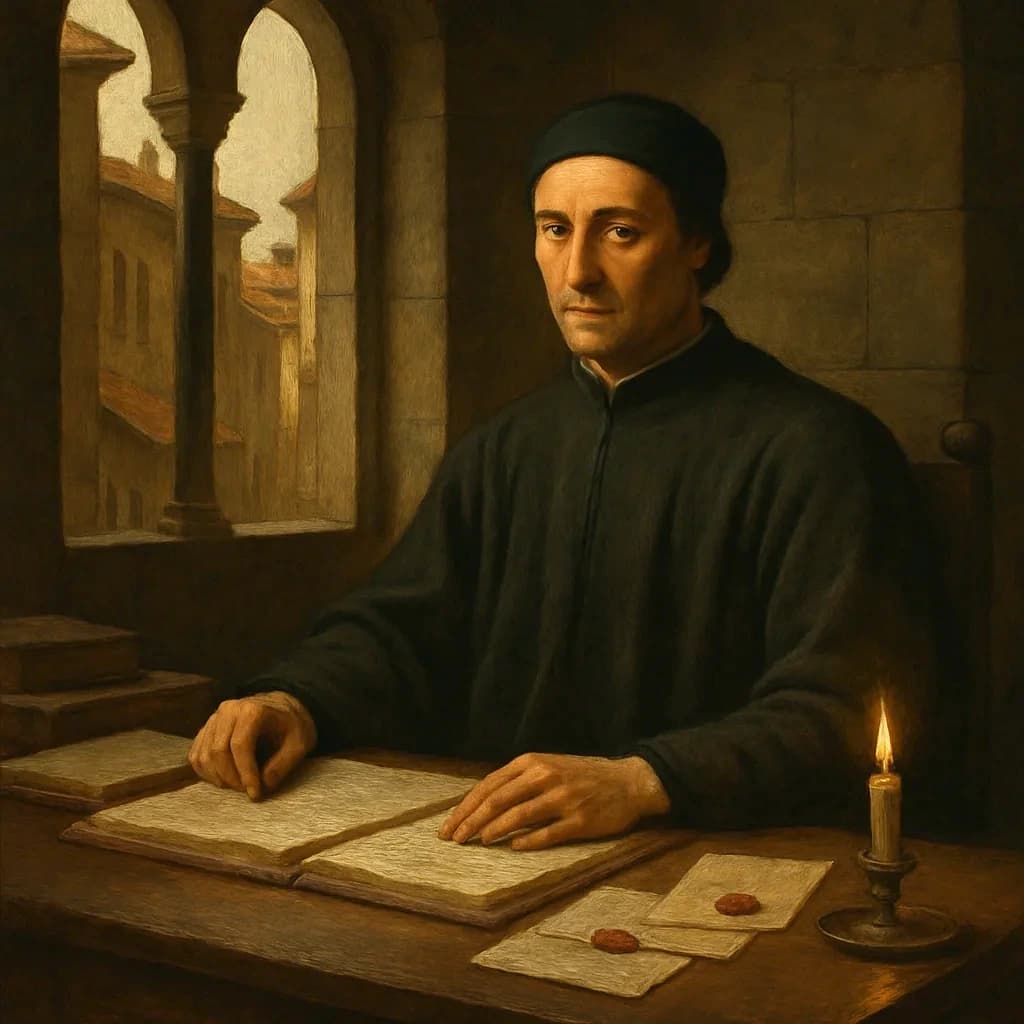
Cosimo de' Medici Paid His Way Out of Execution
The richest man in Europe was hiding from a death sentence in a pile of straw, and he had a plan.
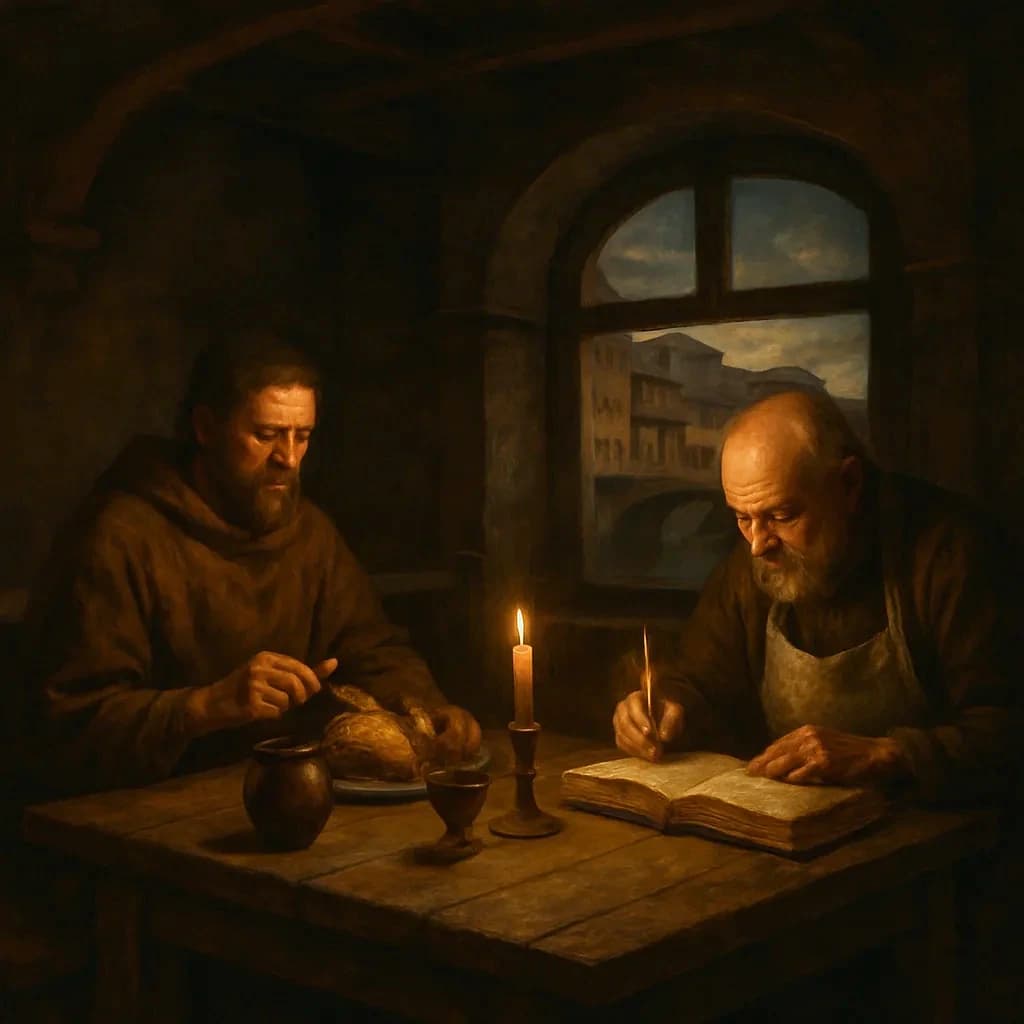
Four Florins of Wine That Bankrupted Florence's Banks
A Florentine merchant's unpaid restaurant bill became the most expensive meal in European history.
- Dale Kent, Cosimo de' Medici and the Florentine Renaissance (Yale University Press, 2000)
- Tim Parks, Medici Money: Banking, Metaphysics, and Art in Fifteenth-Century Florence (W.W. Norton, 2005)
- Gene Brucker, Renaissance Florence (University of California Press, 1969)