
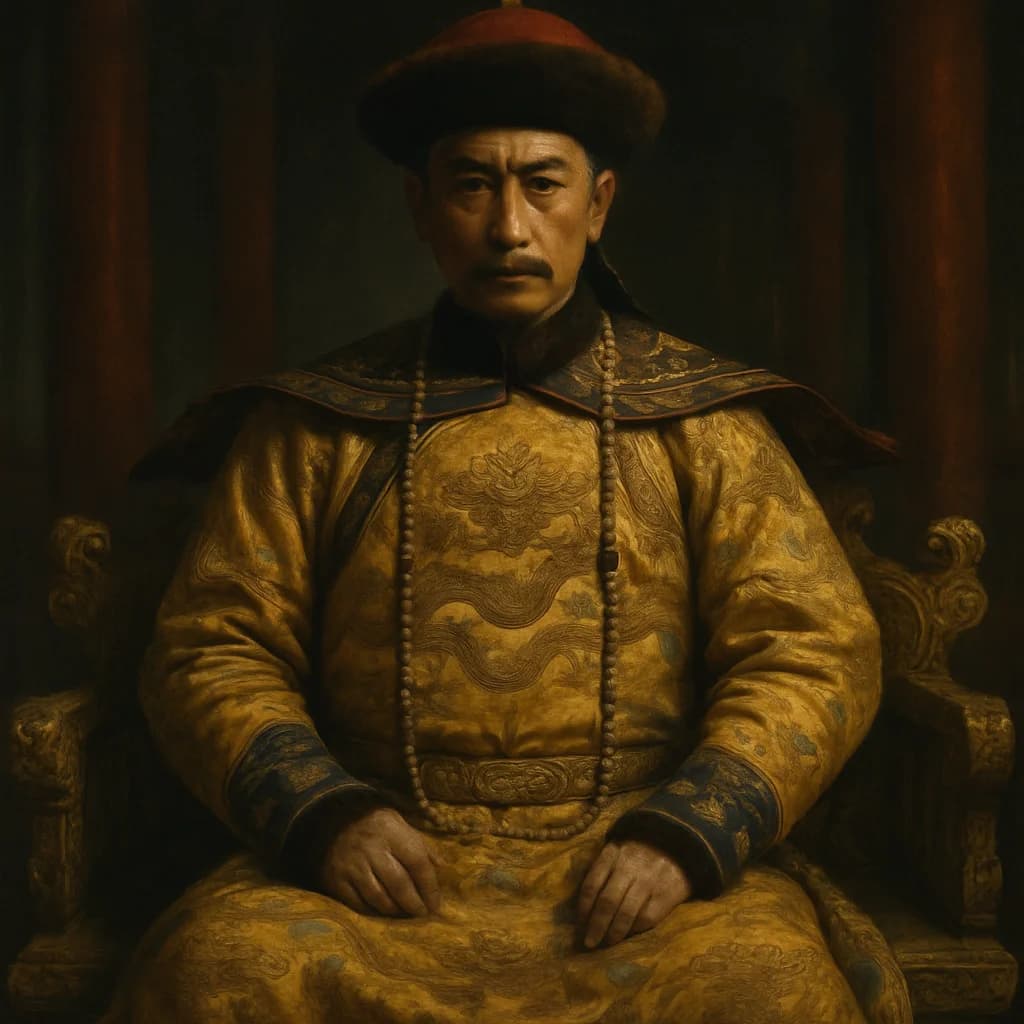
Yongzheng Emperor
The emperor who murdered his way to power spent his reign obsessively trying to prove he deserved it.
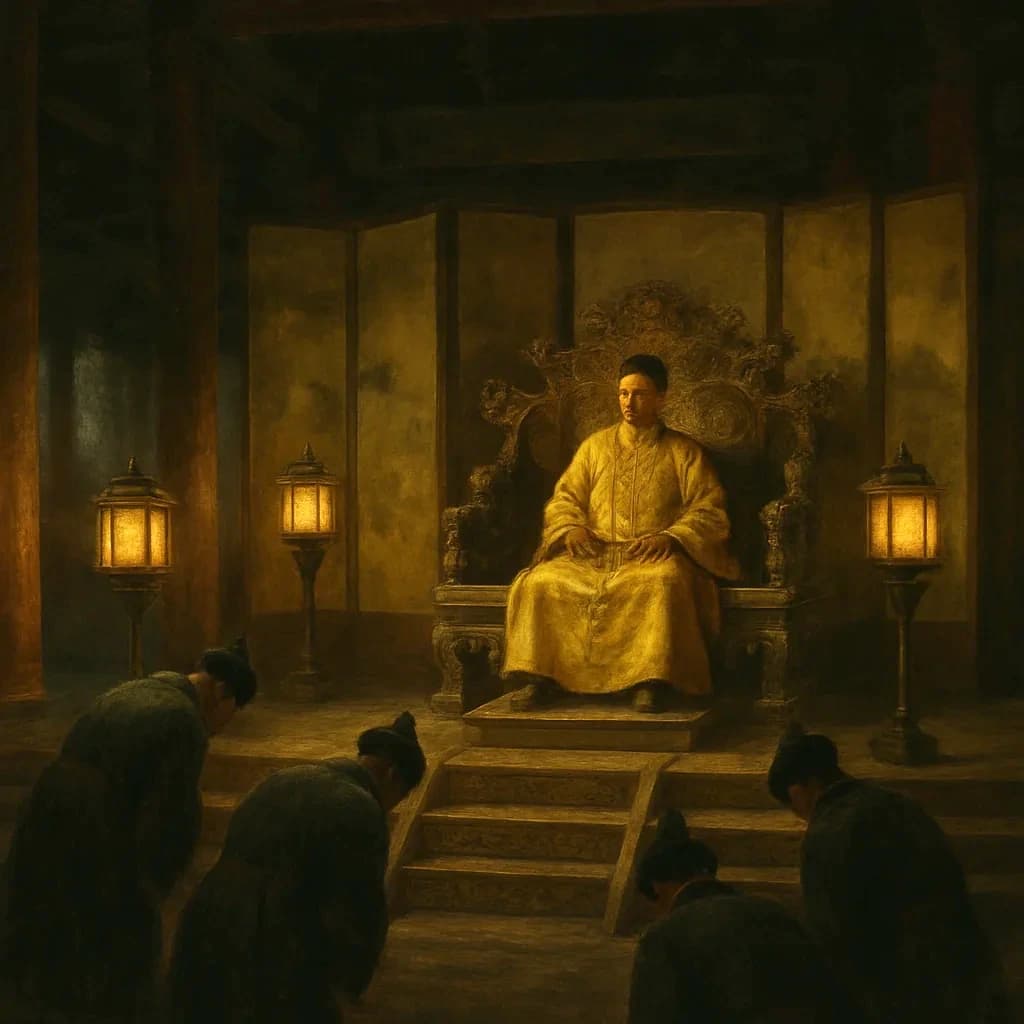
Yongzheng ascended the Dragon Throne in 1722 under a cloud of suspicion so thick it poisoned his entire thirteen-year reign. His father, the Kangxi Emperor, had twenty-four sons, and the succession should have gone to the crown prince. Instead, it went to the fourth prince, a man so paranoid about legitimacy that he spent more time justifying his rule than actually ruling.
The whispers started immediately. Had he forged the imperial edict? Poisoned his brothers? The evidence was circumstantial but damning: key rivals died mysteriously, documents appeared altered, and witnesses vanished. Yongzheng's response was characteristically extreme: he created an entire government department dedicated to rooting out sedition, turning the Forbidden City into a surveillance state where even thinking the wrong thoughts could prove fatal.
What made his paranoia truly extraordinary was its productivity. Convinced that efficiency would silence critics, Yongzheng revolutionized Chinese governance with manic energy. He abolished the corrupt practice of selling government positions, created a secret intelligence network that would make modern spy agencies jealous, and personally reviewed thousands of documents daily, often working eighteen-hour shifts that left his courtiers exhausted.
The irony was perfect: the emperor who may have stolen his throne became one of China's most effective rulers. His reforms strengthened the Qing Dynasty for the next century, but the man himself remained haunted by legitimacy. Even on his deathbed in 1735, he was still issuing edicts defending his right to rule, a tyrant's final, futile attempt to rewrite the story of his own ascension.
Yongzheng created China's first systematic thought police, establishing the Literary Inquisition that could execute scholars for writing ambiguous poems that might contain hidden criticisms of his reign.
Why untold: His administrative genius gets overshadowed by the dramatic mystery of how he seized power and the more famous reigns of his father and son.
- Spence, Jonathan D. 'Treason by the Book: A Tale of Loyalty and Revenge in the Age of Yongzheng.' New York: Penguin Books, 2001.
- Huang, Pei. 'Autocracy at Work: A Study of the Yung-cheng Period, 1723-1735.' Bloomington: Indiana University Press, 1974.
- Rawski, Evelyn S. 'The Last Emperors: A Social History of Qing Imperial Institutions.' Berkeley: University of California Press, 1998.