
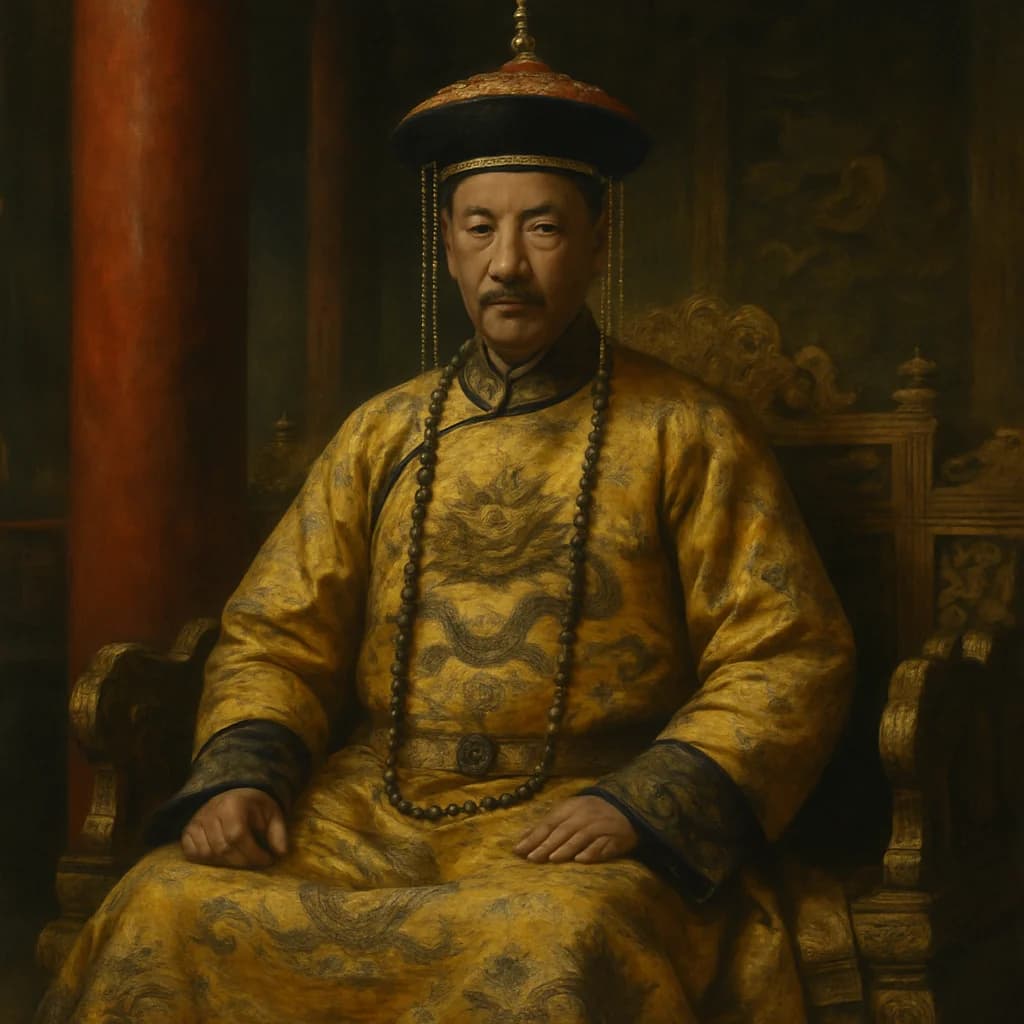
Kangxi Emperor
The longest-ruling emperor in Chinese history spent his final years desperately trying to erase one of his greatest achievements from existence.
Kangxi ruled the Qing Dynasty for sixty-one years, longer than any emperor in Chinese history, but his final decade was consumed by a project that would haunt him: commissioning the most accurate map of China ever created. In 1708, he hired Jesuit missionaries (foreigners he simultaneously distrusted and needed) to survey his vast empire using European techniques. The resulting Kangxi Atlas was a masterpiece of cartography, pinpointing China's borders, resources, and strategic locations with unprecedented precision.
But Kangxi quickly realized his mistake. This wasn't just a map. It was a blueprint for conquest. Every mountain pass, every navigable river, every defensive weakness was now documented with scientific accuracy. The emperor who had welcomed European knowledge suddenly understood its danger. He ordered the atlas buried, copies destroyed, and swore the Jesuits to secrecy. Yet somehow, fragments survived.
A century later, those surviving maps would guide British opium traders through Chinese waters and help European powers carve up the empire Kangxi had spent a lifetime building. The emperor who defeated rebellions, conquered Taiwan, and expanded China to its greatest territorial extent had inadvertently provided the tools for its humiliation. His obsession with knowing every corner of his realm had created the very weapon that would pierce its heart.
Kangxi died in 1722, never knowing that his secret cartographic project would outlive him by decades. The map he tried to bury would eventually surface in European drawing rooms, where colonial administrators would study its details and plan their next moves against the Middle Kingdom.
Kangxi's court performed elaborate daily rituals around his meals, but he often ate alone in his private chambers, preferring simple Manchu dishes to the elaborate banquets prepared for state occasions.
Why untold: His role in creating the strategic intelligence that enabled later Western dominance of China contradicts the narrative of pure victimization versus foreign aggression.
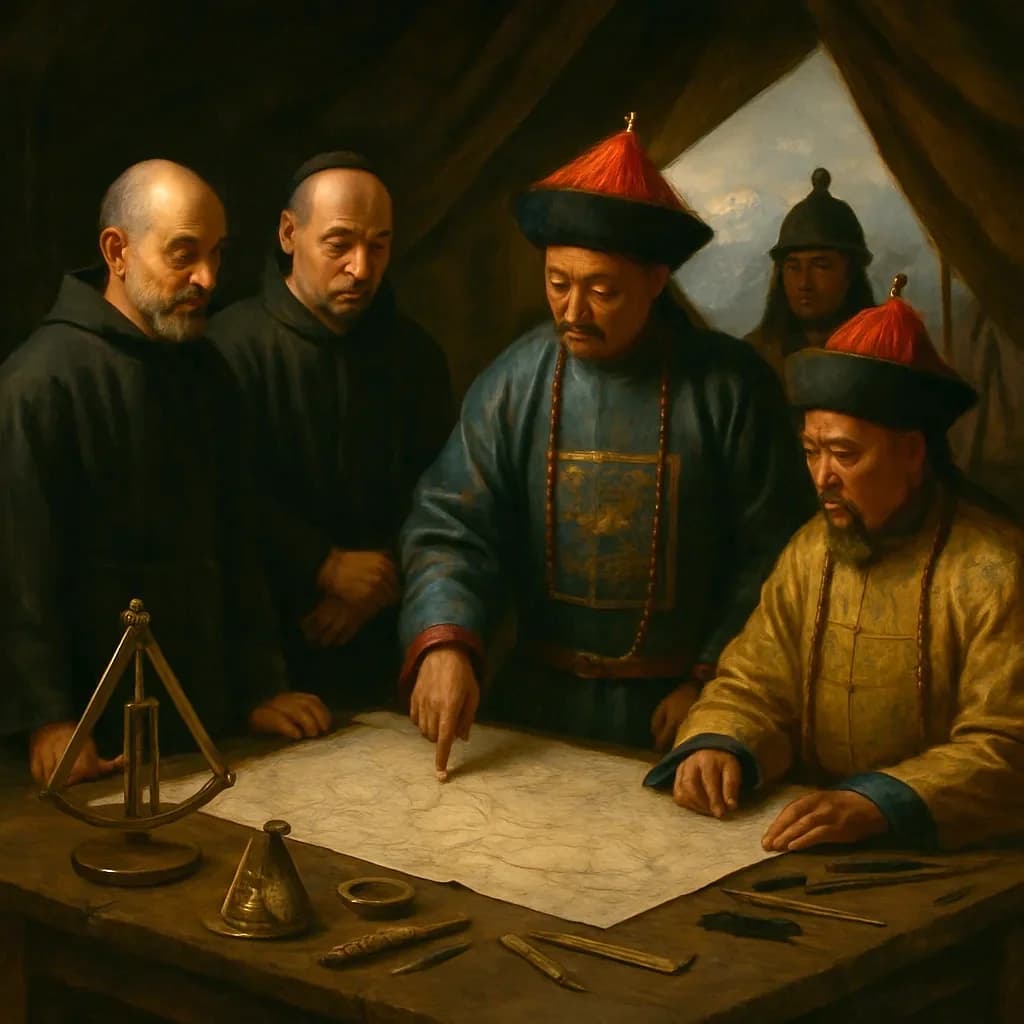
They Mapped Korea Without Setting Foot on It
A team of surveyors charted Korea's coast from across the border, never touching its soil, and British charts copied their mistake for a hundred years.
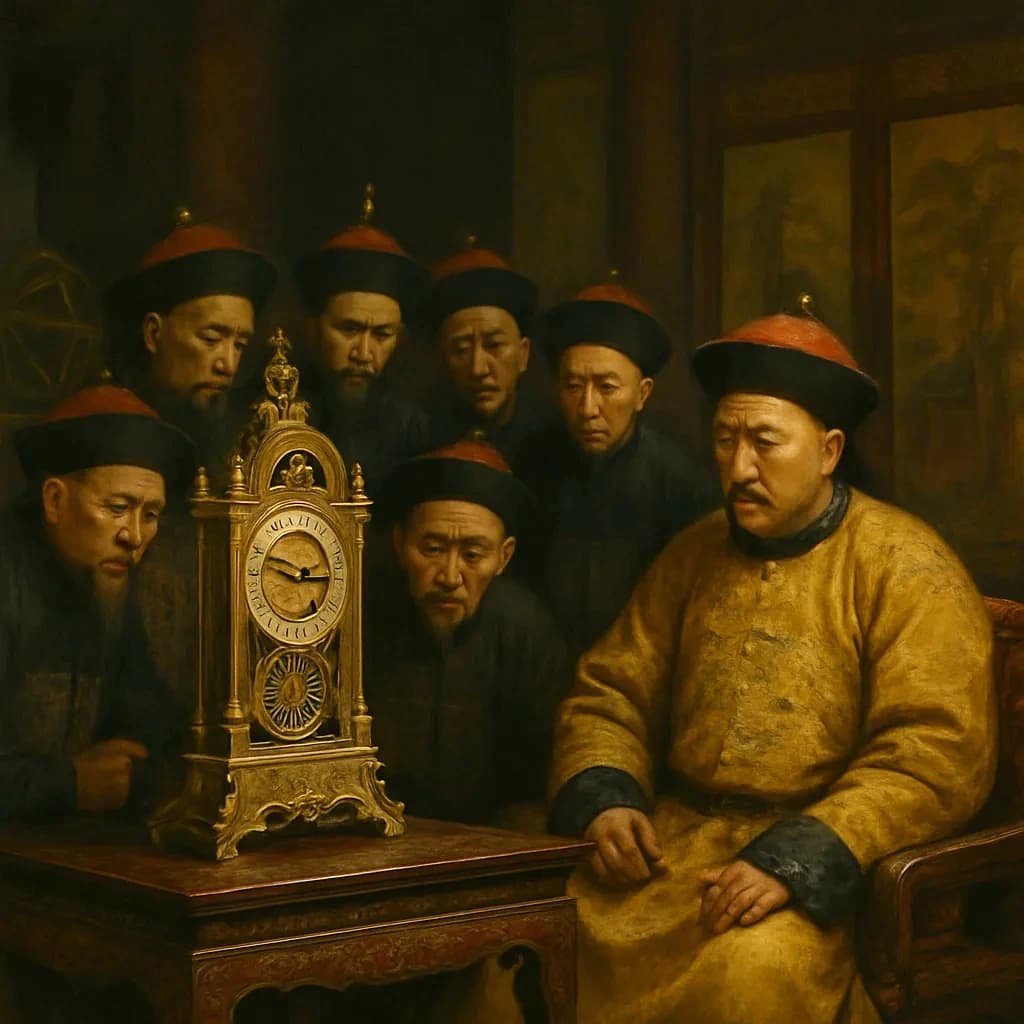
When Every Clock in China Struck Thirteen
The Kangxi Emperor's obsession with European clockwork nearly triggered a war with every Jesuit mission from Beijing to the South China Sea.
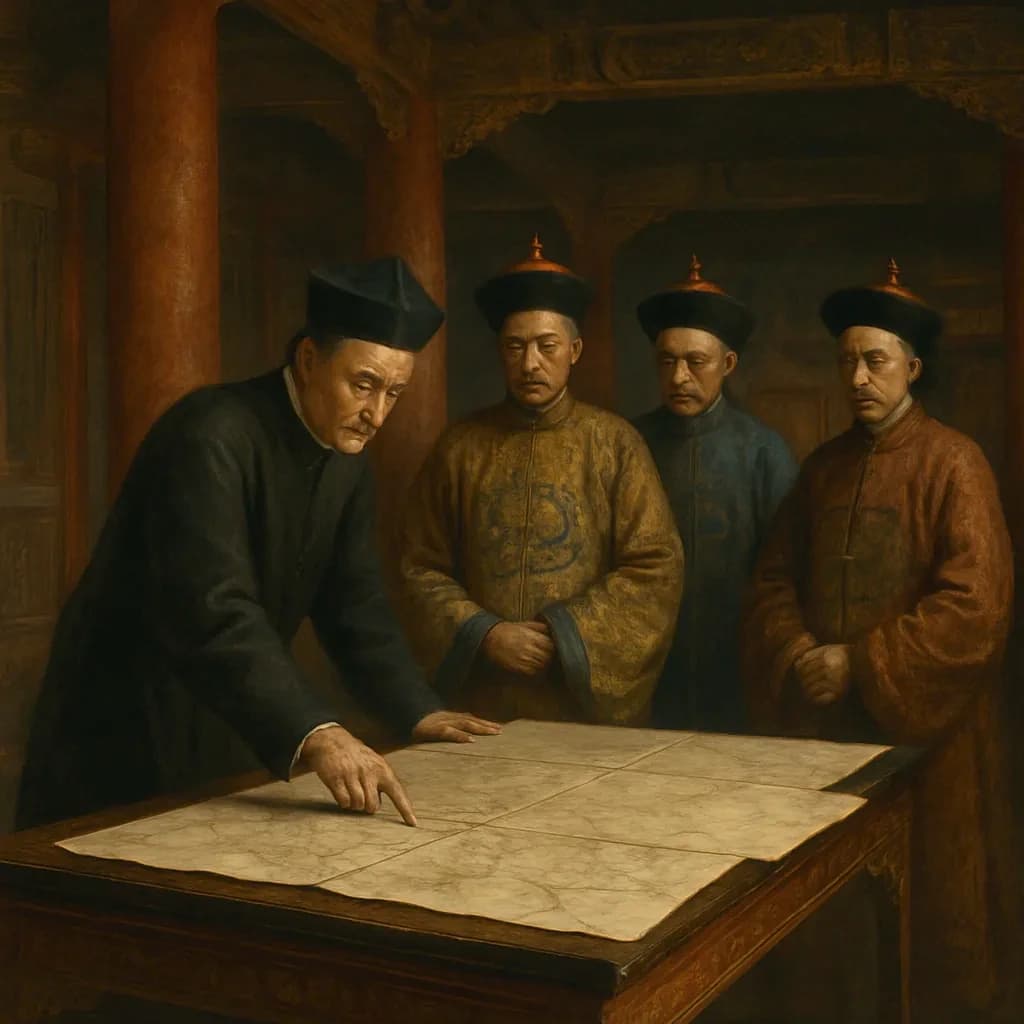
He Mapped China Without Ever Seeing It
The most accurate map of China ever made was created by a Jesuit priest who never saw the country, and the emperor who commissioned it tried to bury every copy.
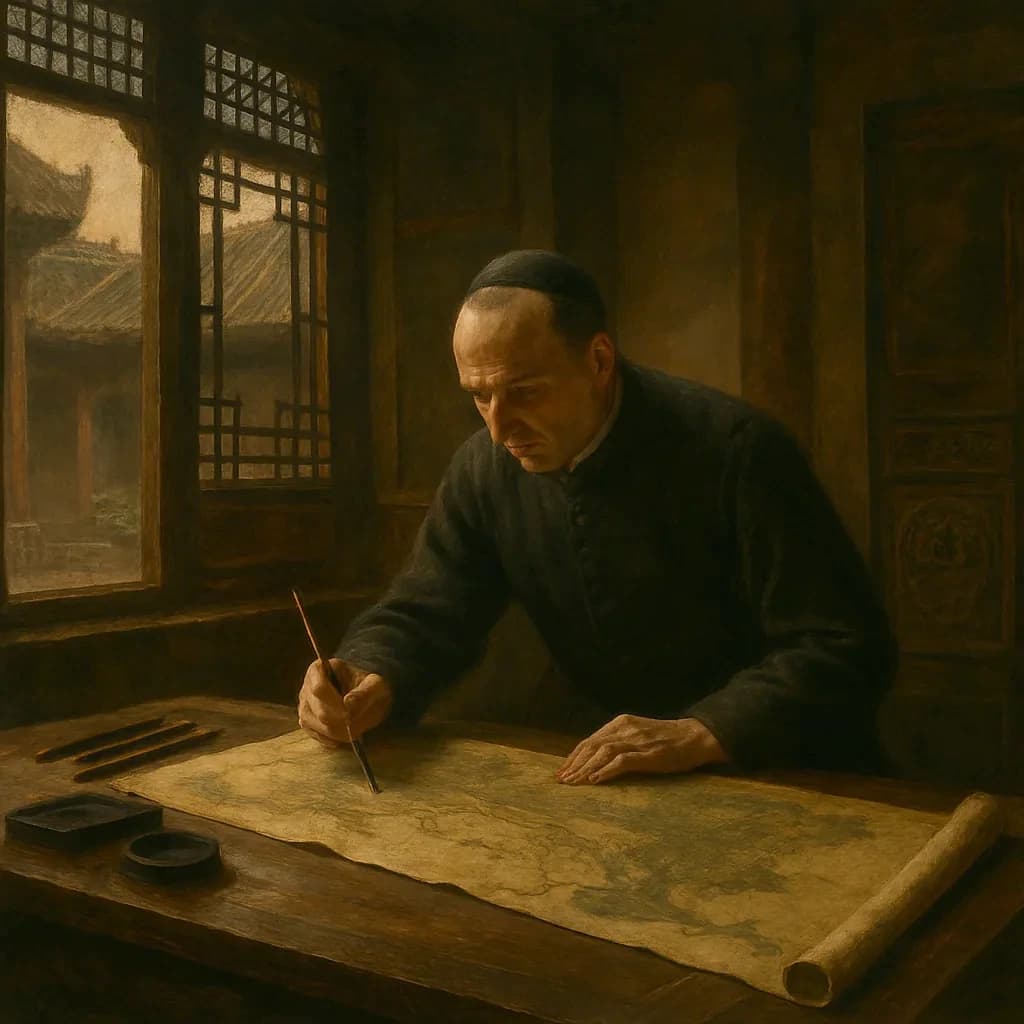
How a Jesuit's Map of China Reached Britain's Warships
A Jesuit priest's secret map of China may have helped trigger the Opium Wars.
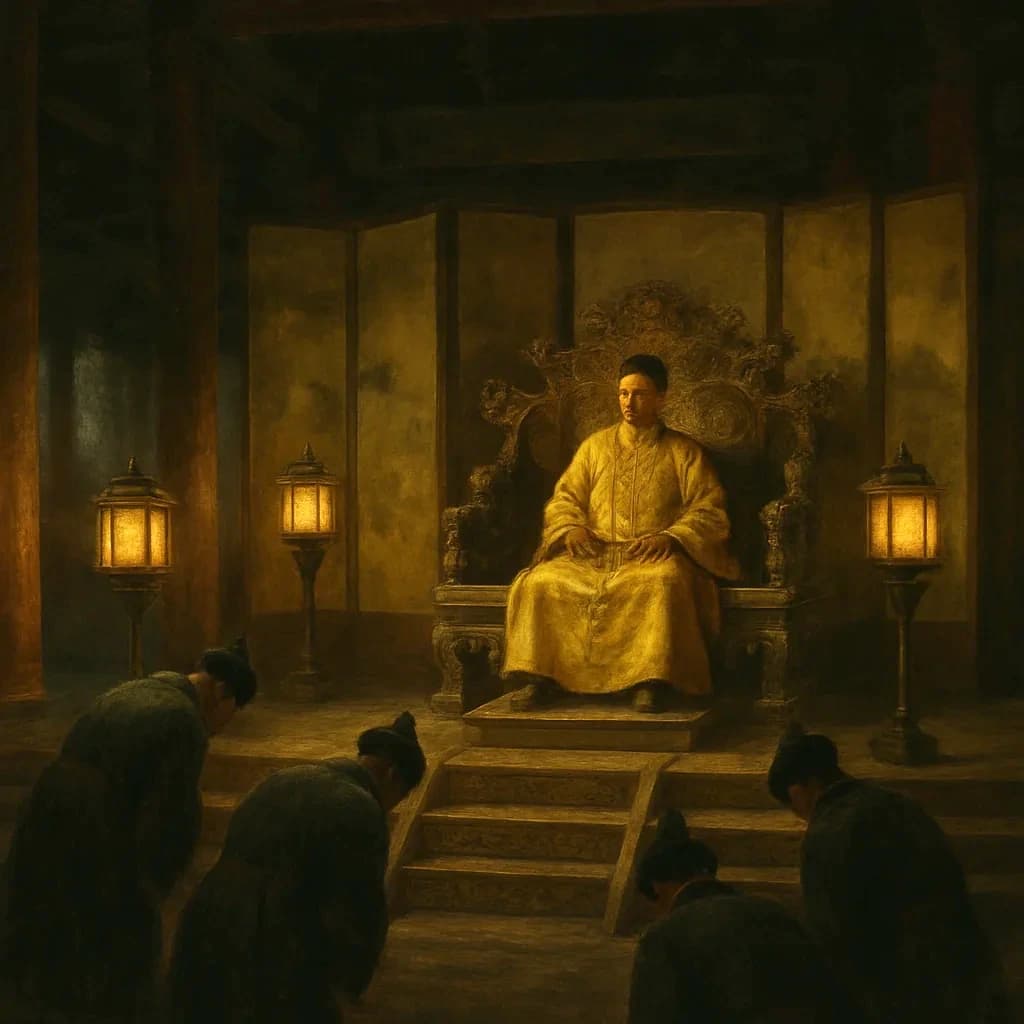
The Corpse on the Golden Throne
For six months, the most powerful empire on earth was secretly ruled by a dead man.
- Jonathan Spence, Emperor of China: Self-Portrait of K'ang-Hsi
- Peter C. Perdue, China Marches West: The Qing Conquest of Central Eurasia
- Joanna Waley-Cohen, The Sextants of Beijing: Global Currents in Chinese History