
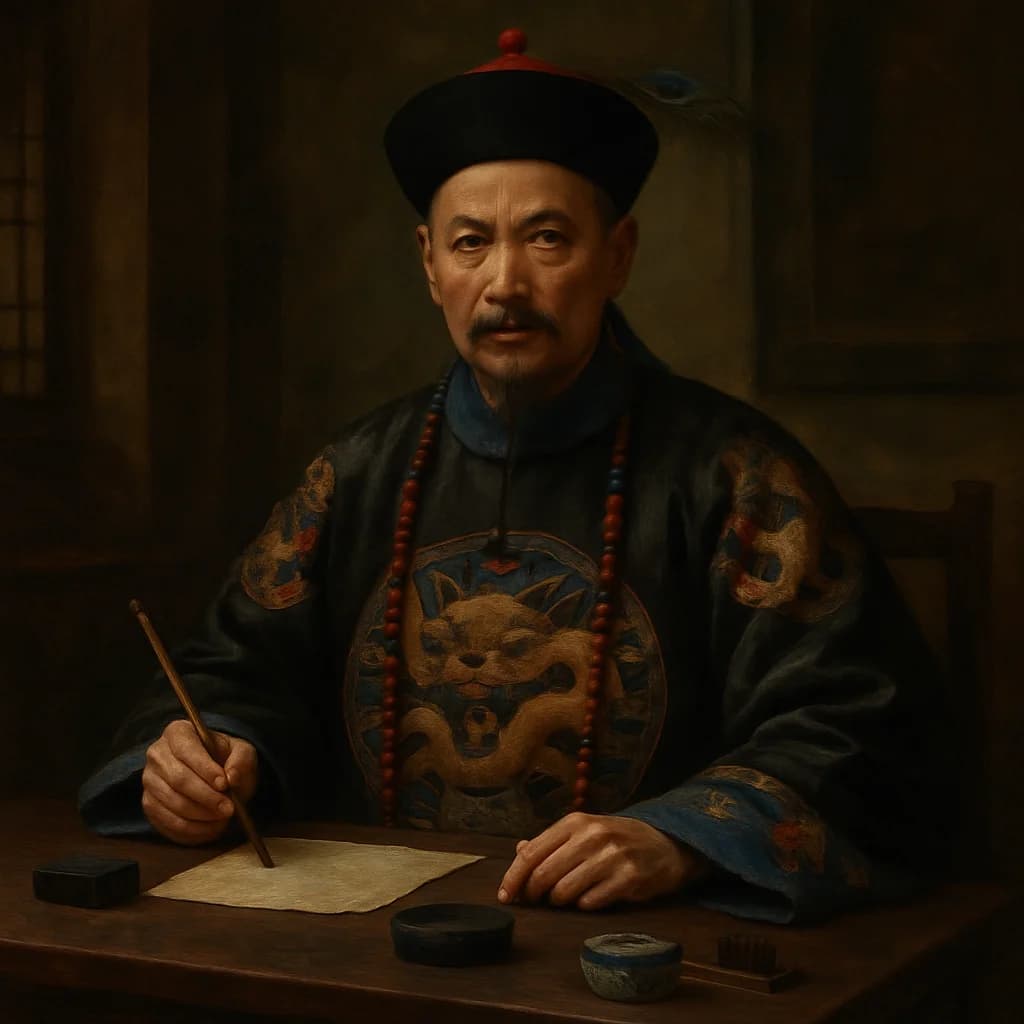
Lin Zexu
The man who destroyed $2 billion worth of British opium in a single afternoon became history's most misunderstood reformer.
Lin Zexu never intended to start a war. In 1838, this Confucian scholar and imperial commissioner arrived in Canton with a simple mandate: stop the opium trade that was bleeding China's silver reserves dry. What he discovered instead was a web of corruption so deep it reached into the highest levels of Chinese officialdom.
Lin's genius wasn't military. It was bureaucratic. He understood that the British weren't just selling drugs; they were running a sophisticated financial operation that had turned addiction into empire. His famous letter to Queen Victoria, politely but firmly explaining why her subjects' drug dealing violated basic human decency, revealed a mind that grasped global economics better than most of his contemporaries. He calculated exactly how much silver was leaving China (millions of taels annually), tracked the flow of bribes to local officials, and methodically dismantled the entire smuggling network.
When Lin ordered the destruction of 20,000 chests of opium at Humen in June 1839 (mixing the drug with lime and salt before flushing it into the sea), he wasn't making a symbolic gesture. He was eliminating inventory worth roughly $2 billion in today's money. The British response was swift and predictable: gunboats. But Lin had already achieved something remarkable: he'd proven that the Qing dynasty could still enforce its will when it chose to act decisively.
The First Opium War's outcome branded Lin a failure, but his real legacy lay in his detailed reports to Beijing. His meticulous documentation of Western military technology, diplomatic methods, and commercial practices became the foundation for China's later modernization efforts. The man who lost the battle had already won the intelligence war.
Lin Zexu personally supervised the mixing of lime, salt, and water with the confiscated opium to ensure it was completely destroyed rather than secretly resold, a process that took 23 days and required 500 workers.
Why untold: Western histories focused on the war's outcome rather than Lin's sophisticated understanding of global economics and his role as China's first modern intelligence gatherer.
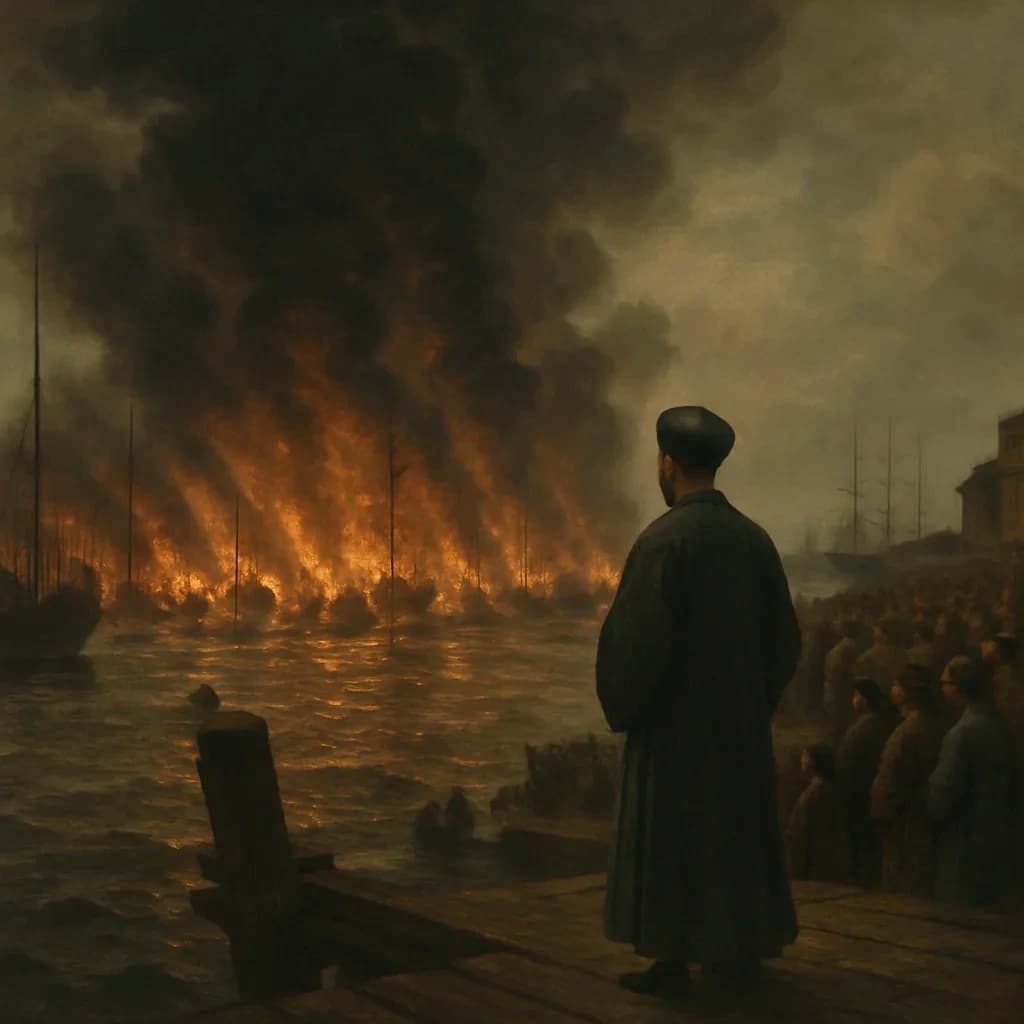
Burn the Whole Fleet: A Drug Lord's Redemption Backfires
A Scottish missionary convinced China's most powerful drug lord to burn his own fleet, and triggered the war that opened Asia to the West.
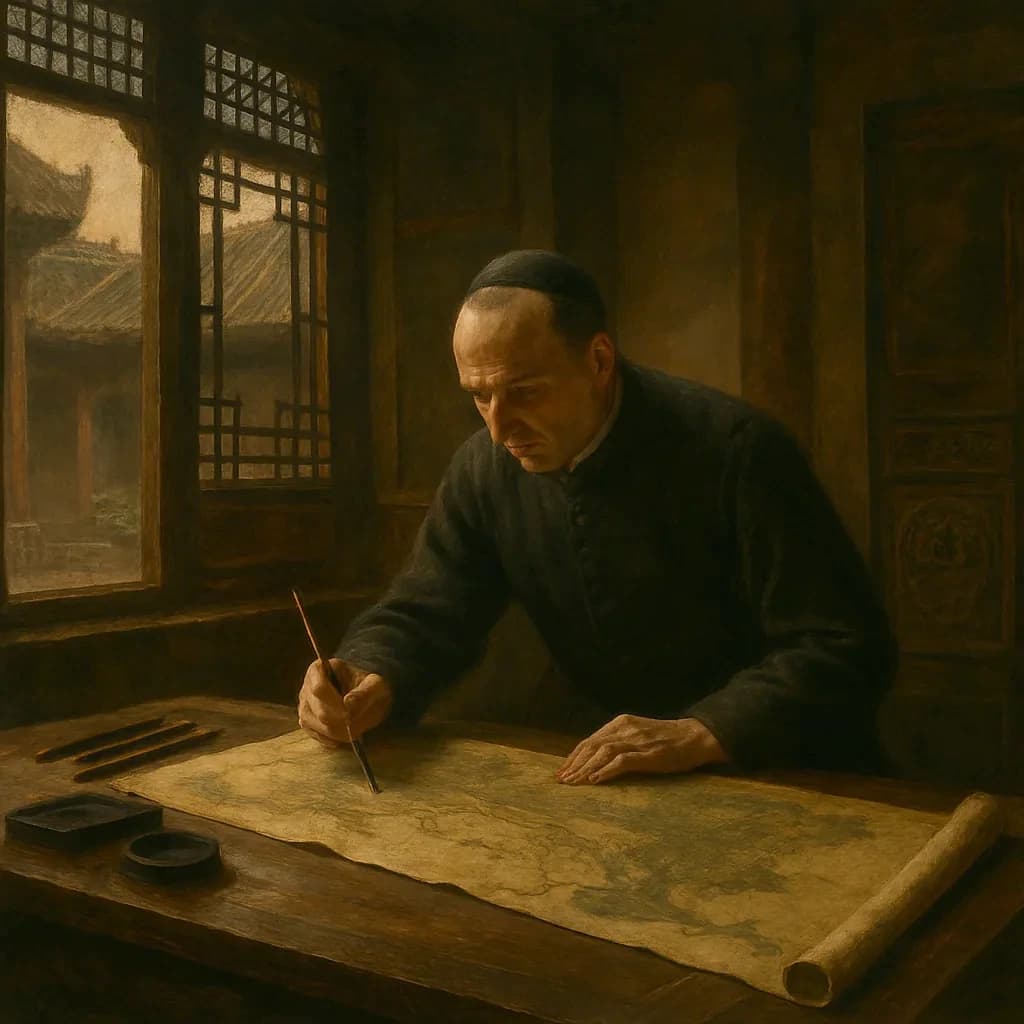
How a Jesuit's Map of China Reached Britain's Warships
A Jesuit priest's secret map of China may have helped trigger the Opium Wars.
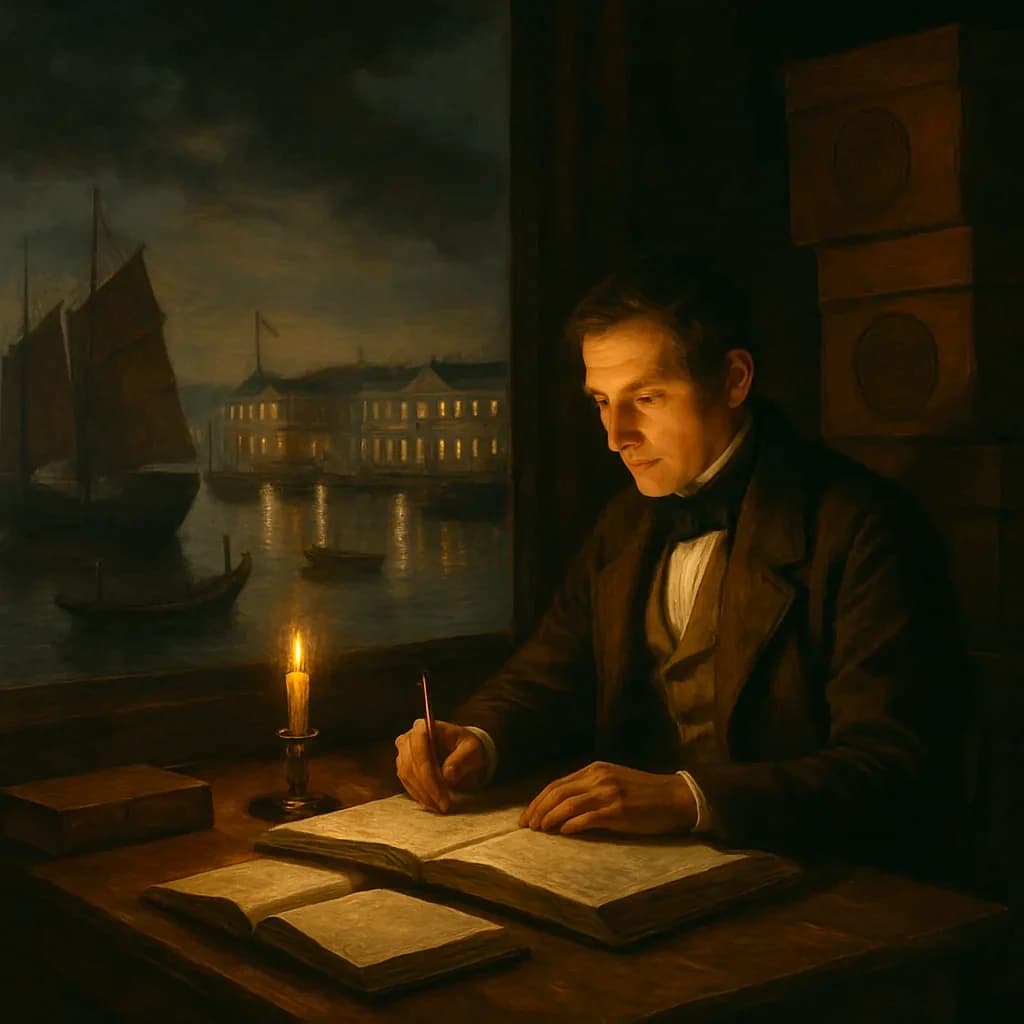
Two Ledgers Hid Britain's Secret Opium Empire
One man's meticulous bookkeeping exposed how a British trading company secretly owned China, and nobody was supposed to see the numbers.
- Chang, Hsin-pao. Commissioner Lin and the Opium War. Harvard University Press, 1964.
- Waley, Arthur. The Opium War Through Chinese Eyes. Stanford University Press, 1958.
- Zheng Yangwen. The Social Life of Opium in China. Cambridge University Press, 2005.