
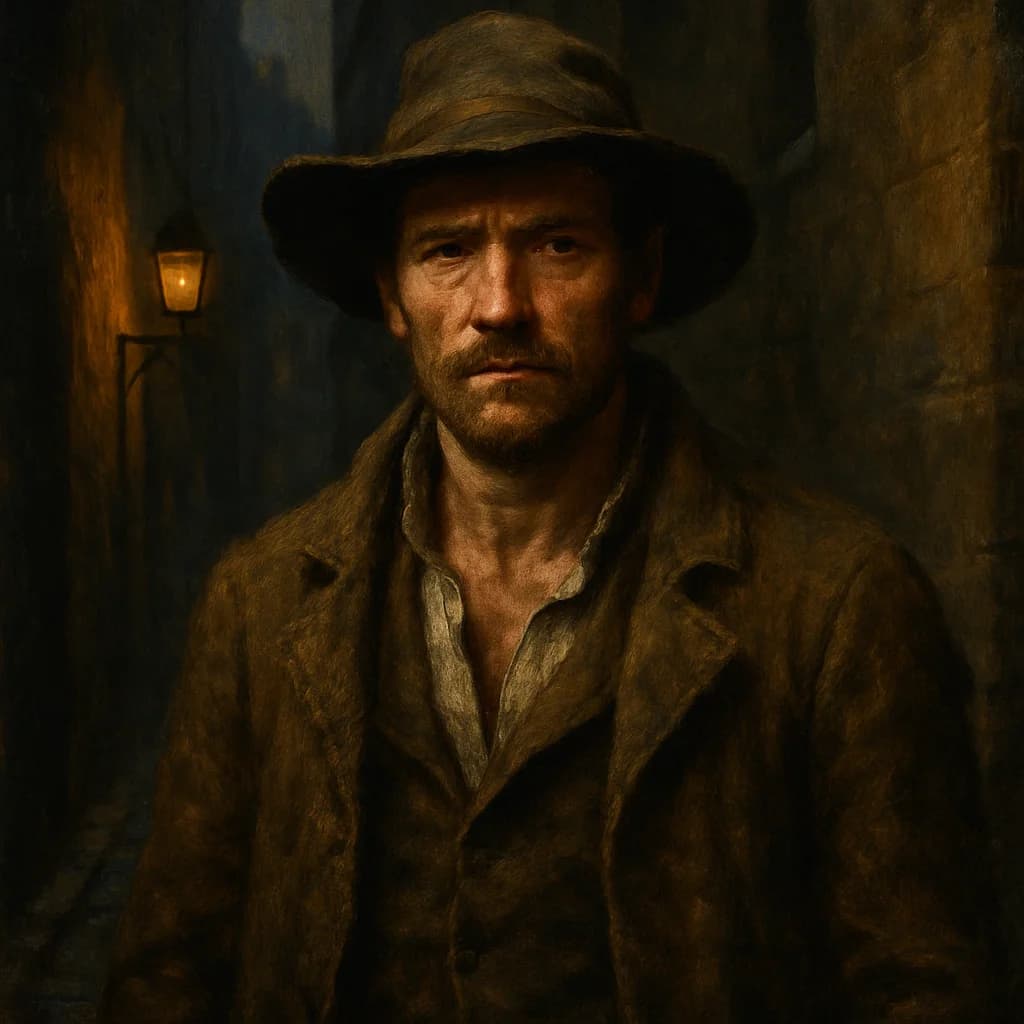
William Hare
He helped murder seventeen people, confessed to everything, and walked free. And then history lost him entirely.
William Hare arrived in Edinburgh sometime around 1800, an Irish laborer who crossed the water looking for work on the Union Canal. He found it, and when the canal was finished, he found something else: a lodging house on Tanner's Close in the West Port, run by a man named Logue. When Logue died, Hare simply stayed, eventually taking up with Logue's widow, Margaret Laird. This is how William Hare operated. He didn't build things. He moved into spaces other people vacated.
The partnership with William Burke (another Irish immigrant, a former soldier with a talent for charm) began as a practical arrangement and became something else entirely. When a lodger named Donald died of natural causes in November 1827, owing rent, Burke and Hare sold the body to the anatomist Robert Knox for seven pounds and ten shillings. The logic was clean and immediate: Knox needed cadavers, the law provided almost none, and a fresh body was worth more than Donald's entire debt. They committed their first murder the following February. Over the next ten months, they killed sixteen more people (mostly the poor, the drunk, the friendless), smothering them carefully so the bodies arrived undamaged and worth full price.
What history skims past is the deal Hare made. When the operation collapsed in November 1828 and both men were arrested, Hare turned King's Evidence against Burke. He told prosecutors everything. Every victim, every method, every payment. Burke hanged in January 1829 before a crowd of twenty-five thousand. Hare walked out of Edinburgh Jail on February 5th, a free man under the technical protections of the law, and immediately became the most hated person in Scotland. A mob followed him south toward England. He was attacked in Dumfries. He disappeared (possibly to Ireland, possibly to England, possibly under a different name) and was never reliably seen again.
There were sightings for decades. A blind beggar in London in the 1850s. A man in Belfast. A laborer in Carlisle. None confirmed. Hare had done what he always did: moved into a vacancy, this time the vacancy of his own future, and vanished clean.
Robert Knox, the anatomist who purchased at least some of the bodies, was never charged with any crime, despite the near-certainty that he recognized the corpses as murder victims rather than exhumed graves.
Why untold: Because Burke was executed and became the story, Hare (the man who escaped justice entirely and whose post-1829 life is a documented historical blank) was absorbed into Burke's shadow, his own trajectory rendered narratively inconvenient.
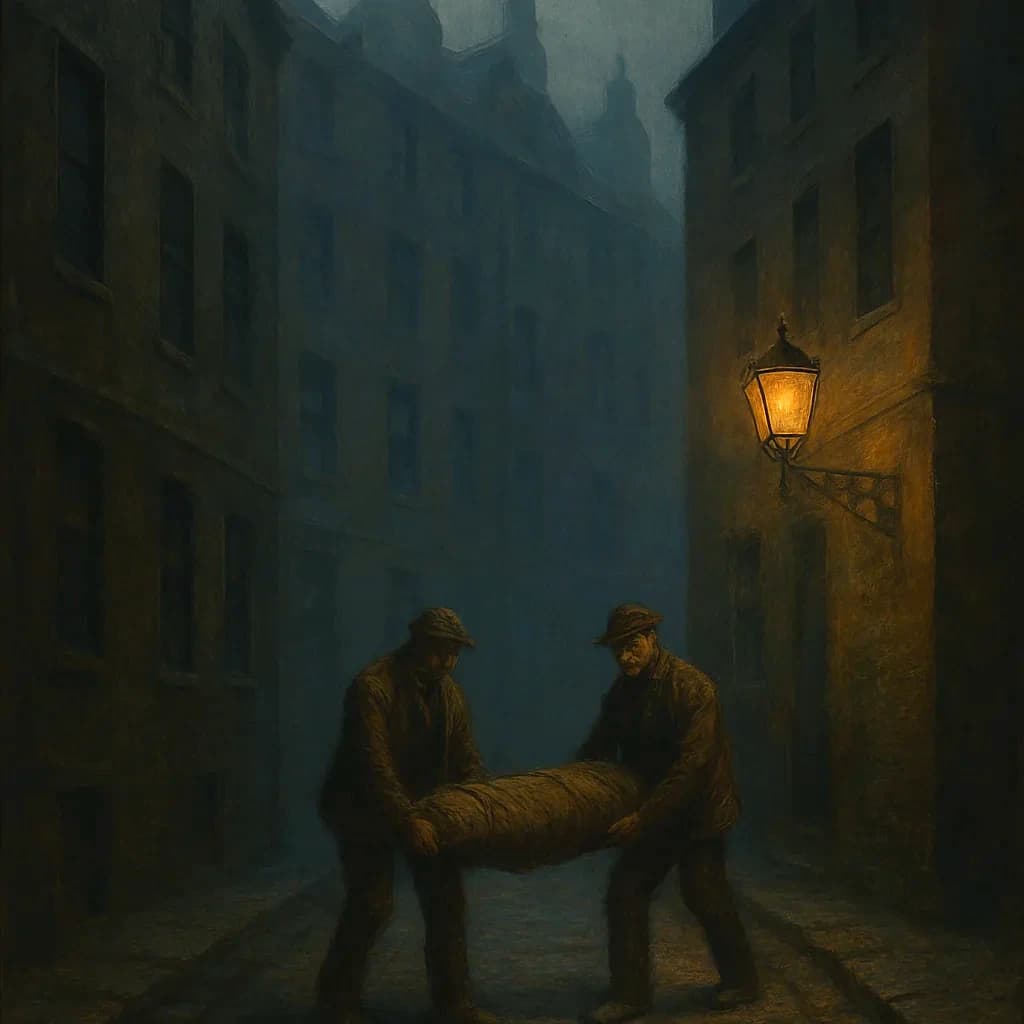
When Edinburgh's Dead Refused to Stay Buried
In 1820s Edinburgh, fresh corpses commanded higher prices than old masters, and desperate men would do anything to supply the demand.
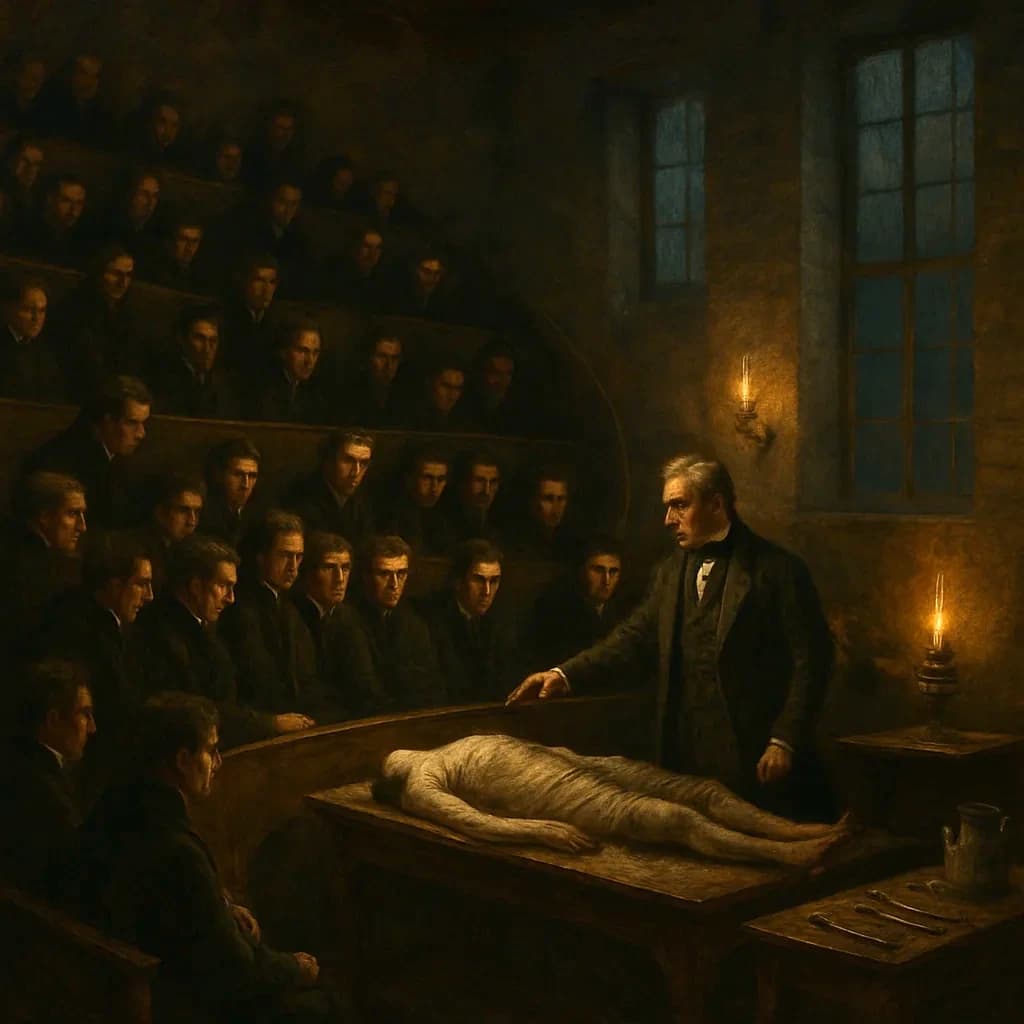
They Murdered to Fill the Dissection Table
A shortage of graves in Scotland's capital opened the most macabre business opportunity in history.
- Owen Dudley Edwards, Burke and Hare (Mercat Press, 1980)
- Lisa Rosner, The Anatomy Murders: Being the True and Spectacular History of Edinburgh's Notorious Burke and Hare (University of Pennsylvania Press, 2010)
- Brian Bailey, Burke and Hare: The Year of the Ghouls (Mainstream Publishing, 2002)