
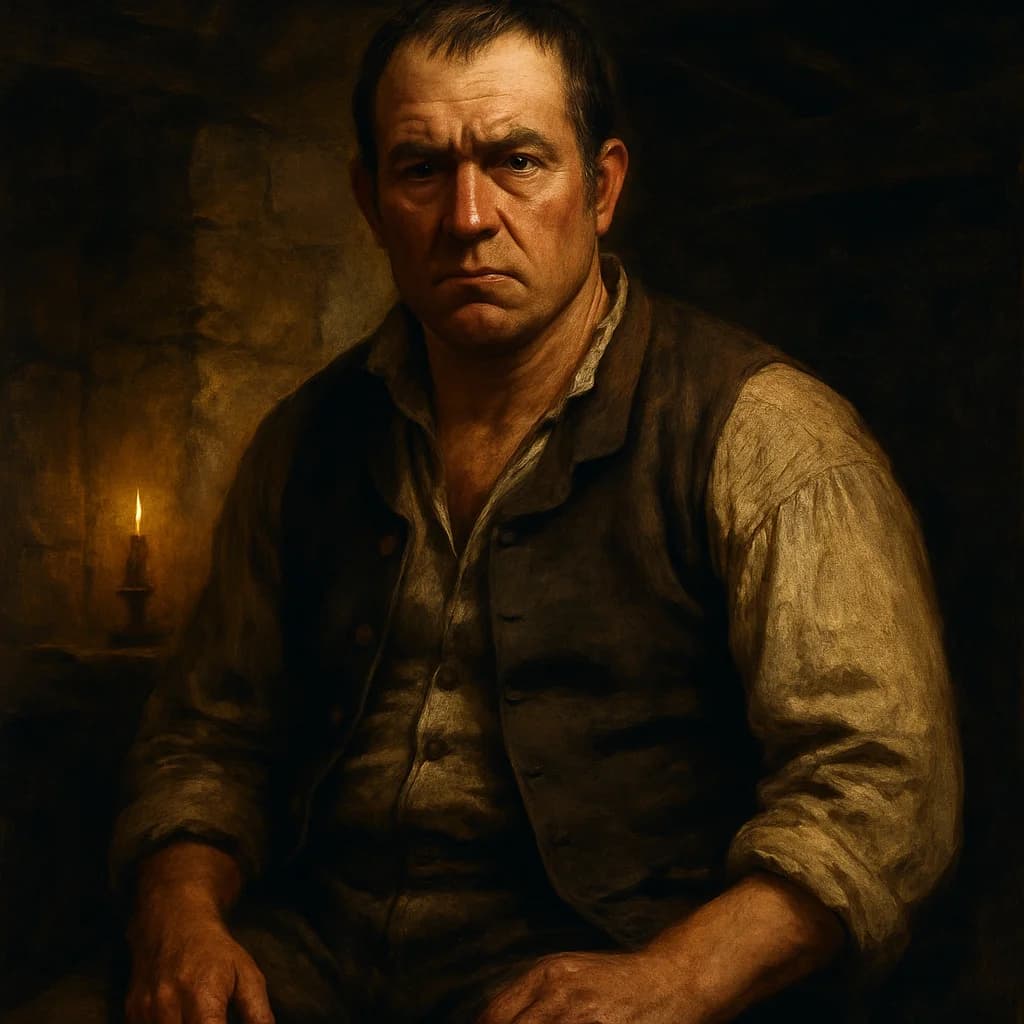
William Burke
He didn't steal corpses. That's the part everyone gets wrong.
William Burke arrived in Edinburgh around 1818 as an Irish laborer chasing canal work, the kind of man cities swallow whole and history forgets entirely. He settled in the Grassmarket, found a partner named Helen McDougal, and scraped together a living doing odd jobs and cobbling shoes. Nothing about him suggested he would end up the most infamous name in British medical history. But then, most catastrophes don't announce themselves.
The common assumption is that Burke and his partner William Hare were body snatchers, resurrectionists who dug up fresh graves to sell cadavers to Edinburgh's insatiable anatomy schools. They were not. This is the detail that makes the story so much darker. They never touched a shovel. When an elderly lodger named Donald died at Hare's boarding house in November 1827, owing back rent, the two men sold his body to the anatomist Robert Knox at Surgeon's Square for £7 and change. Clean, quick, no cemetery required. Then they noticed how simple it had been. What followed was a calculated pivot: rather than wait for the inconvenient randomness of natural death, they began manufacturing their own supply. Between 1827 and 1828, Burke and Hare killed at least sixteen people, mostly destitute Irish immigrants, prostitutes, and vagrants in the Grassmarket, people whose disappearance would generate no official inquiry. The method was suffocation by compression, later called "burking," a verb that entered the English language and outlasted both of them.
What often disappears in retellings is how specifically Edinburgh's academic economy enabled everything. Knox paid premium prices (up to £10 per body) and asked almost nothing about provenance. The city's medical schools were among the best in the world precisely because they trained on real anatomy, and real anatomy required real corpses. The legal supply, drawn from executed criminals, was nowhere near sufficient. Burke was the logical endpoint of a system that had been quietly incentivizing murder for years.
Hare turned King's evidence and walked free. Burke was hanged on January 28, 1829, before a crowd estimated at 25,000. The irony that closed the circle: his own body was publicly dissected at Edinburgh Medical College the following day, his skeleton remaining on display at the Anatomical Museum of the University of Edinburgh to this day.
The word "burking" (meaning to suppress or quietly smother something to prevent it from becoming public) entered standard English usage within years of Burke's execution and is still used in British political writing today.
Why untold: Because framing Burke as a body snatcher misclassifies what he actually was (a serial killer produced by market incentives), which lets the institutions that created those incentives, particularly Robert Knox and Edinburgh's medical establishment, escape the frame entirely.
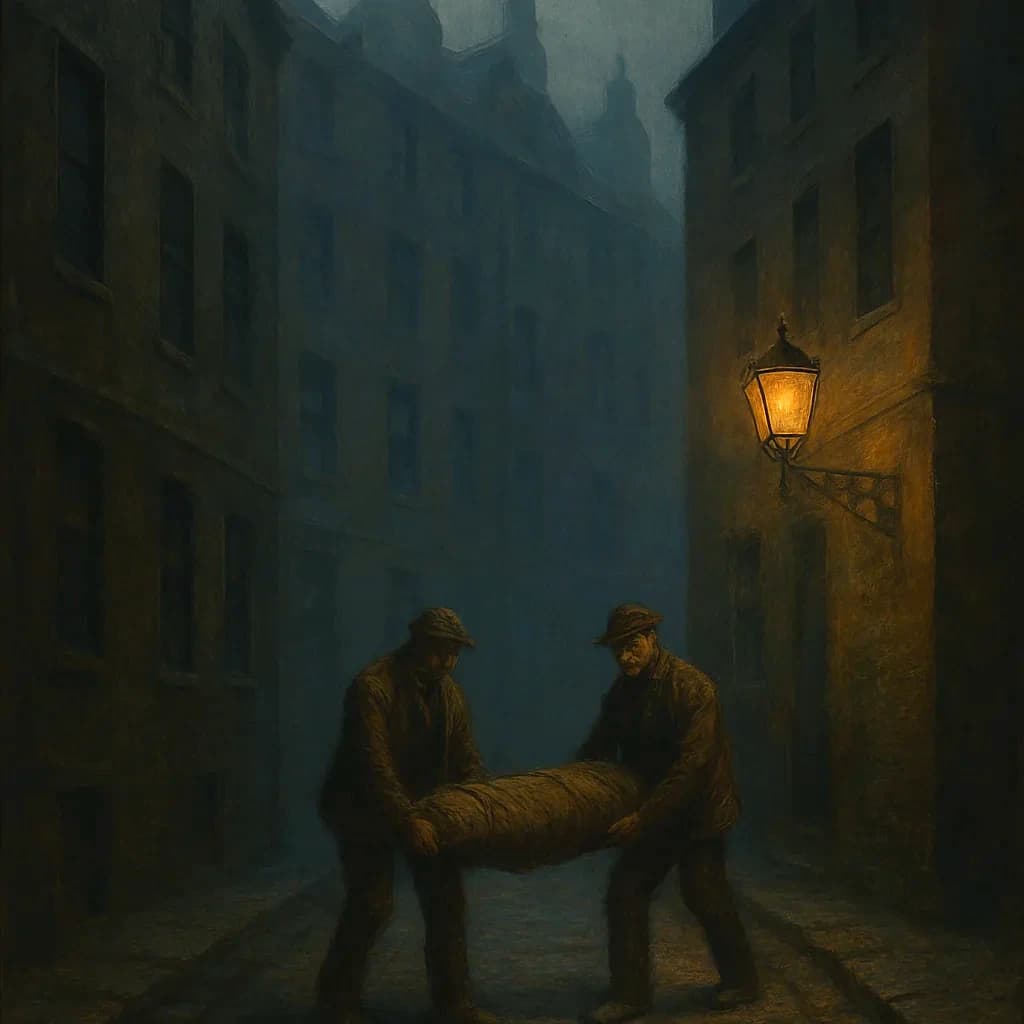
When Edinburgh's Dead Refused to Stay Buried
In 1820s Edinburgh, fresh corpses commanded higher prices than old masters, and desperate men would do anything to supply the demand.
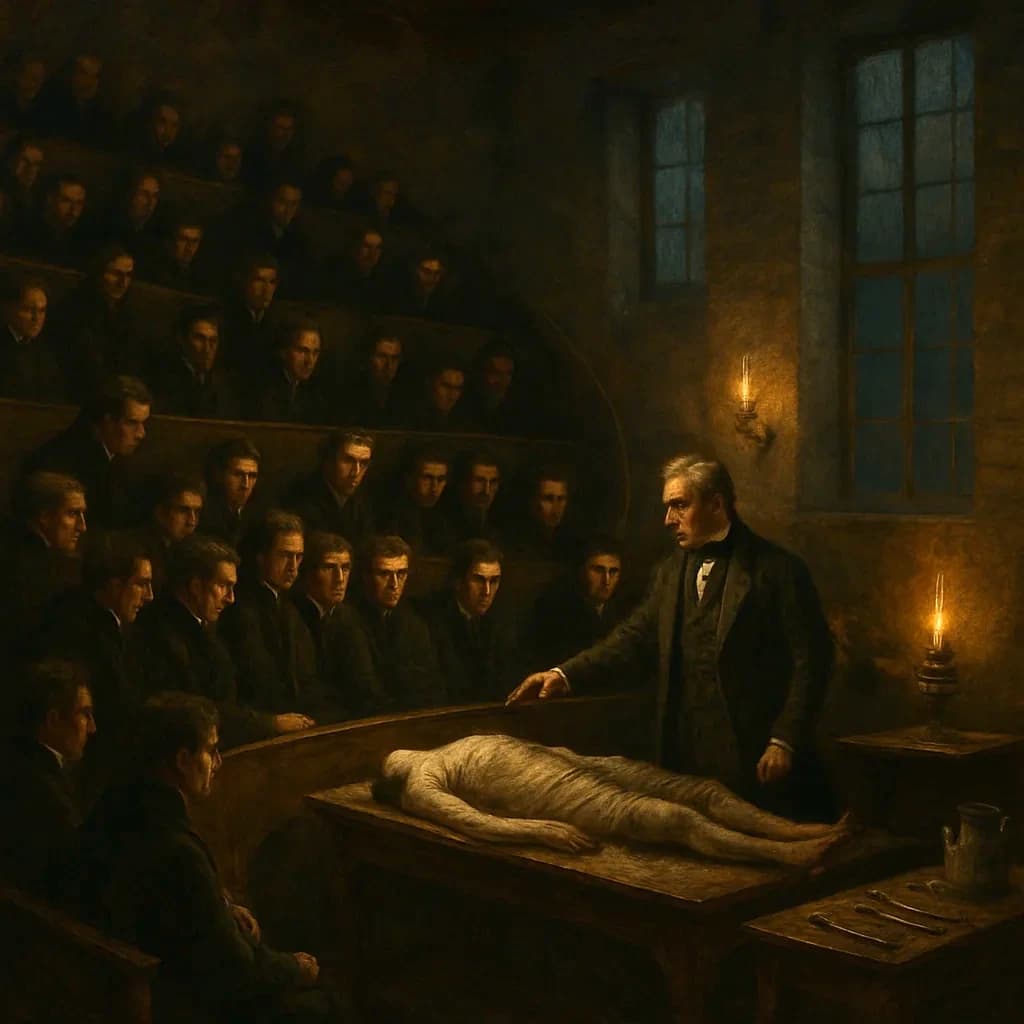
They Murdered to Fill the Dissection Table
A shortage of graves in Scotland's capital opened the most macabre business opportunity in history.
- Lisa Rosner, The Anatomy Murders: Being the True and Spectacular History of Edinburgh's Notorious Burke and Hare (University of Pennsylvania Press, 2010)
- Owen Dudley Edwards, Burke and Hare (Polygon, 1980)
- Ruth Richardson, Death, Dissection and the Destitute (University of Chicago Press, 1987)