
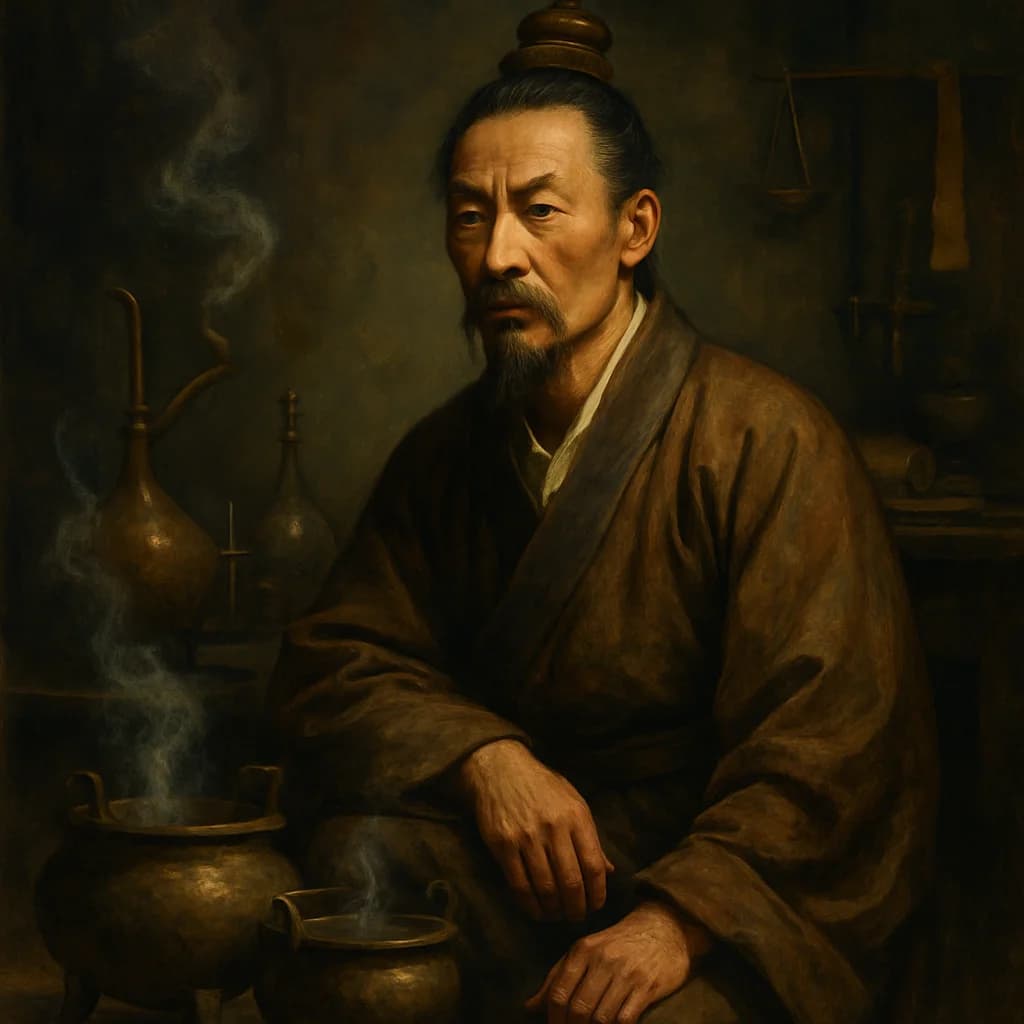
Wei Boyang
The man who accidentally invented gunpowder was trying to create a pill that would make him live forever.
Wei Boyang spent his life mixing mercury, sulfur, and saltpeter in bronze cauldrons, convinced he was on the verge of brewing immortality. A Taoist alchemist during the Han Dynasty, he believed the same forces that governed the stars could be captured in a crucible. His masterwork, the Zhouyi Cantongqi, reads like a fever dream of cosmic chemistry: equal parts astronomy, philosophy, and what we'd now recognize as primitive explosives manufacturing.
The irony would have killed him if the experiments hadn't first. Wei Boyang died testing his own elixir of life, probably from mercury poisoning, leaving behind detailed notes on combining substances that would later level cities. His followers, undeterred by their master's demise, continued his work for centuries. They called the resulting black powder "fire medicine" and used it to treat skin conditions.
Meanwhile, Wei Boyang's failed immortality serum was quietly revolutionizing warfare. Chinese military engineers discovered that his "medicine" could launch projectiles with devastating force. By 1000 CE, his accidental creation was hurling stone balls through fortress walls across Asia. European Crusaders encountered these "Chinese snow" weapons and brought the knowledge home, where it would topple feudalism itself.
Wei Boyang had sought to transcend death through alchemy. Instead, he democratized it. His quest for personal immortality became humanity's most efficient method of mass mortality.
Wei Boyang's original gunpowder recipe was written in deliberately obscure alchemical code, using planetary symbols and Taoist metaphors that took later scholars centuries to decode.
Why untold: His accidental invention of gunpowder is overshadowed by his reputation as a mystical philosopher, and most accounts focus on his theoretical writings rather than his explosive laboratory failures.
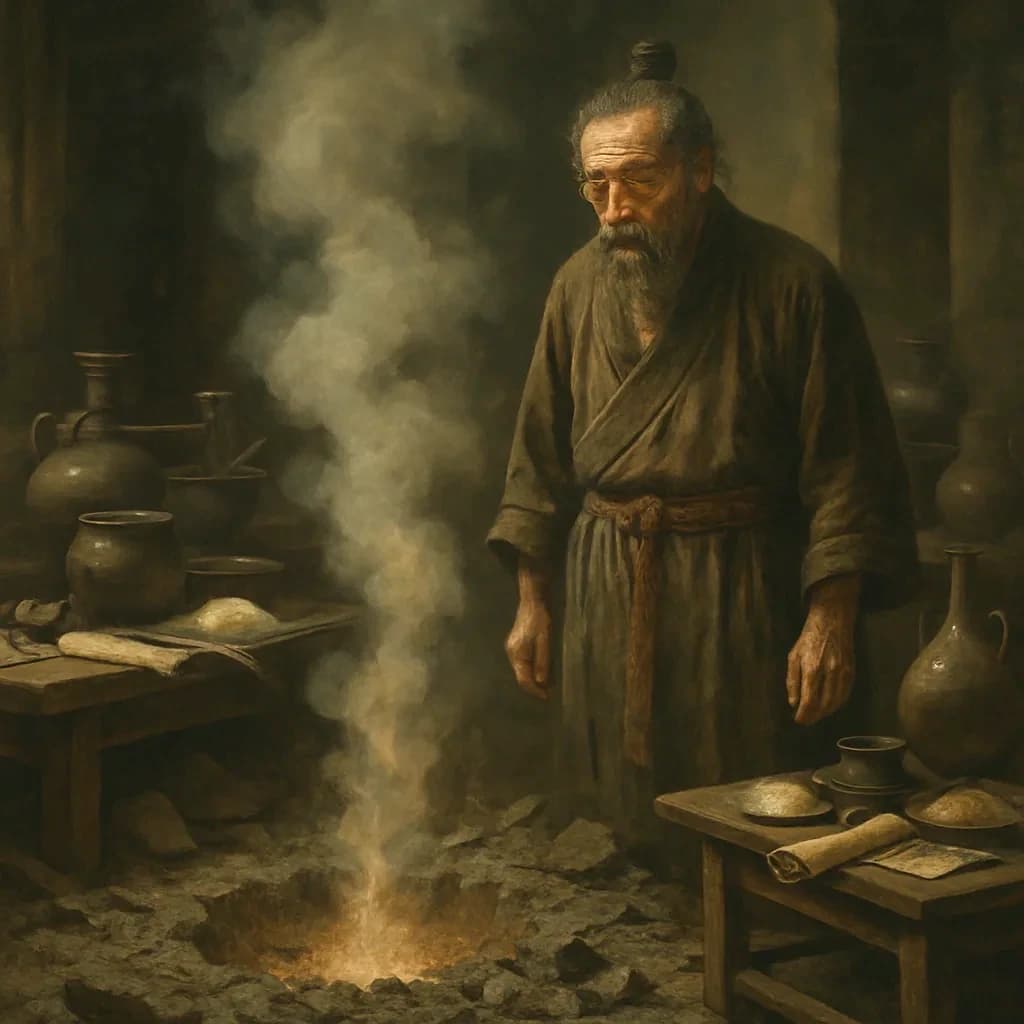
He Accidentally Invented One of History's Deadliest Weapons
A Chinese inventor's discovery accidentally created one of history's deadliest weapons, and he didn't even know what fire was for.
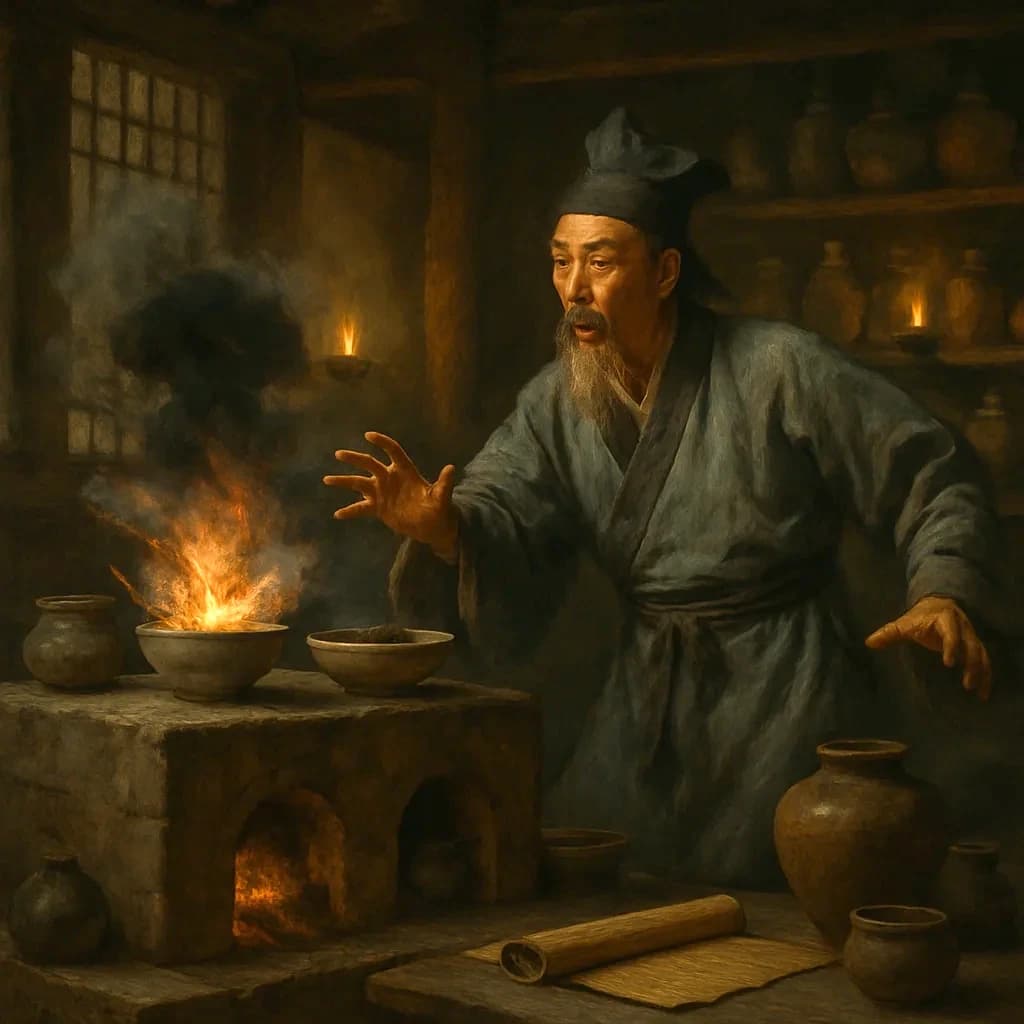
How a Botched Immortality Potion Toppled Castle Walls
A Chinese alchemist's failed bid for immortality handed European soldiers the power to bring down any castle wall.
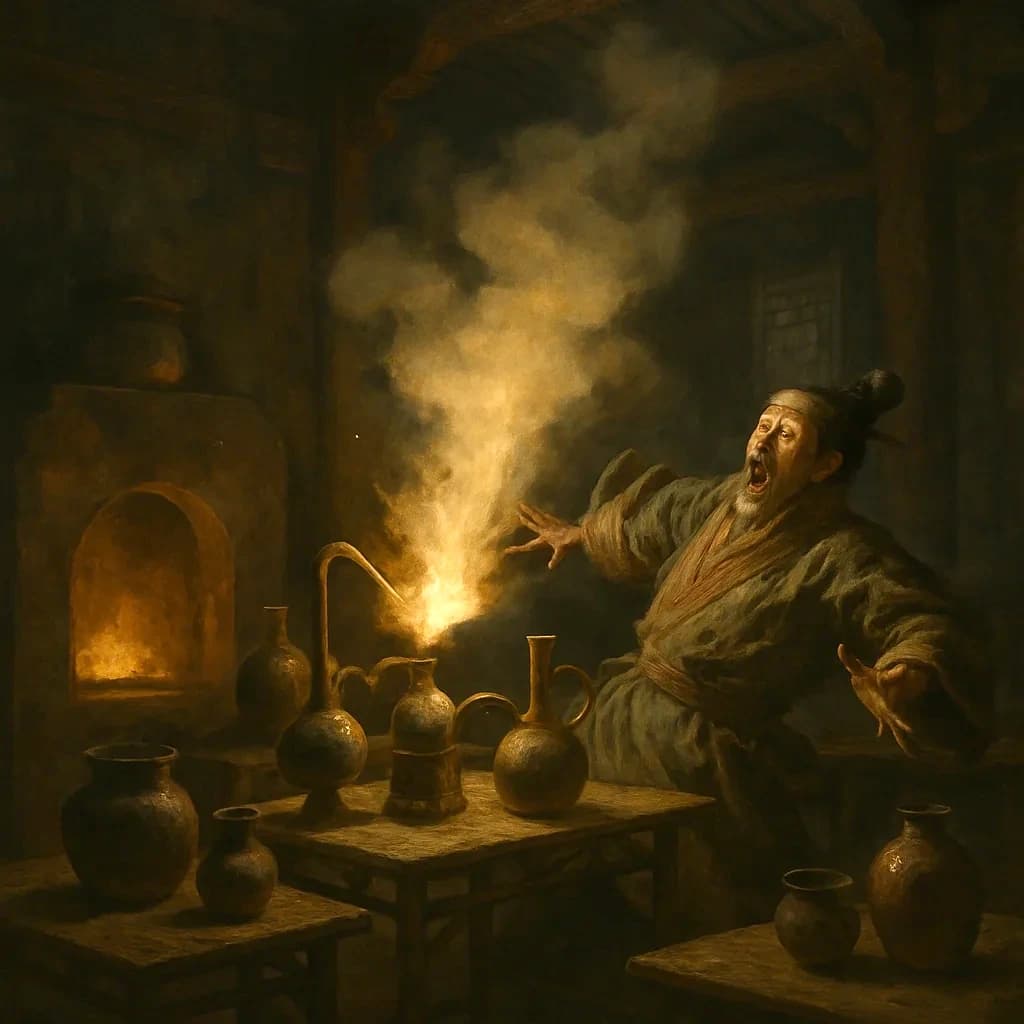
Chasing Immortality, He Brewed Gunpowder Instead
A Chinese emperor's desperate hunt for an immortality elixir produced the most destructive substance the ancient world had ever known.
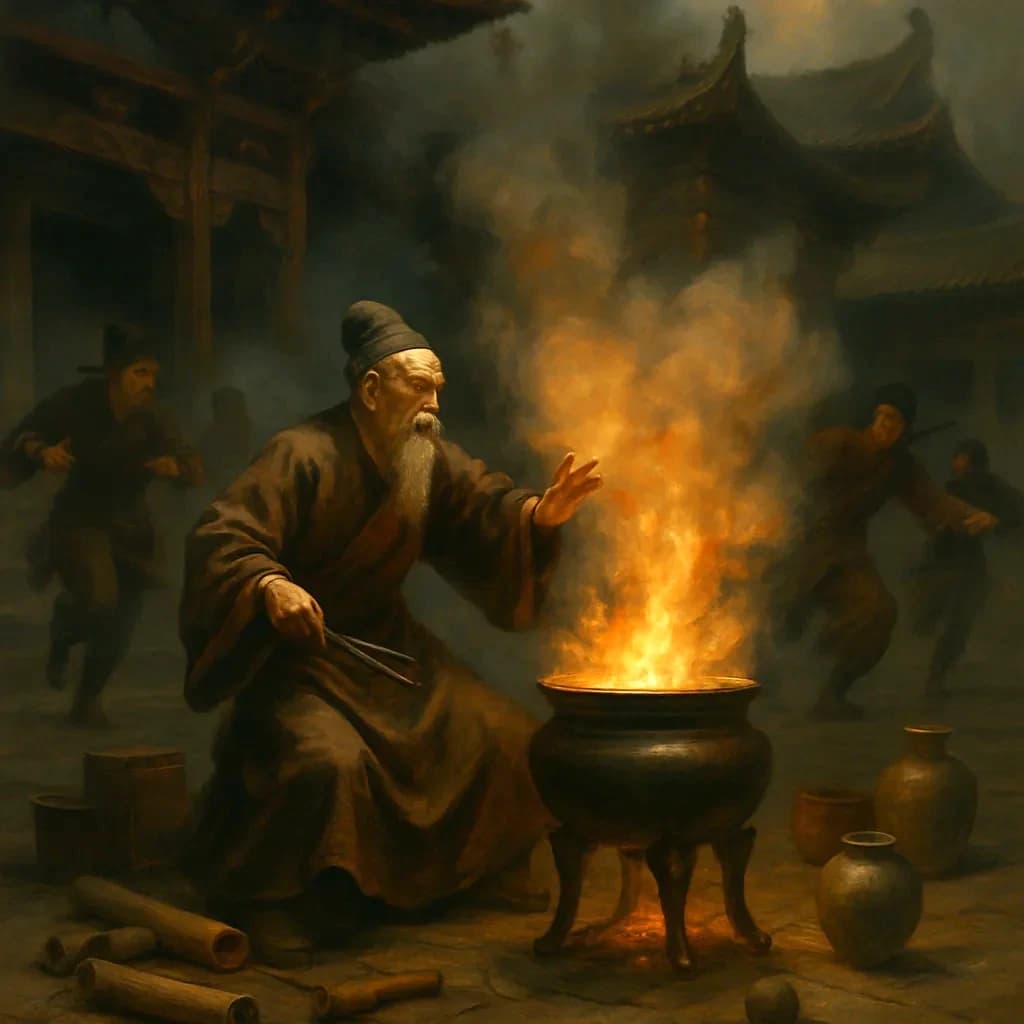
Searching for Immortality, He Invented Gunpowder
A Chinese alchemist's quest for immortality created the deadliest substance on Earth. And nobody realized it for a thousand years.
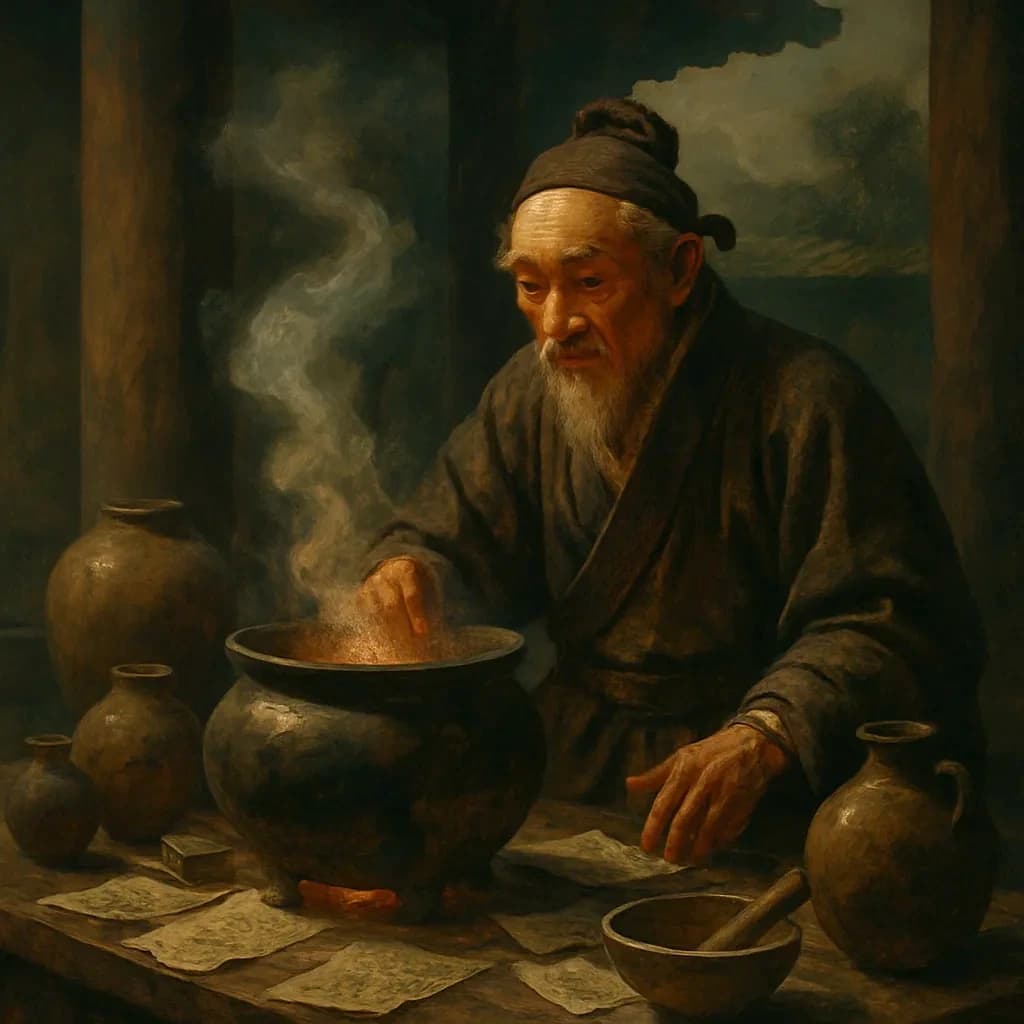
The Deadliest Weapon's Inventor Died Trying to Destroy It
The most destructive weapon in human history was invented by accident, and the inventor died trying to destroy his own formula.
- Needham, Joseph. Science and Civilisation in China, Volume 5: Chemistry and Chemical Technology
- Pregadio, Fabrizio. The Encyclopedia of Taoism
- Kelly, Jack. Gunpowder: Alchemy, Bombards, and Pyrotechnics