
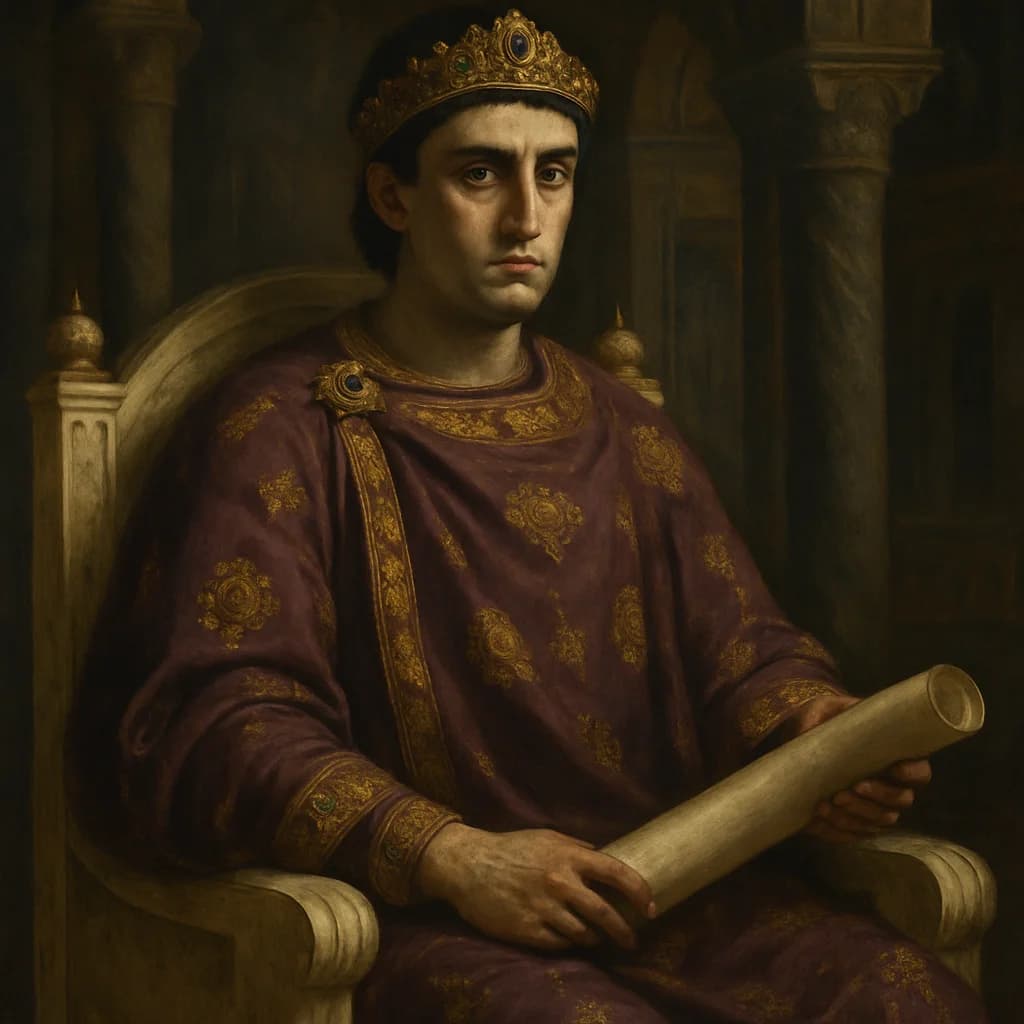
Theodosius II
The emperor who ruled for nearly half a century never won a single battle, yet his reign may have been the most consequential in late Roman history.
Theodosius II inherited the Eastern Roman throne at age seven in 408 CE, and for the next 42 years, he perfected the art of imperial survival through what his contemporaries mockingly called cowardice. While his Western counterparts burned through emperors like kindling, Theodosius mastered something far more valuable than military glory: the economics of appeasement.
His defining moment came in 447 CE when Attila the Hun arrived at Constantinople's gates demanding tribute. Instead of mounting a heroic last stand, Theodosius opened the imperial treasury and paid: 6,000 pounds of gold annually, plus a massive one-time payment that bankrupted the state. His courtiers were horrified. His people were humiliated. But Theodosius understood something they didn't: gold could buy what armies couldn't. Time.
While he hemorrhaged money to barbarians, Theodosius quietly revolutionized the empire from within. He commissioned the Theodosian Code, the first systematic compilation of Roman law that would influence legal systems for centuries. He fortified Constantinople with walls so impressive they wouldn't fall until 1453. Most crucially, he transformed the empire's economy from one dependent on military conquest to one based on trade, taxation, and, ironically, the very tribute payments that seemed to humiliate him.
When Theodosius died in 450 CE, falling from his horse during a hunting accident, he left behind an empire that had learned to survive through wealth rather than warfare. His tribute payments had accidentally created the financial infrastructure that would sustain Byzantium for another thousand years, proving that sometimes the most effective imperial strategy is knowing when not to fight.
Theodosius II's tribute payments to Attila were so enormous that they required the empire to melt down imperial statues and church ornaments to meet the gold quotas.
Why untold: His reign is overshadowed by the more dramatic military campaigns of his contemporaries, making his economic innovations appear as mere footnotes to barbarian diplomacy.
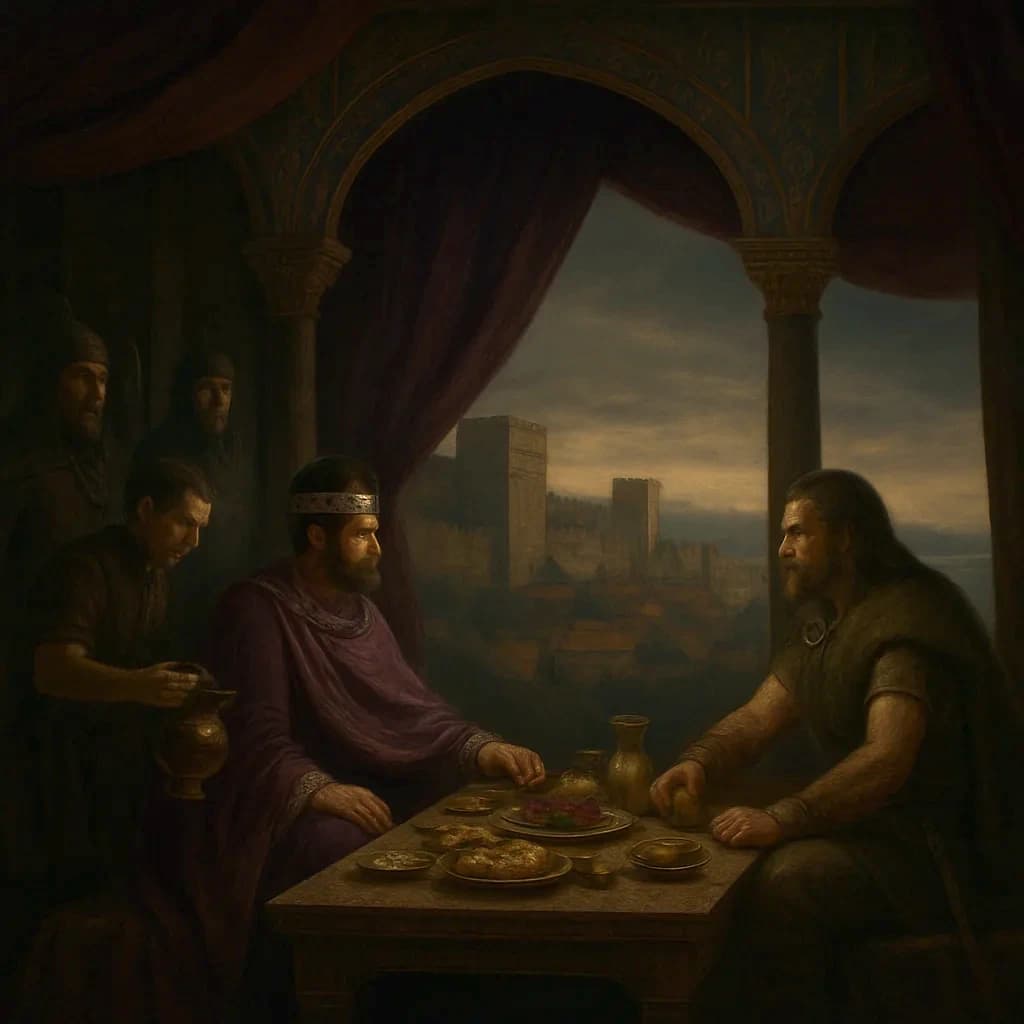
A Desperate Dinner Invitation Invented Modern Diplomacy
A Byzantine emperor's desperate dinner invitation to a barbarian king accidentally created the template for modern European diplomacy.
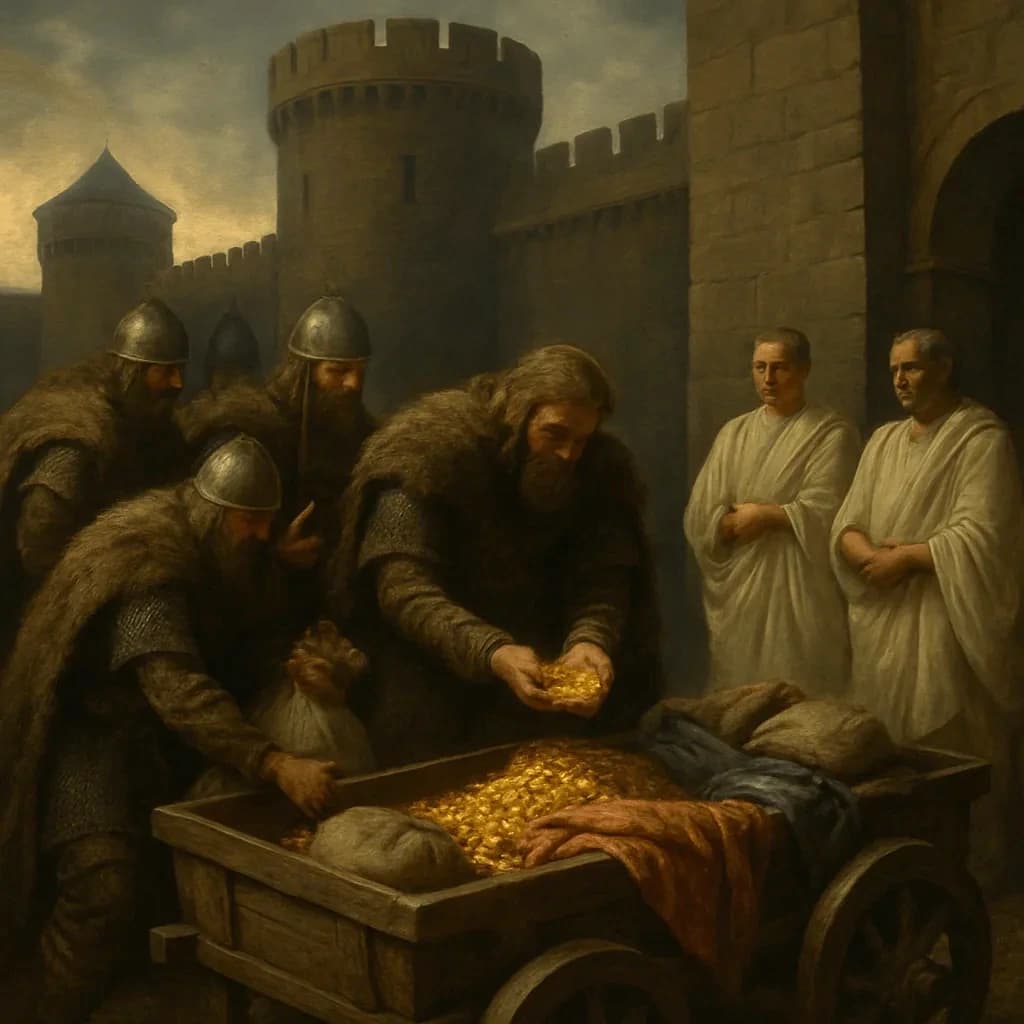
A Barbarian's Ransom Demand Accidentally Funded the Byzantine Empire
A barbarian king's ransom demand accidentally created the economic foundation of the Byzantine Empire.
- Blockley, R.C. 'East Roman Foreign Policy: Formation and Conduct from Diocletian to Anastasius.' Leeds: Francis Cairns, 1992.
- Kelly, Christopher. 'Attila the Hun: Barbarian Terror and the Fall of the Roman Empire.' London: Bodley Head, 2008.
- Millar, Fergus. 'A Greek Roman Empire: Power and Belief under Theodosius II.' Berkeley: University of California Press, 2006.