
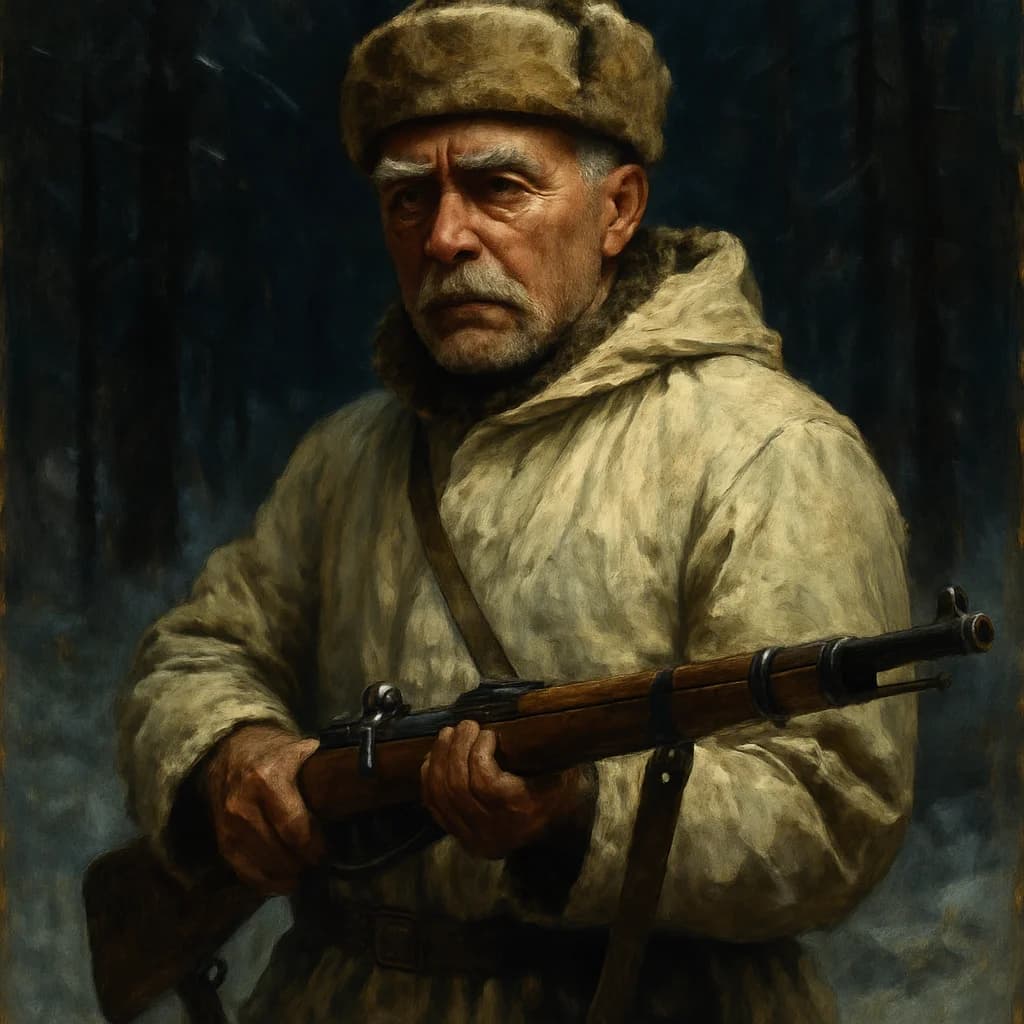
Simo Häyhä
The deadliest sniper in military history never owned a telescopic sight and preferred dairy farming to killing.
Simo Häyhä milked cows at 4 AM every morning for twenty years before the Soviet Union invaded Finland in November 1939. The 34-year-old farmer stood barely five feet tall and had spent his adult life perfecting two skills: marksmanship at his local shooting club and animal husbandry on his small farm in Rautjärvi. When war came to the forests of Karelia, he simply applied the same methodical precision to human targets that he'd used to measure milk yields.
What made Häyhä extraordinary wasn't his kill count (though 505 confirmed sniper kills in 100 days remains unmatched) but his complete rejection of military convention. He refused telescopic sights, knowing they would fog in subzero temperatures and catch sunlight. Instead, he used iron sights and packed snow in his mouth to prevent his breath from forming visible vapor clouds. While Soviet snipers hunted from trees and bunkers, Häyhä dug shallow depressions in the snow, sometimes lying motionless for hours in temperatures that reached -40°F. His targets never knew where the shots came from.
The Soviets called him "White Death" and deployed counter-snipers, artillery barrages, and even aerial bombing to kill him. On March 6, 1940, an explosive bullet finally found its mark, shattering Häyhä's jaw and left cheek. He awakened from a coma eleven days later, on the same day the Winter War ended. The farmer who had terrorized an entire army returned to milking cows and breeding hunting dogs, rarely speaking about his hundred days in the snow.
Häyhä lived until 2002, spending sixty-two years after the war as a quiet rural gentleman who grew prize-winning cucumbers and avoided photographers. He never wrote a memoir.
Häyhä's rifle had no name or special modifications. It was a standard-issue Mosin-Nagant that he'd practiced with at his shooting club, and he chose it specifically because he knew exactly how it performed in cold weather.
Why untold: Military historians focus on his kill count rather than examining how a subsistence farmer's daily routines translated into the most effective guerrilla tactics of the Winter War.
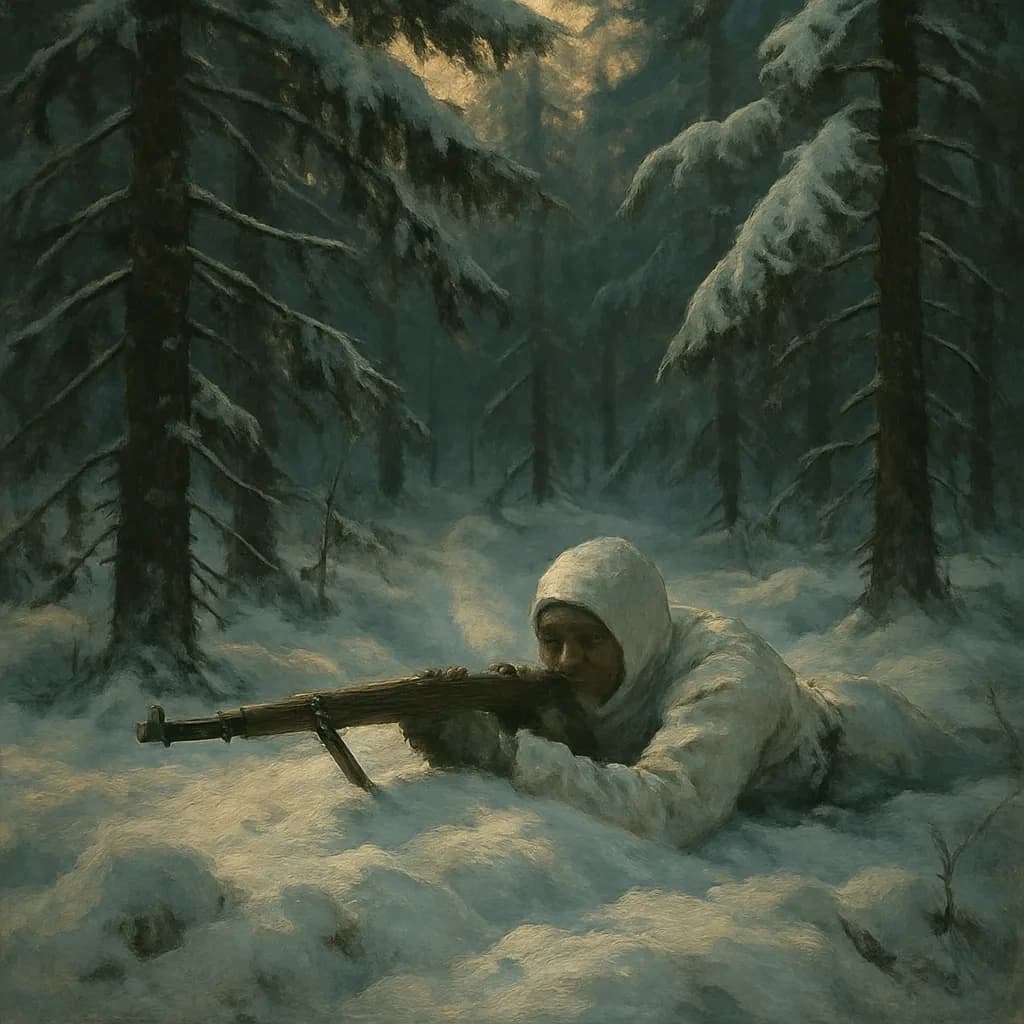
White Death: A Finnish Farmer's 542 Confirmed Kills
A Finnish machine gunner spent over a week alone with a hundred Soviet corpses in 1942, waiting for someone to remember he existed.
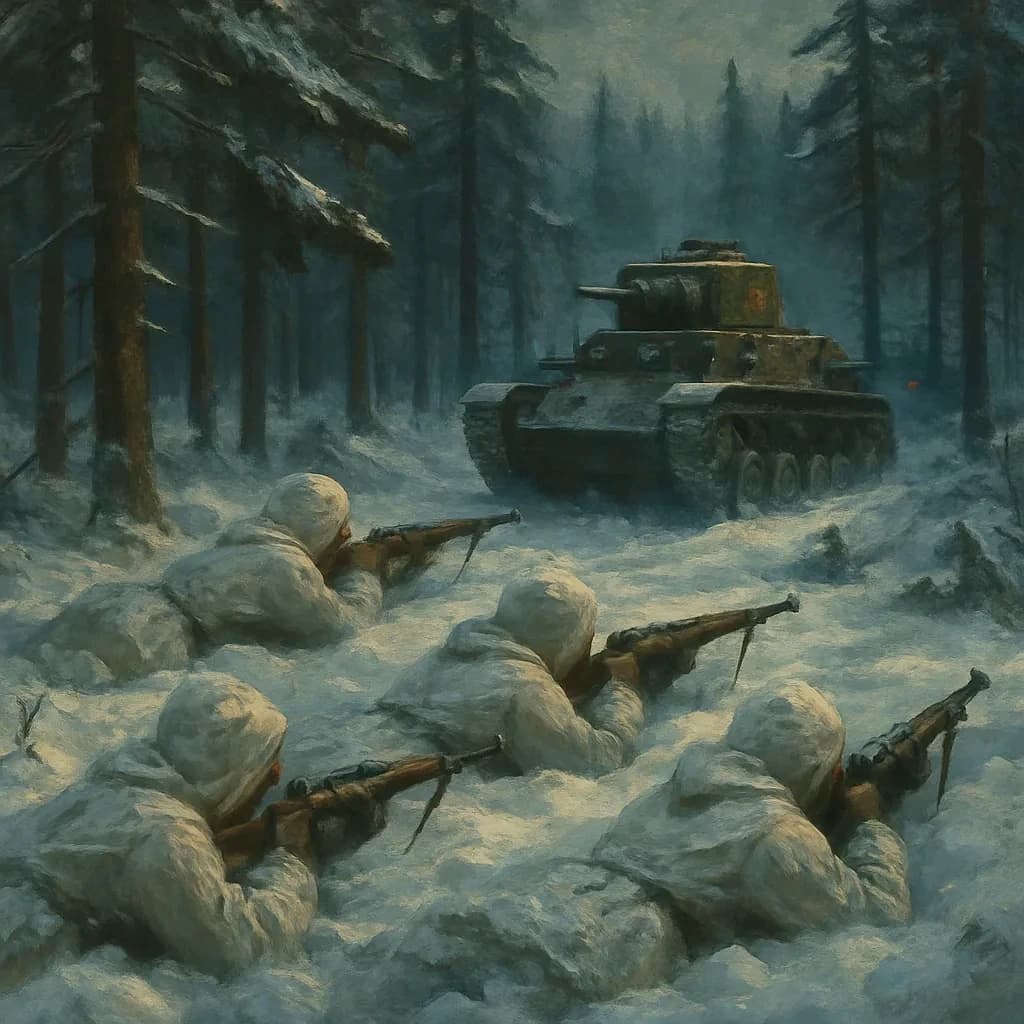
A Parish Priest Caused Military History's Most Embarrassing Defeat
A parish priest picked up a rifle on December 6, 1939, and accidentally created one of military history's most embarrassing defeats.
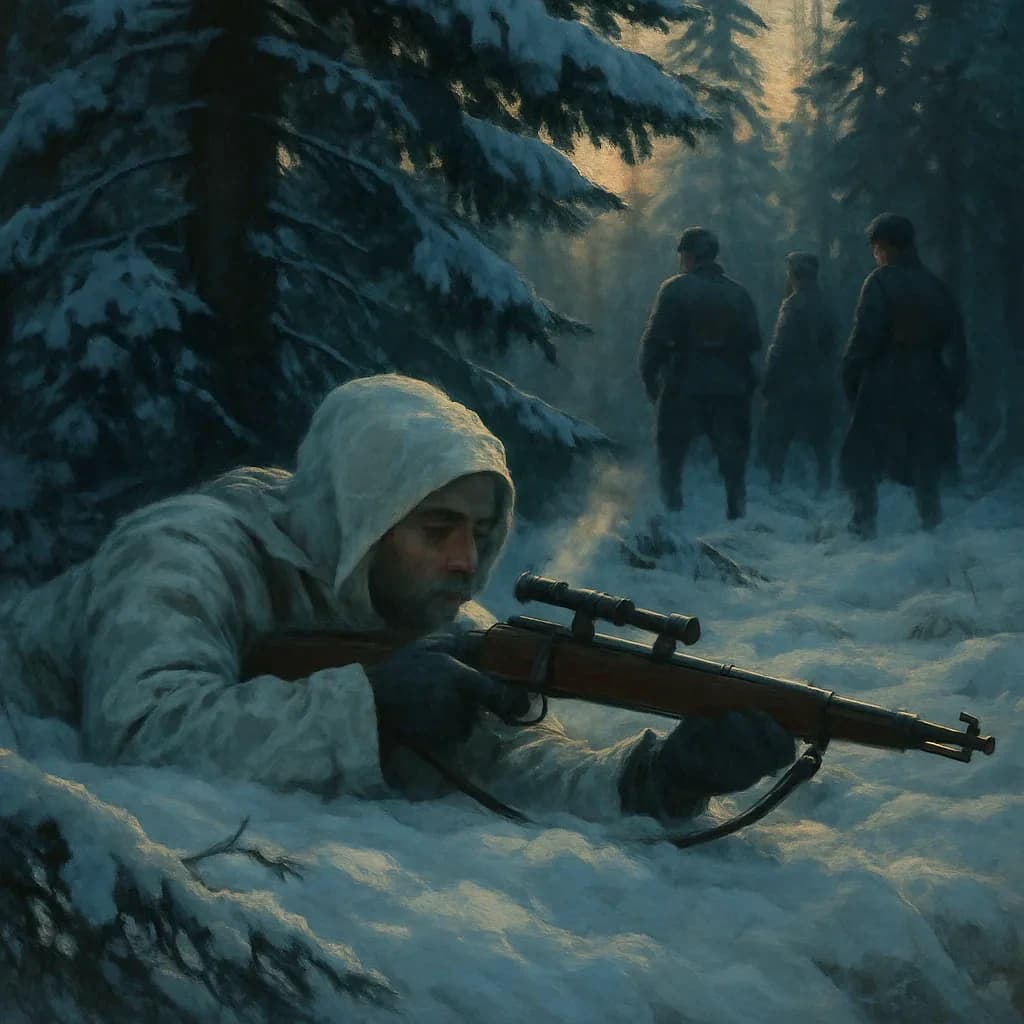
A Deserter Became History's Deadliest Marksman
In the frozen forests of Finland, one man's betrayal became the deadliest marksmanship in history.
- Tapio Saarelainen, 'The White Sniper: Simo Häyhä' (Casemate Publishers, 2016)
- Allen F. Chew, 'The White Death: The Epic of the Soviet-Finnish Winter War' (Michigan State University Press, 1971)
- Finnish Military Archives, Winter War Records, Simo Häyhä Service File