
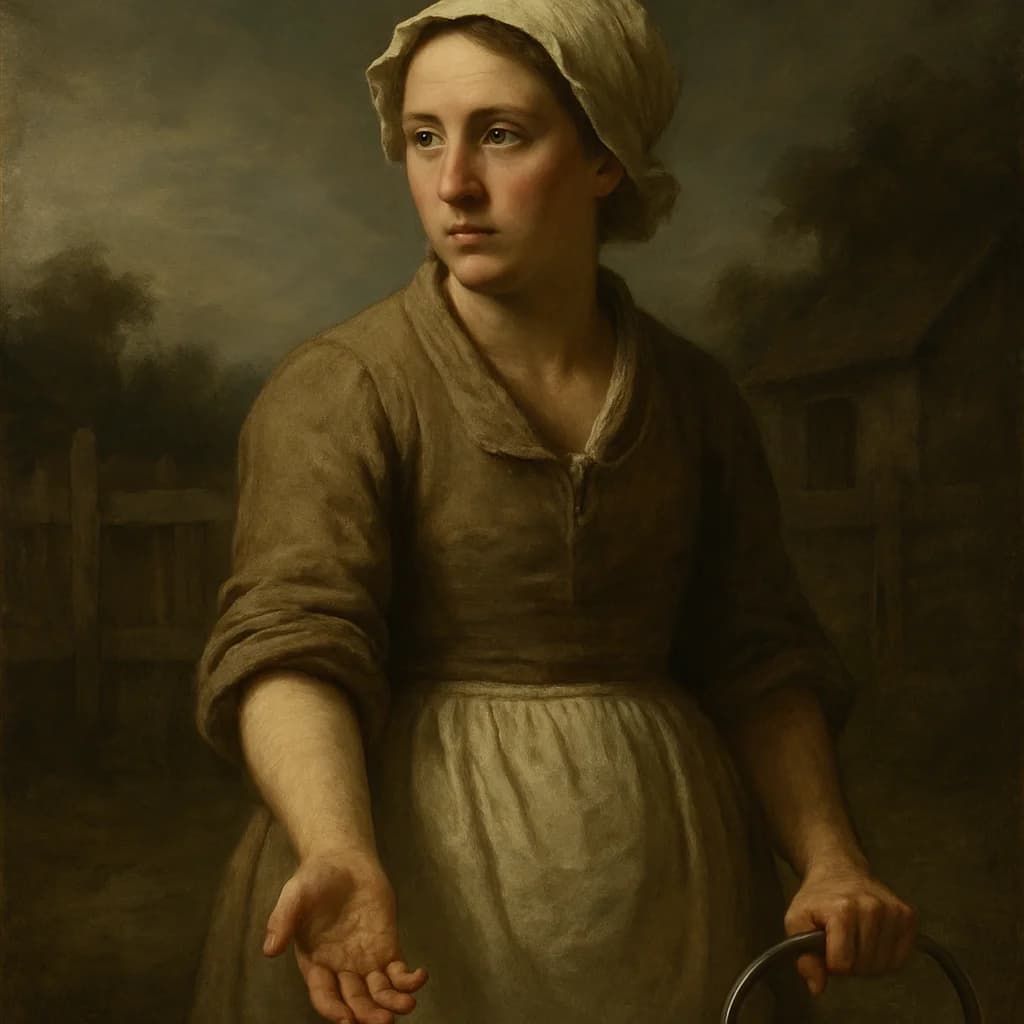
Sarah Nelmes
She didn't volunteer, didn't consent, and didn't know she was about to save hundreds of millions of lives.
In the spring of 1796, Sarah Nelmes walked into Edward Jenner's surgery in Berkeley, Gloucestershire, with a rash on her hand and nothing more pressing on her mind than getting it looked at. She was a milkmaid. The rash was cowpox, contracted from a Gloucester cow named Blossom. Within days, Jenner had scraped fluid from Sarah's lesions and introduced it into the arm of an eight-year-old boy named James Phipps. That was the experiment. Sarah wasn't it. She was the supply line.
This is what tends to get lost. Jenner is the doctor. Phipps is the child who proved the theory. Sarah Nelmes is the footnote who actually carried the material that changed everything. Her hand, her lesions, her accidental infection: these were the biological raw ingredient without which the first vaccination simply doesn't happen. Jenner documented her in his 1798 paper, *An Inquiry into the Causes and Effects of the Variolae Vaccinae*, complete with an engraving of her infected hand. She exists in the historical record primarily as an illustration. A labeled diagram.
Almost nothing else is known about her life. She doesn't appear in subsequent accounts of Jenner's work. She left no letters, no diary, no record of whether she understood what had been done with her pustules or what it eventually meant. The cow Blossom, by contrast, has a preserved hide hanging in the St George's medical school library in London. The hide made it. Sarah, the person the hide infected, did not.
What we can say is this: the entire architecture of modern immunology (the eradication of smallpox declared by the WHO in 1980, the vaccines that followed across two centuries, the framework of deliberately introduced immunity) ran its first successful proof of concept through her hand. She was probably in her twenties. She was doing her job. She went home.
The cow Blossom, whose cowpox infected Sarah Nelmes and provided the material for the world's first vaccine, has her hide preserved and displayed at St George's, University of London, while Sarah herself has no known grave marker, portrait, or surviving personal records.
Why untold: Jenner's paper documented Sarah Nelmes as a medical specimen rather than a person, and the subsequent canonization of Jenner as sole hero of vaccination left no institutional or narrative incentive to recover her individual identity from the archive.
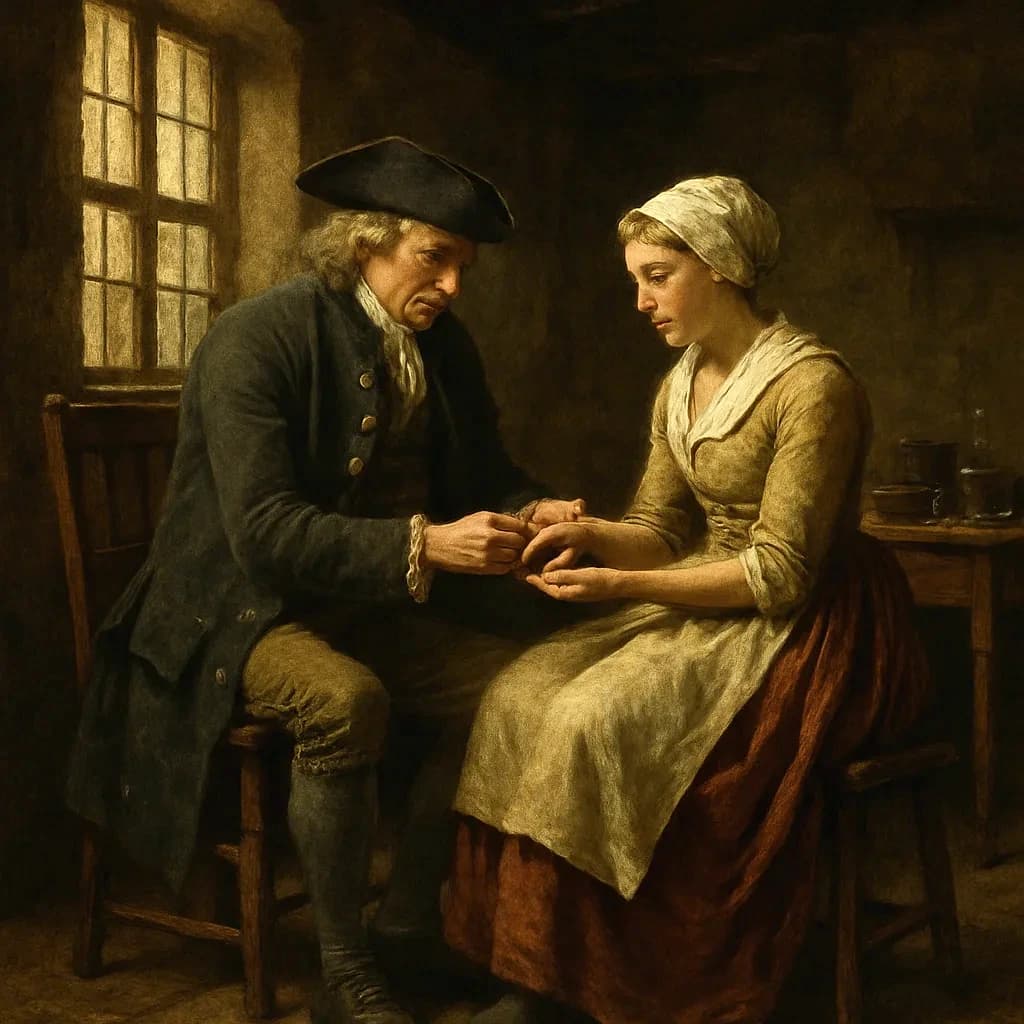
Jenner's Vaccine: How Curing Smallpox Made Wars Deadlier
A country doctor in 1796 discovered the one thing that terrified both sides of every war.
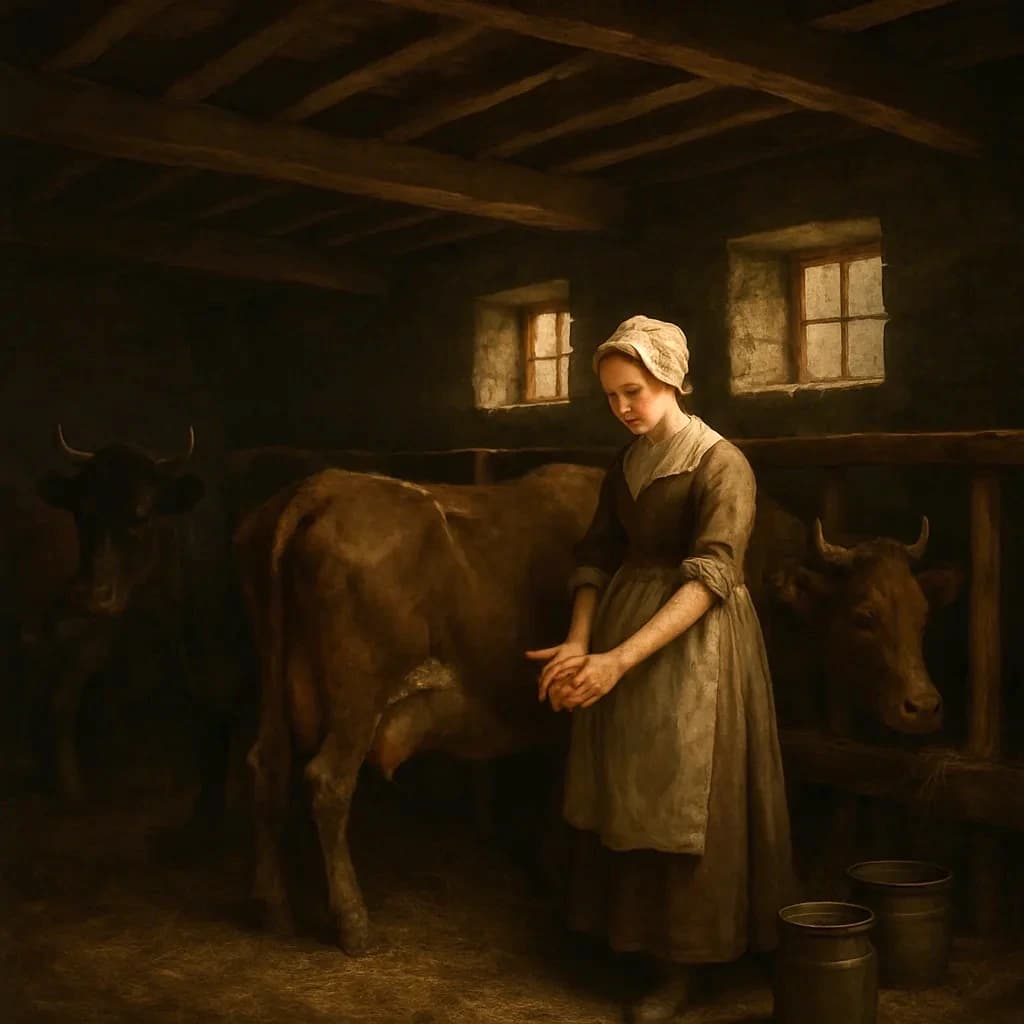
A Teenage Milkmaid Discovered How to Conquer Smallpox
A teenage girl in Gloucestershire accidentally discovered the secret to conquering smallpox, but nobody believed her for twenty years.
- Jenner, Edward. An Inquiry into the Causes and Effects of the Variolae Vaccinae. London: Sampson Low, 1798.
- Riedel, Stefan. 'Edward Jenner and the History of Smallpox and Vaccination.' Baylor University Medical Center Proceedings 18, no. 1 (2005): 21-25.
- Pead, Patrick J. 'Benjamin Jesty: New Light in the Dawn of Vaccination.' The Lancet 362, no. 9401 (2003): 2104-2109.