
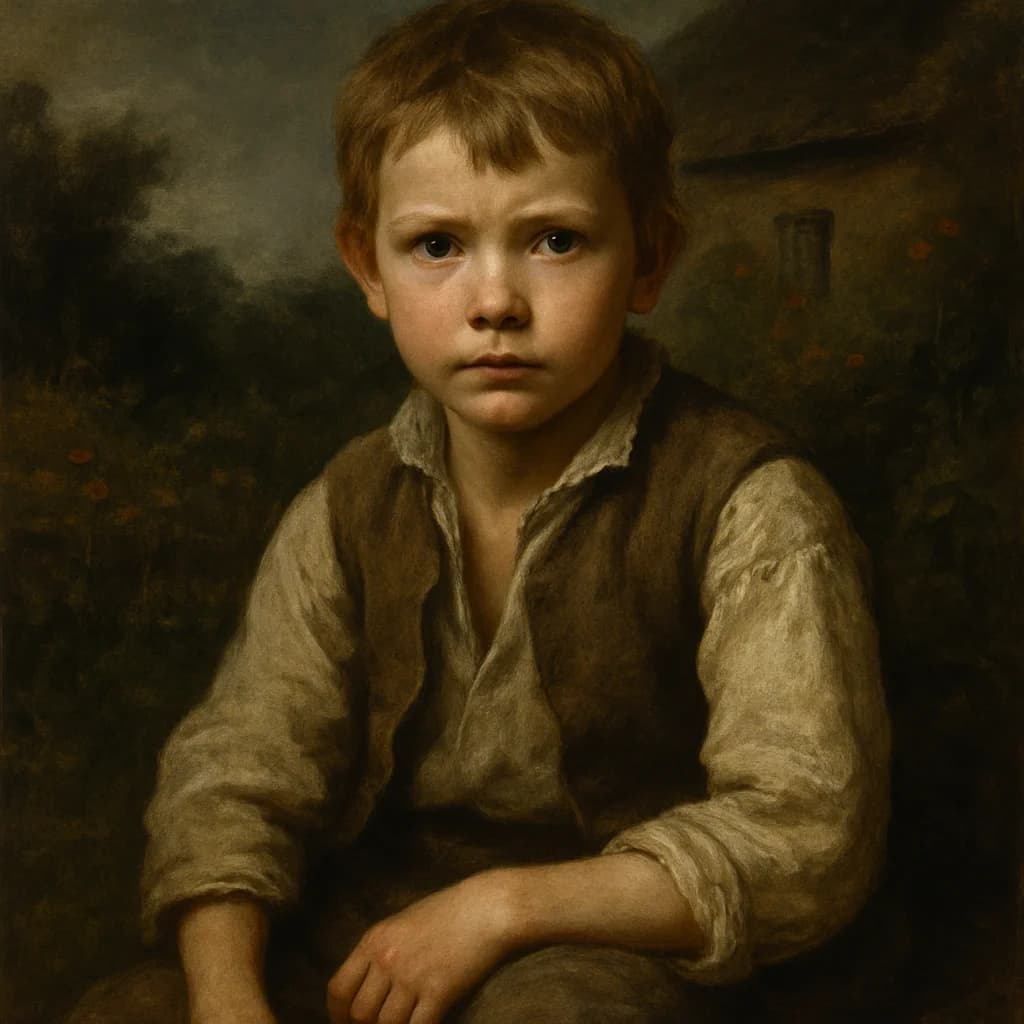
James Phipps
He was eight years old when a doctor infected him with disease on purpose, and history never bothered to learn what became of him.
On May 14, 1796, a boy named James Phipps sat in a garden in Berkeley, Gloucestershire, and let Edward Jenner scratch his arm. He didn't choose this. His father was a laborer who worked for Jenner, and in the social arithmetic of rural England, that was reason enough. Jenner transferred matter from a cowpox blister on the hand of a milkmaid named Sarah Nelmes into the incision. James developed a mild fever, some discomfort. Then he recovered. Six weeks later, Jenner did it again, this time with live smallpox. The boy didn't get sick. Jenner had his proof.
What happened next to James Phipps is almost entirely absent from the historical record. He was not a gentleman's son or an apprentice or a person whose trajectory anyone tracked. He was a working-class child used as experimental material, and the nineteenth century saw no reason to follow up. What we do know is fragmentary and quietly remarkable: Jenner inoculated James at least twenty more times over the following years, each time with smallpox, testing and re-testing the protection. Twenty times. James survived every one. Jenner, apparently feeling something (gratitude, guilt, a complicated mixture of both), built James Phipps a cottage when he came of age. He even planted the roses in the garden himself.
James married. He had two children, both of whom Jenner also vaccinated. He lived in that cottage in Berkeley for the rest of his life, dying in 1853 at the age of 65, a reasonable lifespan for the era, a fact that gets cited as though it closes the question of what was done to him. It doesn't. It just means he survived the experiment and the century both.
The vaccination that Jenner developed from James Phipps's arm eventually eradicated one of the most lethal diseases in human history. Statues were raised. Medals were struck. Jenner's name traveled everywhere. The boy in the garden became a footnote inside a footnote, identified primarily by his relationship to a needle and the man holding it.
The cottage Jenner built for James Phipps still exists in Berkeley, Gloucestershire, and was restored in the early 2000s. It is now a museum to Jenner, not to Phipps.
Why untold: Phipps's story was absorbed entirely into Jenner's biography, as the class dynamics of Georgian England made a laborer's son a legible instrument but an illegible subject.
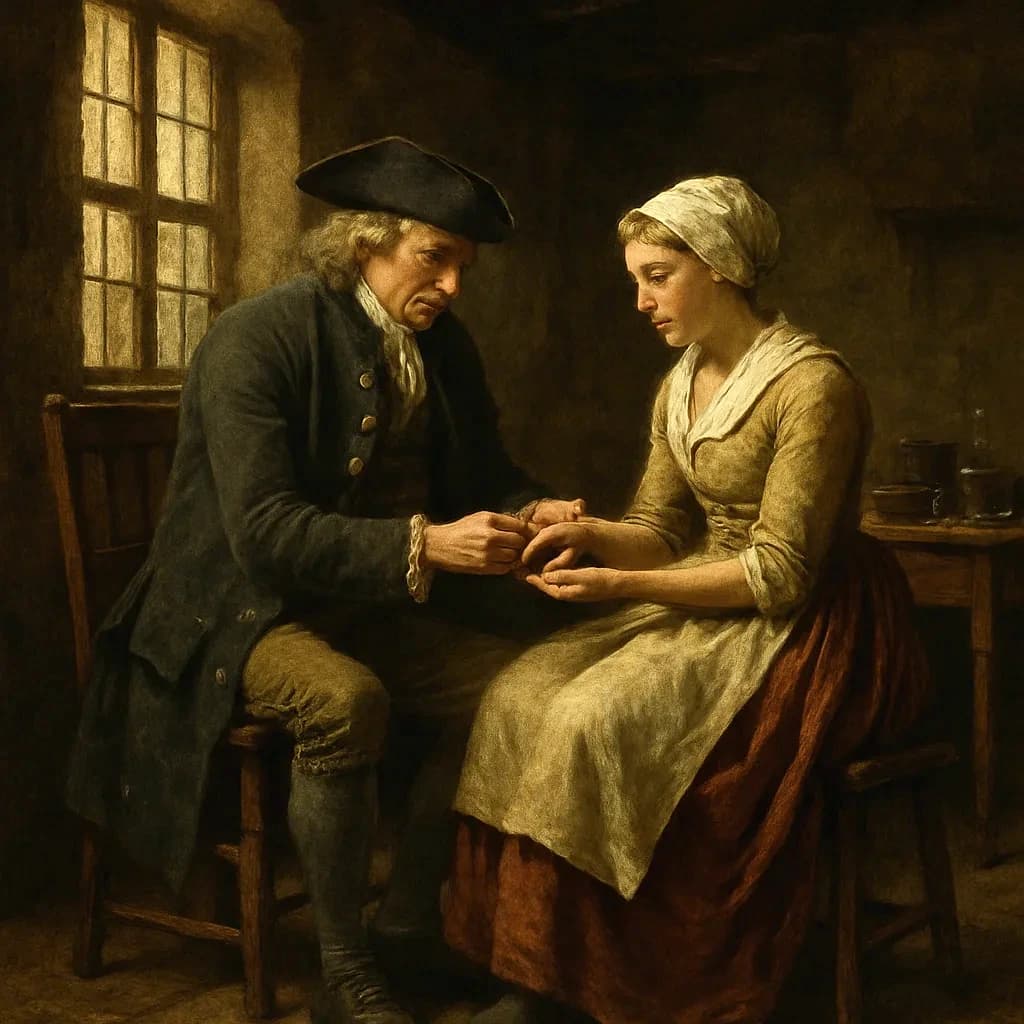
Jenner's Vaccine: How Curing Smallpox Made Wars Deadlier
A country doctor in 1796 discovered the one thing that terrified both sides of every war.
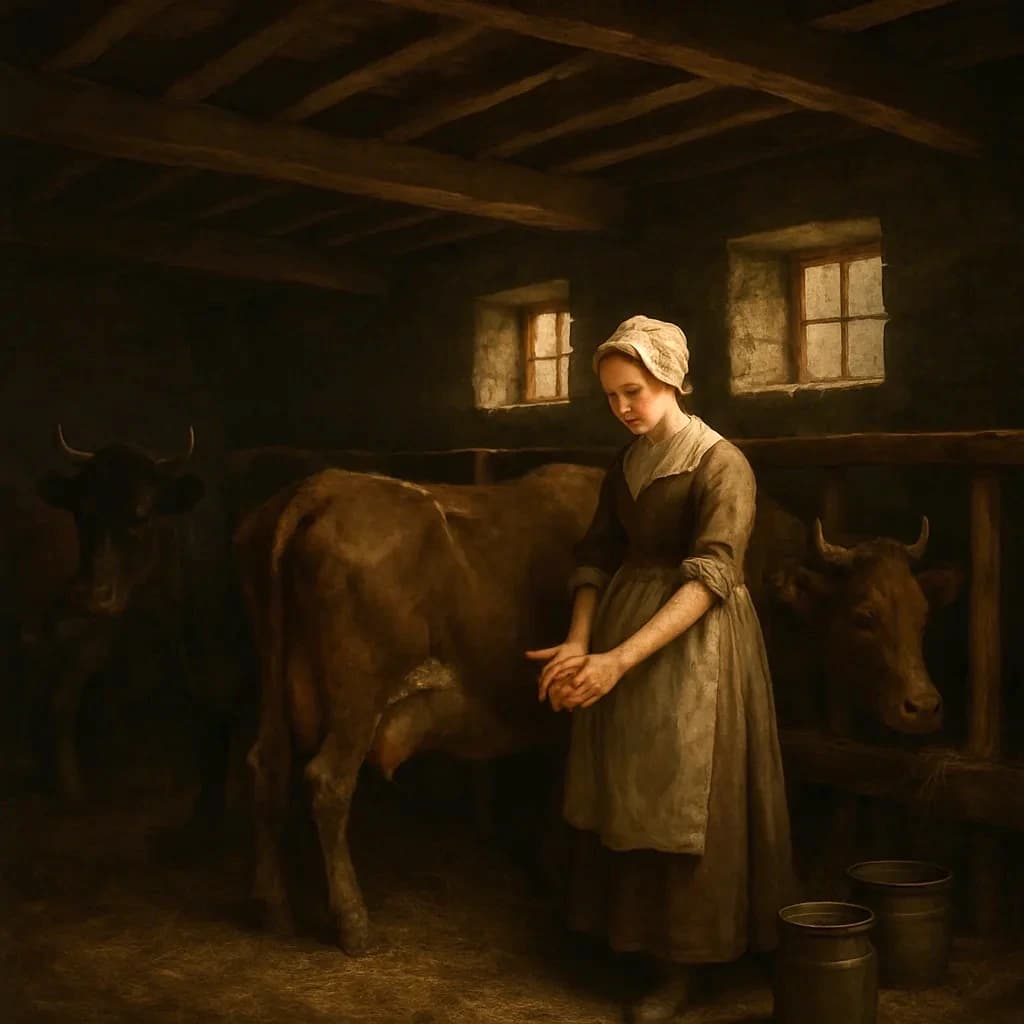
A Teenage Milkmaid Discovered How to Conquer Smallpox
A teenage girl in Gloucestershire accidentally discovered the secret to conquering smallpox, but nobody believed her for twenty years.
- Derrick Baxby, 'Jenner's Smallpox Vaccine: The Riddle of Vaccinia Virus and Its Origin' (Heinemann Educational Books, 1981)
- Stefan Riedel, 'Edward Jenner and the History of Smallpox and Vaccination,' Baylor University Medical Center Proceedings, Vol. 18, No. 1 (2005)
- Richard B. Fisher, 'Edward Jenner 1749-1823' (Andre Deutsch, 1991)