
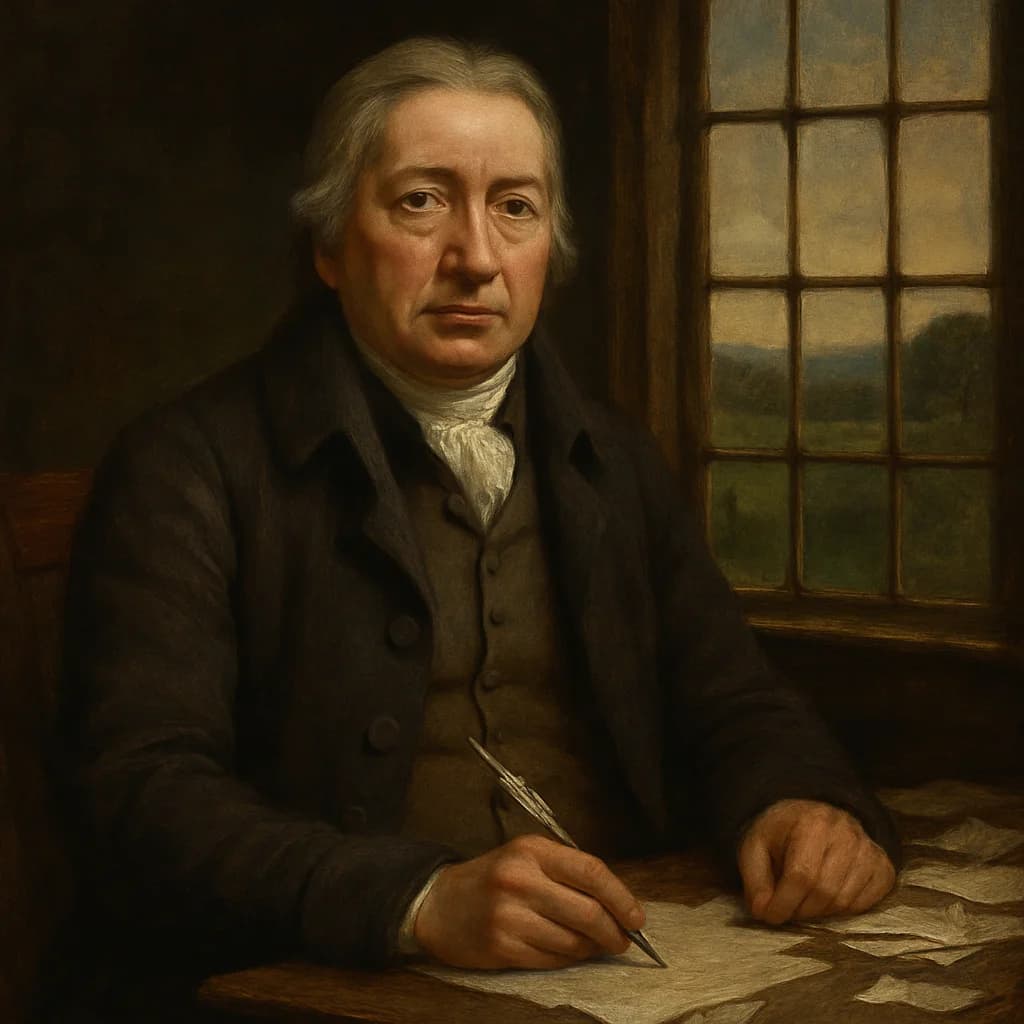
Edward Jenner
He gave the world its first vaccine, and spent the rest of his life being hounded for it.
Edward Jenner was a country doctor in Berkeley, Gloucestershire, not London, not Edinburgh, not anywhere that mattered to the medical establishment of 1796. He kept hedgehogs as pets, wrote poetry, and played the violin badly. He was, by almost every measure, a provincial eccentric. Which made it all the more infuriating to the Royal Society when he turned out to be right.
The story usually told is clean and triumphant: milkmaid, cowpox, inoculation, victory over smallpox. What that version leaves out is the twenty-year obsession before it. Jenner had first heard the milkmaids' claim as a young apprentice in the 1770s: local folklore, really, that women who caught cowpox from their cattle seemed mysteriously immune to smallpox. Most physicians filed that under 'peasant superstition' and moved on. Jenner filed it under 'worth destroying my career over.' He spent two decades quietly collecting cases, testing hypotheses, and being ignored. When he finally submitted his findings to the Royal Society in 1797, they rejected the paper without review. He published it himself.
The backlash was not gentle. Clergy called vaccination an abomination: the introduction of animal matter into human bodies, an offense against divine order. Satirists drew cartoons of vaccinated patients sprouting cow heads from their arms. Physicians with financial stakes in the older practice of variolation, a riskier procedure that had dominated smallpox prevention for decades, attacked his credibility with institutional efficiency. Jenner fought back through correspondence alone, writing thousands of letters to doctors across Europe and, crucially, to Napoleon's chief physician. Napoleon, who was at war with Britain and had every reason to dismiss anything British, vaccinated his entire army anyway. He reportedly called Jenner 'one of the greatest men in history' and released British prisoners at Jenner's personal request.
Back home, Parliament eventually awarded him £10,000 in 1802, then another £20,000 in 1807, acknowledgment wrapped in the particular coldness of people who know they were wrong. He died in 1823, having spent most of his prize money funding a free vaccination clinic from a small hut in his garden. The hut still exists. It's called the Temple of Vaccinia, which is either very grand or very sad, depending on how you look at it.
Napoleon released imprisoned British soldiers as a personal favor to Jenner, calling him one of the greatest benefactors of mankind, a wartime exception for a man whose country was actively fighting his empire.
Why untold: The triumph of the vaccine has been told so cleanly that it erases the two decades of institutional rejection, financial sacrifice, and coordinated professional hostility that nearly buried the discovery before it could save anyone.
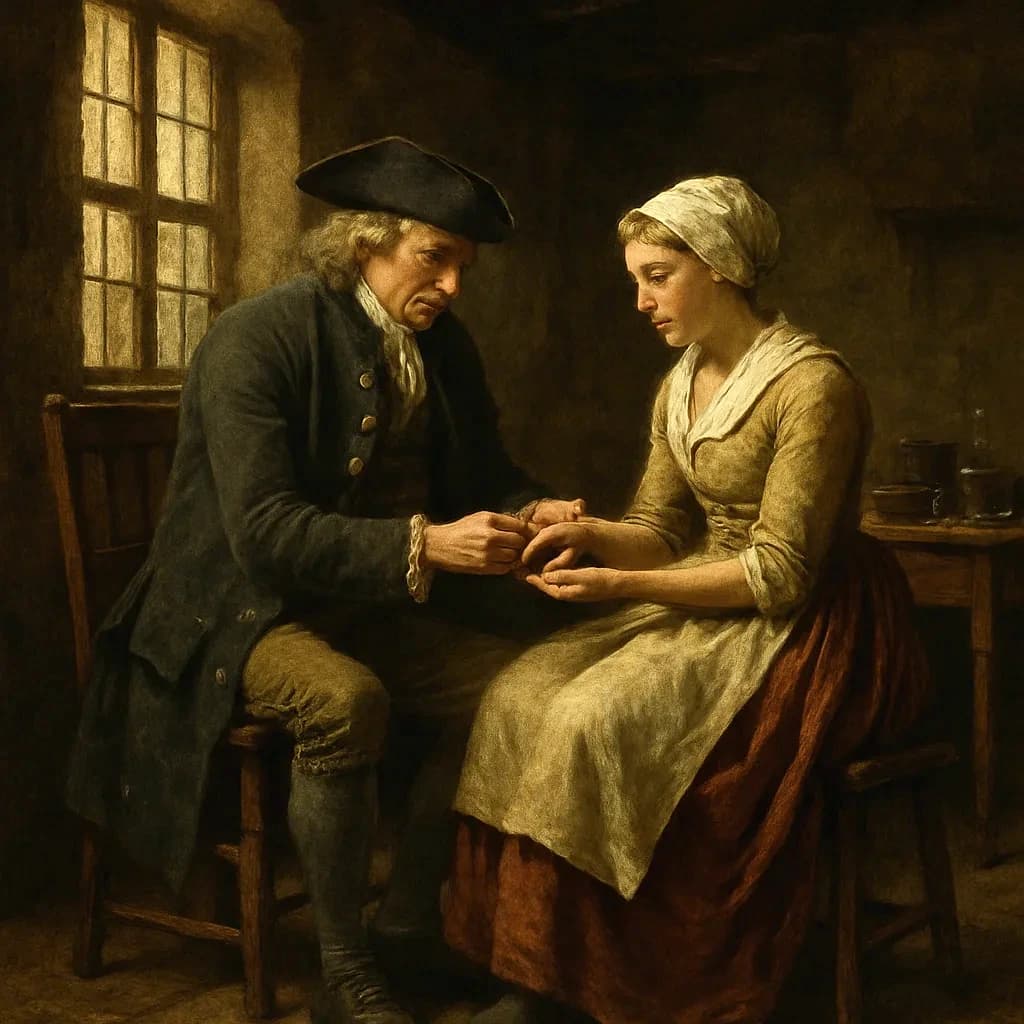
Jenner's Vaccine: How Curing Smallpox Made Wars Deadlier
A country doctor in 1796 discovered the one thing that terrified both sides of every war.
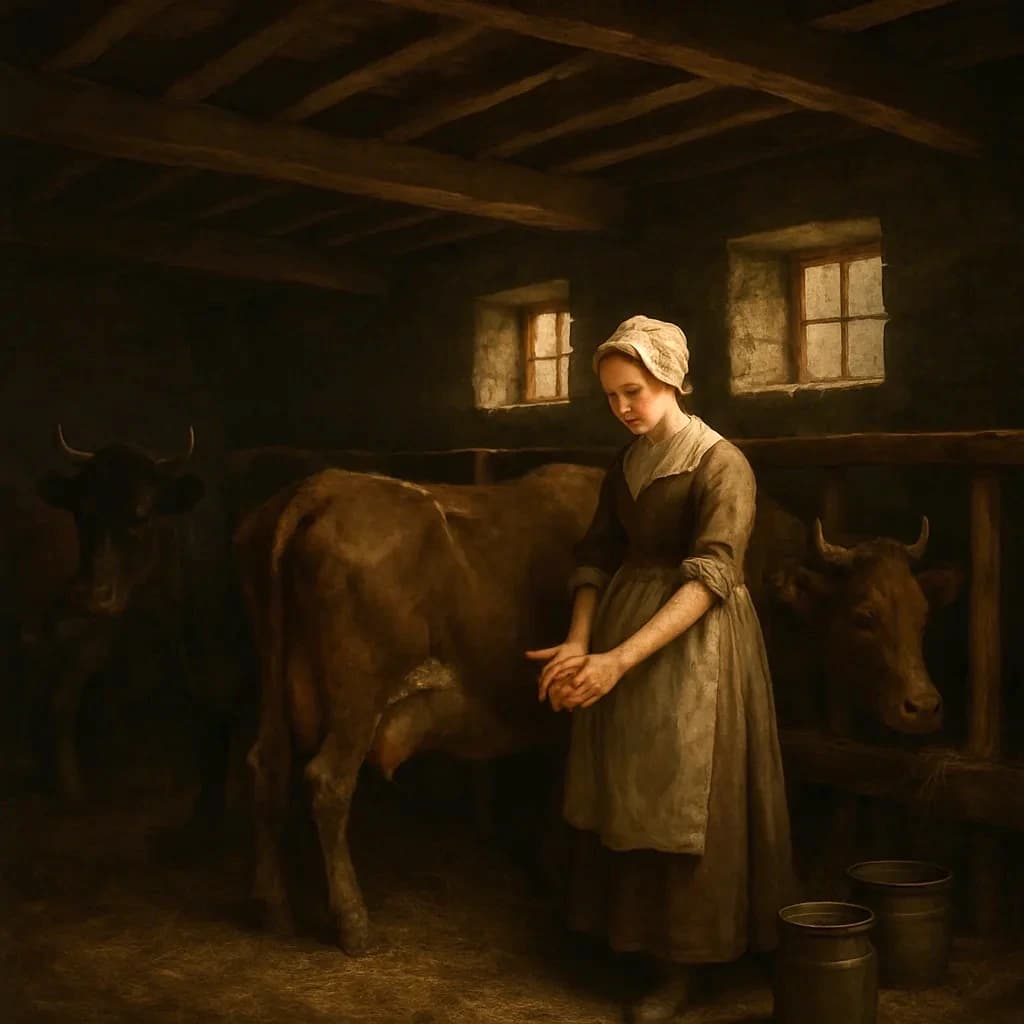
A Teenage Milkmaid Discovered How to Conquer Smallpox
A teenage girl in Gloucestershire accidentally discovered the secret to conquering smallpox, but nobody believed her for twenty years.
- Derrick Baxby, Jenner's Smallpox Vaccine: The Riddle of Vaccinia Virus and Its Origin (Heinemann Educational Books, 1981)
- Stefan Riedel, 'Edward Jenner and the History of Smallpox and Vaccination,' Baylor University Medical Center Proceedings, 18(1), 2005
- Richard Fisher, Edward Jenner 1749-1823 (Andre Deutsch, 1991)