
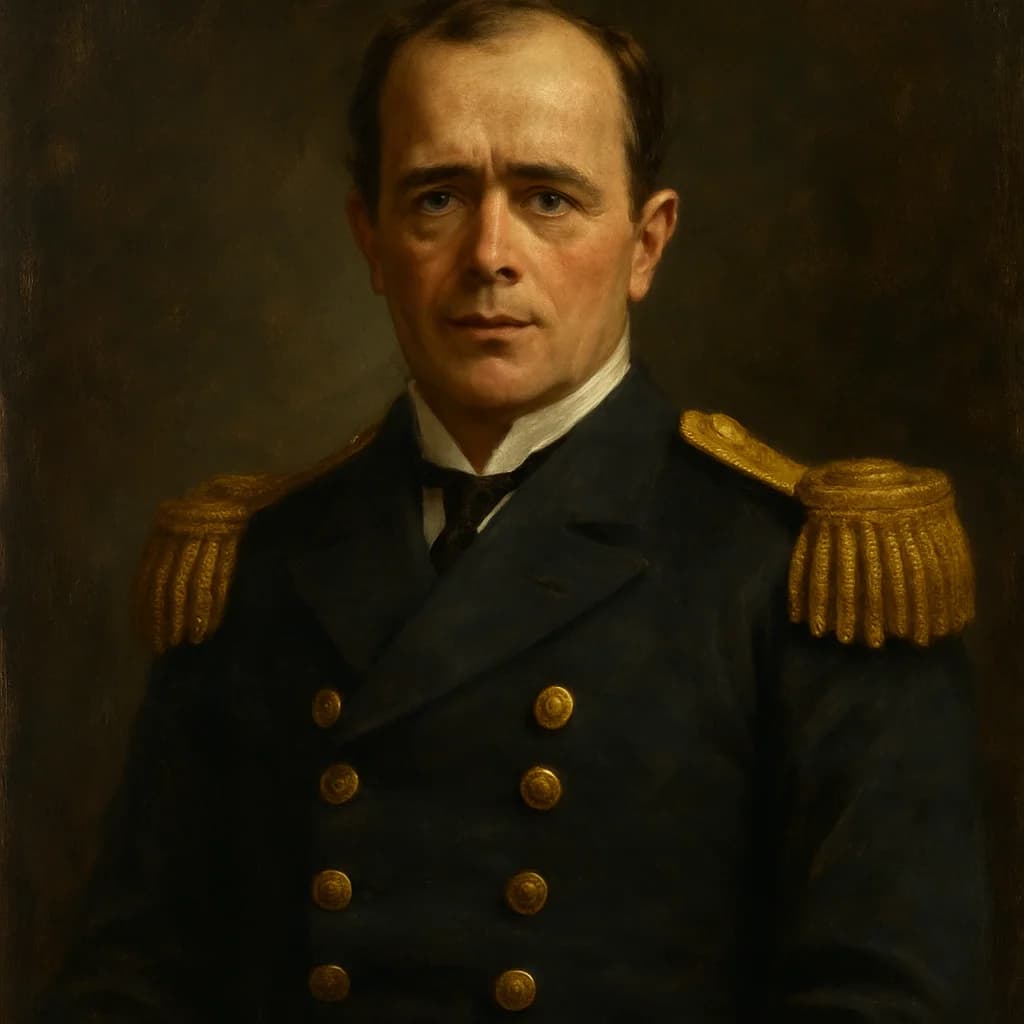
Robert Falcon Scott
He died clutching a geological sample that most people forgot to mention.
The story everyone knows ends in a tent, nine miles from a supply depot, three men frozen and defeated. What gets left out is what Scott was carrying. When rescue parties found the bodies of Robert Falcon Scott and his two remaining companions in November 1912, the sledge beside them held 35 pounds of rock samples they had collected from the Beardmore Glacier. Dying of cold and starvation, Scott's team had refused to abandon them. Those rocks contained fossilized plant impressions (Glossopteris leaves), evidence that Antarctica had once been lush and temperate and connected to continents now thousands of miles away. Scott didn't know exactly what he had. But he knew it mattered.
Scott was, in ways history smoothed over, an accidental explorer. He was a torpedo lieutenant with no polar experience when he lobbied his way into command of the Discovery expedition in 1901, not because of any special wilderness credentials, but because he was ambitious, well-connected, and desperately needed a career-making opportunity. The Royal Navy ran on patronage, and Scott understood the game. What he found in Antarctica remade him. He became genuinely obsessed with the science, not just the glory. His first expedition produced serious meteorological and biological data. He brought back geological specimens that confused and intrigued researchers for years.
His second expedition, the Terra Nova voyage of 1910-1913, is remembered as a race against Roald Amundsen, and a loss. Amundsen reached the Pole on December 14, 1911. Scott arrived January 17, 1912, to find a Norwegian flag already planted in the ice. What the race narrative buries is that Scott's party spent weeks on the return journey doing actual science, collecting samples, stopping to measure and record, behaving less like defeated competitors and more like researchers who happened to be dying. The Glossopteris fossils on that sledge contributed decades later to the evidence supporting continental drift, a theory that was laughed out of scientific circles when Alfred Wegener proposed it in 1912, the same year Scott died.
He never made it home. His journal, found with the bodies, was published to enormous public grief. The fossils were quietly sent to the Natural History Museum in London, where they waited for the world to catch up.
The 35 pounds of geological samples Scott's dying team dragged across Antarctica included Glossopteris plant fossils that would later serve as key evidence for continental drift, a theory considered fringe science at the time of Scott's death.
Why untold: The heroic tragedy narrative around Scott's death consumed public attention so completely that the scientific significance of what he died carrying was buried under a century of debate about his competence as an expedition leader.
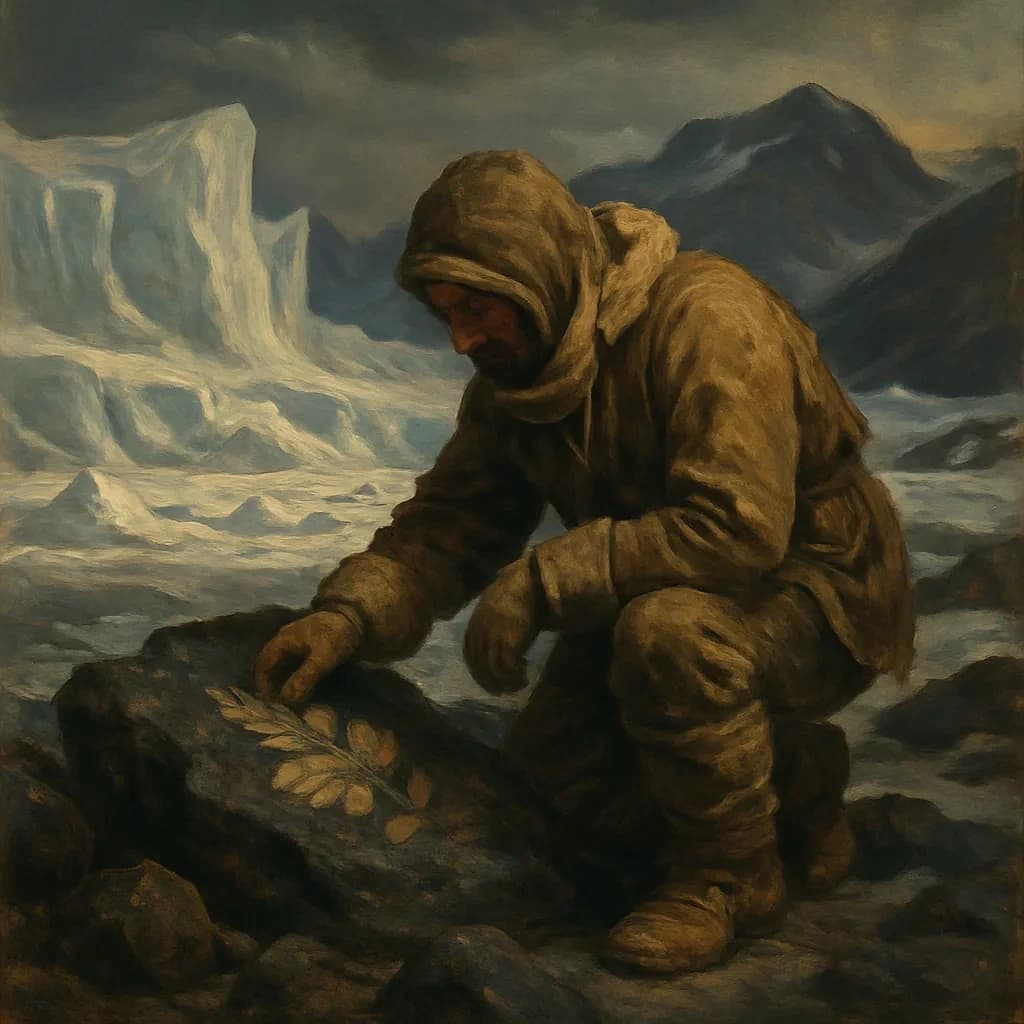
When Antarctica Was a Garden
A British doctor found tropical leaves frozen in Antarctic ice, and realized the world had completely rearranged itself.
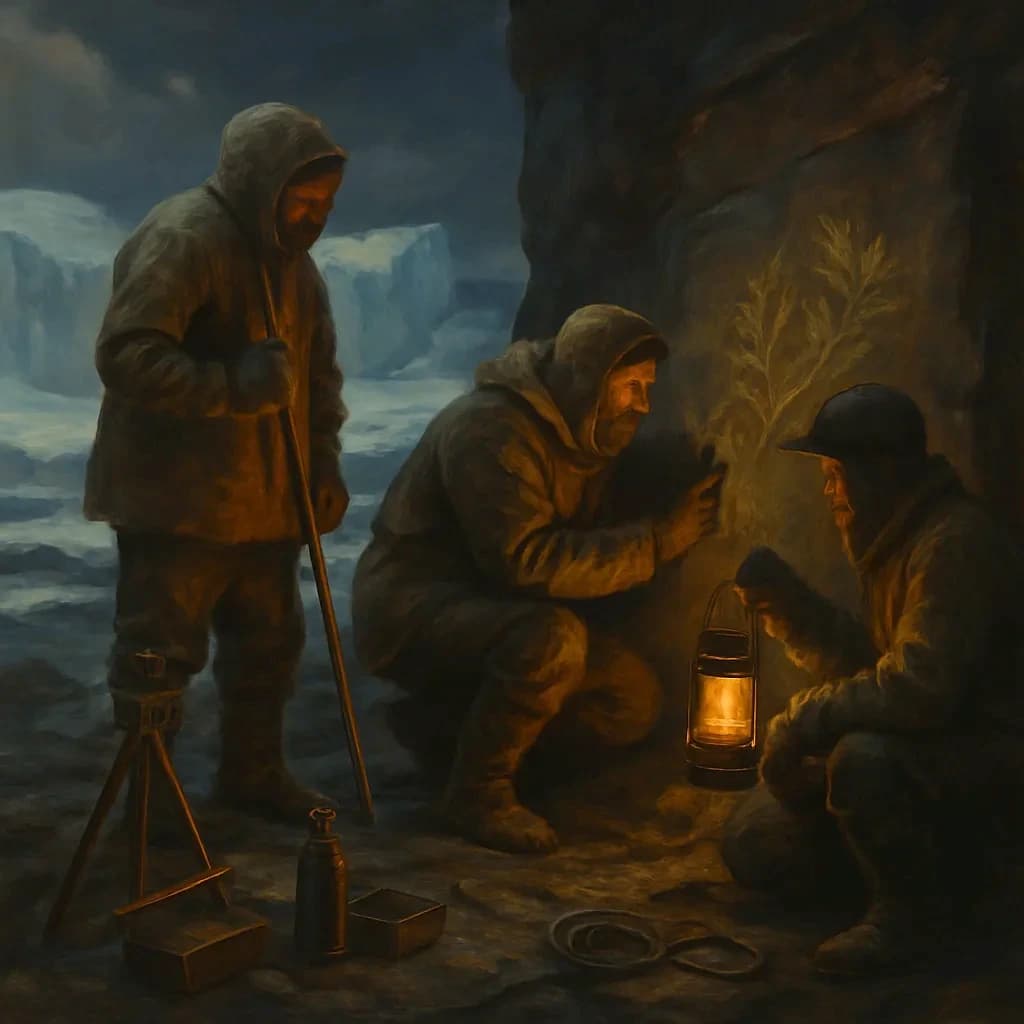
When Antarctica Had Forests
The final explorer to reach the South Pole found leaves instead of ice, evidence of a continent that once bloomed under different stars.
- Susan Solomon, 'The Coldest March: Scott's Fatal Antarctic Expedition' (Yale University Press, 2001)
- David Crane, 'Scott of the Antarctic: A Life of Courage and Tragedy' (HarperCollins, 2005)
- Edward J. Larson, 'An Empire of Ice: Scott, Shackleton, and the Heroic Age of Antarctic Science' (Yale University Press, 2011)