
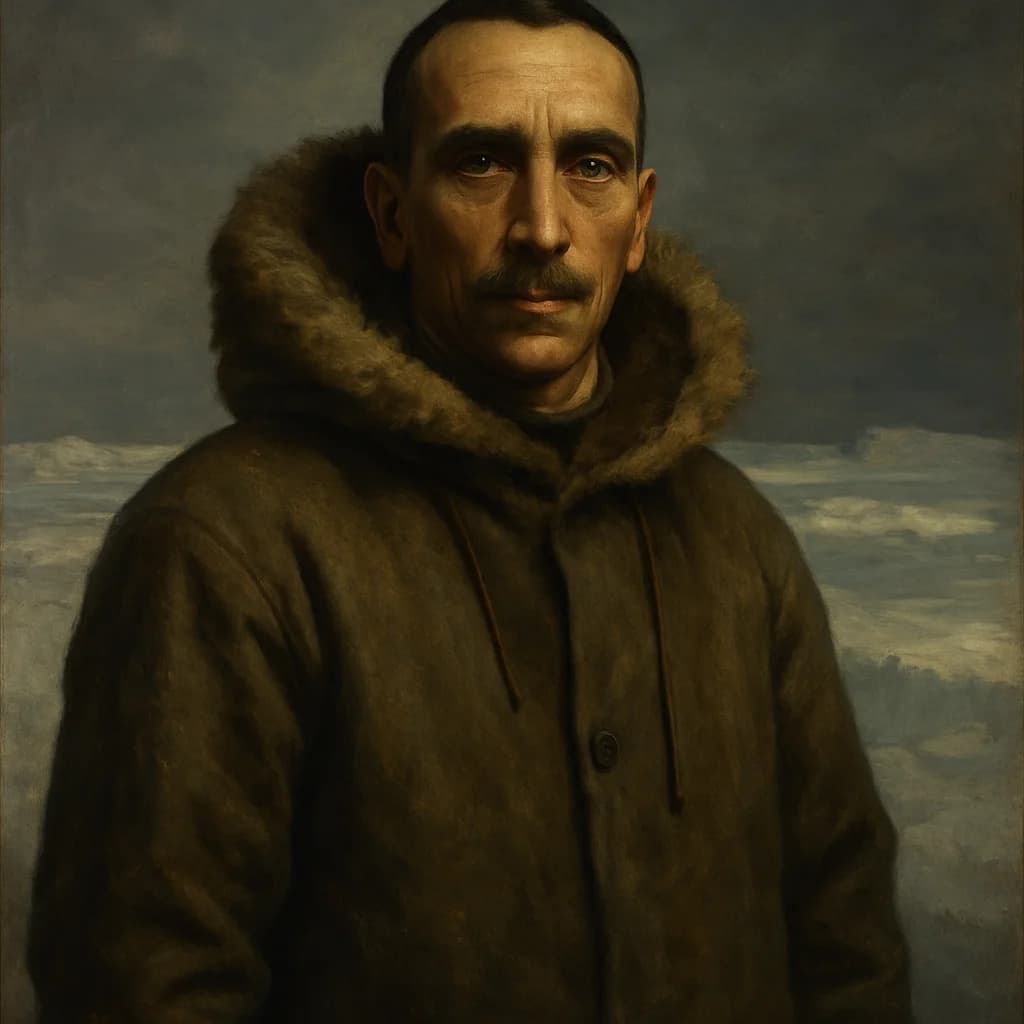
Alfred Wegener
The man who proved the continents move died before anyone believed him.
Alfred Wegener wasn't a geologist. This fact, more than any other, explains why it took fifty years for the scientific establishment to admit he was right. He was a meteorologist (a weather man, as his critics liked to emphasize) who had no business rearranging the furniture of the entire Earth. When he first presented his theory of continental drift to the German Geological Society in Frankfurt in January 1912, the room received it roughly the way a cathedral receives a heretic.
Wegener's idea was elegant to the point of embarrassment: the continents had once been a single landmass, which he called Pangaea, and had since drifted apart like ice floes on a slow black sea. His evidence was the kind that makes you wonder why no one said it first. The coastlines of South America and Africa fit together like torn paper. Identical fossils of the freshwater reptile Mesosaurus appeared on both continents, separated by an ocean it could never have crossed. Coal deposits in Antarctica (a frozen desert) pointed to a tropical past. He gathered the clues from geology, paleontology, and climatology simultaneously, seeing connections that specialists, buried in their own fields, had each missed separately.
What he couldn't explain was the mechanism. How, exactly, does a continent move? He guessed at centrifugal force, at tidal pulls from the Moon. He was wrong about the how. The what, though: the what was exactly right. It wouldn't be until the 1950s and 60s, when oceanographers mapped the mid-Atlantic ridge and understood seafloor spreading, that plate tectonics confirmed everything Wegener had argued and been laughed out of rooms for arguing.
He died in November 1930 on the Greenland ice sheet, on a relief mission to resupply a stranded research team during one of his meteorological expeditions. He was fifty years old. His body wasn't found until the following spring, buried in snow. His team marked the grave with skis and left him there, in the ice of a continent that had once, long ago, been somewhere else entirely.
Wegener held the world record for the longest balloon flight: 52.5 hours, set in 1906 with his brother Kurt, a feat that had nothing to do with geology and everything to do with the restless, boundary-testing temperament that defined his entire career.
Why untold: Because he was disciplinarily dismissed (a meteorologist trespassing on geology), his theory was filed under 'amateur speculation' and ignored for decades, meaning the history of plate tectonics is usually told as a 1960s discovery rather than a 1912 vindication.
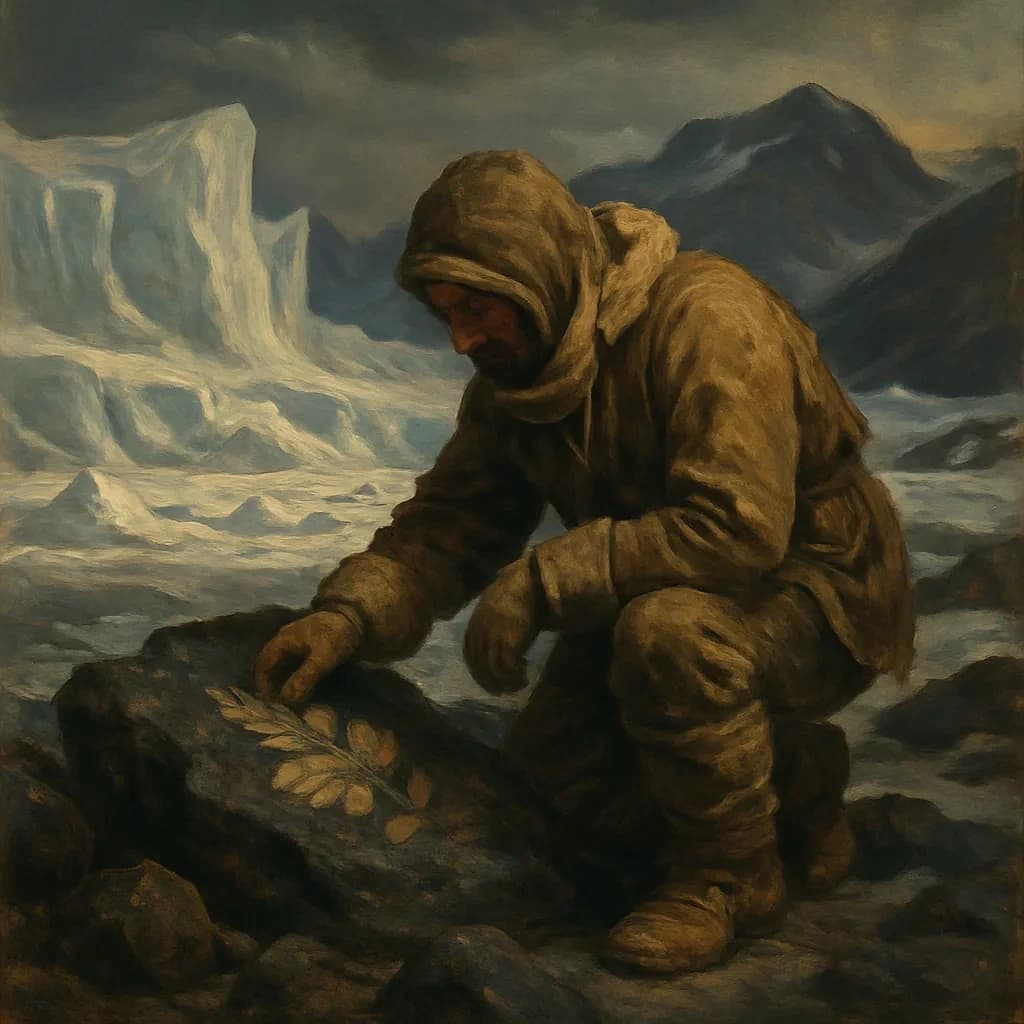
When Antarctica Was a Garden
A British doctor found tropical leaves frozen in Antarctic ice, and realized the world had completely rearranged itself.

When Antarctica Had Forests
The final explorer to reach the South Pole found leaves instead of ice, evidence of a continent that once bloomed under different stars.
- Oreskes, Naomi. The Rejection of Continental Drift: Theory and Method in American Earth Science. Oxford University Press, 1999.
- Schwarzbach, Martin. Alfred Wegener: The Father of Continental Drift. Science Tech Publishers, 1986.
- Wegener, Alfred. The Origin of Continents and Oceans. Translated by John Biram, Dover Publications, 1966 (orig. 1915).