
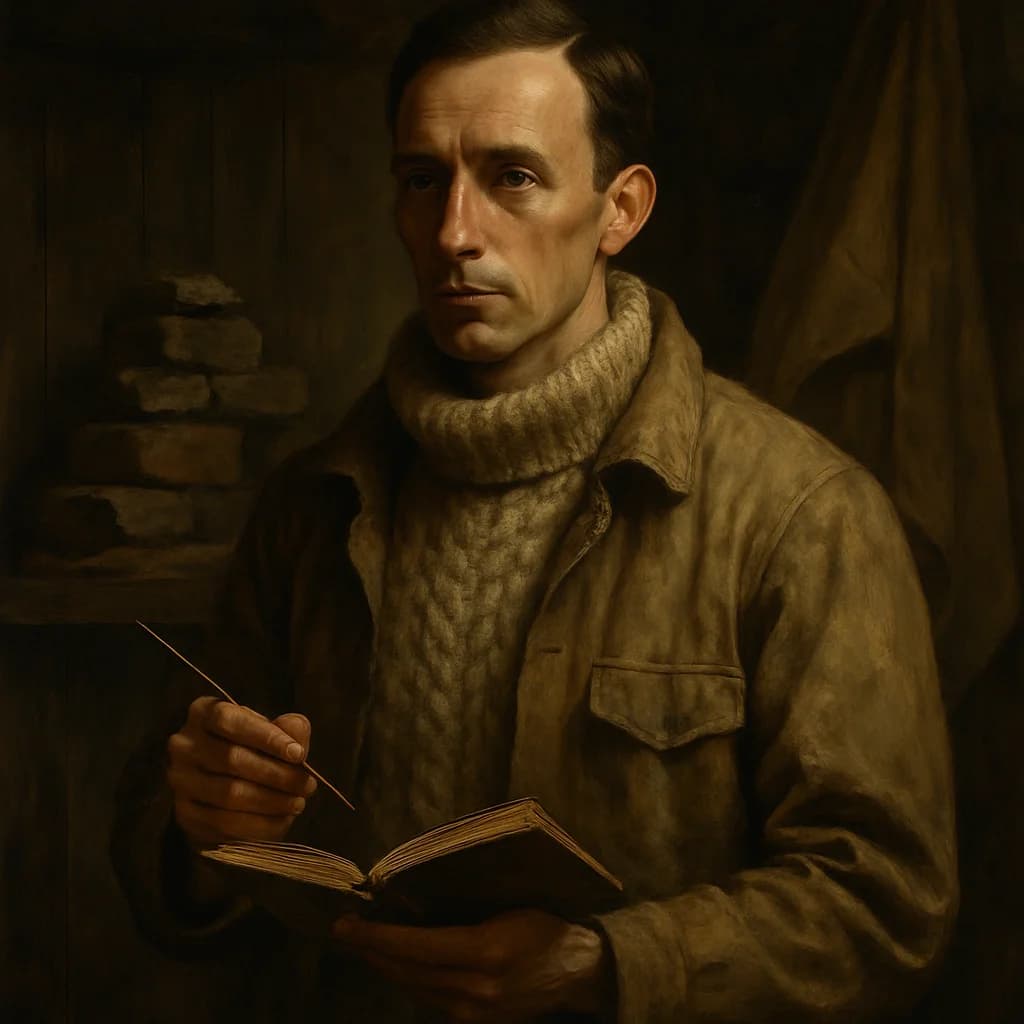
Edward Wilson
He carried 35 pounds of fossil rocks on a doomed march back from the South Pole, and they found the rocks beside his frozen body.
Edward Adrian Wilson was a physician, a painter, a devout Anglican, and one of the finest wildlife illustrators Britain ever produced, and he died at 39 in a tent on the Ross Ice Shelf, having refused to leave behind a geological sample that would reshape how science understood the planet. That last detail rarely makes it into the heroic version of the story. It should be the whole story.
Before Antarctica, Wilson had spent years haunted by tuberculosis, a disease he'd contracted while doing post-mortem work in London in his mid-twenties. Doctors told him to rest. Instead he went to the Antarctic. Twice. On the Discovery expedition of 1901, he was the one dissecting penguins and painting ice formations with watercolors that were accurate enough to be used as scientific records decades later. He wasn't dabbling. He'd studied art as seriously as medicine, and his zoological illustrations of Antarctic birds remain primary references in ornithological literature today. He held both disciplines with the same unflinching precision.
The overlooked expedition came before the fatal one. In June 1911, in complete polar darkness and temperatures that dropped to minus 77 degrees Fahrenheit, Wilson led two companions (Henry Bowers and Apsley Cherry-Garrard) on a five-week winter journey to Cape Crozier. The goal was to collect Emperor penguin eggs at the only time of year when they exist. Wilson believed the embryos would reveal an evolutionary link between reptiles and birds. It nearly killed all three of them. A blizzard destroyed their tent. They spent two days in sleeping bags, singing hymns, waiting to die. They lived. The eggs they retrieved are still at the Natural History Museum in London, though curators initially refused to accept them because no one believed the journey had actually happened.
On the fatal return from the Pole in 1912, the 35 pounds of Glossopteris fossil samples Wilson's team collected from the Beardmore Glacier became, posthumously, some of the most important geological evidence supporting continental drift, proof that Antarctica and India had once been joined in a single landmass. Wilson never knew that. He died in March 1912, probably within days of Scott and Bowers, methodical to the end.
Wilson's watercolors from the Antarctic expeditions were so scientifically precise that the Natural History Museum classified many of them as zoological records rather than artworks, preserving them in scientific archives instead of art collections.
Why untold: Wilson has been consistently absorbed into the Scott tragedy as a loyal supporting figure, which erased his independent scientific and artistic legacy, particularly the winter Cape Crozier journey, which was his expedition, driven by his hypothesis, and represents one of the most extreme acts of scientific commitment in exploration history.
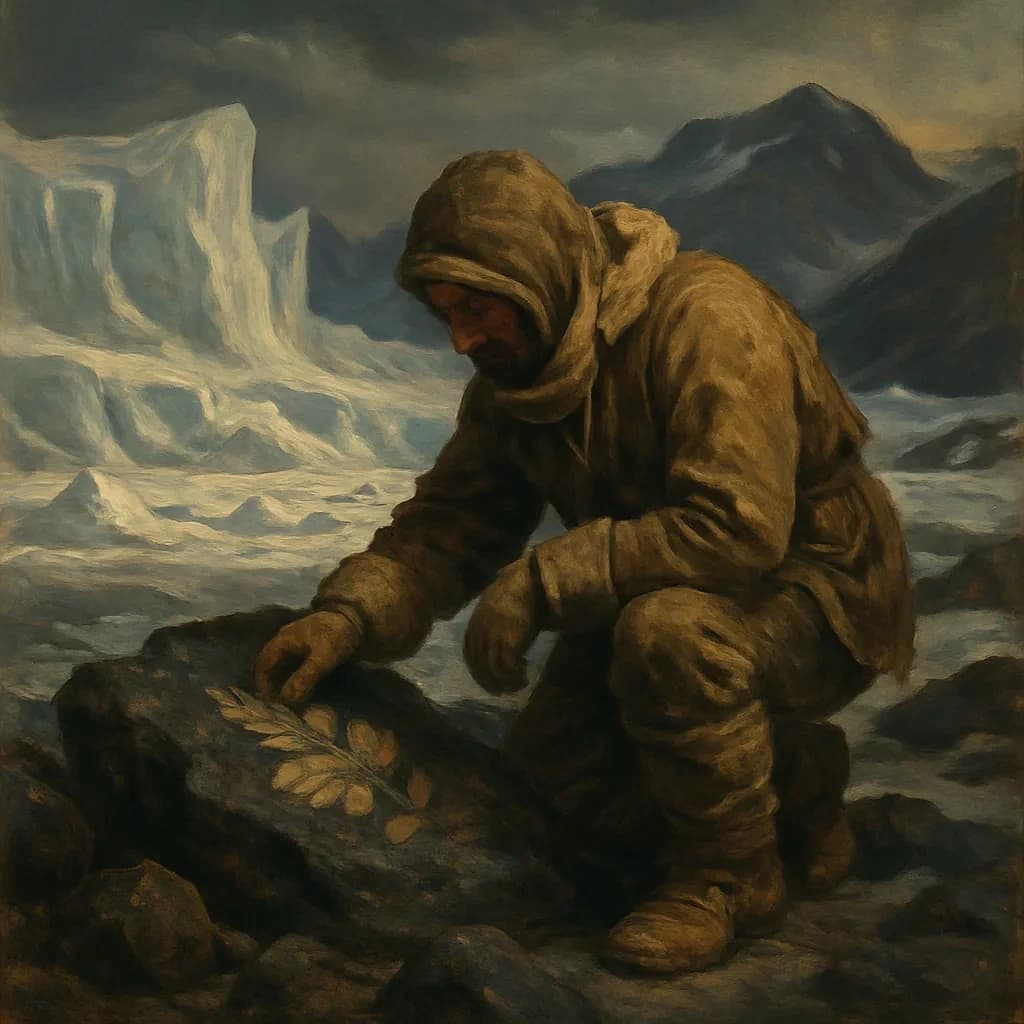
When Antarctica Was a Garden
A British doctor found tropical leaves frozen in Antarctic ice, and realized the world had completely rearranged itself.
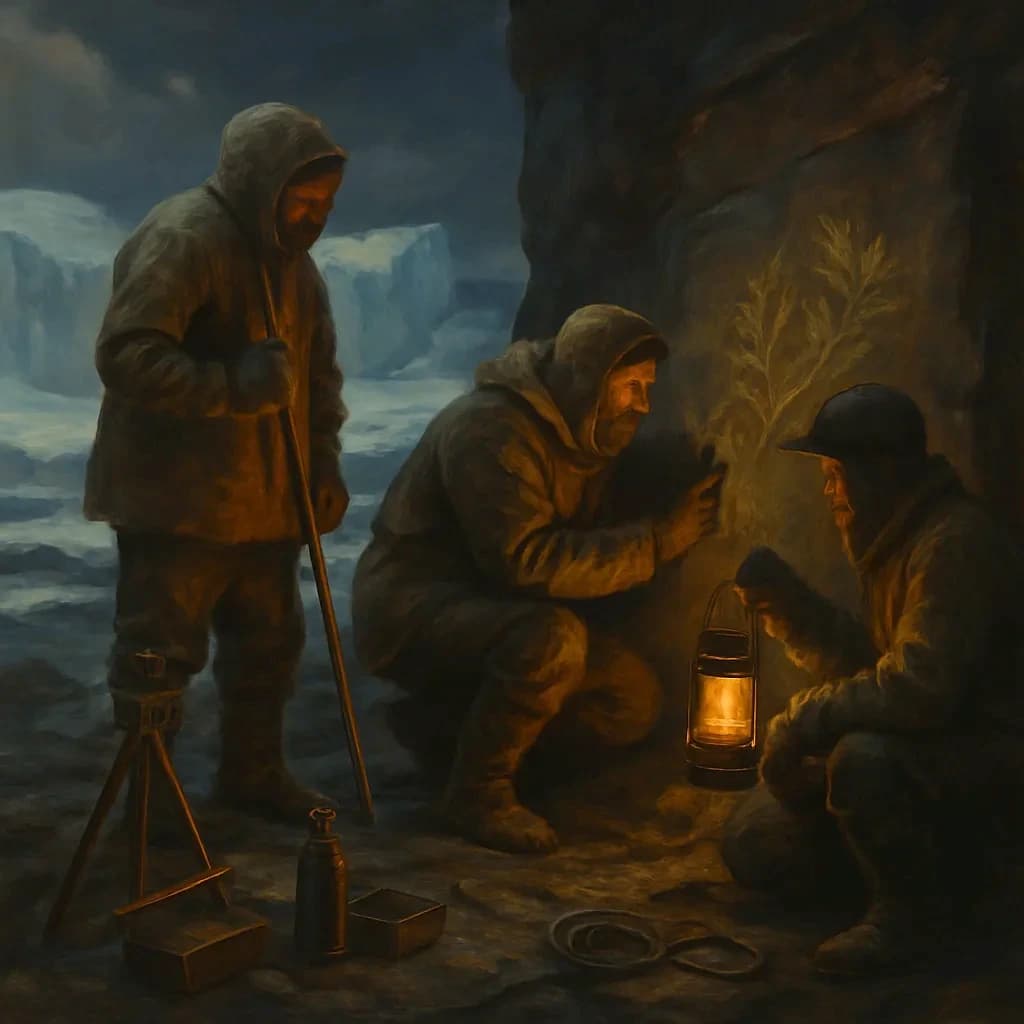
When Antarctica Had Forests
The final explorer to reach the South Pole found leaves instead of ice, evidence of a continent that once bloomed under different stars.
- Apsley Cherry-Garrard, The Worst Journey in the World (1922)
- Diana Preston, A First Rate Tragedy: Robert Falcon Scott and the Race to the South Pole (1997)
- Edward Wilson, Diary of the Terra Nova Expedition to the Antarctic 1910-1912, ed. H.G.R. King (1972)