
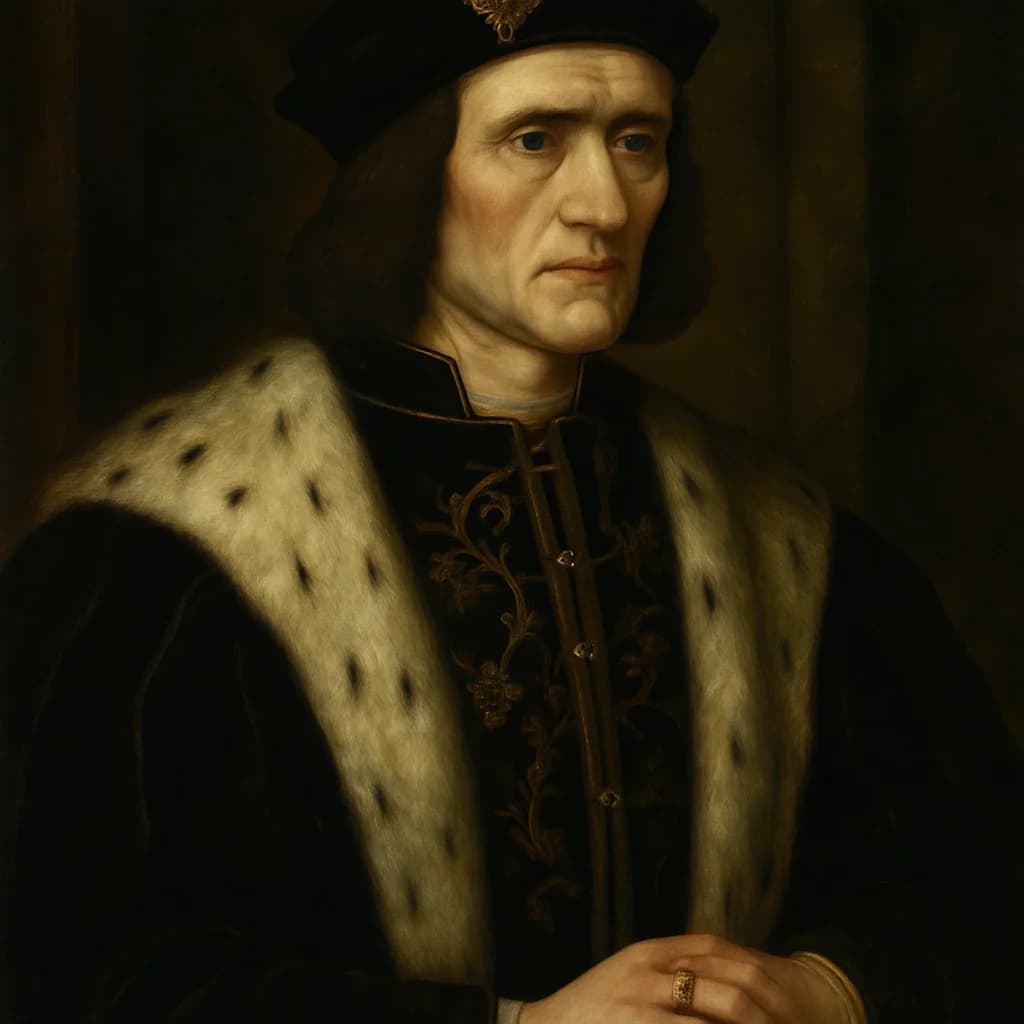
Richard III
The king who ruled England for just 777 days managed to create more legal reforms than monarchs who reigned for decades.
Richard III spent most of his short reign frantically trying to prove he wasn't the monster everyone whispered he was. While rumors swirled about dead nephews in the Tower, Richard was busy revolutionizing English law with an efficiency that bordered on desperation. He legalized bail for prisoners, banned forced loans, and required that laws be written in English rather than Latin or French, radical moves that made justice accessible to common people for the first time.
The irony cuts deep: the king history remembers as a child-killer was obsessively concerned with protecting the innocent. Richard established the Court of Requests specifically to hear cases from poor plaintiffs who couldn't afford regular legal fees. He standardized weights and measures to prevent merchants from cheating customers. His law against livery and maintenance (essentially private armies maintained by nobles) was so effective that Henry VII simply copied it wholesale after Bosworth.
But Richard's reforms couldn't outrun the whispers. Every progressive law felt like an apology he couldn't quite voice. When he appeared at public events, contemporaries noted his habit of fidgeting with rings, his eyes constantly scanning crowds for threats that may or may not have existed. The Titulus Regius, his legal justification for taking the crown, read like a lawyer's brief rather than a royal proclamation, seventeen tortured paragraphs explaining why his nephews were illegitimate and he was the rightful king.
At Bosworth Field in 1485, Richard died as he had lived in those final years: trying to prove something. Witnesses described him charging directly at Henry Tudor's standard, cutting down anyone in his path. His crown, knocked from his head in the melee, was found in a thorn bush, a fitting metaphor for a reign that began in legal thorns and ended the same way.
Richard III's spine was so severely curved that one shoulder sat four inches higher than the other, yet he was considered an exceptionally skilled knight and warrior.
Why untold: Shakespeare's theatrical villain overshadowed the historical record of his progressive legal reforms and the genuine uncertainty about the princes' fate.
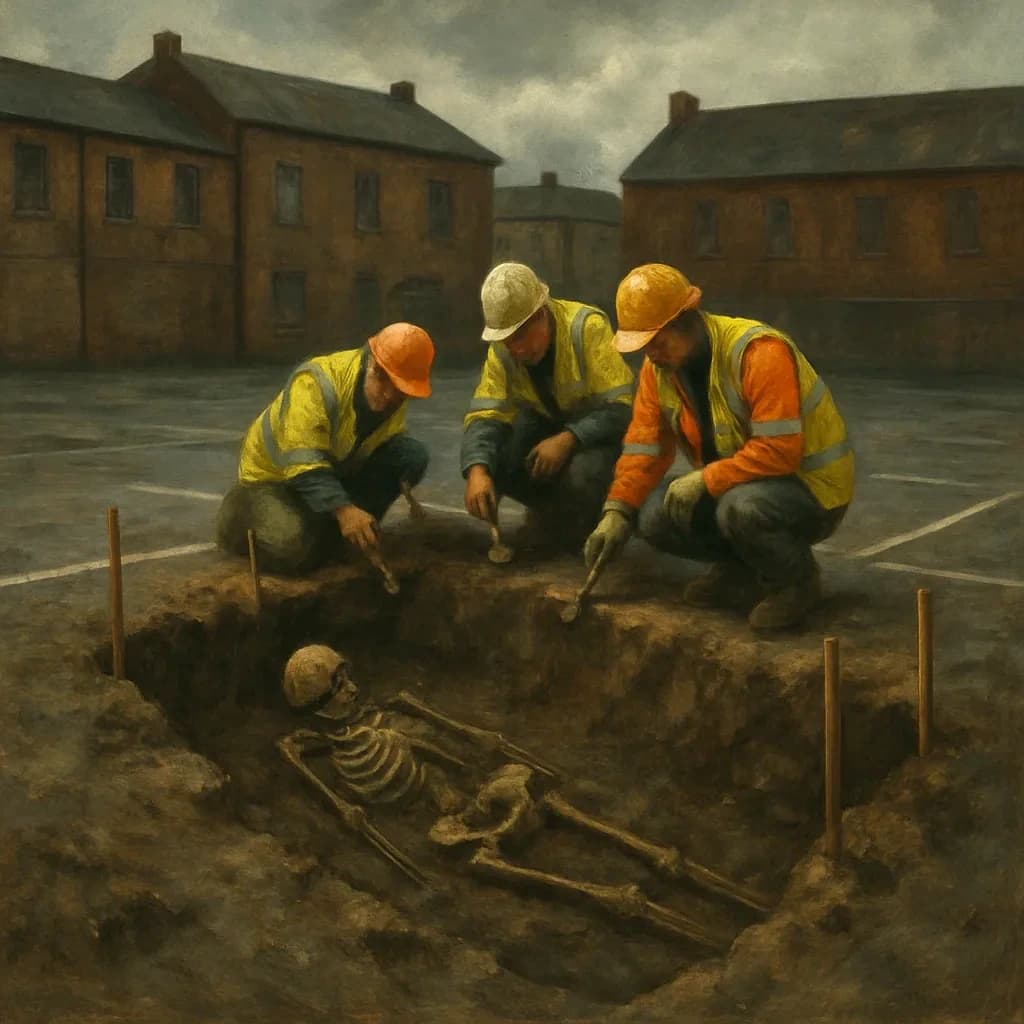
Richard III Lay Under a Car Park for 527 Years
He rode out of Leicester a crowned king and came back the same day, naked, a rope around his neck, slung face-down across a horse.
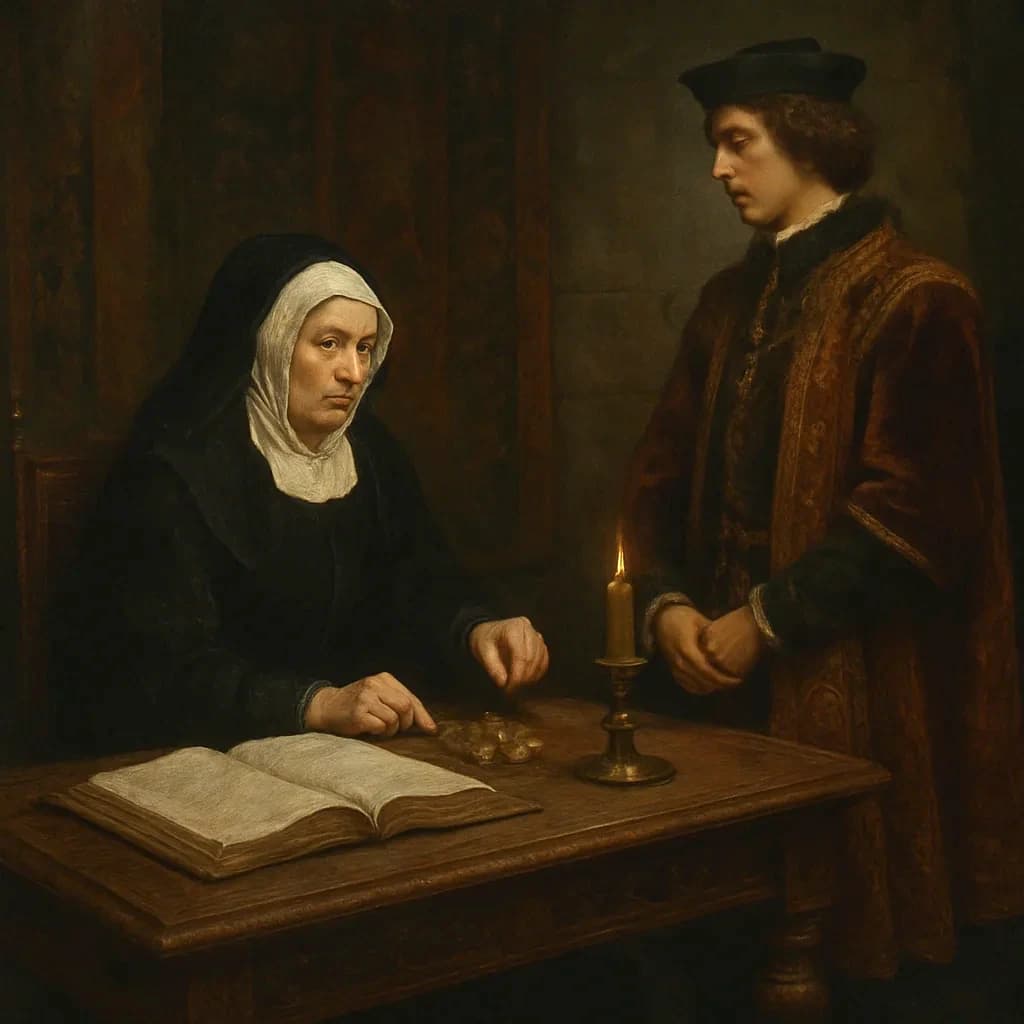
She Billed Her Son the King
When Henry Tudor became King of England, he had to pay rent to his own mother for the privilege.
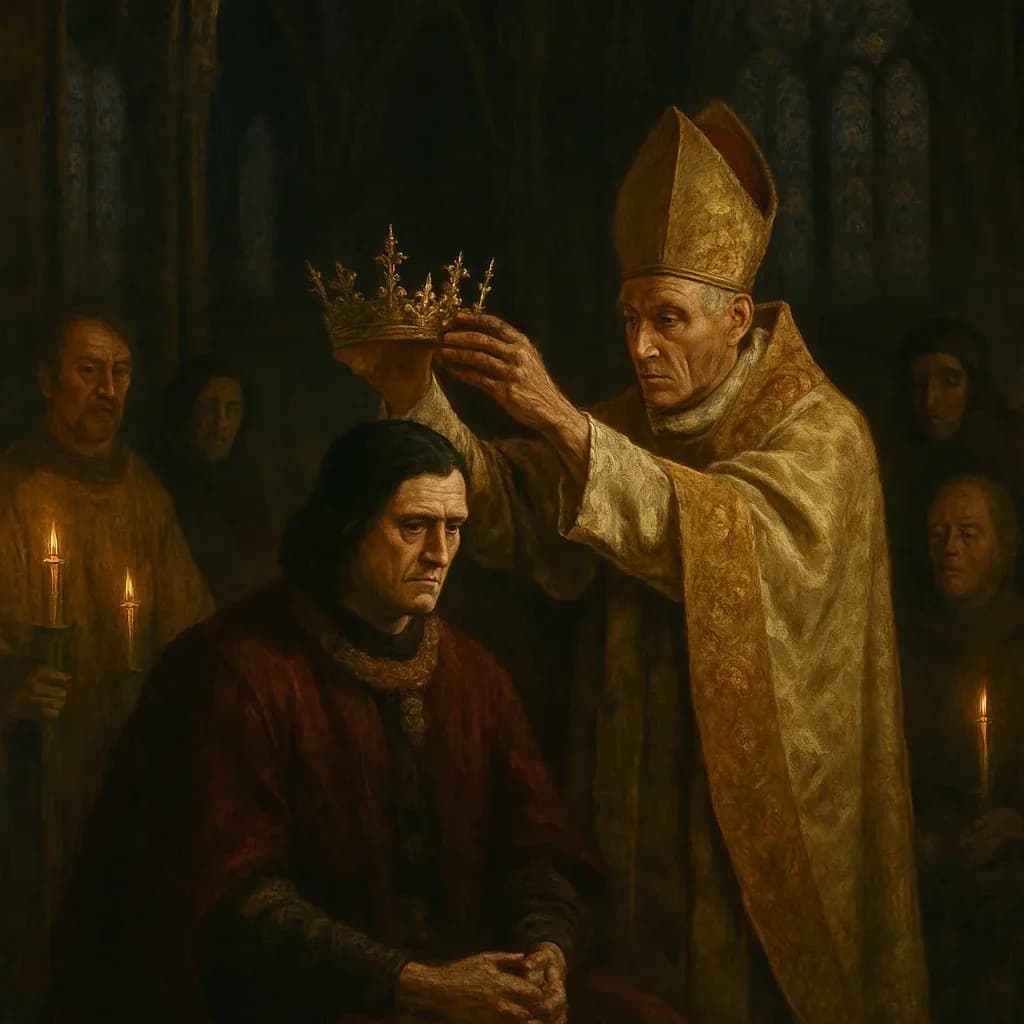
Two Princes Vanished: The Next King Hired Their Suspected Killer
In 1483, two princes vanished from the Tower of London, and the next king hired the same man who might have killed them.
- Kendall, Paul Murray. Richard the Third. New York: W.W. Norton, 1955.
- Horrox, Rosemary. Richard III: A Study in Service. Cambridge University Press, 1989.
- Langley, Philippa and Michael Jones. The King's Grave: The Discovery of Richard III. St. Martin's Press, 2013.