
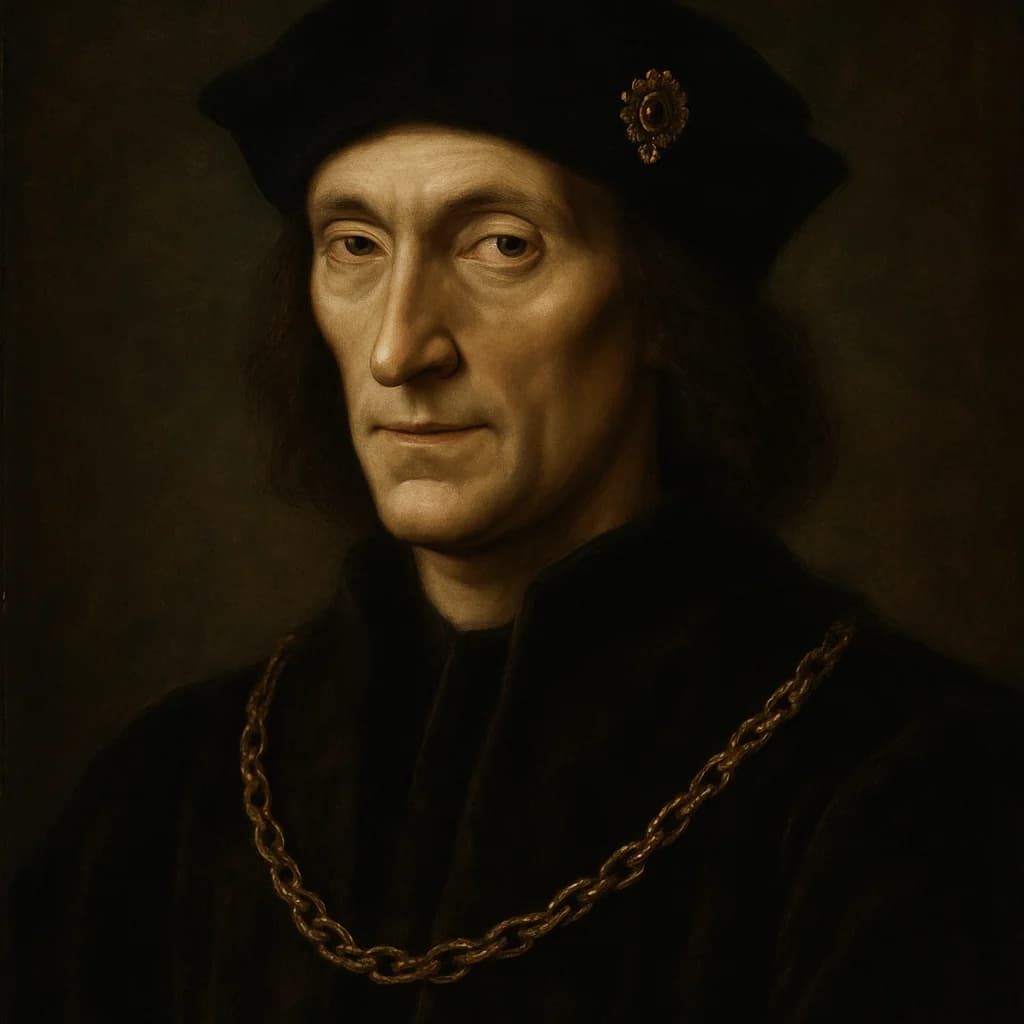
Henry VII
The man who founded the Tudor dynasty spent most of his life as a penniless exile who spoke better French than English.
Henry Tudor's claim to the English throne was so tenuous it was almost laughable. His connection to royalty came through his mother's bastard line (legitimized only by papal decree), and his father was a minor Welsh nobleman who'd caught the eye of a widowed queen. When Henry was fourteen, his uncle whisked him away to Brittany, where he would spend the next fourteen years eating other people's bread and learning to survive on charm, desperation, and an uncanny ability to read political winds.
The exile who would become Henry VII was shaped by poverty and paranoia in equal measure. He spoke fluent French and broken English when he landed at Milford Haven in 1485 with fewer than 2,000 men, most of them foreign mercenaries. His victory at Bosworth Field wasn't the triumph of destiny. It was a miracle of timing, betrayal, and Richard III's fatal decision to charge personally at Henry's standard. Even then, Henry's crown was so precarious that he dated his reign from the day before the battle, making his enemies technically traitors retroactively.
As king, Henry never forgot the lesson of his exile: money was security, and security was survival. He personally audited accounts, initiating every page with 'HR' in his spidery handwriting. He imposed fines for everything from unlicensed retainers to improper dress codes among nobility. His courtiers learned to fear his smile more than his frown. It usually meant they were about to receive an enormous bill for some imagined offense. By his death, Henry had accumulated the equivalent of $300 million in today's money, making him one of the richest monarchs in European history.
The paranoid accountant-king who counted every penny had transformed himself from a landless exile into the founder of England's most famous dynasty, proving that sometimes the best qualification for absolute power is knowing exactly what it feels like to have none at all.
Henry VII was so paranoid about pretenders to his throne that he kept detailed files on potential threats, including a Flemish baker's son who claimed to be one of the missing princes in the Tower.
Why untold: His reputation as a boring, miserly administrator has overshadowed the remarkable transformation from penniless exile to dynasty founder.
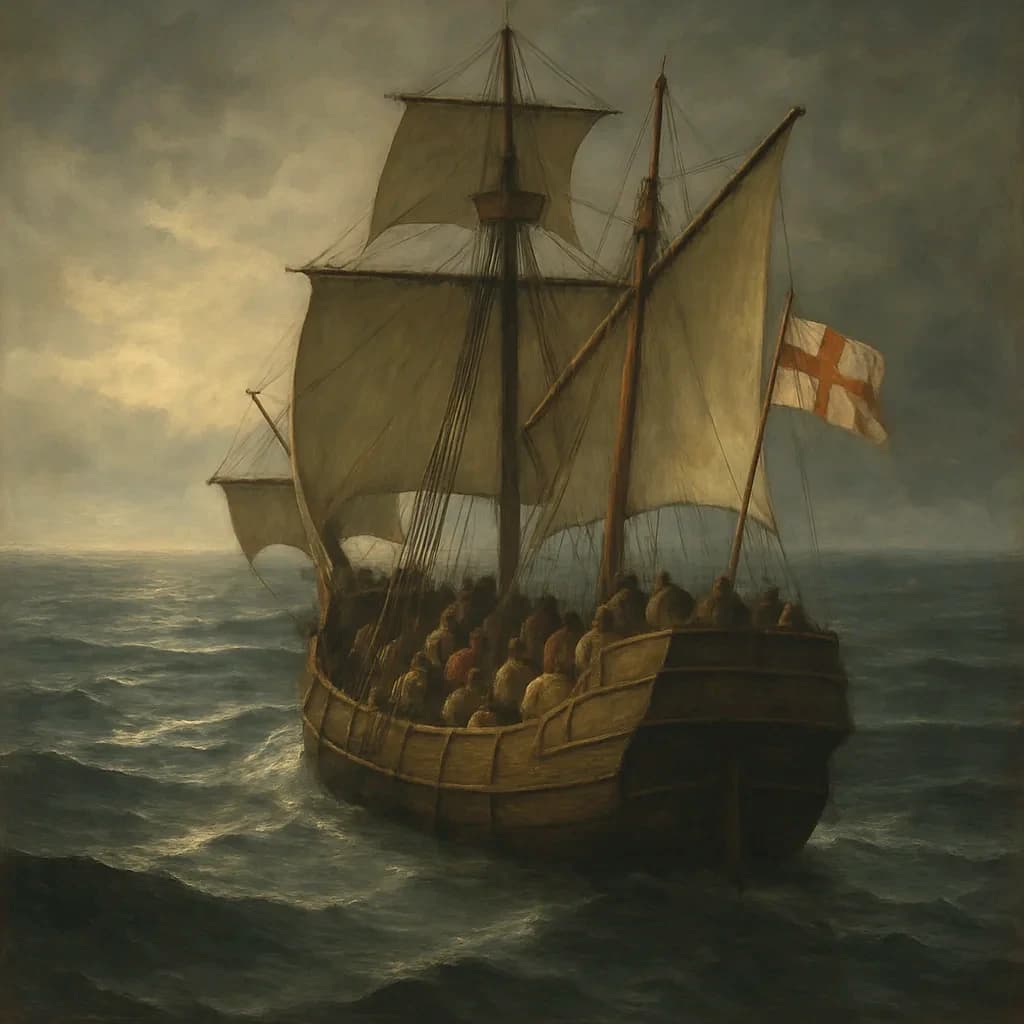
John Cabot Discovered a Continent for £10
A single English merchant's refusal to accept a financial loss in 1496 redirected the entire trajectory of North American exploration.

She Billed Her Son the King
When Henry Tudor became King of England, he had to pay rent to his own mother for the privilege.
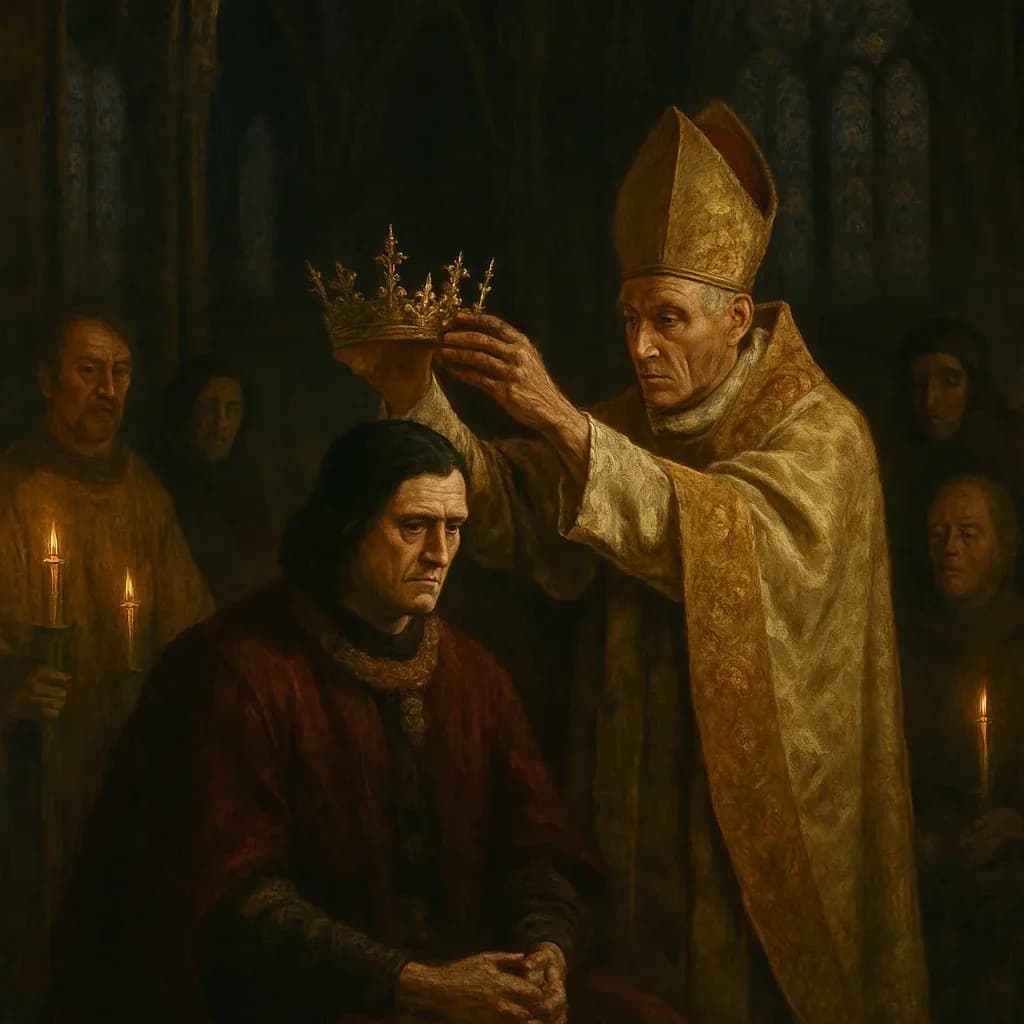
Two Princes Vanished: The Next King Hired Their Suspected Killer
In 1483, two princes vanished from the Tower of London, and the next king hired the same man who might have killed them.
- Penn, Thomas. Winter King: Henry VII and the Dawn of Tudor England. Simon & Schuster, 2011.
- Chrimes, S.B. Henry VII. Yale University Press, 1972.
- Cunningham, Sean. Henry VII. Routledge, 2007.