
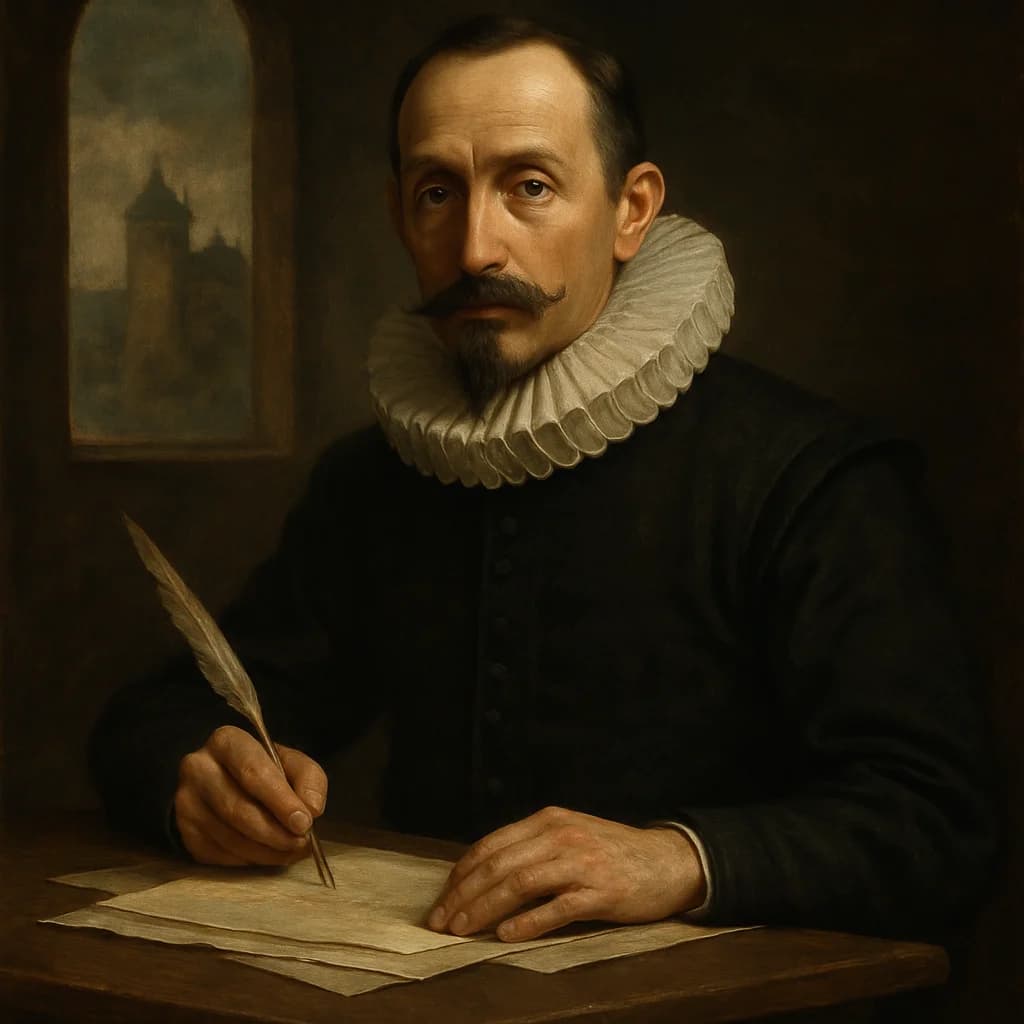
Philipp Fabricius
The man who survived history's most consequential defenestration spent the rest of his life trying to prove it was a miracle.
Philipp Fabricius had every reason to believe God wanted him dead. On May 23, 1618, an angry Protestant mob hurled him from a third-story window of Prague Castle along with two other Catholic officials. The fall should have killed him. Instead, he landed in a pile of manure and walked away with nothing worse than wounded pride and a profound religious awakening.
Before that morning, Fabricius had been a competent but unremarkable Habsburg bureaucrat, one of Ferdinand II's imperial secretaries navigating the treacherous religious politics of Bohemia. He collected taxes, managed correspondence, and kept his head down during the mounting tensions between Catholic rulers and Protestant nobles. The Bohemian estates had summoned him and his colleagues to Hradčany Castle ostensibly for a routine meeting about religious freedoms. Nobody expected to be thrown out a window.
The experience transformed him. Fabricius became convinced that his survival was divine intervention, a sign that God had preserved him for a greater purpose. He threw himself into Catholic Counter-Reformation activities with the zeal of the genuinely converted, funding Jesuit missions and writing religious tracts. His fellow survivor Wilhelm Slavata shared this interpretation, and together they became living symbols of Catholic resilience against Protestant aggression.
What Fabricius couldn't have known was that his undignified tumble had just triggered the Thirty Years' War. The Defenestration of Prague became the spark that ignited a continental conflagration, drawing in Sweden, France, Spain, and dozens of German states. Eight million people would die in a conflict that began with his bruised landing in horse dung. He spent his remaining years as a minor noble in Moravia, writing pious memoirs about his miraculous survival, never quite grasping that his personal salvation had become Europe's catastrophe.
Fabricius later claimed that the Virgin Mary herself had slowed his fall, and he commissioned paintings depicting angels catching him mid-air during his plunge from Prague Castle.
Why untold: History remembers the Defenestration of Prague as a political event, not the personal transformation of its victims who became religious zealots afterward.
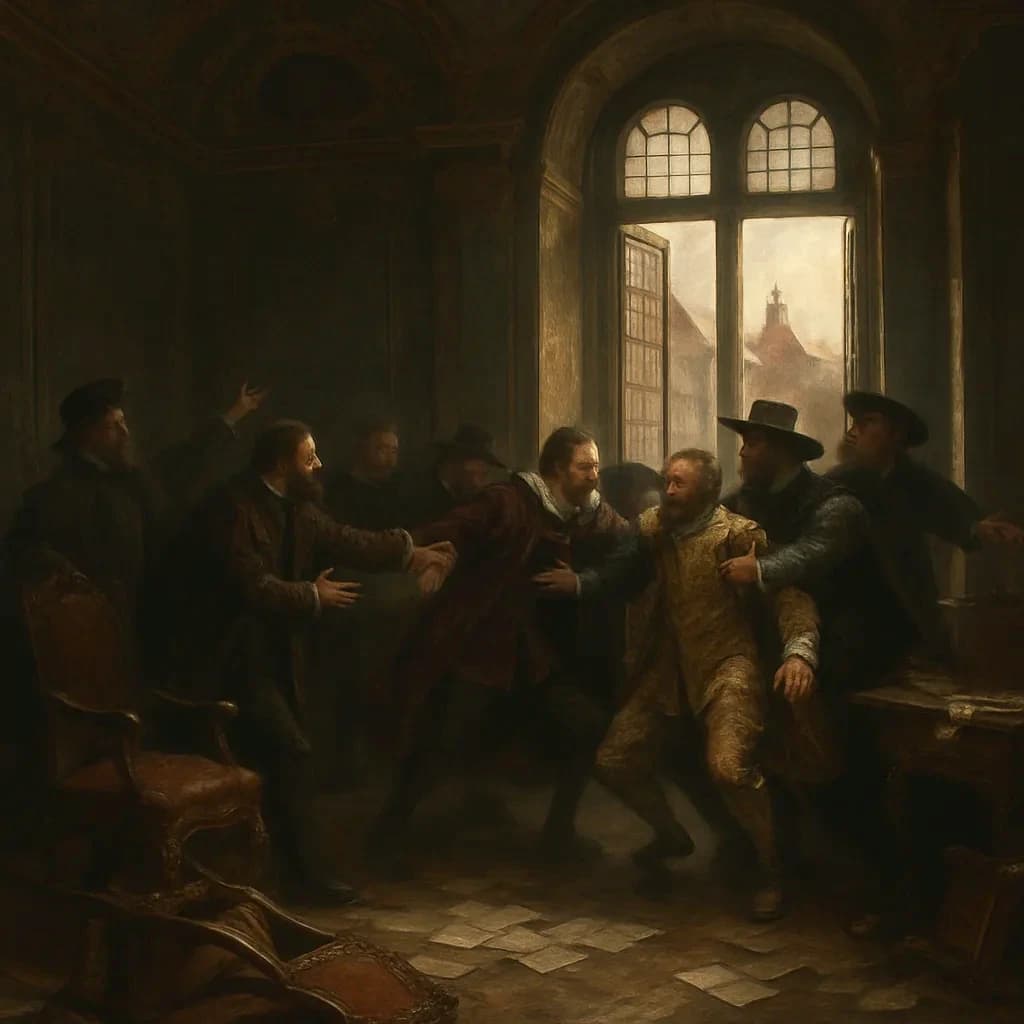
When Prague Lost Its Windows
A single diplomatic meeting in 1618 accidentally invented the world's most dangerous form of political protest.
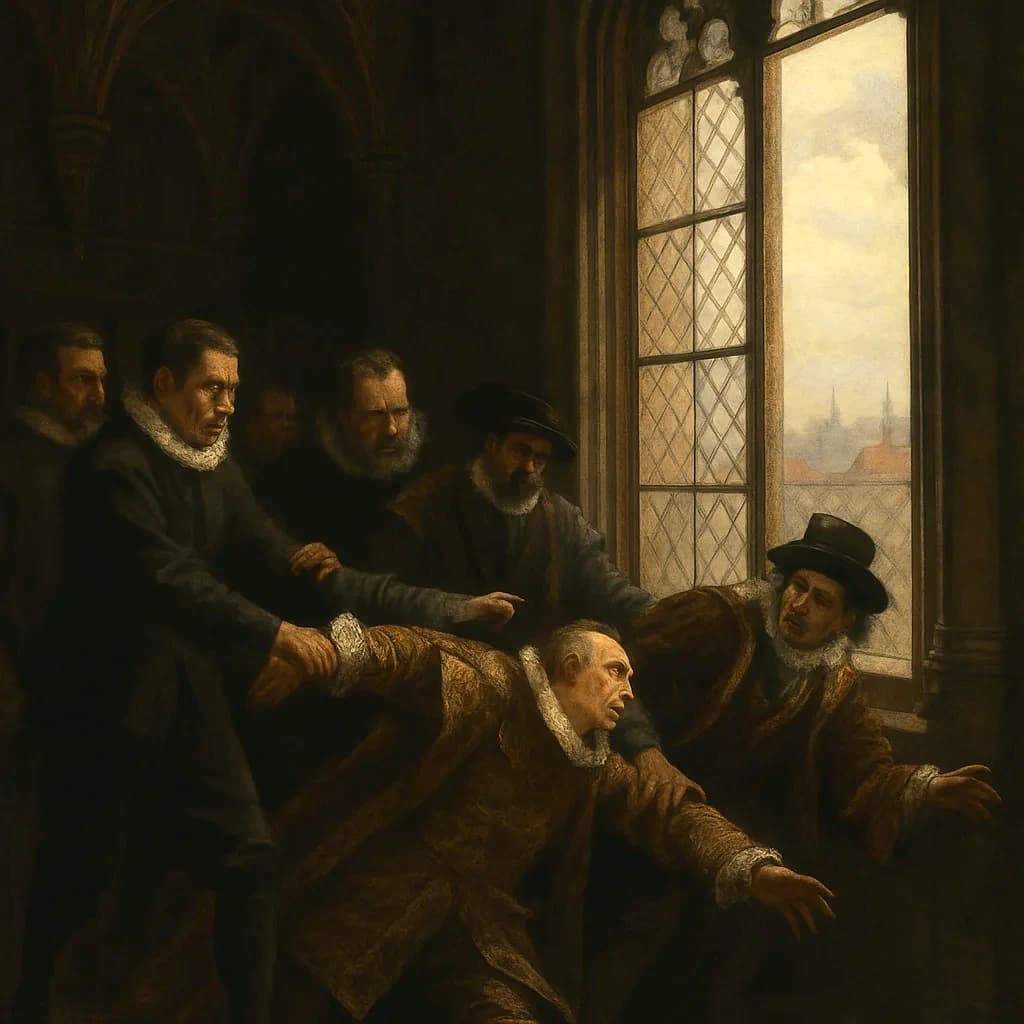
A Mob Threw Three Men From a Window and Eight Million Died
A mob threw three men out of a castle window, and somehow started a war that killed eight million people.
- Wedgwood, C.V. The Thirty Years War. Yale University Press, 1949.
- Parker, Geoffrey. The Thirty Years' War. Routledge, 1997.
- Pursell, Brennan. The Winter King: Frederick V of the Palatinate and the Coming of the Thirty Years' War. Ashgate, 2003.