
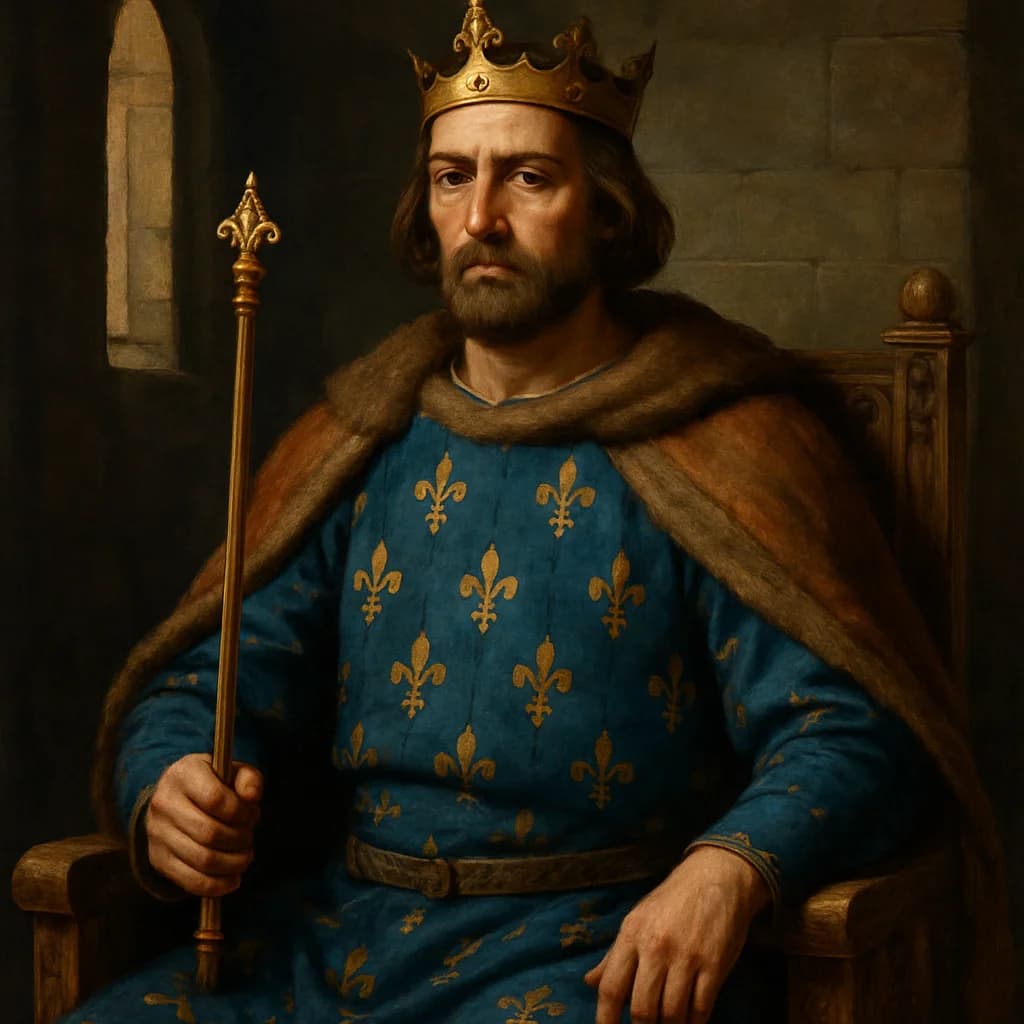
Philip Augustus
He spent forty years building the most powerful kingdom in medieval Europe, and he did most of it by running away.
Philip II of France, crowned at fifteen and dead at fifty-eight, is remembered primarily as the king who clipped the Plantagenet empire and made France matter again. That part is well-documented. What gets lost is the method: a life of spectacular, deliberate, almost gleeful cowardice deployed as a military instrument.
At the Third Crusade in 1191, Philip stood on the walls of Acre beside Richard I of England, joint commander of the greatest Christian military operation in a generation. He fell ill. Whether genuinely or conveniently remains an open question, but the timing was remarkable: he recovered just quickly enough to sail home to France before the actual campaigning began, leaving Richard to fight alone in the desert. He was back in Paris by August. By September, he was already picking apart Richard's French territories while Richard was stuck in the Holy Land. Philip had not won a single battle in the East. He had simply left first.
This was the pattern. Philip understood something his contemporaries refused to accept: that dynasties collapse at negotiating tables and in back rooms, not on battlefields. He was the king who first built a professional administrative apparatus for France, establishing permanent royal officials called baillis who answered directly to the crown and not to local lords. He paved the streets of Paris: actually paved them, in 1186, because the smell outside his palace window had become intolerable. He founded what would become the University of Paris. He built the Louvre as a fortress, not a palace. Every one of these decisions made France more governable, more legible, more his.
His personal life was operatically strange. He married Ingeborg of Denmark in 1193, saw her for the first time at the altar, and, by the following morning, was so viscerally repulsed that he tried to annul the marriage immediately. She refused. So did the Pope. Philip spent the next twenty years ignoring her existence while keeping her in various degrees of house arrest, taking another wife in between, and being excommunicated twice over the whole mess. Ingeborg eventually won. He eventually capitulated. She survived him.
Philip Augustus was the first French king to officially use the title 'King of France' rather than 'King of the Franks', a small linguistic shift that carried enormous constitutional weight, redefining the monarchy as sovereign over a territory rather than a people.
Why untold: Philip's story gets flattened into a supporting role in the Richard I and Crusades narrative, where his strategic retreats read as weakness rather than the calculated long game that tripled the French royal domain.
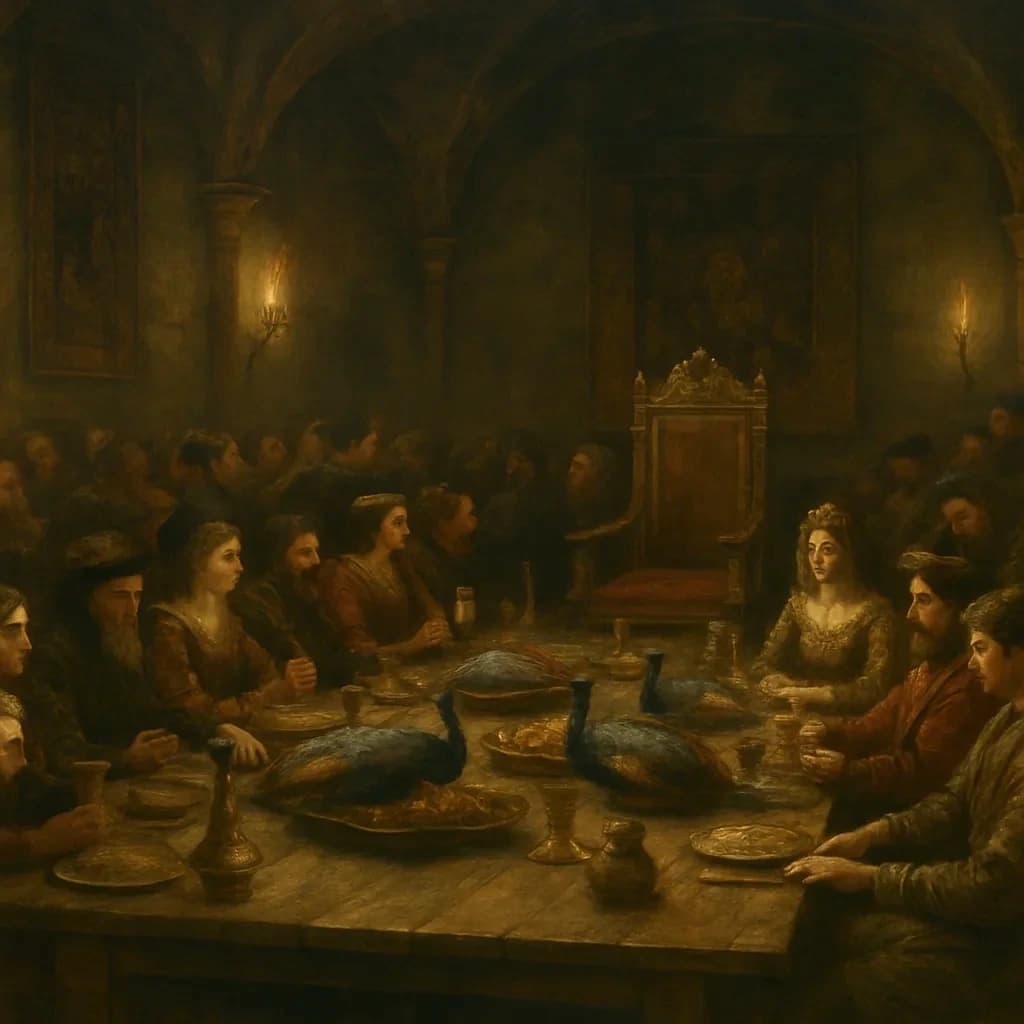
The Snubbed King Who Started a War
One empty table in medieval Paris nearly toppled the most powerful kingdom in Europe.
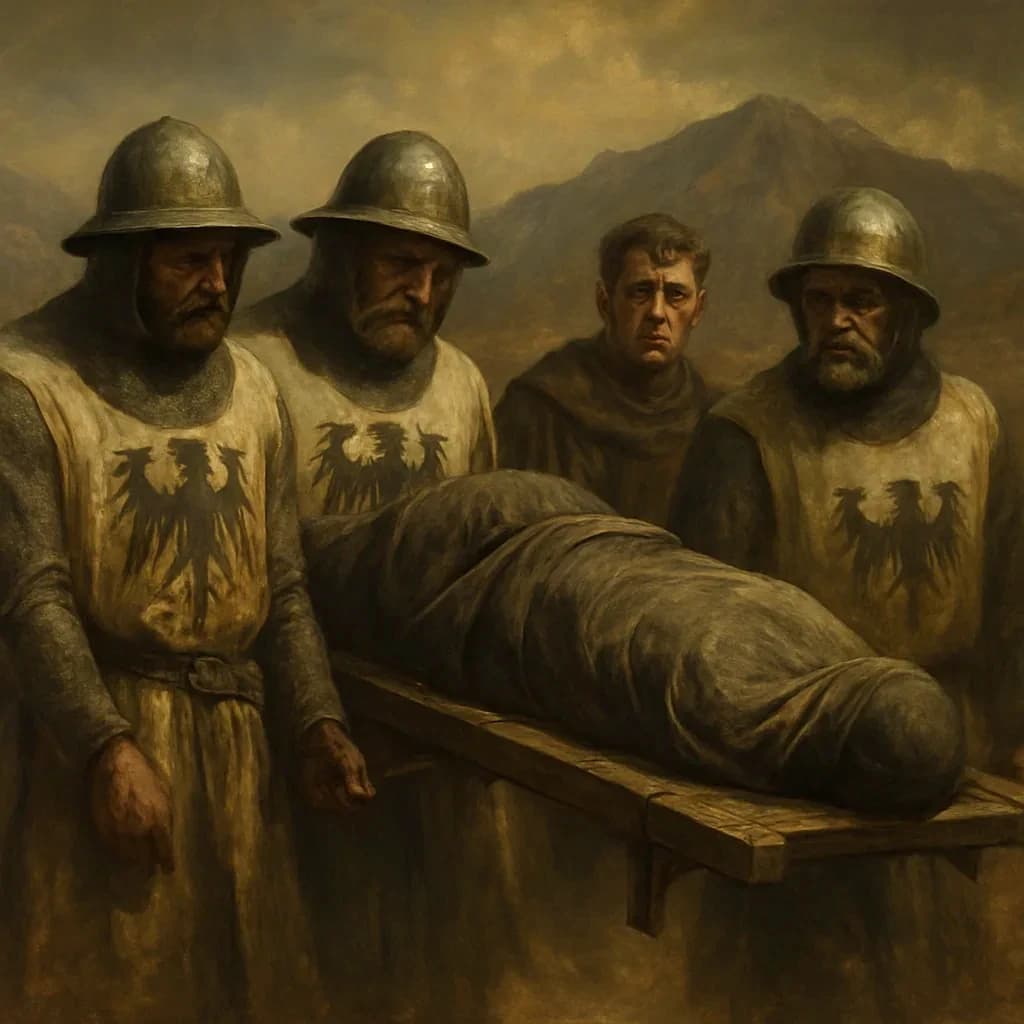
Barbarossa Drowned, So His Army Pickled Him
Frederick Barbarossa drowned crossing a small stream in Turkey, but his knights refused to believe he was dead.
- Jim Bradbury, Philip Augustus: King of France 1180-1223 (Longman, 1998)
- John W. Baldwin, The Government of Philip Augustus: Foundations of French Royal Power in the Middle Ages (University of California Press, 1986)
- Georges Duby, France in the Middle Ages 987-1460 (Blackwell, 1991)