
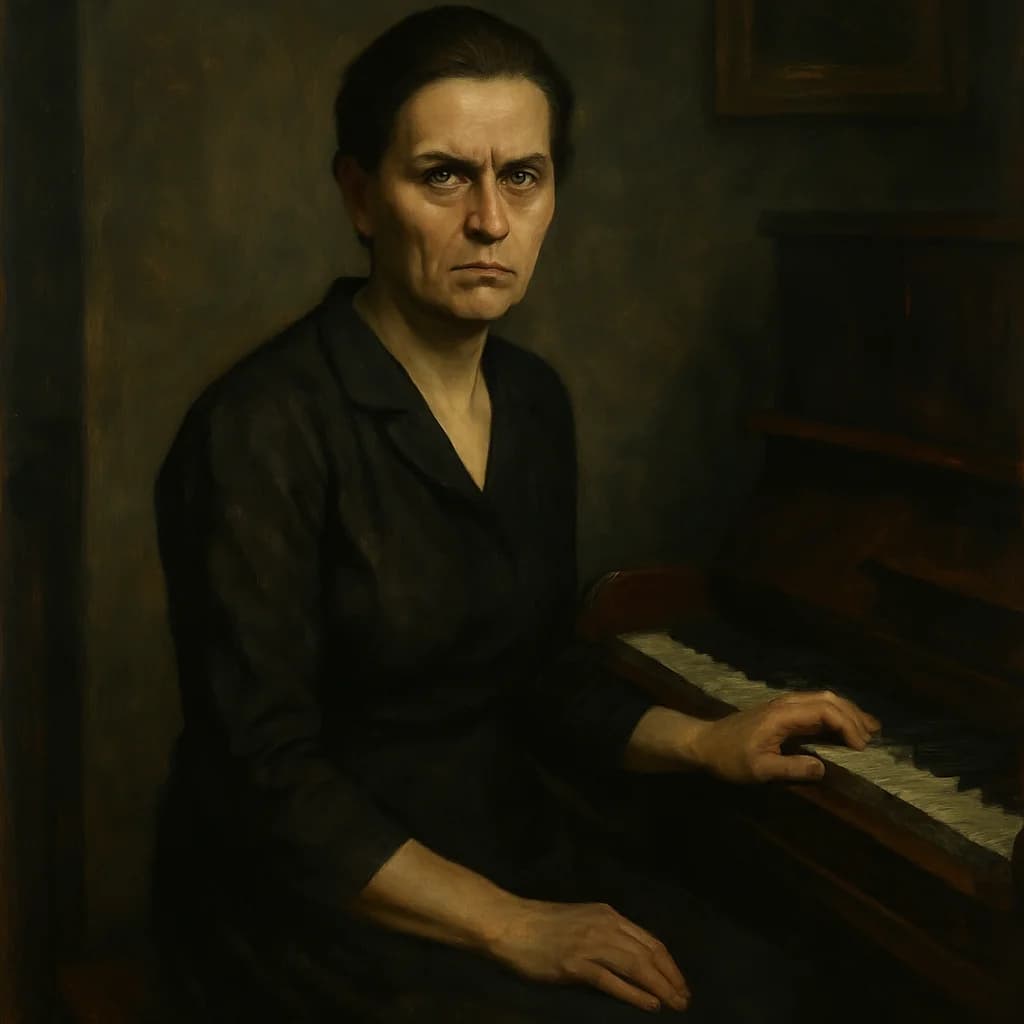
Maria Yudina
The woman who told Stalin to his face that he was a monster spent her last years giving underground concerts in Soviet kitchens, playing Bach for audiences of five.
Maria Yudina lived her entire life as if the Soviet surveillance state was merely an inconvenience, like bad weather. Born into a family of Siberian intellectuals in 1899, she studied under some of Russia's greatest pianists before the Revolution swept away the world that had created her. What emerged was something the Party never anticipated: a virtuoso who treated Communist ideology like a poorly written sonata.
She performed barefoot. She kept a pet monkey named Yasha in her Moscow apartment. She openly attended Orthodox services when religion could land you in the Gulag. Her concerts became legendary not just for her technical brilliance, but for her complete disregard for Soviet musical doctrine. While other artists performed approved works by approved composers, Yudina championed banned Western music and forgotten Russian masters with the intensity of a missionary.
The famous midnight recording session for Stalin (when she trembled so badly she could barely dial the phone) was typical Yudina. She made the recording, took Stalin's personal payment, then immediately donated the money to the Orthodox Church with a note explaining exactly where it came from. She survived multiple denunciations, interrogations, and the systematic destruction of her career not through compromise, but through sheer artistic conviction that proved more durable than the regime that tried to break it.
By the 1960s, officially banned from major concert halls, Yudina had created an underground network of private performances in apartments across Moscow and Leningrad. These kitchen concerts, attended by dissidents, intellectuals, and anyone brave enough to show up, became the stuff of legend. She died in 1970, having outlasted Stalin by seventeen years, still playing unauthorized music for unauthorized audiences in unauthorized spaces.
Yudina once received a standing ovation from a Gulag audience. She had volunteered to perform for political prisoners, an act so unprecedented that even the guards were too stunned to intervene.
Why untold: Soviet cultural authorities systematically erased her from official music history due to her religious faith and political defiance, while Western accounts focused only on her Stalin anecdote.
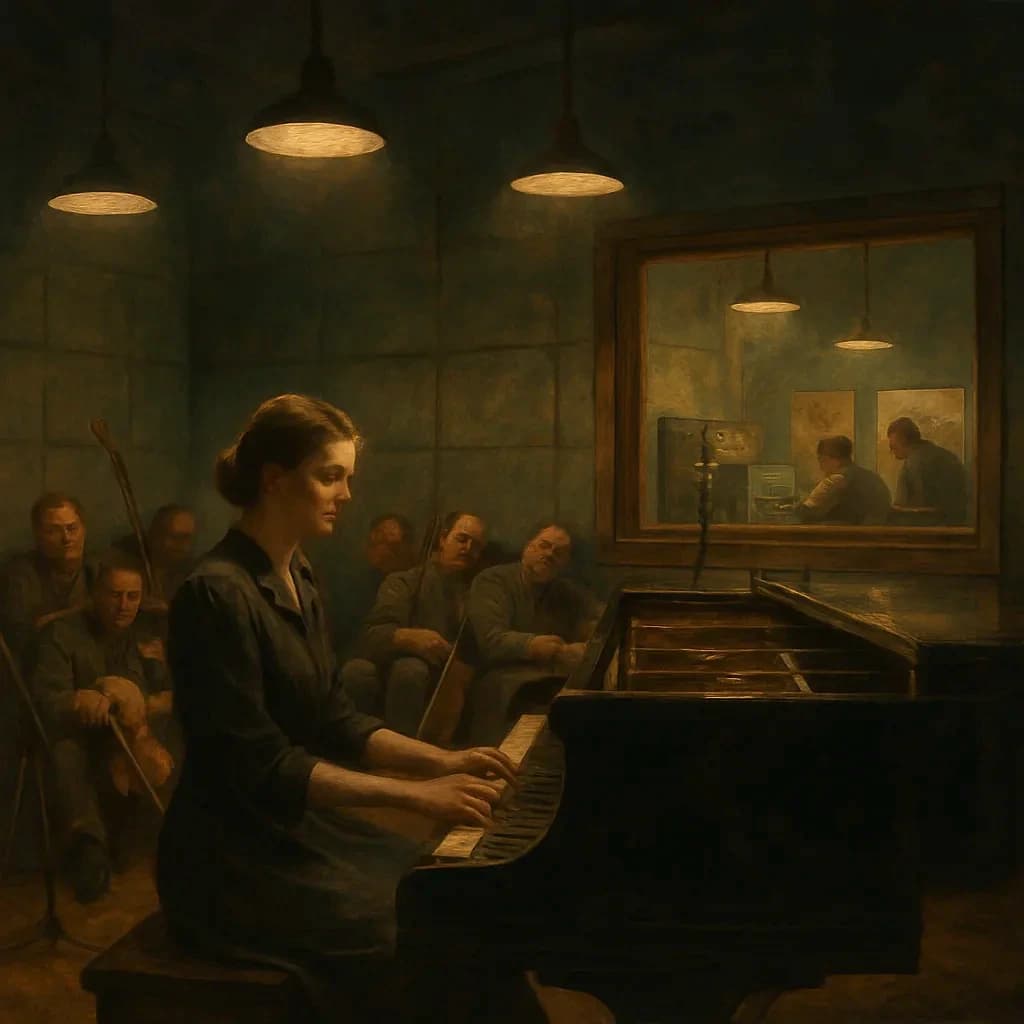
Stalin Phoned at 3 AM Demanding a Private Recording
When Stalin called for a private recording at 3 AM, no one mentioned the pianist was trembling so badly she could barely hold the phone.
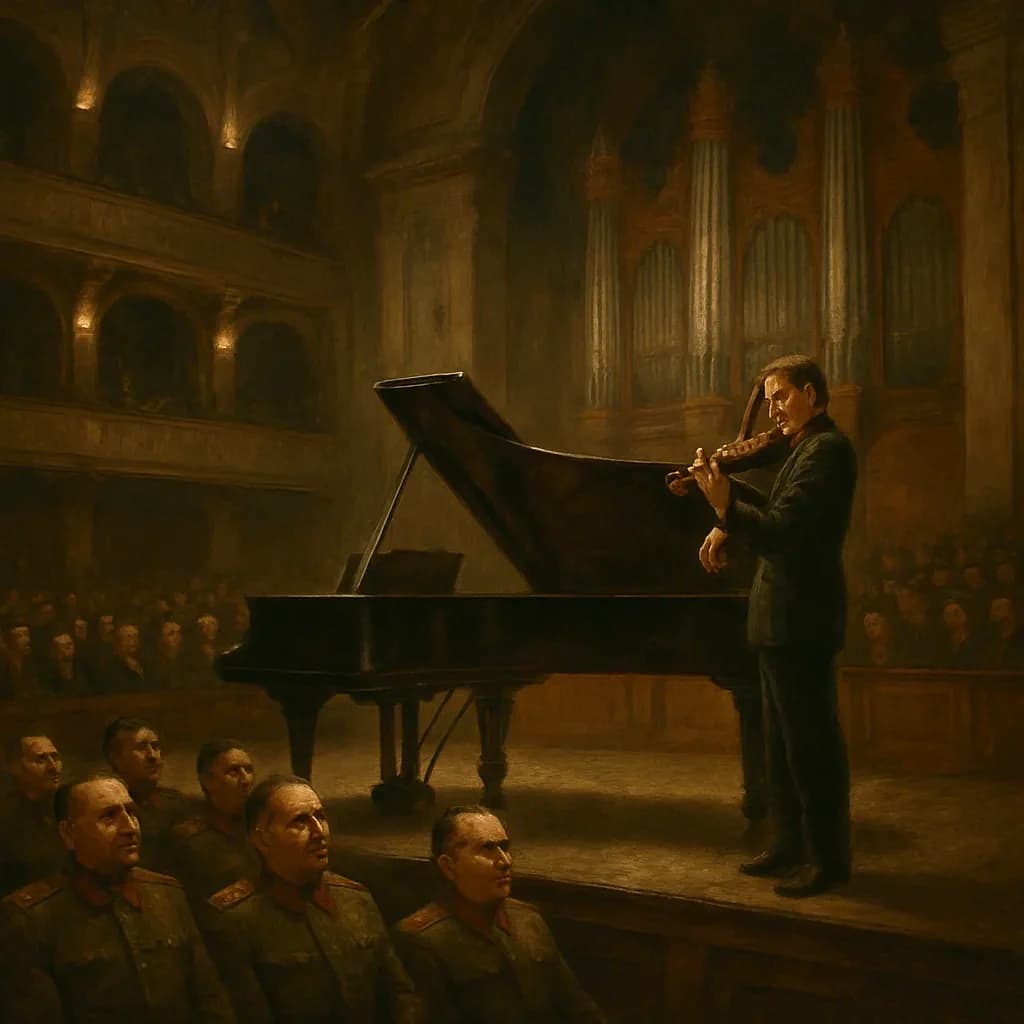
Five Seconds of Silence in a Moscow Theater
A piano accompanist's split-second hesitation during a 1943 concert may have saved Stalin from assassination.
- Elizabeth Wilson, 'Shostakovich: A Life Remembered' (Princeton University Press, 1994)
- Anatoly Kuznetsov, 'Maria Yudina: The Pianist Who Defied Stalin' (Journal of Soviet Music Studies, 1991)
- Solomon Volkov, 'The Magical Chorus: A History of Russian Culture from Tolstoy to Solzhenitsyn' (Vintage Books, 2008)