
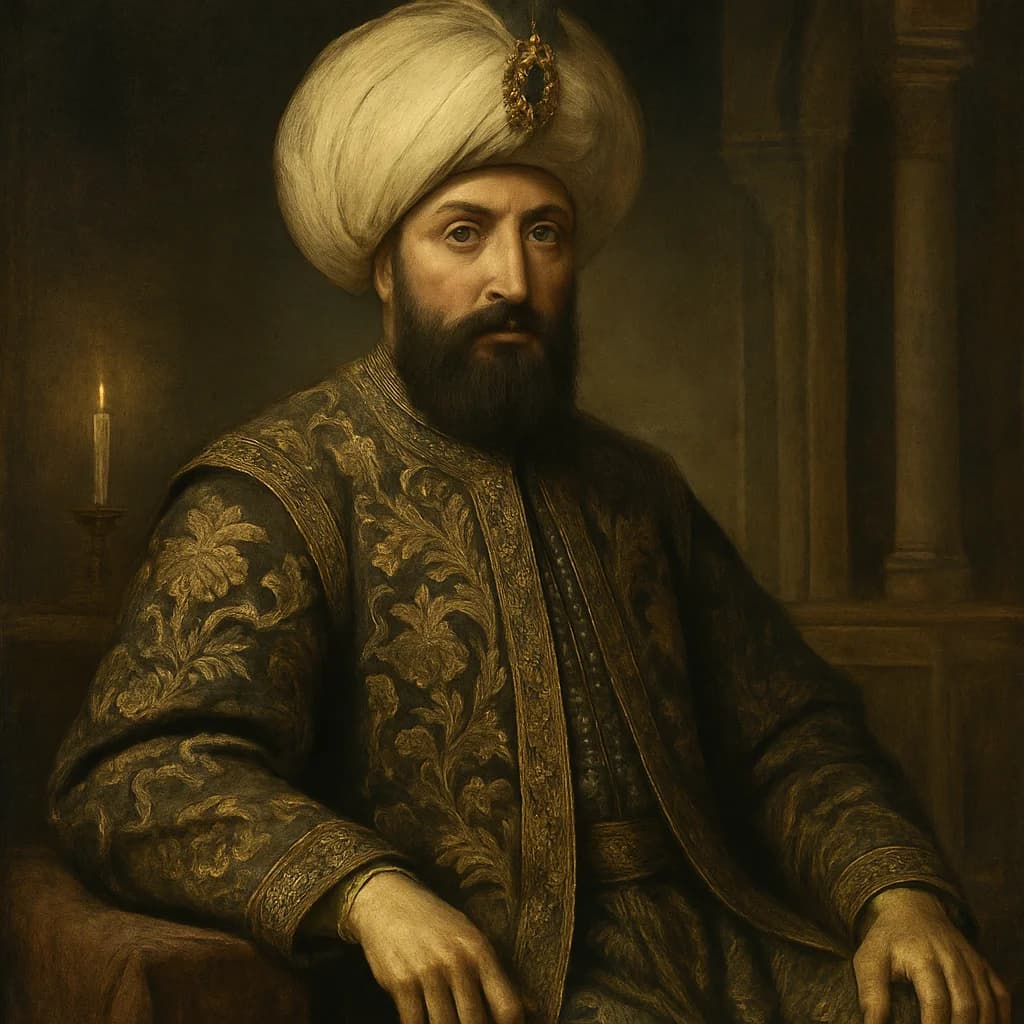
Kara Mustafa
He came within a bowshot of reshaping European history, then was strangled with a silk cord as a reward for his ambition.
Kara Mustafa Pasha was not supposed to be the man who decided the fate of Europe. He got there through a combination of ruthless court maneuvering, a dead mentor's connections, and an almost pathological need to outdo everyone who had ever doubted him. Born around 1634 in Merzifon, in what is now northern Turkey, he was taken into the household of the Grand Vizier Köprülü Mehmed Pasha as a boy, one of those strange Ottoman mechanisms where proximity to power could transform a provincial nobody into the second most dangerous man in an empire.
He rose through the Köprülü family's shadow, eventually marrying into it, and by 1676 had secured the Grand Vizierate itself. What history glosses over is the specific texture of his ambition: Kara Mustafa genuinely believed he could take Vienna where Suleiman the Magnificent had failed in 1529. This wasn't delusion. It was a calculated bet, and for most of the summer of 1683, it was nearly correct. His siege army, somewhere between 90,000 and 150,000 strong depending on whose count you trust, drove Vienna's garrison of roughly 15,000 to such desperation that the defenders literally loaded their own silver coins into cannon barrels for lack of conventional shot. The city was eating its horses. The wells were failing.
What Kara Mustafa refused to do, almost inexplicably, was allow his artillery to properly breach the walls. Contemporary Ottoman accounts and later Habsburg records both circle around the same possibility: he wanted Vienna intact. A destroyed city was a trophy. An intact Vienna was an empire, and specifically, it was *his* empire, separate from Constantinople, separate from the Sultan who could recall him at any moment. The siege wasn't just a military campaign. It was a real estate negotiation conducted with a hundred thousand men.
On September 12, 1683, the Polish-Lithuanian relief force under Jan III Sobieski descended from the Kahlenberg heights: famously cavalry-heavy, less famously cavalry-deficient, with hussar rolls padded by officers collecting pay for soldiers who existed only in ledgers. The Ottoman flanks collapsed within hours. Kara Mustafa fled to Belgrade. On December 25, 1683, Sultan Mehmed IV's envoys arrived with the imperial order. The silk cord was traditional. So was the ritual of presenting the Grand Vizier's severed head in a velvet bag. His head reached Constantinople shortly after New Year's.
When Kara Mustafa's camp was overrun after the Battle of Vienna, Sobieski's forces captured the Ottoman commander's personal standard along with an enormous quantity of coffee beans, a commodity so unfamiliar to the Viennese that a Polish officer named Jerzy Kulczycki reportedly used the captured stock to open one of the first coffeehouses in the city.
Why untold: Kara Mustafa exists almost entirely as a foil in Western historiography (the villain whose defeat enabled European Christendom's survival), which flattens the internal Ottoman political calculus that actually drove his decisions and makes his strategic thinking invisible.
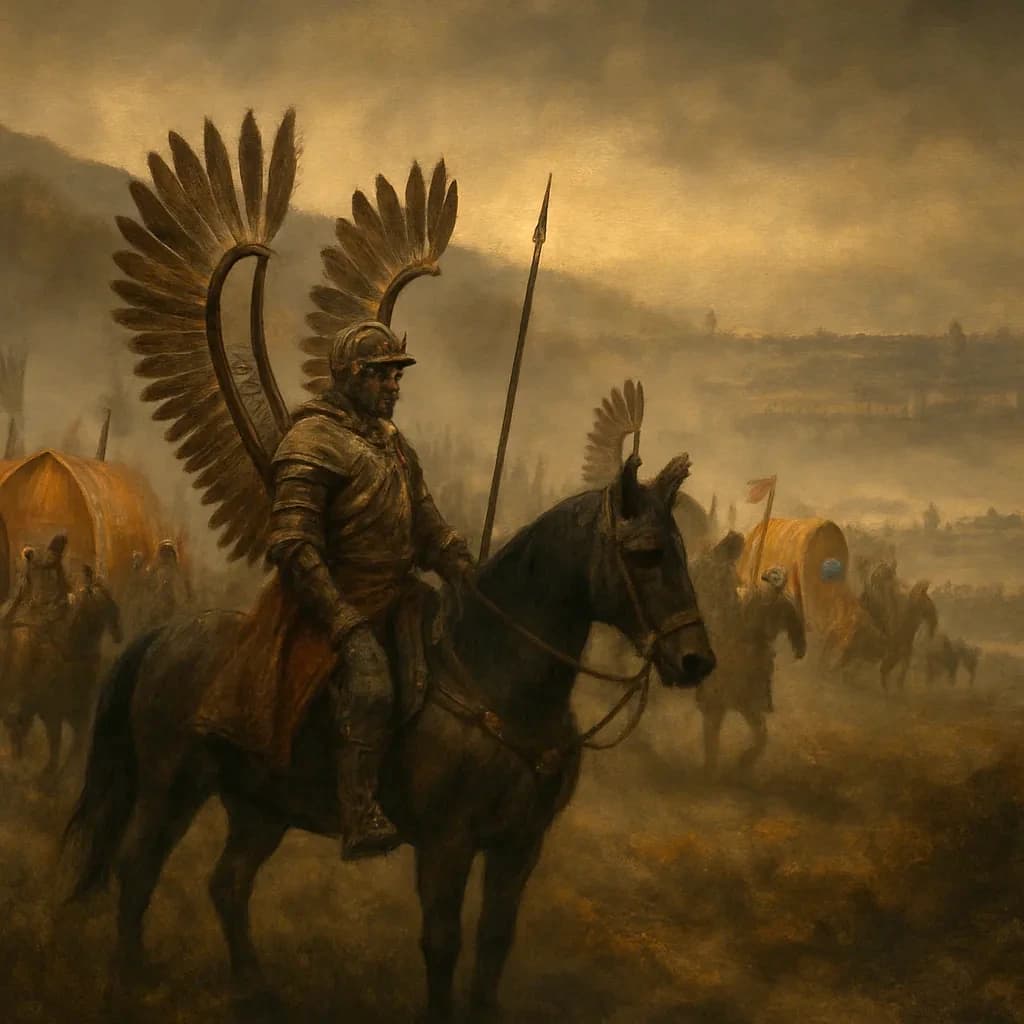
Half the Cavalry That Saved Vienna Was Fake
The Polish general who saved Vienna from Ottoman conquest had one problem: half his legendary cavalry existed only on paper.
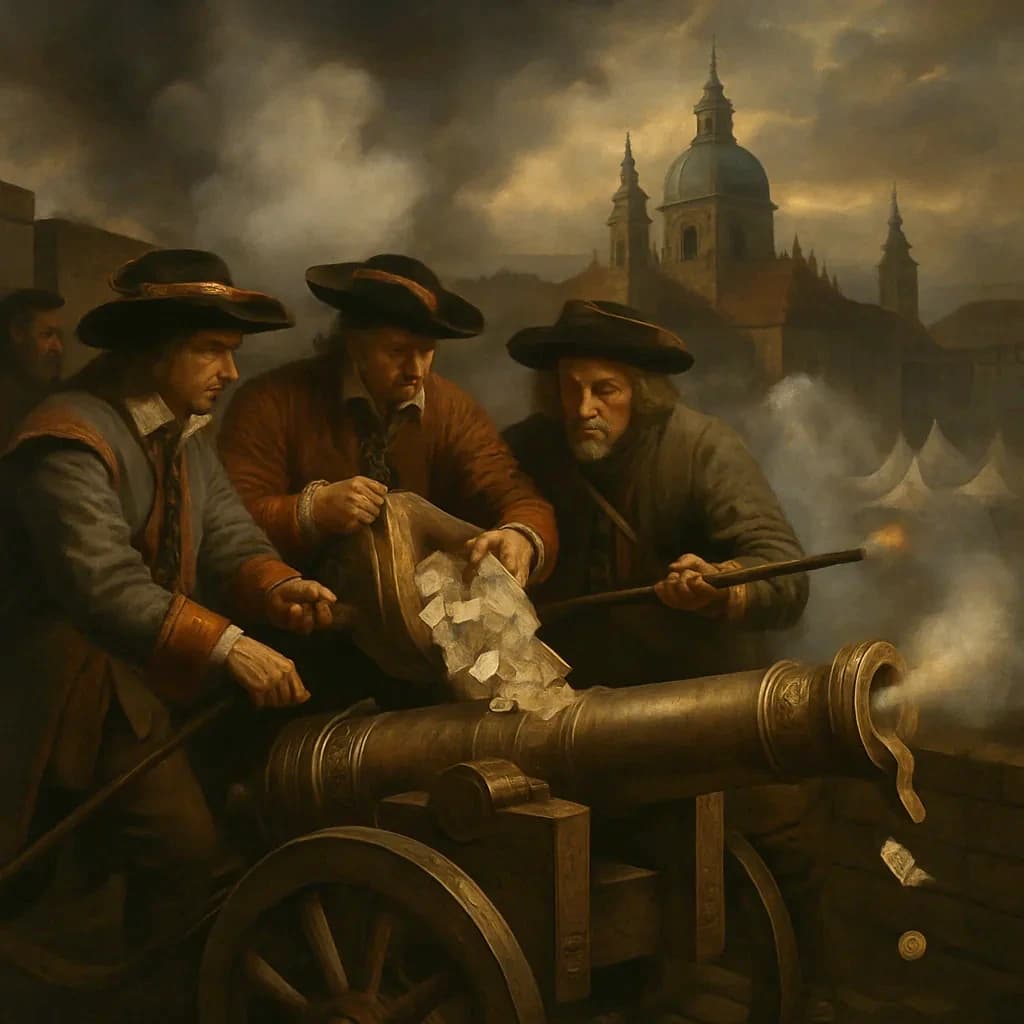
Vienna Stuffed Its Cannons With Imperial Money
By 1683 the Ottoman siege had pushed Vienna's defenders so close to breaking that they began ramming their own currency into their cannons as wadding.
- John Stoye, The Siege of Vienna: The Last Great Trial Between Cross and Crescent (2006), Pegasus Books
- Caroline Finkel, Osman's Dream: The History of the Ottoman Empire (2005), Basic Books
- Thomas M. Barker, Double Eagle and Crescent: Vienna's Second Turkish Siege and Its Historical Setting (1967), SUNY Press