
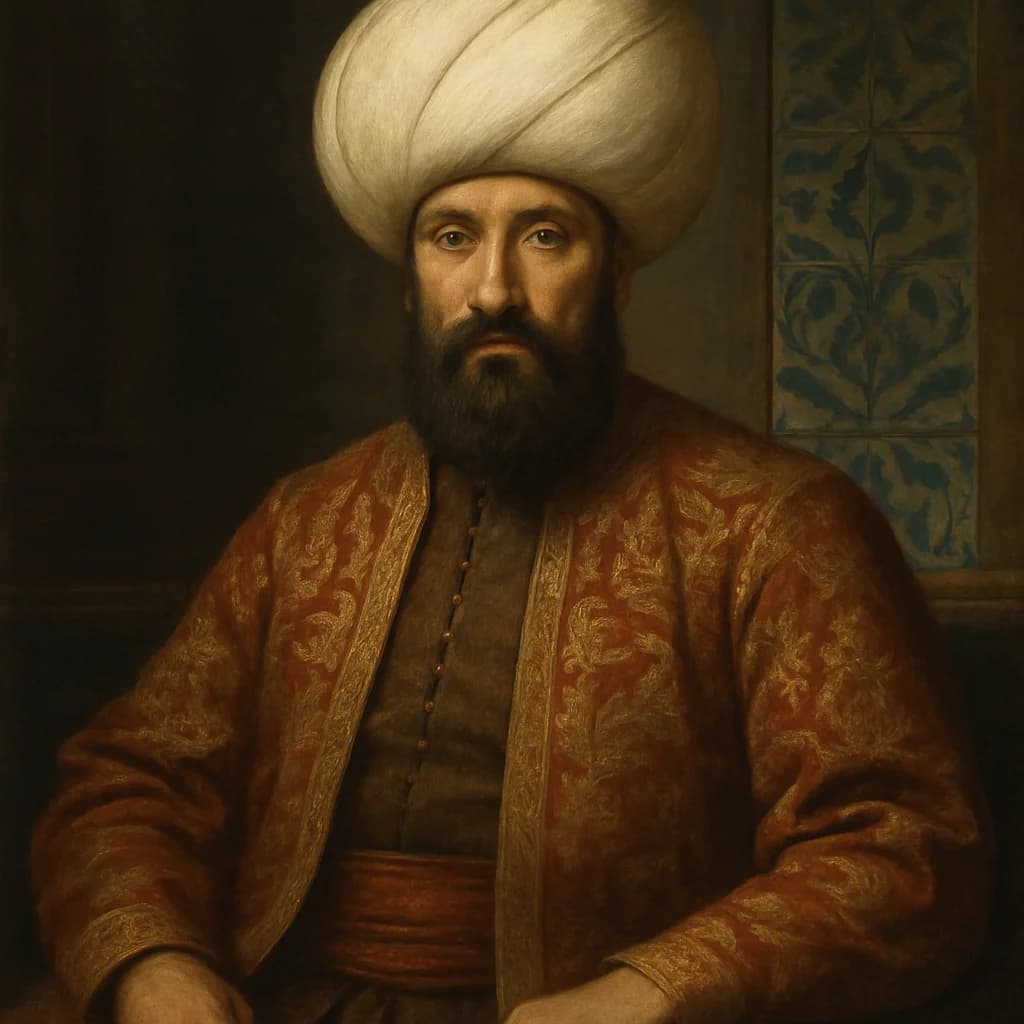
Ibrahim Pasha
He conquered Egypt, Syria, and nearly toppled the Ottoman dynasty itself, and history remembers him mostly as his father's son.
Ibrahim Pasha was born around 1493 in Parga, a Greek coastal town, the son of a fisherman. He was enslaved as a boy, entered the Ottoman imperial household, and by his early twenties had become the closest companion (by some accounts, something closer than that) of Prince Suleiman. When Suleiman became sultan in 1520, Ibrahim's ascent was so rapid it disturbed even the people who benefited from it. Within three years he was Grand Vizier, the second most powerful man in the world. He was thirty years old.
What gets buried under the legend of Suleiman the Magnificent is how much of the magnificence was Ibrahim's architecture. He negotiated the 1533 Franco-Ottoman alliance with Francis I's ambassador (the most strategically audacious diplomatic arrangement of the sixteenth century, a Christian king and a Muslim empire coordinating against the Habsburgs), and he did it while managing Ottoman court protocol so rigid that a French diplomat's beard nearly derailed the entire enterprise before it began. Ibrahim understood that empire runs on theater as much as steel, and he was a virtuoso of both. He commanded the Ottoman campaigns in Persia and Iraq personally, capturing Tabriz in 1534, and his administrative reorganization of those territories outlasted him by generations.
But Ibrahim made one catastrophic error of vanity. During his Egyptian campaign of 1524-1525, he had statues of himself erected in Constantinople's Hippodrome (including figures seized from Budapest) and allowed himself to be addressed as Serasker Sultan, 'commander sultan.' In Ottoman political grammar, that word belonged to one man only. Suleiman let it pass. For years, he let it pass. Then, on the night of March 14-15, 1536, Ibrahim dined with Suleiman in the palace. He was found strangled the next morning. No trial. No exile. No explanation.
His wealth was confiscated, his name was excised from official records where possible, and the machinery of Ottoman memory (which was also the machinery of Ottoman silence) did the rest. He was thirty-nine, give or take.
Ibrahim Pasha was so trusted by Suleiman that he was given the virtually unprecedented privilege of using Suleiman's own personal tughra (the imperial seal) on official documents, a power normally reserved for the sultan himself.
Why untold: Because the Ottoman state actively suppressed his memory after his execution, and Western historiography has spent five centuries treating him as a supporting character in Suleiman's biography rather than a principal architect of the sixteenth-century world order.
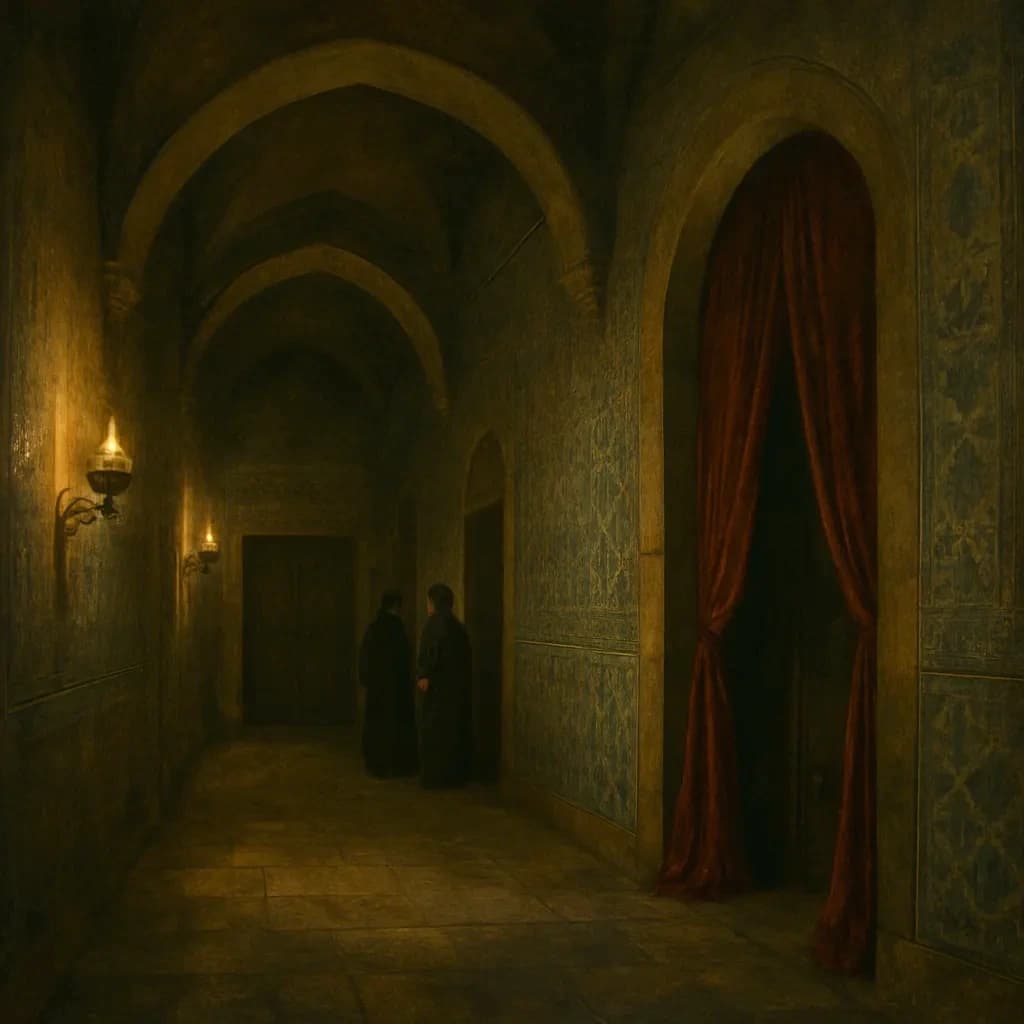
Suleiman Had His Closest Friend Strangled at Dinner
An Ottoman grand vizier was strangled on a Tuesday morning because he'd been too honest in a letter, and his death changed the course of an entire century.
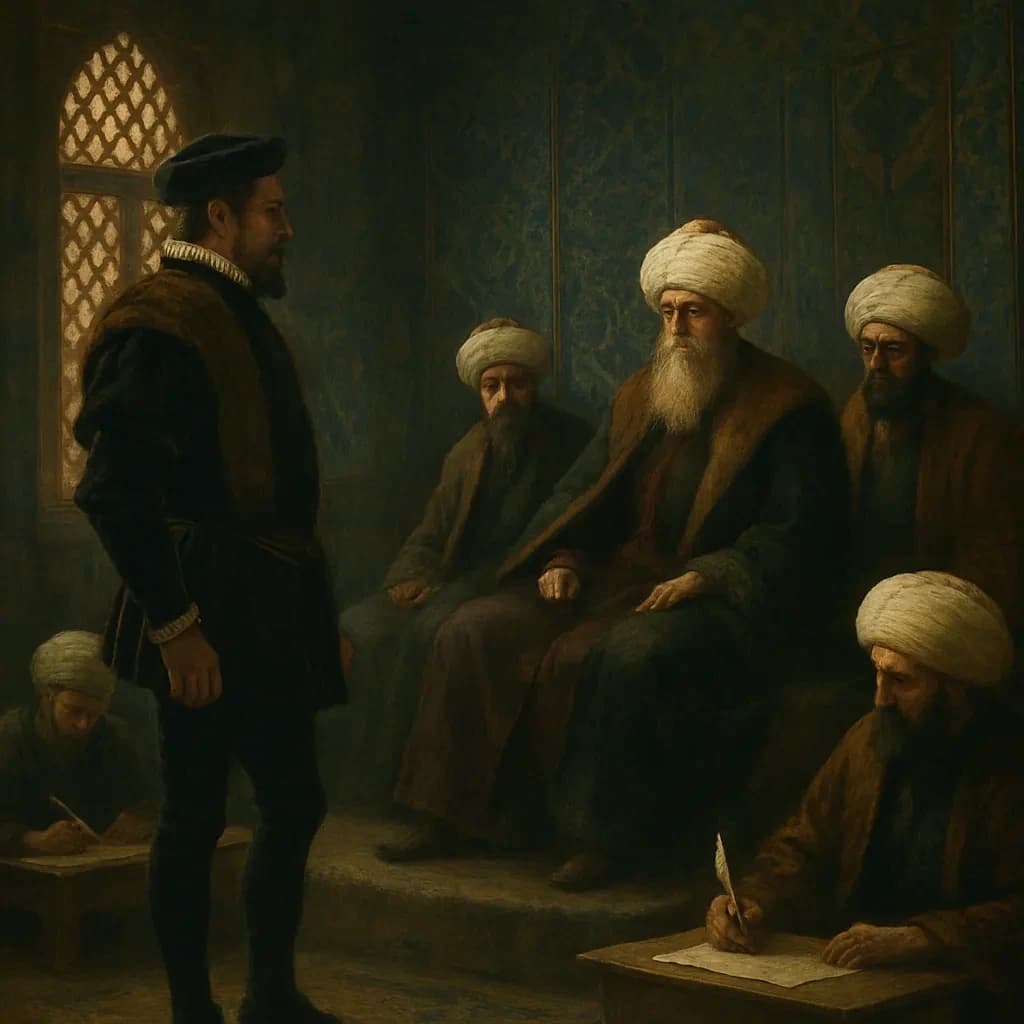
A Beard Nearly Wrecked Europe's Most Scandalous Alliance
A Turkish diplomatic ritual collided with one Frenchman's facial hair in 1533, and the most important alliance in European history almost died in a waiting room.
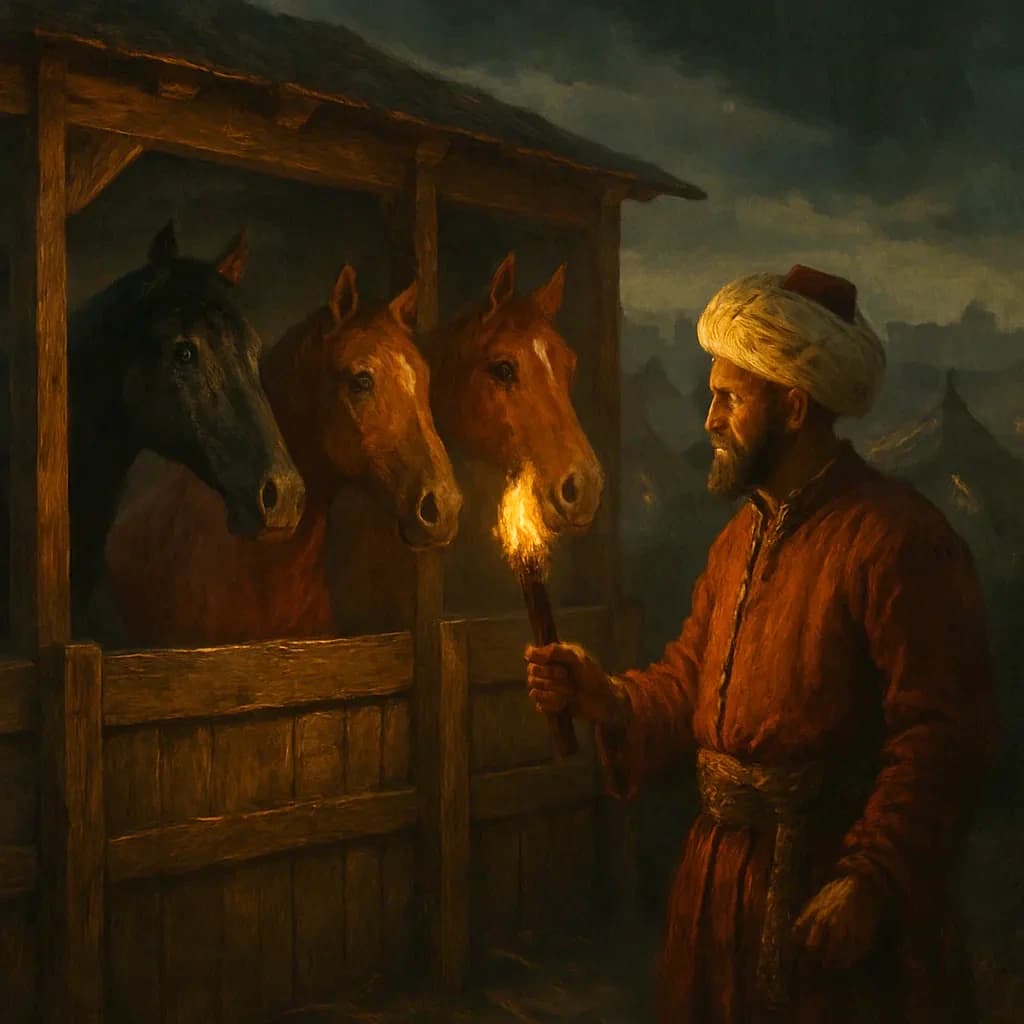
One Horse Decided Whether Vienna Would Fall
A stable master's choice of which horses to saddle in 1529 redrew the map of Europe forever.
- Peirce, Leslie. 'Empress of the East: How a European Slave Girl Became Queen of the Ottoman Empire.' Basic Books, 2017.
- Ágoston, Gábor and Bruce Masters, eds. 'Encyclopedia of the Ottoman Empire.' Facts on File, 2009.
- Skilliter, S.A. 'The Franco-Ottoman Alliance of 1536.' In 'Historians of the Middle East,' edited by Bernard Lewis and P.M. Holt. Oxford University Press, 1962.