
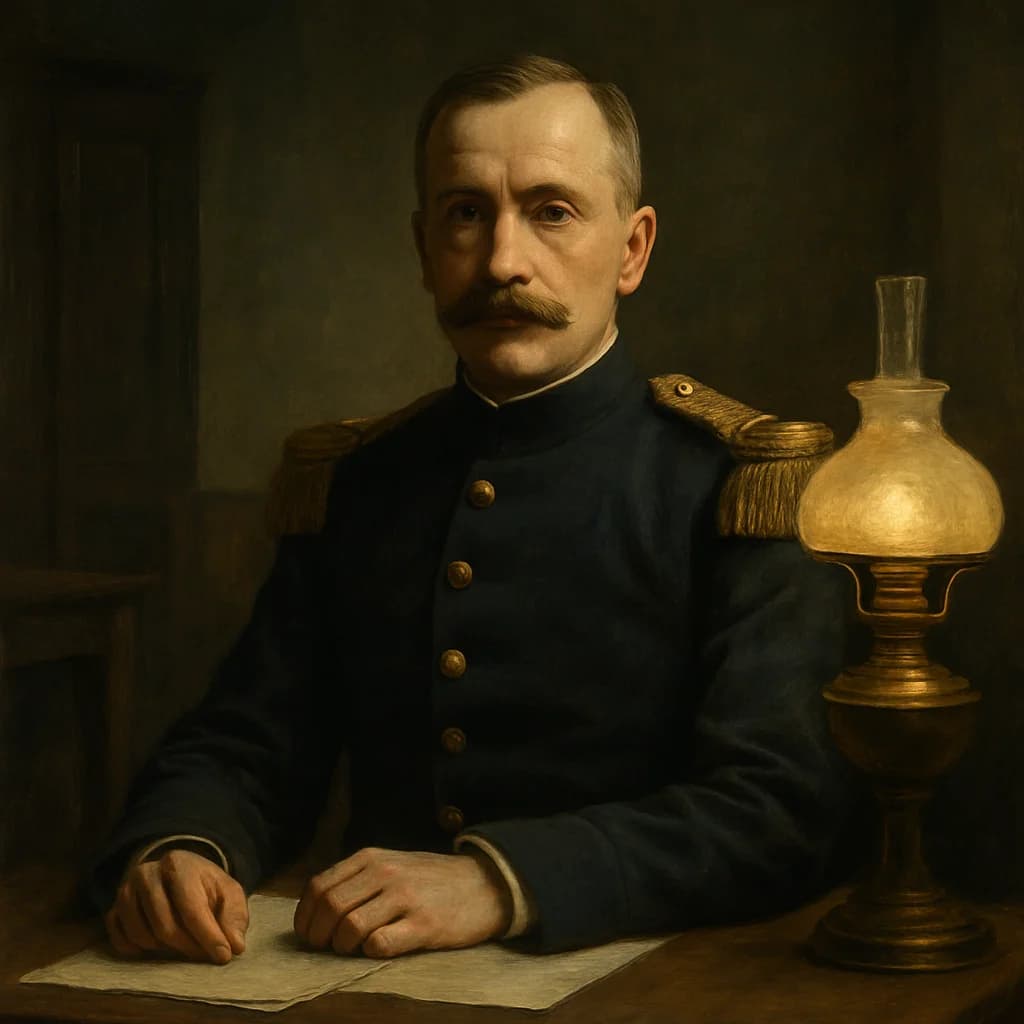
Georges Picquart
He proved a man was innocent, and France punished him for it.
Georges Picquart was not supposed to be a hero. He was, by most measures, a product of the very system that was destroying Alfred Dreyfus: a career military man, an Alsatian by birth, a rising star in French intelligence who had himself held antisemitic views common among the officer class of the 1890s. When he was appointed head of the Statistical Section, the army's counterintelligence unit, in 1895, he inherited a closed case. Dreyfus was on Devil's Island. The matter was settled. Picquart's job was to keep watching German spies, not to ask uncomfortable questions.
The uncomfortable question found him anyway. In April 1896, Picquart's agents intercepted a torn pneumatic message (a petit bleu, the pale blue correspondence card used in Paris's pneumatic postal system) addressed to Major Ferdinand Walsin Esterhazy, an infantry officer with serious gambling debts and a known fondness for Germany. Picquart began pulling the thread. What unraveled was the realization that Esterhazy, not Dreyfus, had authored the bordereau, the document that had sent Dreyfus to prison. The handwriting was unmistakable. Picquart brought this to his superiors. His superiors told him to bury it.
He refused. This decision cost him nearly everything. The army transferred him out of Paris in November 1896, shipping him to increasingly dangerous postings in Tunisia, then to a remote assignment in eastern France, a slow administrative burial. When that didn't silence him, they arrested him. In 1898, Picquart was imprisoned in the Cherche-Midi military prison on fabricated charges of leaking documents to a lawyer. He spent nearly a year there. The army had, in essence, jailed the one officer who had tried to correct its mistake. He was eventually court-martialed, convicted, and dismissed from the service in 1898, the same year Émile Zola published J'Accuse.
The Dreyfus Affair's full reversal vindicated him completely. In 1906, Picquart was not only exonerated but promoted directly to brigadier general, skipping several ranks. Georges Clemenceau, who had championed the Dreyfusard cause for years, appointed him Minister of War in 1906, the civilian head of the institution that had tried to destroy him. He held the post until 1909. He died in 1914 from injuries after being thrown from a horse, three months before the war that would consume the generation he'd spent his career serving.
Picquart was appointed Minister of War in 1906 by Prime Minister Clemenceau, making him the direct civilian superior of the French Army, the same institution that had forged documents to imprison him just eight years earlier.
Why untold: Because the Dreyfus Affair's narrative gravitates toward Dreyfus himself and toward public intellectuals like Zola, the military insider who actually cracked the case from within (at the greatest personal cost) gets absorbed into the supporting cast of someone else's story.
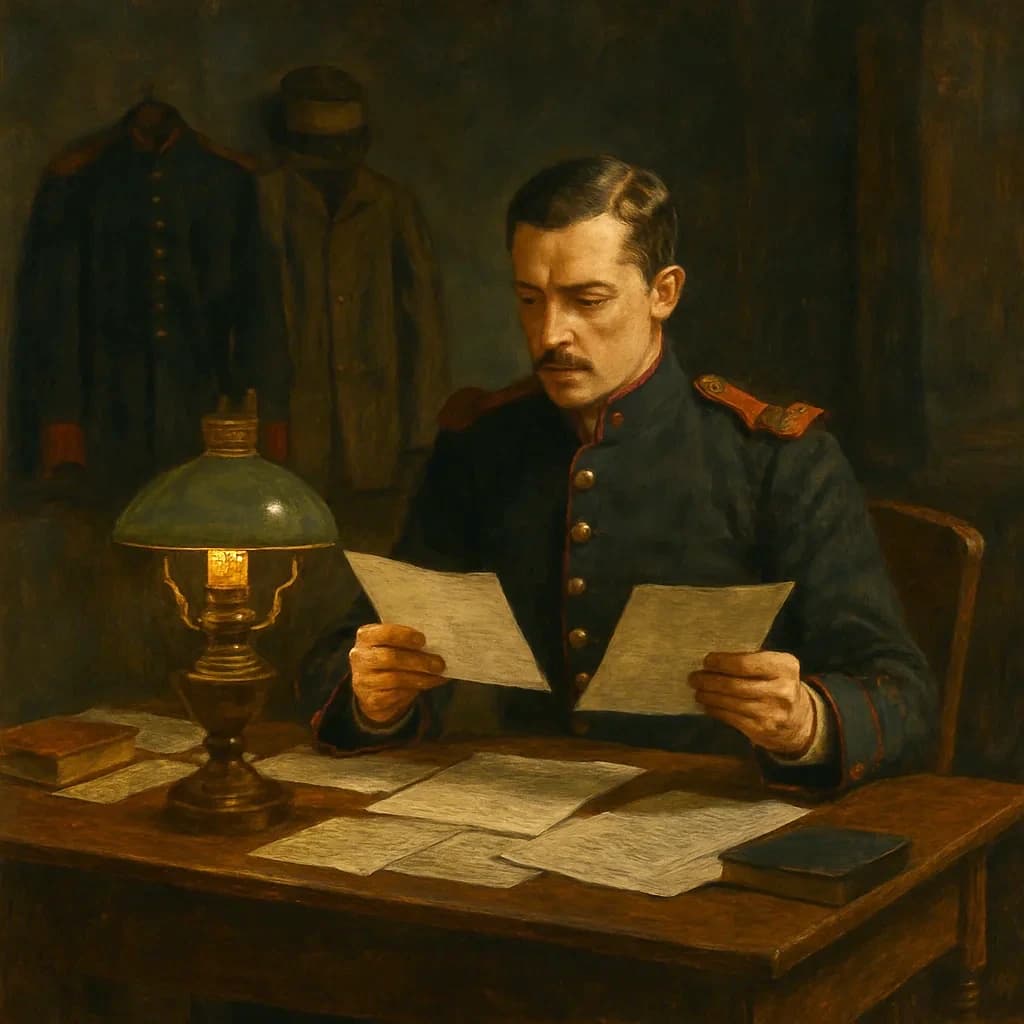
Two Handwriting Samples That Tore France Apart
A colonel's poorly forged handwriting started a diplomatic crisis that nearly toppled a government and exposed the rot at the heart of French military intelligence.
One Signature Tore France Apart for a Decade
A single signature on a French passport in 1894 triggered a scandal that would tear apart a nation for over a decade.
- Ruth Harris, Dreyfus: Politics, Emotion, and the Scandal of the Century (Metropolitan Books, 2010)
- Frederick Brown, For the Soul of France: Culture Wars in the Age of Dreyfus (Knopf, 2010)
- Jean-Denis Bredin, The Affair: The Case of Alfred Dreyfus, translated by Jeffrey Mehlman (George Braziller, 1986)