
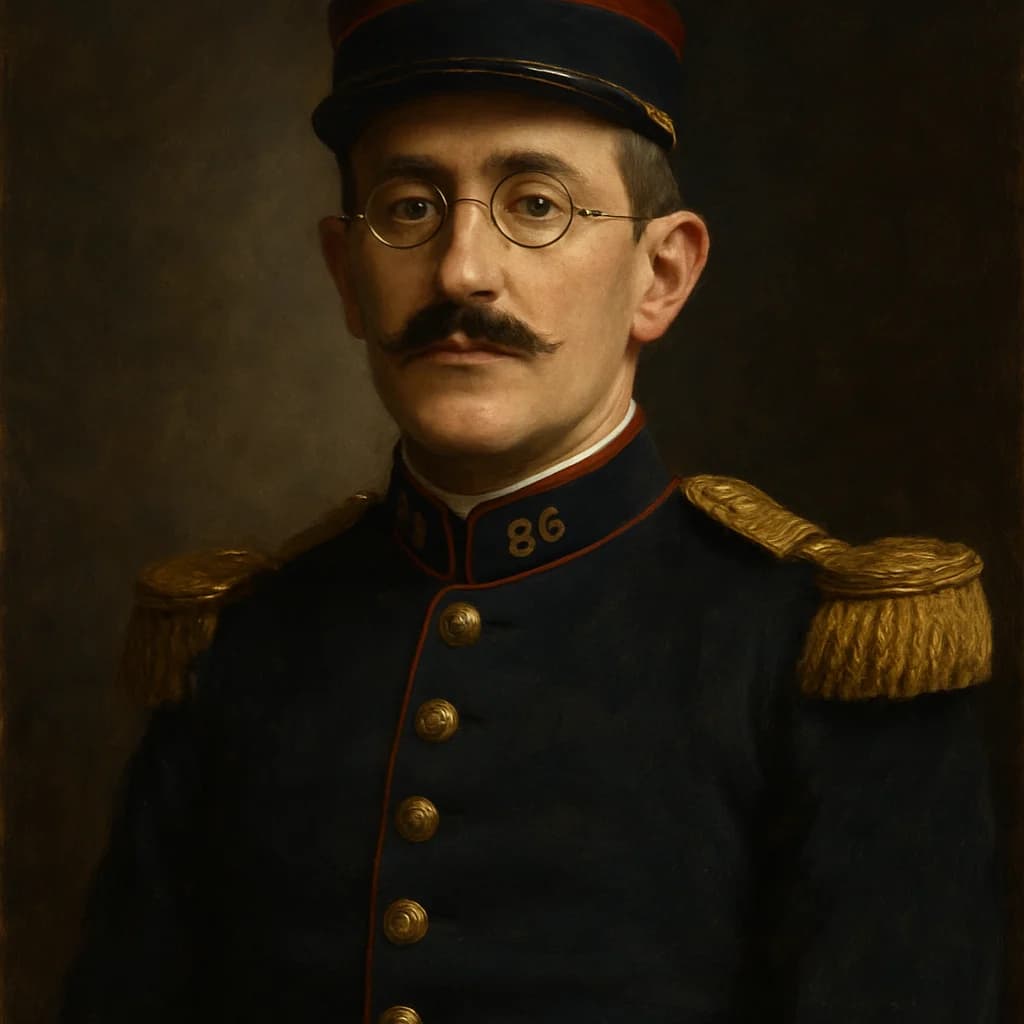
Alfred Dreyfus
He was exonerated, reinstated, and decorated, and spent the rest of his life wishing everyone would just stop talking about him.
Alfred Dreyfus did not want to be a symbol. He wanted to be a soldier. Born in 1859 in Mulhouse, Alsace, into a prosperous Jewish textile family, he watched French troops withdraw from his hometown after the Franco-Prussian War of 1871 and made a decision that would define his life: he would become an officer in the French Army. Not despite France's humiliation. Because of it. The family moved to Paris rather than accept German annexation, and Dreyfus carried that loyalty like a second skin.
When he was arrested in October 1894, accused of passing military secrets to Germany, the case against him was almost comically thin: a single torn letter, the so-called bordereau, matched to his handwriting by an expert who later admitted he wasn't sure. The Army convicted him anyway. He was publicly stripped of his rank in the courtyard of the École Militaire in January 1895, his sword broken, his buttons ripped off, while a crowd outside screamed for his death. Then they shipped him to Devil's Island, a malarial prison colony off the coast of French Guiana, and left him there. Alone. In a stone hut. For four years.
What tends to get lost is how completely Dreyfus was excluded from his own defense. While Émile Zola published J'accuse, while intellectuals fought in Parisian cafés, while the Dreyfus Affair convulsed French politics and inspired Theodor Herzl to write The Jewish State, Dreyfus sat on a rock in the Atlantic with no news, no context, and no idea any of it was happening. He learned about Zola's letter months after publication. The man at the center of the century's great civil liberties battle was its least informed participant.
After his 1906 exoneration and reinstatement, he served with distinction in World War One, was promoted to lieutenant colonel, and was awarded the Légion d'Honneur. Then he quietly retired and spent decades giving almost no interviews. His memoir, Cinq Années de ma Vie, reads less like a manifesto than a very tired man's request to be left alone. He died in Paris in 1935, six years before the Vichy government would posthumously strip Jewish veterans of exactly the honors France had spent forty years learning to give him.
During his imprisonment on Devil's Island, French authorities built a wooden palisade around Dreyfus's hut so he could not see the sea, not for security, but simply to increase his psychological suffering.
Why untold: Because the Dreyfus Affair became a story about France (its institutions, its intellectuals, its anti-Semitism) and in that retelling, Dreyfus himself was reduced from a person to a plot point, his inner life and postwar silence crowded out by the drama of everyone who fought over him.
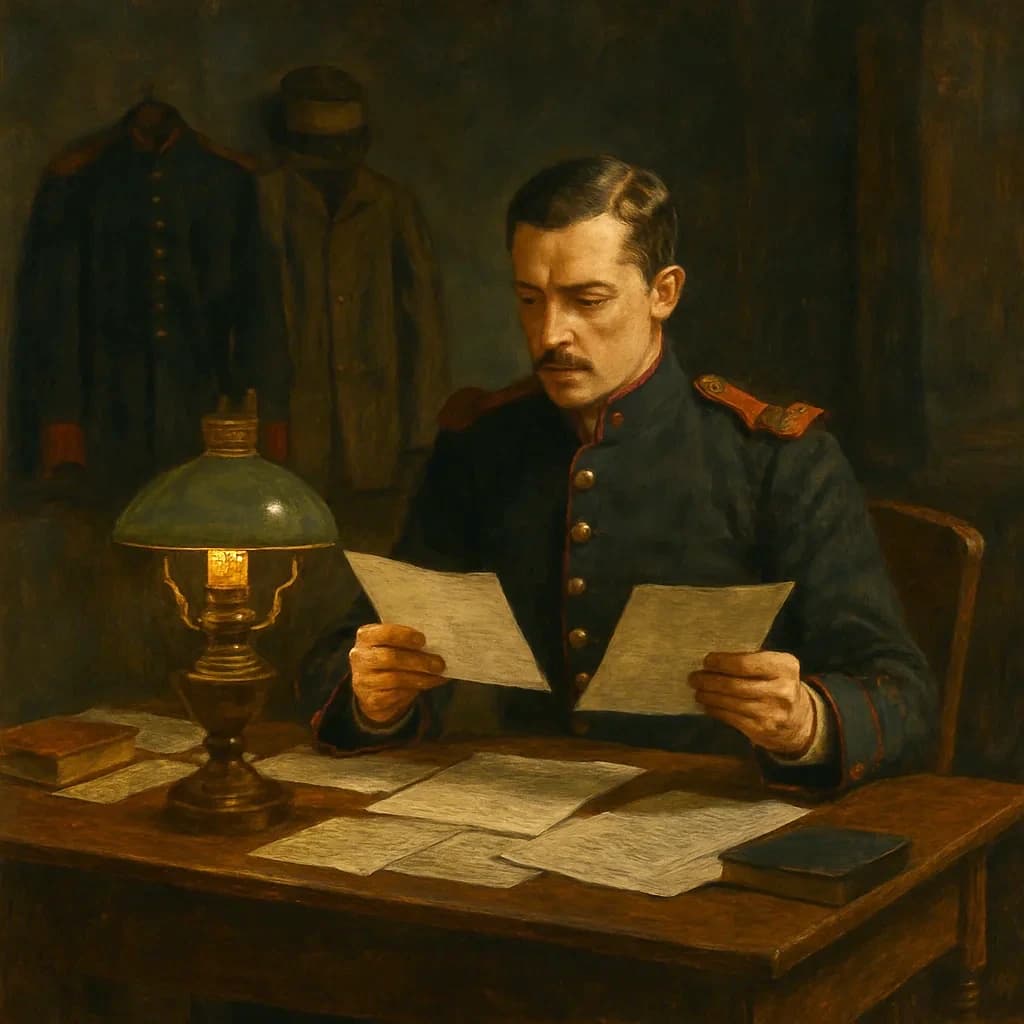
Two Handwriting Samples That Tore France Apart
A colonel's poorly forged handwriting started a diplomatic crisis that nearly toppled a government and exposed the rot at the heart of French military intelligence.
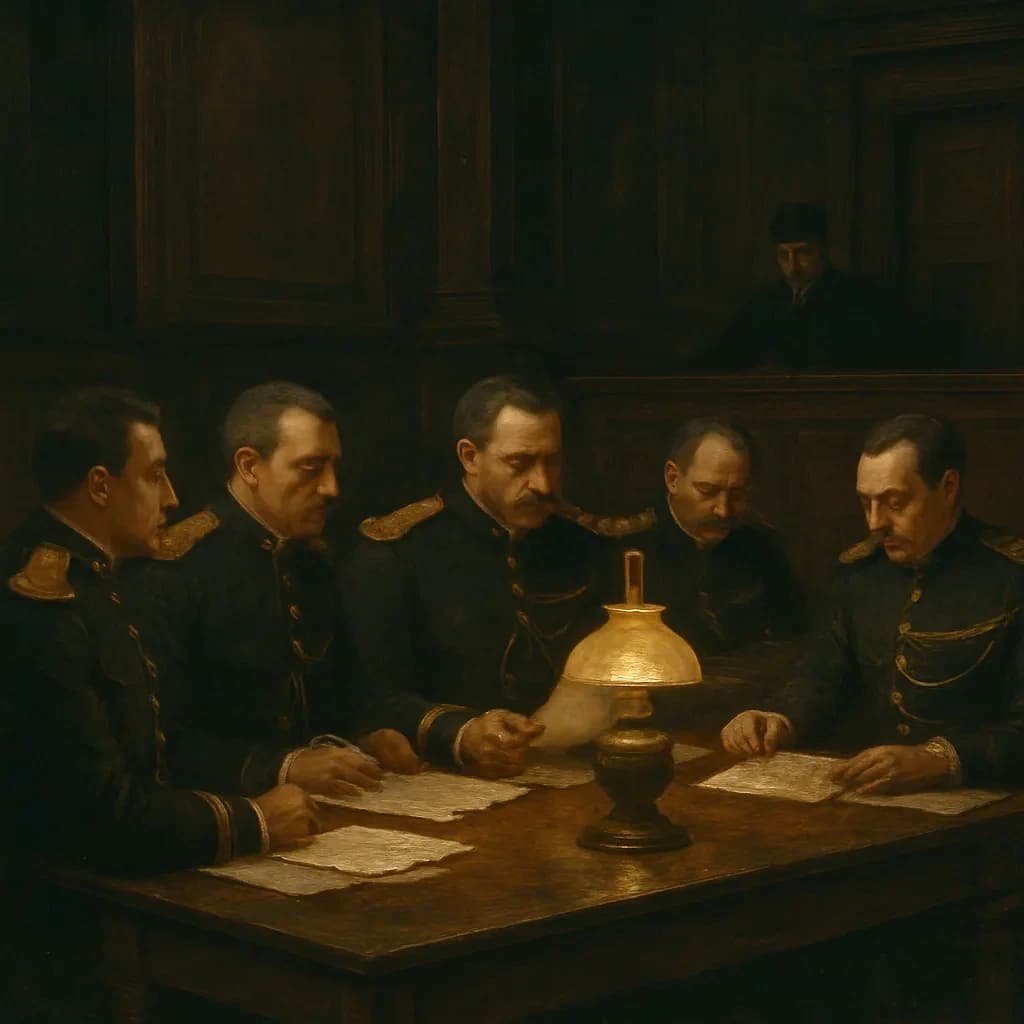
One Signature Tore France Apart for a Decade
A single signature on a French passport in 1894 triggered a scandal that would tear apart a nation for over a decade.
- Ruth Harris, The Man on Devil's Island: Alfred Dreyfus and the Affair That Divided France (Penguin, 2010)
- Alfred Dreyfus, Cinq Années de ma Vie (Fasquelle, 1901)
- Louis Begley, Why the Dreyfus Affair Matters (Yale University Press, 2009)