
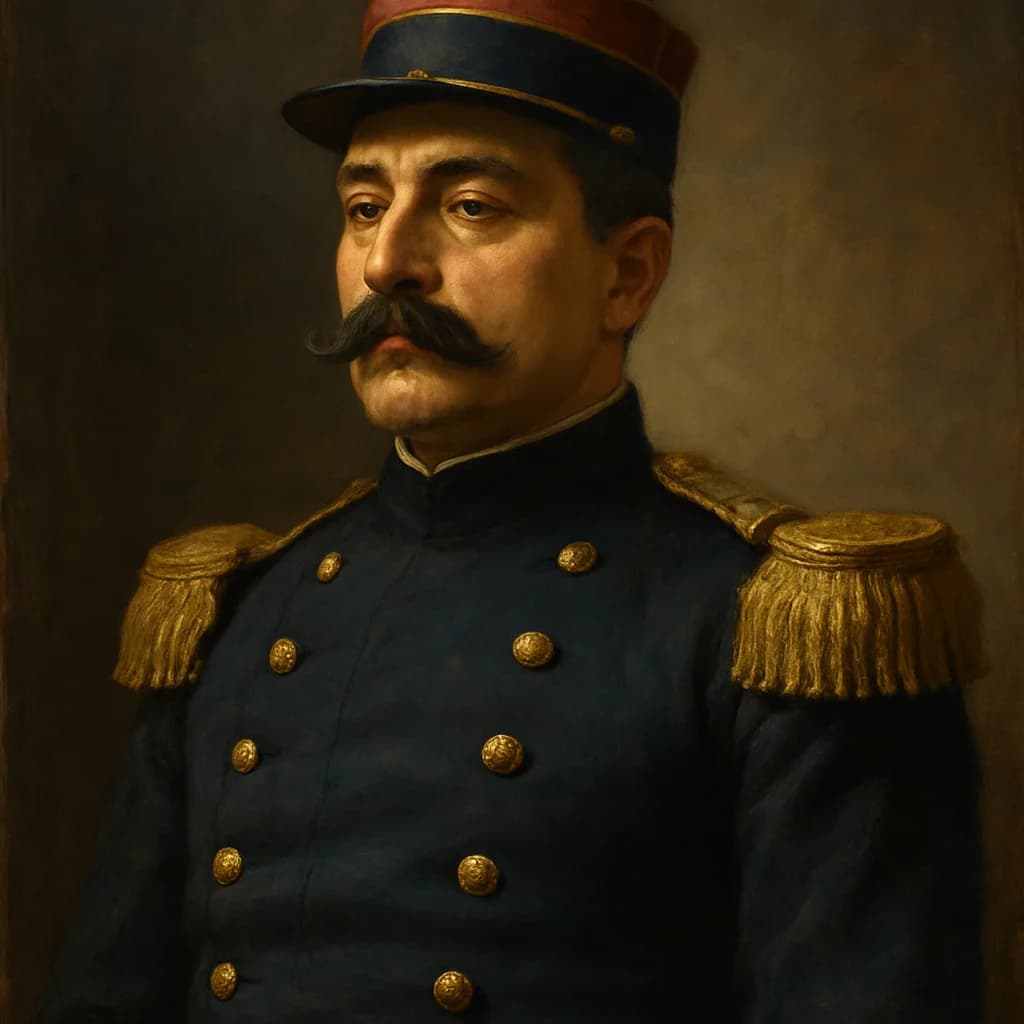
Ferdinand Walsin Esterhazy
He framed an innocent man, got away with it, confessed in public, and still died in his bed.
Ferdinand Walsin Esterhazy was, by almost any measure, a catastrophic human being, and yet the French Army spent years protecting him anyway. Born in 1847 into a minor branch of the famous Austro-Hungarian Esterházy dynasty, he spent his life leveraging that aristocratic name like a crowbar: prying open doors, extracting credit, escaping consequences. He served in the Papal Army, then the Foreign Legion, then the regular French infantry, accumulating debt and enemies at roughly equal speed. By the 1880s he was hemorrhaging money to gambling and mistresses while simultaneously demanding promotions he hadn't earned. His solution to financial ruin was simple: he started selling French military secrets to the German military attaché in Paris, Major Maximilian von Schwartzkoppen. The going rate for treason, it turned out, was modest.
In 1894, a torn letter retrieved from a wastebasket at the German Embassy (the now-infamous bordereau) listed French artillery secrets being offered to Germany. French intelligence needed a culprit, and Captain Alfred Dreyfus, an Alsatian Jewish officer with the misfortune of having vaguely similar handwriting, was court-martialed and shipped to Devil's Island. Esterhazy, the actual author, watched from a comfortable distance. When a dogged intelligence officer named Lieutenant Colonel Georges Picquart identified Esterhazy as the real spy in 1896, the Army's response was not to prosecute Esterhazy. It was to reassign Picquart to Tunisia. The institution had decided which problem it preferred to solve.
What makes Esterhazy genuinely strange is what happened next. Cornered by accumulating evidence in 1898, he demanded a court-martial himself, and was acquitted in three minutes, to a cheering courtroom. Two weeks later, Émile Zola published J'Accuse. The Dreyfus Affair exploded into the open. Esterhazy fled to England, where, under the alias Count Jean de Voilemont, he gave interviews cheerfully admitting he had forged the bordereau, though he claimed he'd been ordered to do so, a claim historians have never been able to verify or entirely dismiss. He ran a small restaurant in Harpenden, Hertfordshire. He died in 1923.
He outlived Zola by twenty-one years.
Esterhazy once wrote a letter to the President of France begging for a pardon and financial assistance, framing himself as a victim of the very conspiracy he had engineered. The letter was ignored.
Why untold: Esterhazy has been perpetually flattened into a supporting villain in the Dreyfus Affair, his own bizarre postscript life (the confession, the alias, the Hertfordshire restaurant) consistently dropped from narratives that prefer clean moral architecture over a traitor dying quietly of old age.
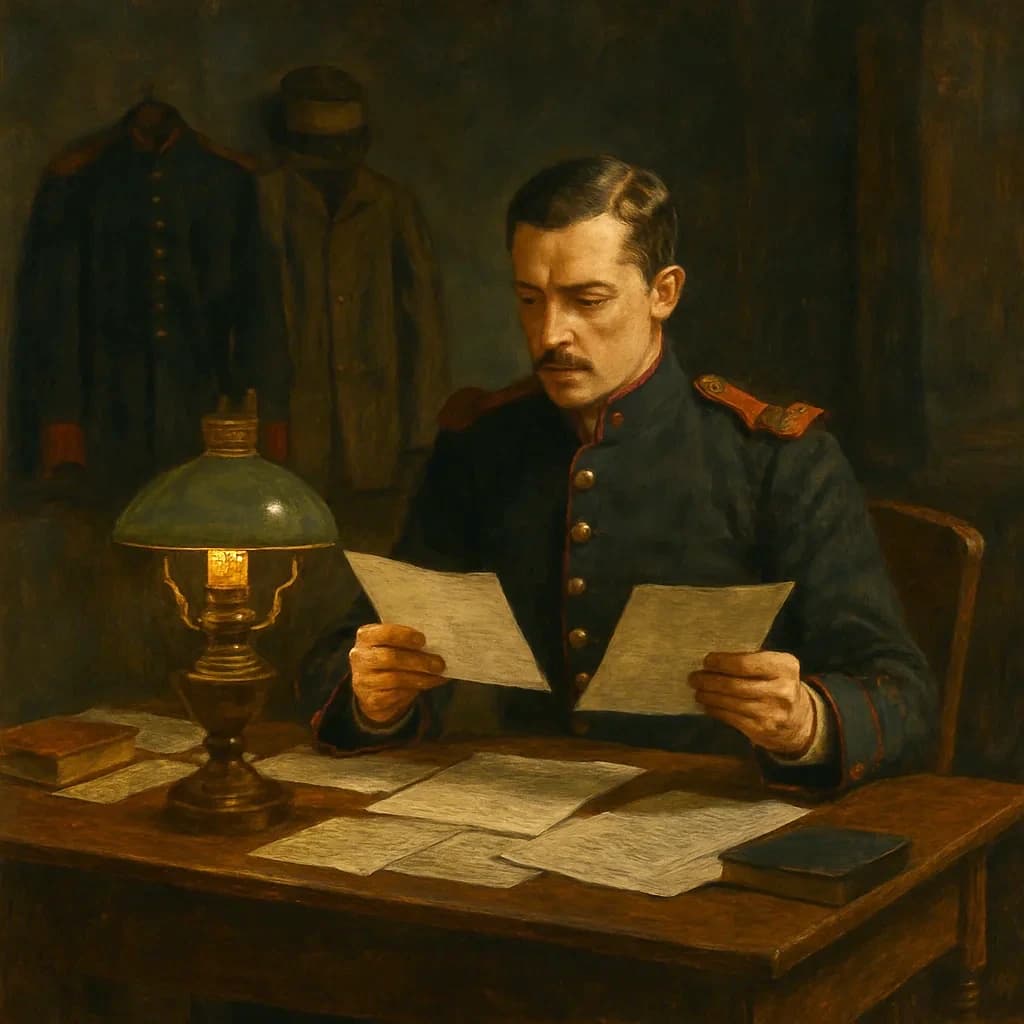
Two Handwriting Samples That Tore France Apart
A colonel's poorly forged handwriting started a diplomatic crisis that nearly toppled a government and exposed the rot at the heart of French military intelligence.
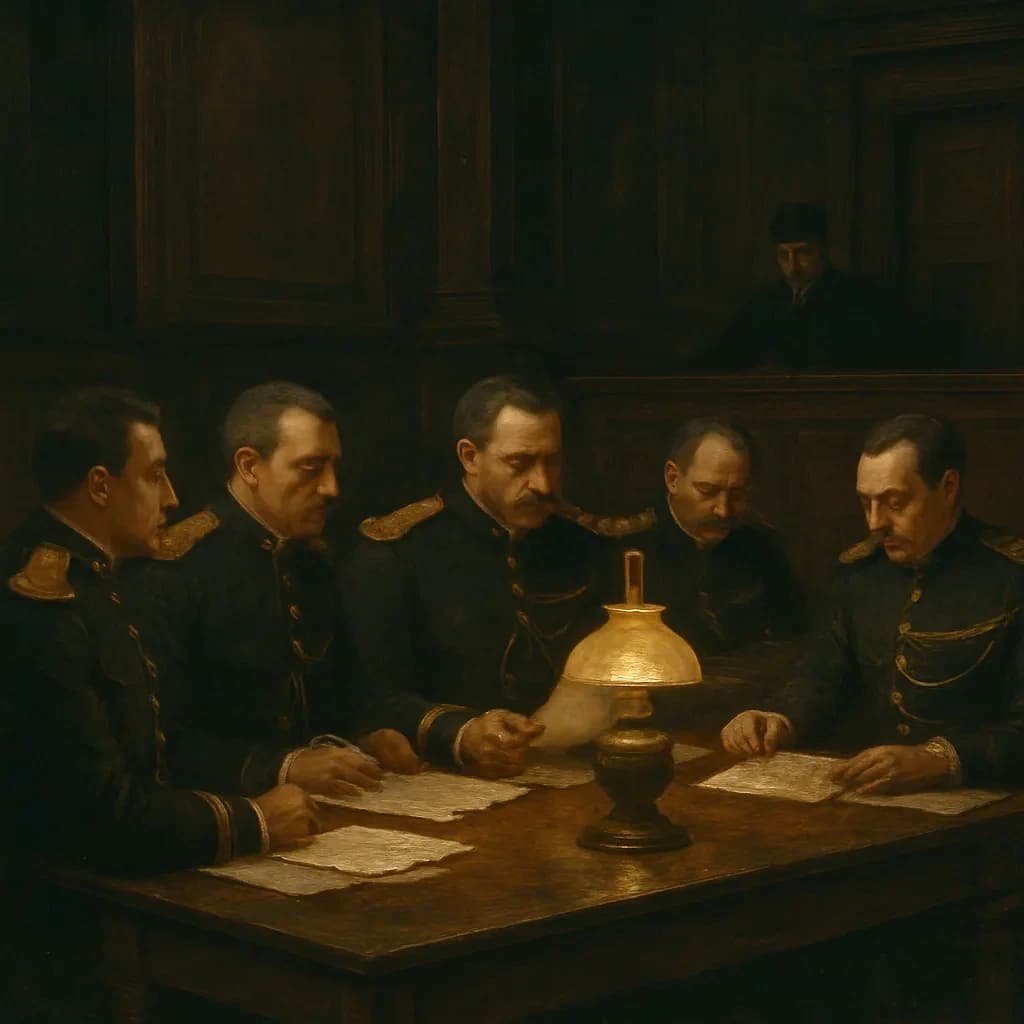
One Signature Tore France Apart for a Decade
A single signature on a French passport in 1894 triggered a scandal that would tear apart a nation for over a decade.
- Michael Burns, France and the Dreyfus Affair: A Documentary History (Bedford/St. Martin's, 1999)
- Ruth Harris, The Man on Devil's Island: Alfred Dreyfus and the Affair That Divided France (Metropolitan Books, 2010)
- Jean-Denis Bredin, The Affair: The Case of Alfred Dreyfus, trans. Jeffrey Mehlman (George Braziller, 1986)