
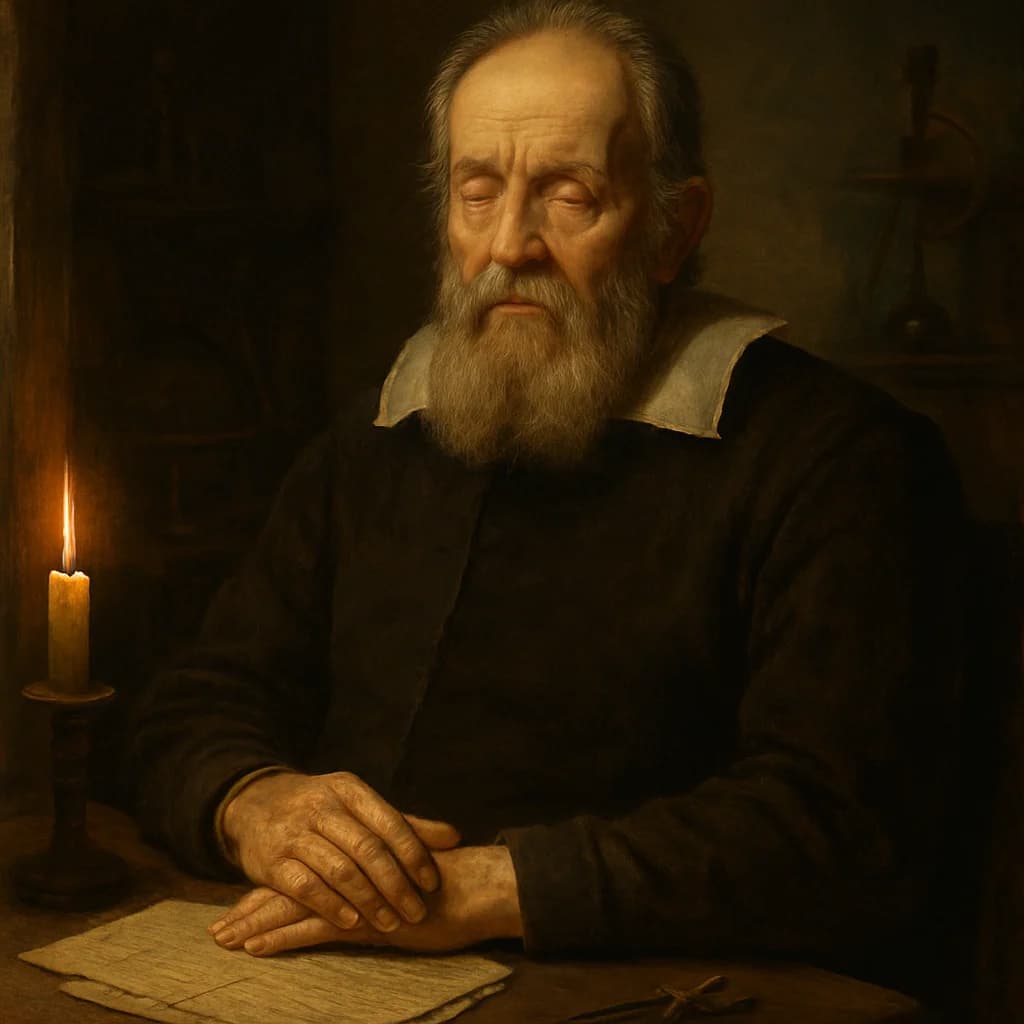
Galileo Galilei
He didn't discover that the Earth moves. He spent decades terrified to say so out loud.
Galileo Galilei was, for most of his working life, a careful man. That tends to get forgotten. The mythology hands us a heroic contrarian, finger pointed at the sky, daring the Church to call him wrong. The actual Galileo was more interesting than that: a man who sat on his most explosive conclusions for years, watched a colleague burn at the stake for cosmological opinions in 1600, and made a series of very deliberate calculations about when it was safe to speak and when it absolutely was not.
He was also, before the telescopes and the trial, a fairly mediocre professor of mathematics in Padua who tutored rich students to pay off his father's debts and his siblings' dowries. The debts were real and relentless. He never married, but he supported a mistress, Marina Gamba, and their three illegitimate children for years, a fact scrubbed clean from most hagiographies. When he finally left Padua in 1610 for a court position in Florence, part of the calculation was financial. The Medici paid better. His eldest daughter, Virginia, whom he adored and who adored him back, eventually took holy vows partly because her illegitimate status made her unmarriageable. She died in 1634, one year after his trial, while he was under house arrest. He described her death as a grief that would never leave him.
The cannonball story is real, in its way. During the siege of 1633 (not quite a siege, more a sustained institutional pressure), a projectile did strike near his home, though the Church's weapon of choice was procedural terror rather than artillery. What the Inquisition understood, and what Galileo understood back, was that recantation was the point. Not execution. A living Galileo who had publicly crawled was more useful than a dead martyr. He knelt. He recanted. Then, according to the story everyone wants to be true, he muttered under his breath that the Earth moves anyway. He almost certainly did not say this. But we needed him to.
His last years were spent blind, under house arrest in Arcetri, dictating work on the mechanics of motion: the physics of falling bodies, pendulums, resistance. The Church had taken his sky. He turned to the ground.
Galileo applied for a patent on his improved telescope design in 1594 (nearly fifteen years before he used it to observe Jupiter's moons) primarily to sell it to the Venetian navy as a maritime surveillance tool.
Why untold: The heroic-martyr narrative required a simplified Galileo (fearless, singular, opposed to religion), which meant the frightened, debt-ridden, strategically cautious man who actually lived had to be quietly edited out.
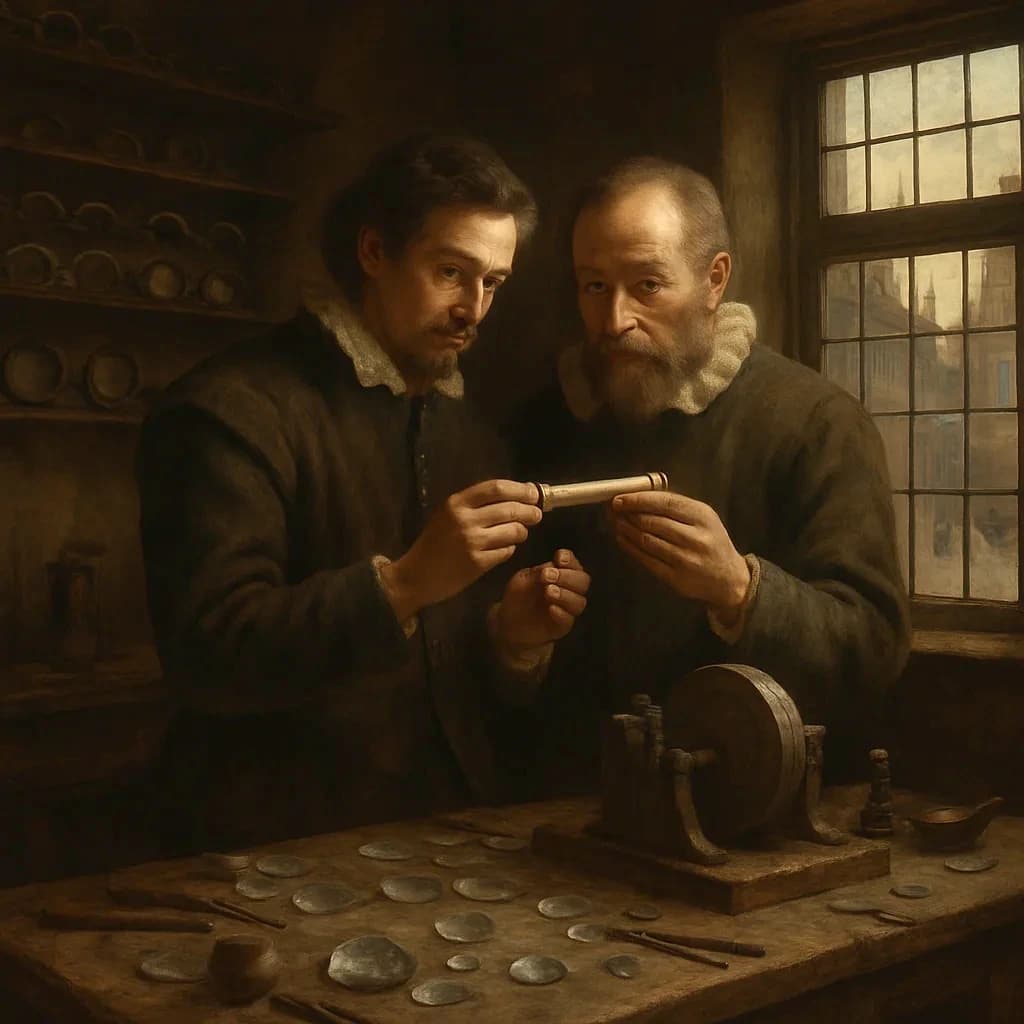
Too Late: The Telescope Nobody Could Patent
A Dutch spectacle-maker's apprentice wandered into a library in 1609 and, without meaning to, handed Europe the next century of war.
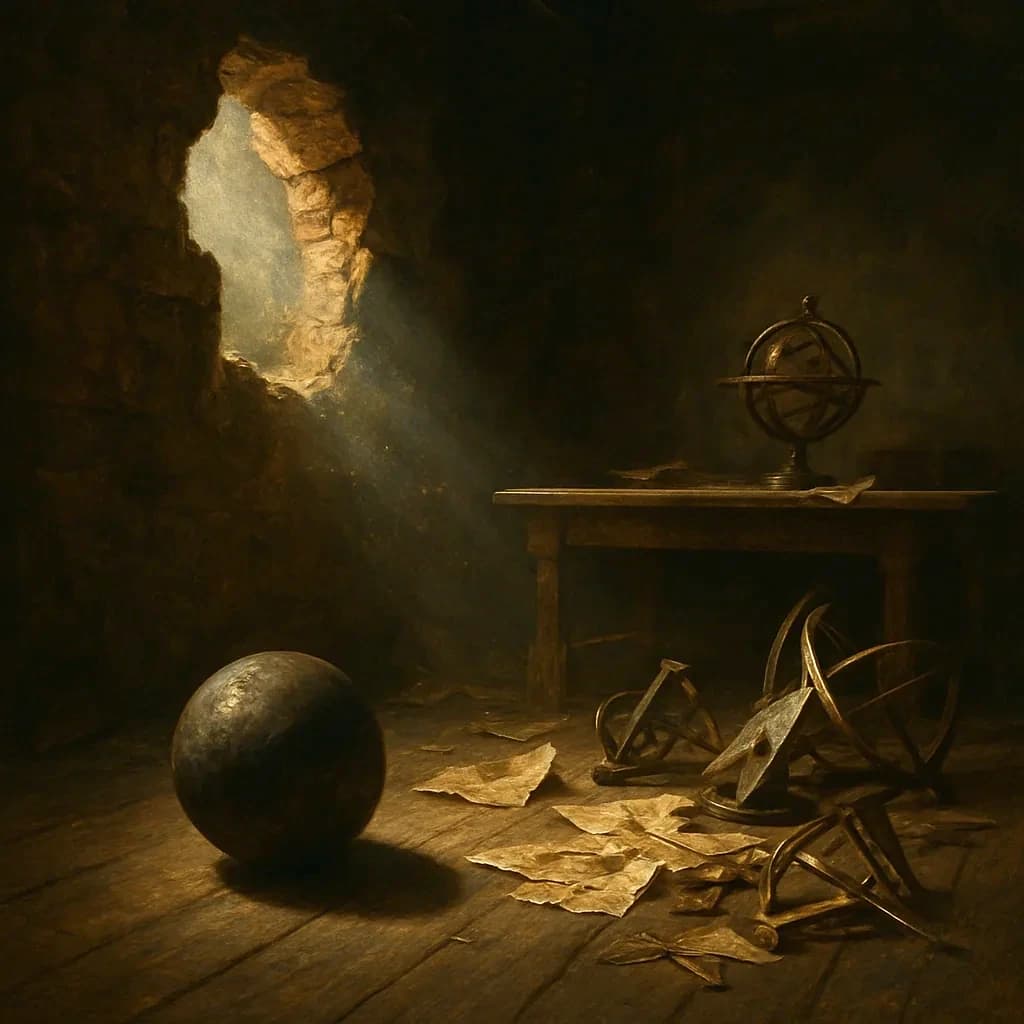
Galileo Hid Heresy Inside Europe's Cannon Tables
A cannonball crashed through Galileo's workshop in 1633, and the blast only made him more dangerous to the Church.
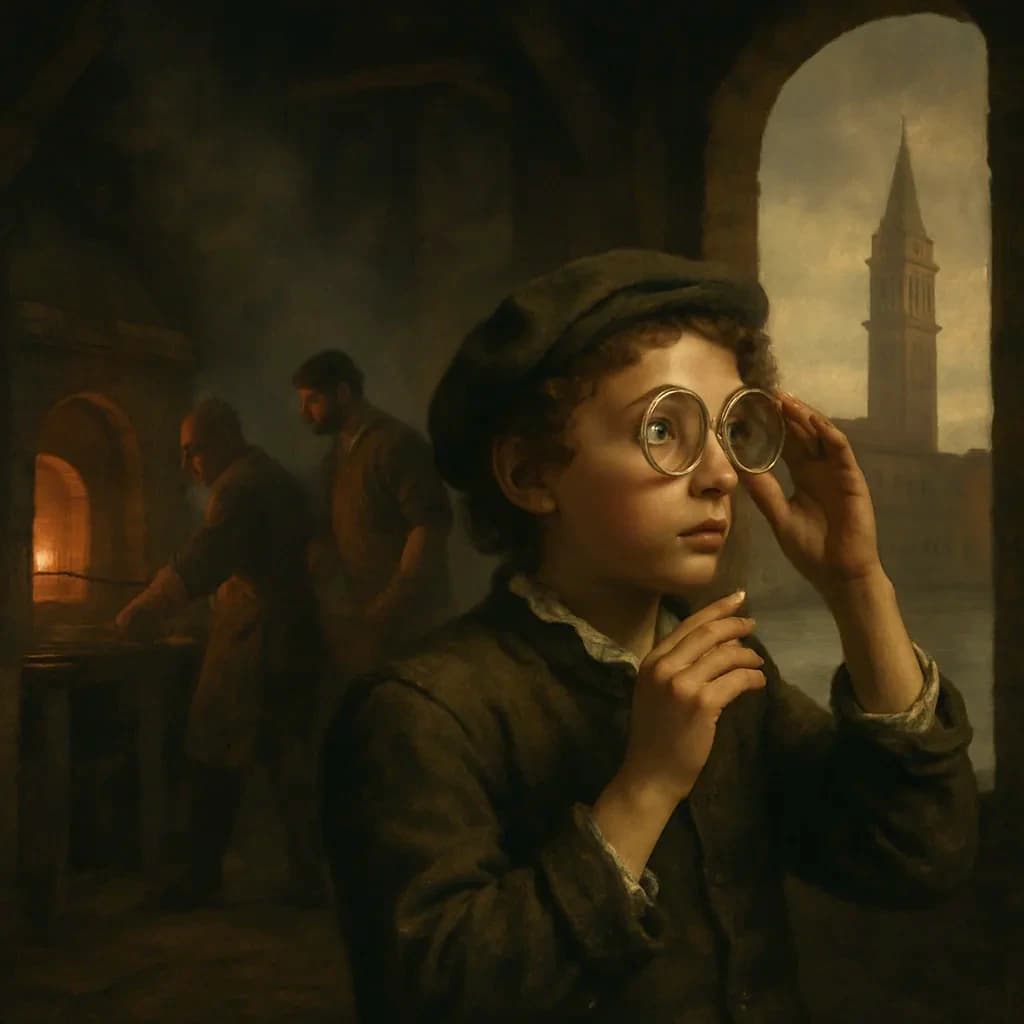
An Apprentice's Lens Knocked Earth From the Center of the Universe
A Venetian glassmaker's apprentice stumbled upon a lens that would eventually move the Earth from the center of the universe.
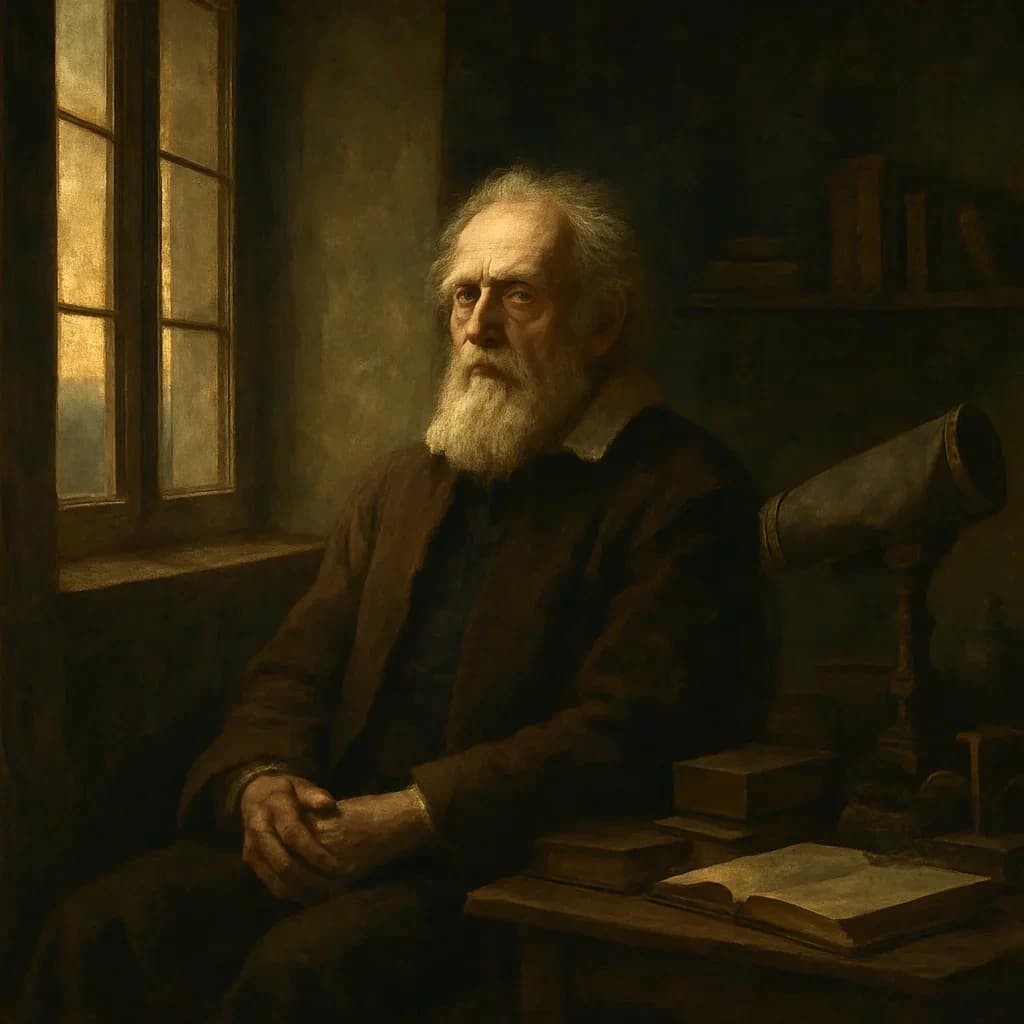
Galileo Went Blind Fearing His Telescope Had Damned Him
The father of modern science spent his final years terrified that his own telescope would damn him to hell.
- Dava Sobel, Galileo's Daughter: A Historical Memoir of Science, Faith, and Love (Walker & Company, 1999)
- John Heilbron, Galileo (Oxford University Press, 2010)
- Maurice Finocchiaro, The Galileo Affair: A Documentary History (University of California Press, 1989)