
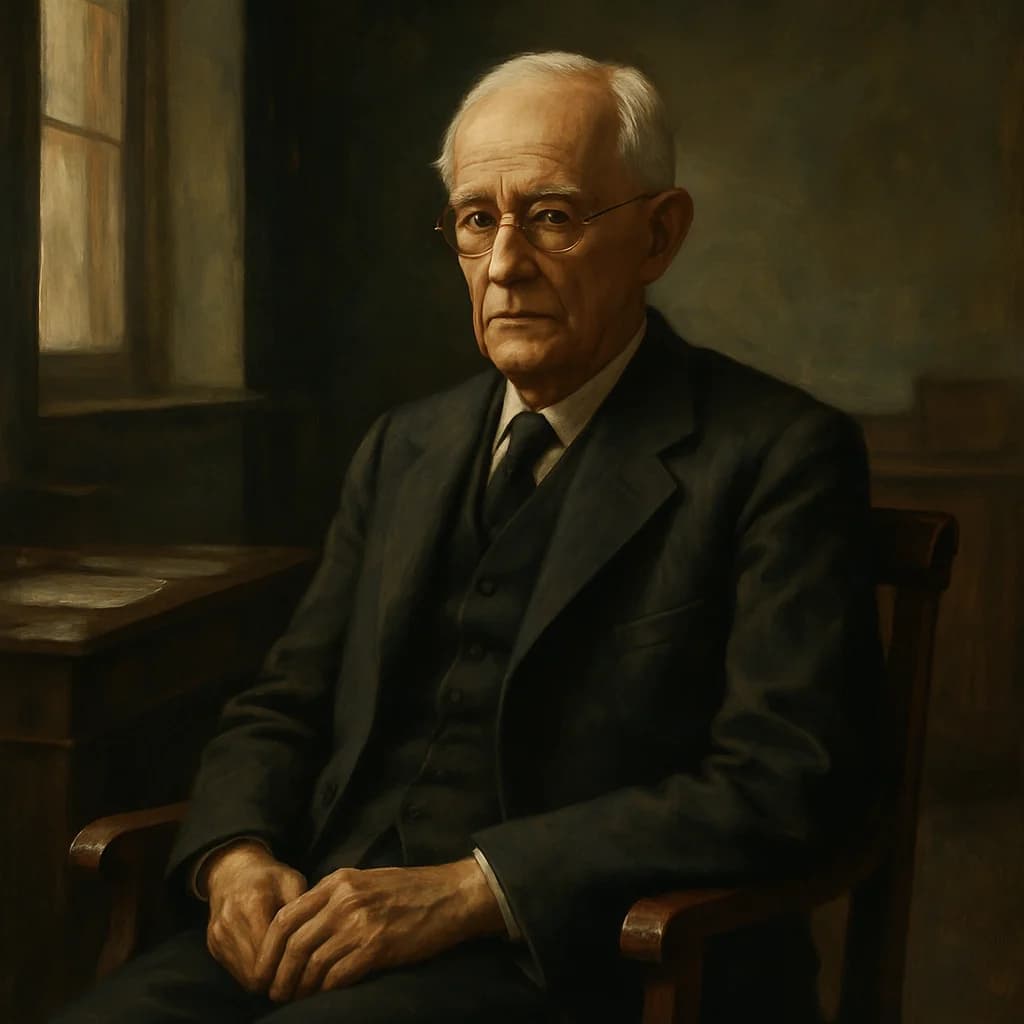
Douglas Hyde
He became the first President of Ireland despite spending decades insisting he wanted nothing to do with politics.
Douglas Hyde was born in 1860 in Castlerea, County Roscommon, the son of a Protestant Church of Ireland rector. That detail alone made him an unlikely candidate for anything in Irish nationalist life, let alone the man who would one day be unanimously elected head of state by a parliament of Catholic republicans. But Hyde operated by a logic all his own, and it confounded everyone around him for his entire life.
He taught himself Irish as a boy, eavesdropping on the conversations of laborers and farm hands near his father's rectory. Not from a book. Not from a teacher. He simply listened at hedges and walls until the language came to him. By his twenties he was writing poetry in Irish under the pen name An Craoibhín Aoibhinn (the Pleasant Little Branch) and publishing it in newspapers at a time when Irish was still widely regarded, even by many Irish people, as the embarrassing dialect of the rural poor. In 1892 he delivered a lecture to the Irish National Literary Society in Dublin titled 'The Necessity for De-Anglicising Ireland.' It was a provocation dressed as scholarship. He argued that the Irish had absorbed English cultural contempt for their own traditions so completely that they were finishing the job of erasure themselves. The lecture lit a fuse.
The following year, in 1893, Hyde co-founded the Gaelic League, an organization explicitly designed to be non-political, focused purely on reviving the Irish language through classes, publications, and public events. It worked almost too well. Within a decade the League had branches across Ireland and in Irish diaspora communities in America. It had become, quietly, a training ground for almost every significant figure in the 1916 Rising. Patrick Pearse learned his Irish there. So did Éamon de Valera. Hyde watched his careful apolitical project become the incubator for a revolution he had never called for, and in 1915 he resigned the presidency of the organization he had built, unable to stop its transformation.
Then, in 1938, de Valera (the same man who had absorbed the League's energy into armed nationalism) nominated Hyde as the first President of Ireland under the new constitution. Hyde accepted. He was seventy-eight years old, half-blind, and had already suffered a stroke. He served until 1945.
Hyde's 1890 collection of Irish folk songs, 'Love Songs of Connacht,' was translated into English with such lyrical power that W.B. Yeats credited it as a direct inspiration for the entire Irish Literary Revival, yet Hyde himself considered the folklore secondary to the language work.
Why untold: Hyde's story collapses into the larger narrative of Irish independence, where political and military figures absorb the credit for a cultural transformation he engineered decades before any shot was fired.
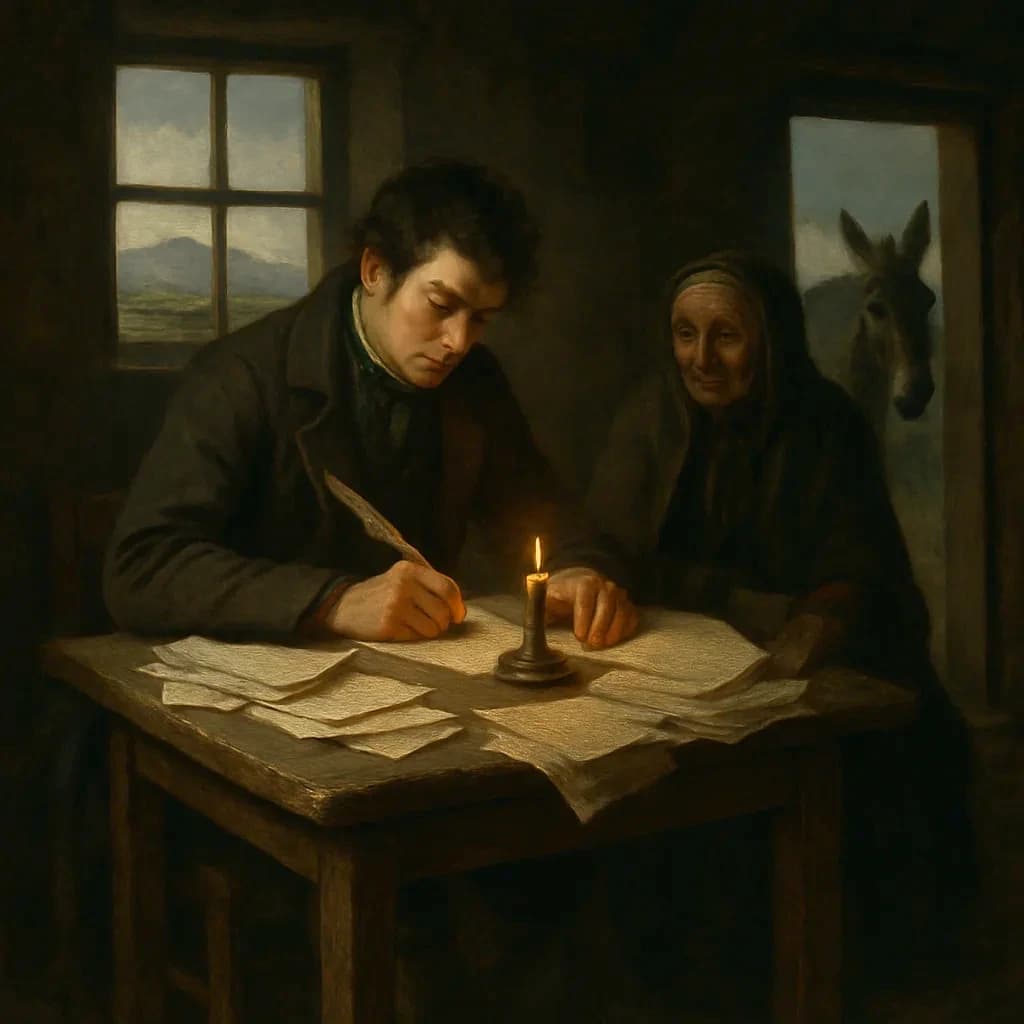
The Night a Poet Saved Ireland's Memory
A landlord's clerk with a notebook walked into dying villages during a famine and came out with a language.
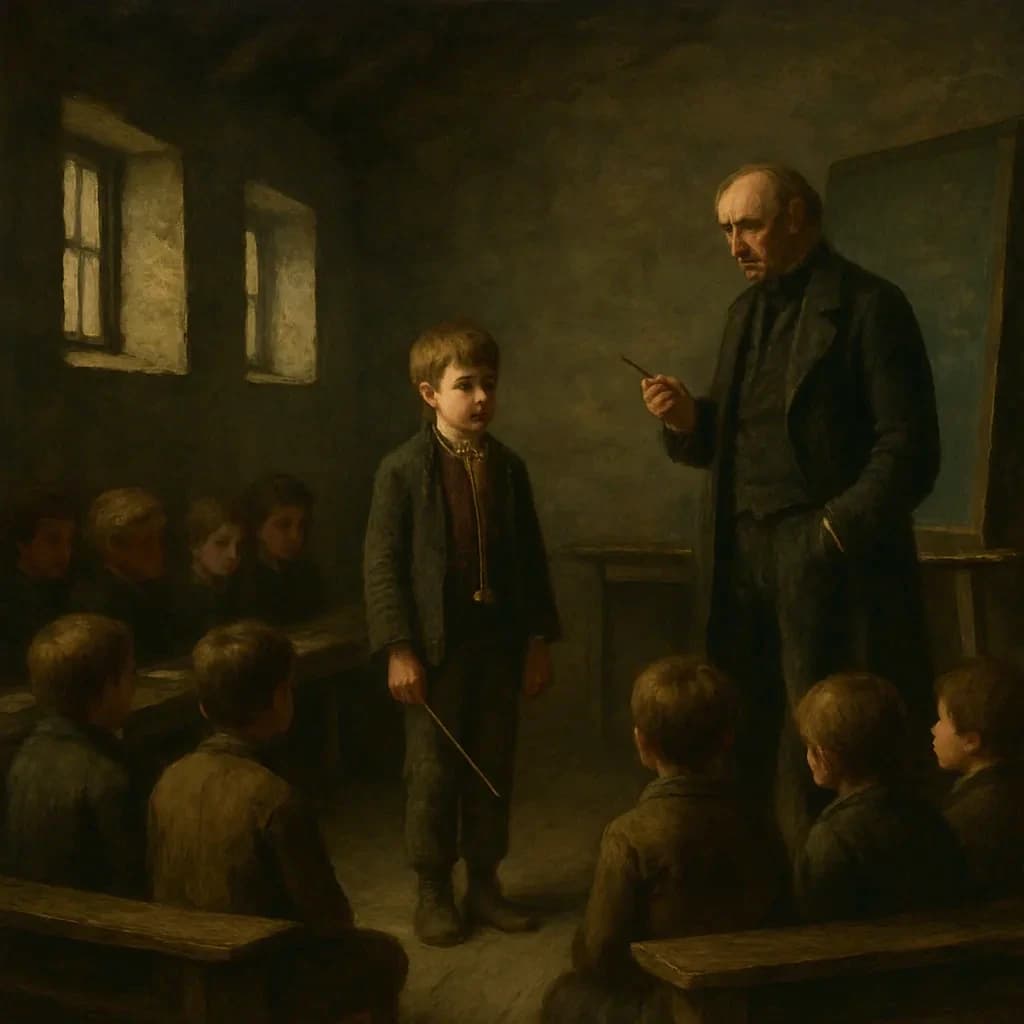
How a School System Nearly Erased Irish
A single administrative decision in 1840s Ireland didn't just rewrite what children were taught. It nearly wiped a four-thousand-year-old language off the earth.
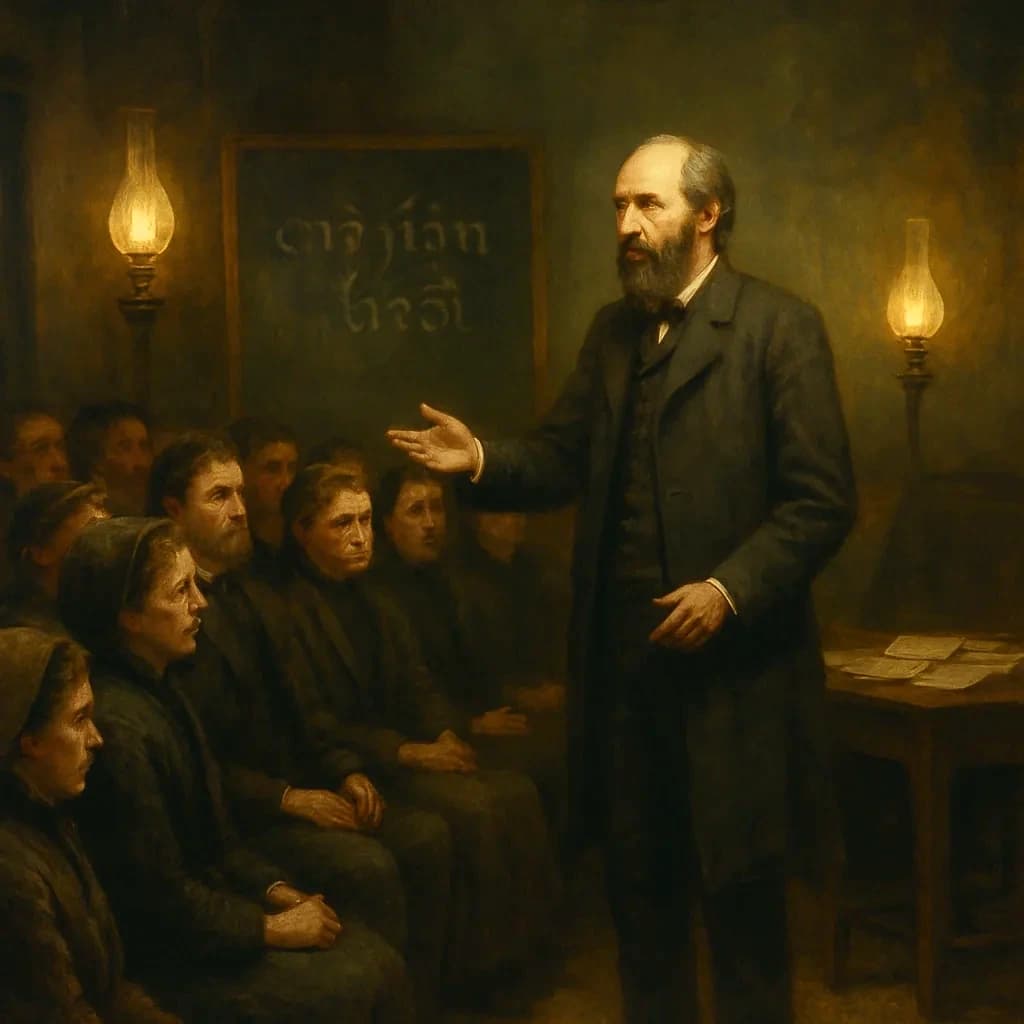
He Wanted to Save a Language, Not a Revolution
A dying tongue was saved not by scholars or kings, but by a Protestant landlord who couldn't stand to watch something beautiful disappear.
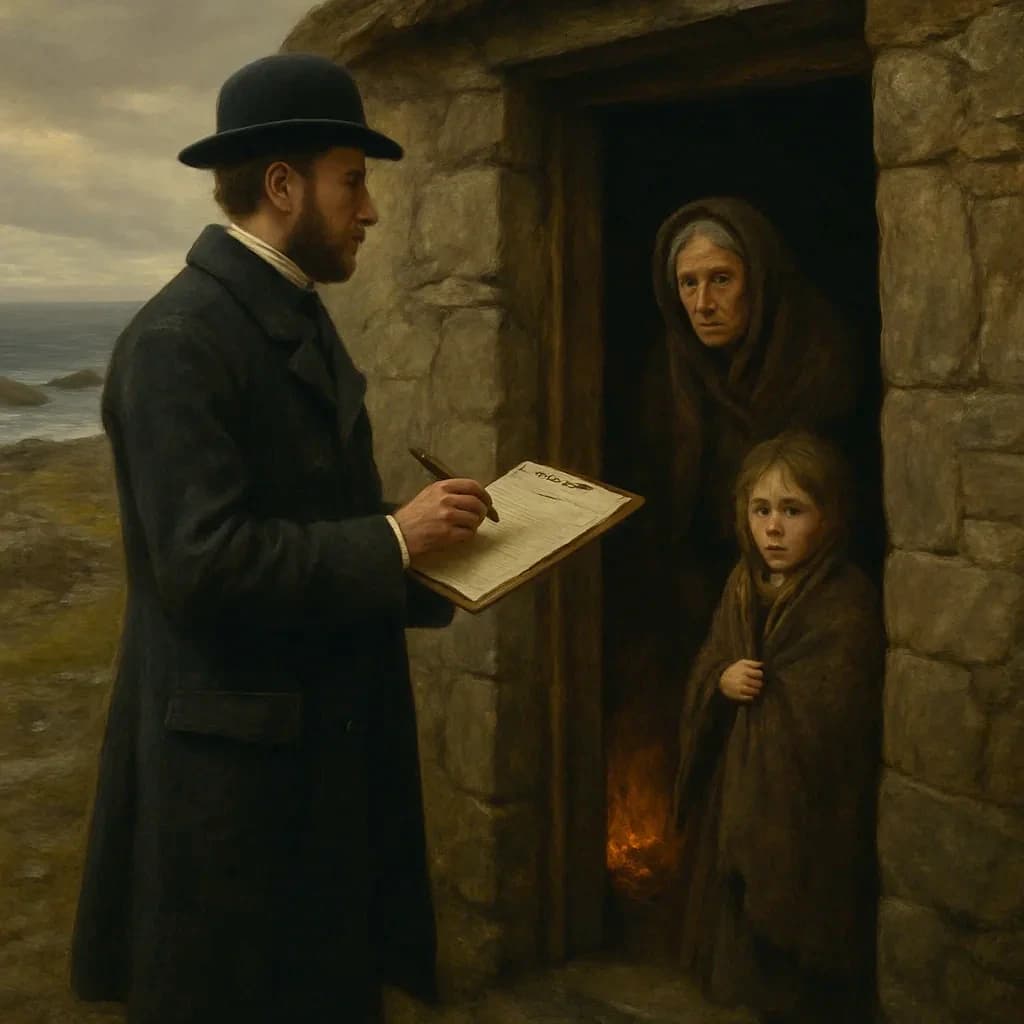
The Census That Killed a Language
A Scottish administrator filled out a form incorrectly in 1881, and within two generations, a language spoken by millions had nearly vanished from official existence.
- Dunleavy, Janet Egleson, and Gareth W. Dunleavy. Douglas Hyde: A Maker of Modern Ireland. University of California Press, 1991.
- Hutchinson, John. The Dynamics of Cultural Nationalism: The Gaelic Revival and the Creation of the Irish Nation State. Allen & Unwin, 1987.
- Hyde, Douglas. 'The Necessity for De-Anglicising Ireland.' Lecture delivered to the Irish National Literary Society, Dublin, November 25, 1892. Published in The Revival of Irish Literature, 1894.