
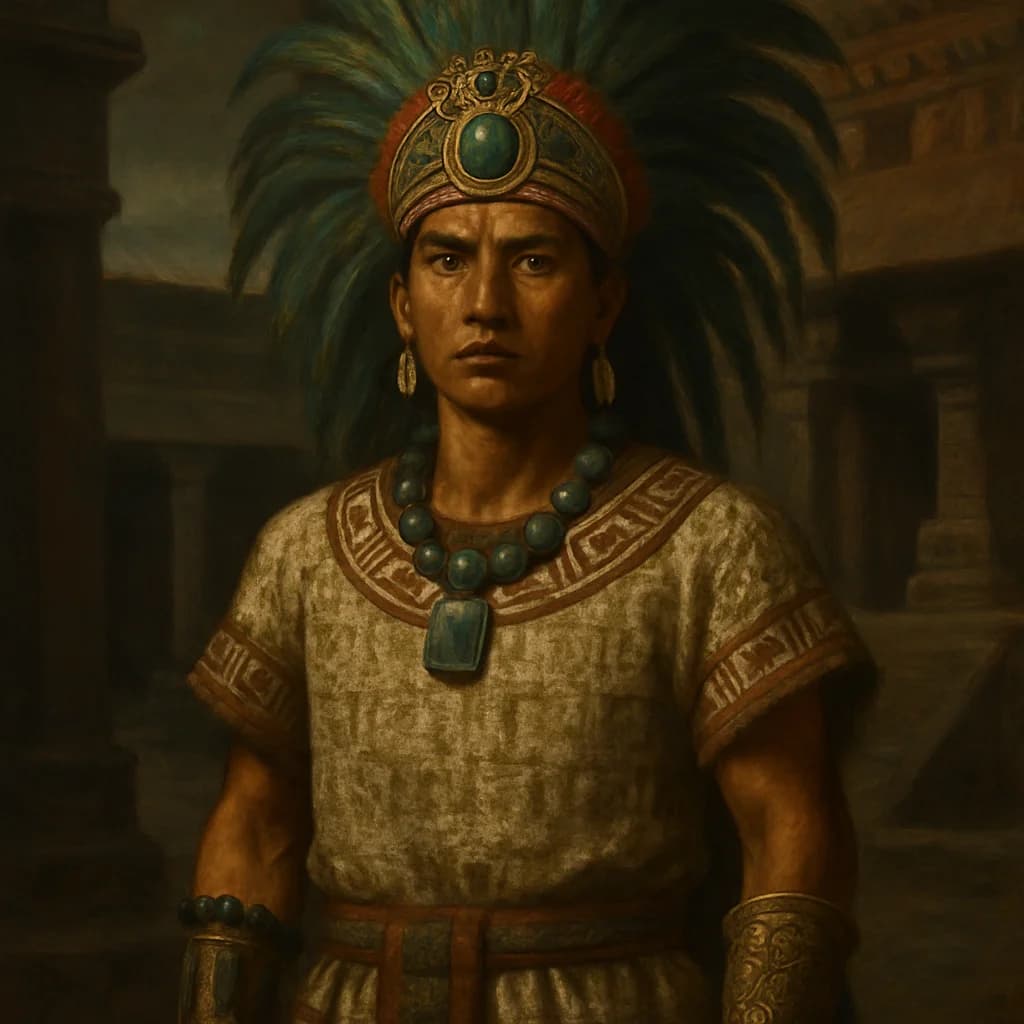
Cuauhtémoc
The last Aztec emperor spent his final years as a human GPS for the Spanish conquistadors who tortured him.
When eighteen-year-old Cuauhtémoc became emperor in 1520, the Aztec Empire was already bleeding to death from smallpox and Spanish steel. His predecessor Moctezuma had died in captivity, his successor Cuitláhuac had lasted eighty days before succumbing to disease. The throne fell to a teenager who inherited not an empire, but a siege.
Cuauhtémoc held Tenochtitlan for three months against impossible odds. While Cortés built ships to attack the island city and smallpox killed thousands daily, the young emperor organized a defense that astonished even his enemies. Spanish chroniclers noted how he personally led raids from canoes, how he kept his warriors fighting even as the city's food ran out and bodies floated in the canals. When the siege finally broke Tenochtitlan's defenses in August 1521, Cuauhtémoc attempted to flee by canoe with his family and treasury.
But capture was only the beginning of his humiliation. Cortés kept him alive as a puppet ruler, parading him before subdued Aztec nobles to legitimize Spanish rule. When rumors spread of hidden Aztec gold, the Spanish heated oil and burned Cuauhtémoc's feet, demanding he reveal treasure locations. He never broke. Then came the strangest chapter of his life: Cortés dragged the crippled emperor on his disastrous 1524 expedition to Honduras, using him as a guide through territories he'd never seen, forcing him to translate languages he didn't speak.
On February 28, 1525, somewhere in the jungles of modern Guatemala, Cortés accused Cuauhtémoc of plotting rebellion and hanged him from a ceiba tree. The emperor who had defended the greatest city in the Americas died as a reluctant tour guide, hundreds of miles from home, his feet still bearing the scars of Spanish torture.
Cuauhtémoc's name means "Descending Eagle" in Nahuatl, and he was chosen as emperor through combat trials, not hereditary succession.
Why untold: His post-conquest survival and forced participation in Spanish expeditions is overshadowed by the more dramatic story of Tenochtitlan's fall.
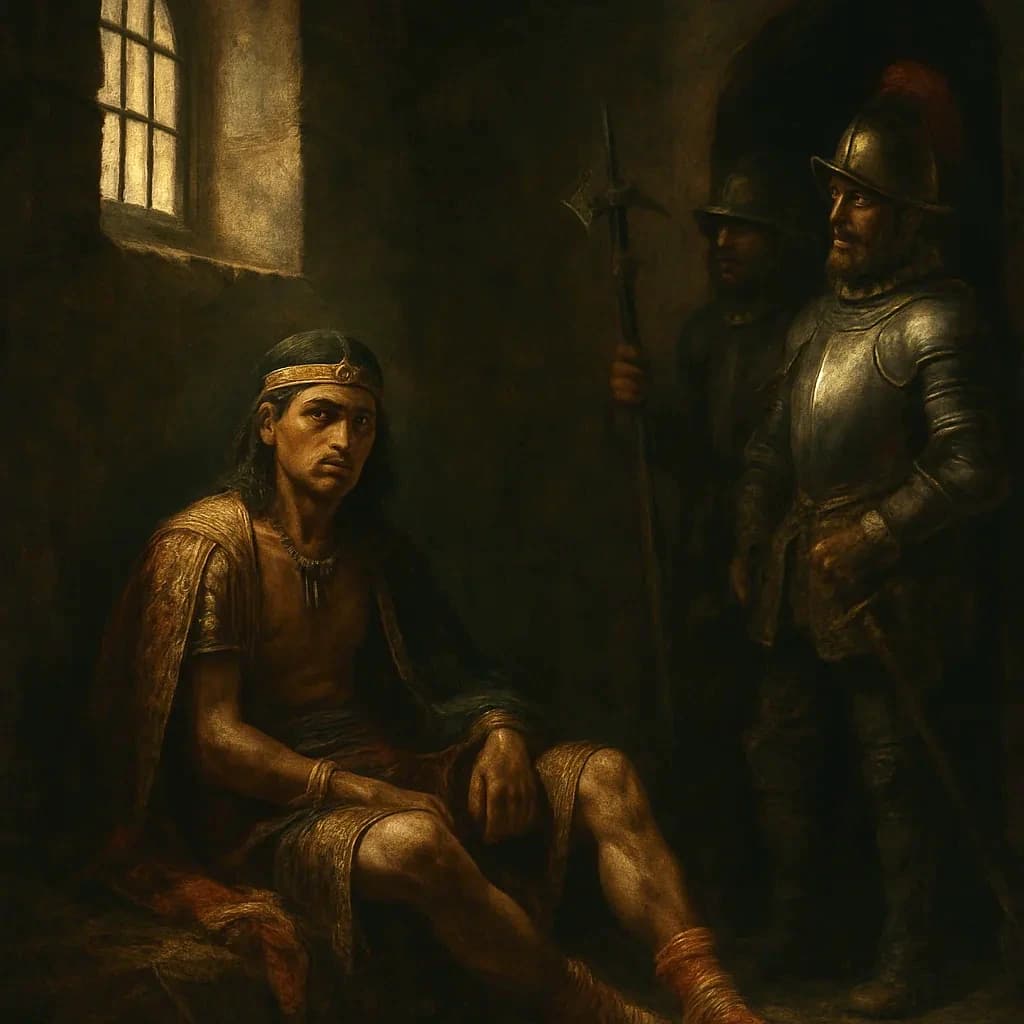
The Last Aztec Emperor's Silence Outlived His Empire
The last Aztec Emperor sat in a Spanish prison cell in 1522 and made a decision that would echo across five centuries.
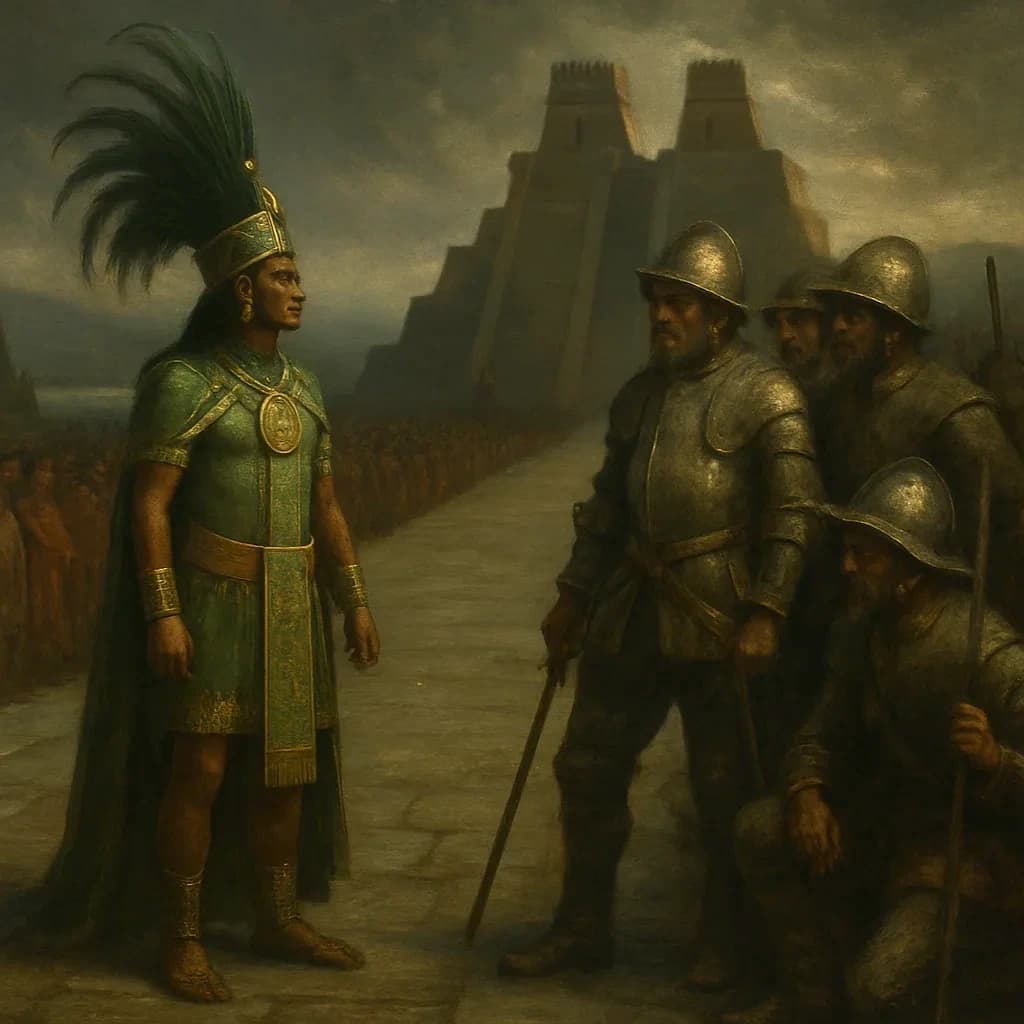
400 Starving Men Bluffed an Empire Into Surrender
An army of 400 men convinced 300,000 people to surrender their empire without firing a shot.
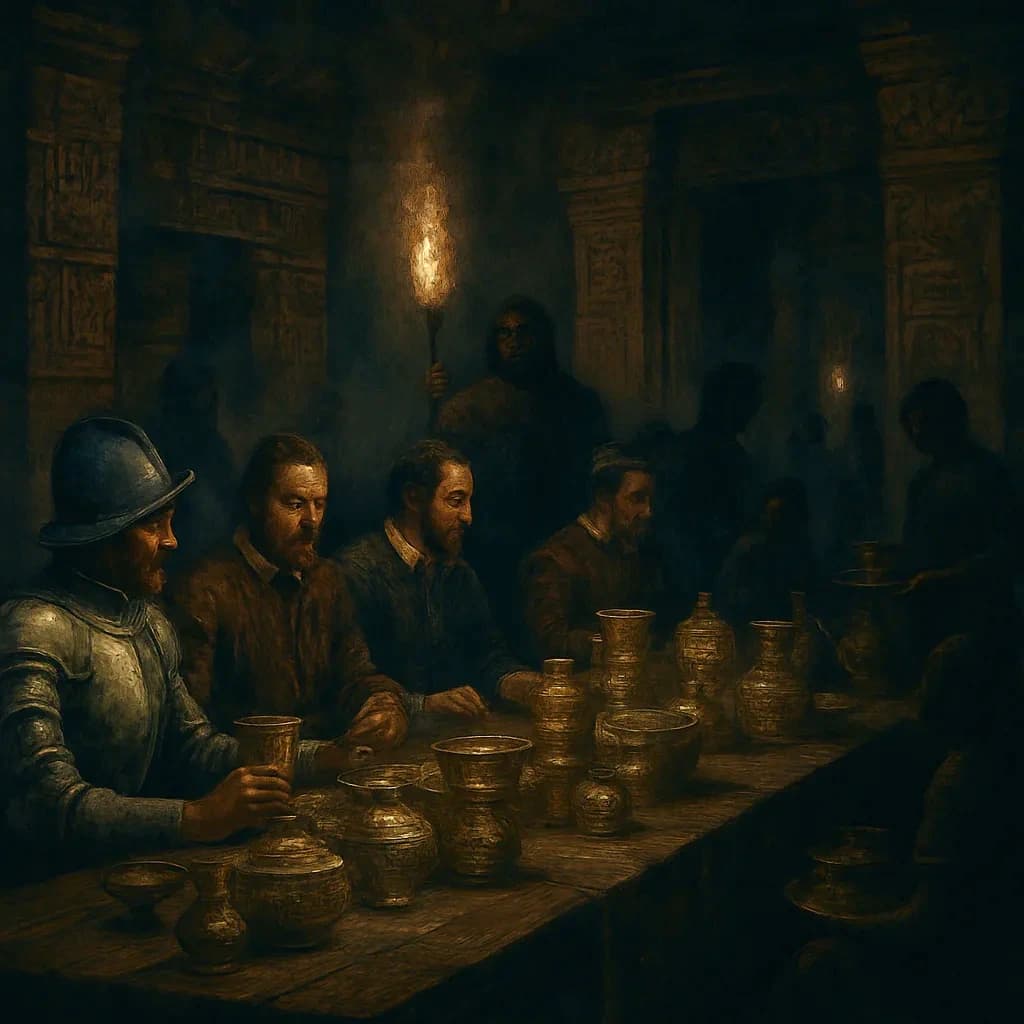
Cortés Threw a Victory Feast Inside a Trap
When 400 Spanish colonists sat down to celebrate their conquest of the Aztec Empire, they didn't know they were about to become the meal.
- Díaz del Castillo, Bernal. The True History of the Conquest of New Spain
- Restall, Matthew. Seven Myths of the Spanish Conquest
- Townsend, Camilla. Fifth Sun: A New History of the Aztecs