
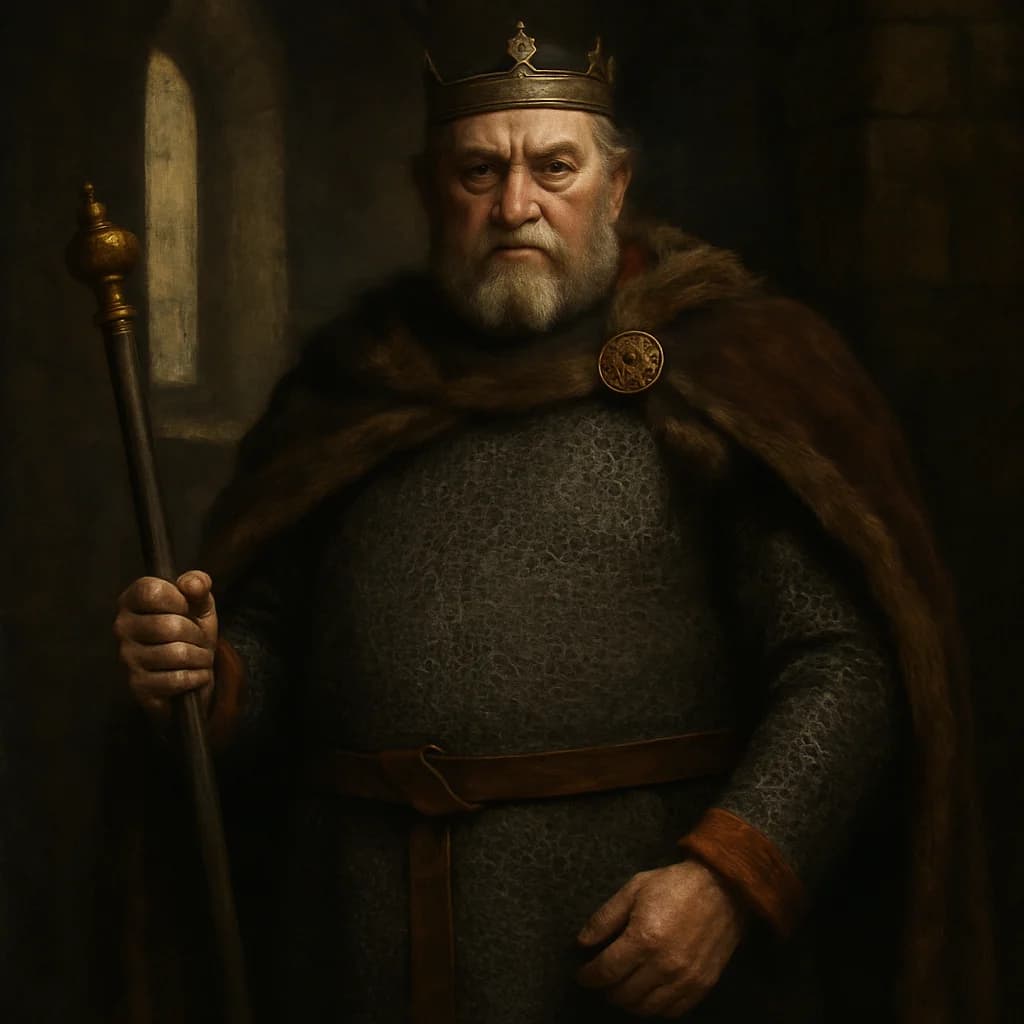
William the Conqueror
He didn't just conquer England. He accidentally deleted it.
William of Normandy was a bastard. Literally. His father, Duke Robert I, never married his mother, Herleva, a tanner's daughter from Falaise, and when Robert died on pilgrimage in 1035, he left his eight-year-old illegitimate son to survive a Norman court that regarded him as a joke. Three of William's guardians were murdered before he turned fifteen. He learned early that the world would not be giving him anything.
What happened in October 1066 at Hastings is the famous part. What isn't is what William did next, and how permanent it was. He didn't simply replace the king. He replaced the language of power. Within a generation, English had been pushed entirely out of the courtroom, the church hierarchy, and the deed. French became the tongue of law, land, and money. Latin handled God. English was left to the peasants, which meant it was left to rot. For roughly three centuries, England's ruling class conducted the entire business of England in a language most of the people living there couldn't speak. The English language that survived and eventually re-emerged in the 1300s was a different creature: rougher, stranger, loaded with French vocabulary it had absorbed like a sponge trying to stay relevant.
Then there was the land itself. William's solution to governing a conquered country was almost absurdly systematic. He parceled out England to his followers like a landlord dividing apartments, but with conditions so baroque they lasted centuries. Some lords owed military service. Some owed money. And some (in arrangements that read today like fever dreams) owed a handful of cumin seeds at every coronation, or a specific number of arrows, or the right to hold the king's head steady on the Channel crossing. These weren't jokes. They were recorded in the Domesday Book, enforced in courts, and in some cases honored by noble families into the nineteenth century.
He died in 1087 after his horse stumbled at the siege of Mantes, throwing him against the pommel of his saddle and rupturing something internal. His courtiers fled before he was cold. His body, abandoned in the heat, swelled so badly that when the clergy tried to force it into the stone sarcophagus at Caen, it burst.
William ordered the compilation of the Domesday Book in 1085, a survey so thorough it recorded not just every landowner in England but every ox, pig, and fishpond. Contemporaries said there was not a hide of land, nor even an ox, cow, or pig omitted.
Why untold: William's story is perpetually flattened into a single battle and a single date, which buries the stranger, longer-lasting transformation: that he didn't just change who ruled England, but systematically dismantled the language, law, and land tenure of everyone who lived there, effects that rippled forward for nearly a thousand years.
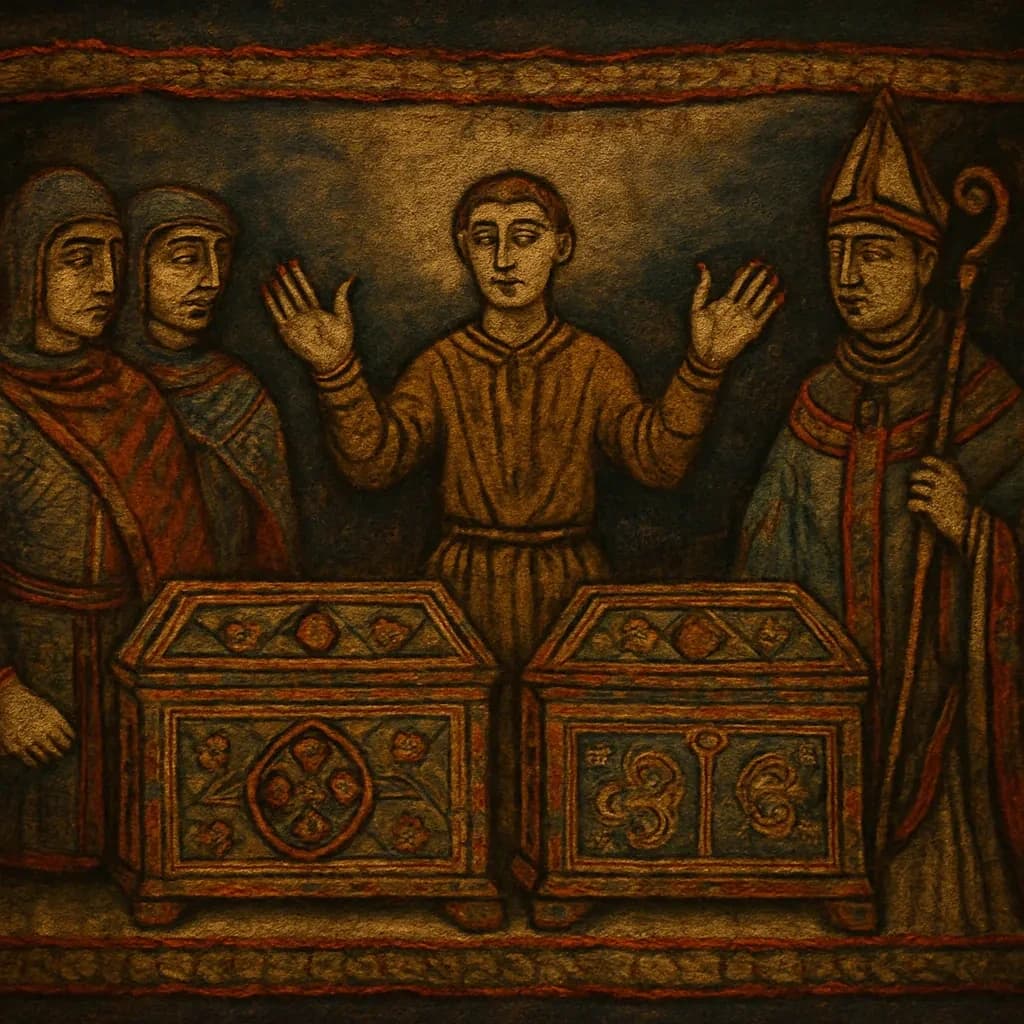
Bayeux Tapestry: The Conquest Story Its English Makers Undermined
Stitched across 230 feet of embroidered linen, the Bayeux Tapestry tells the story of the Norman Conquest, but the most important scene is the one that isn't there.
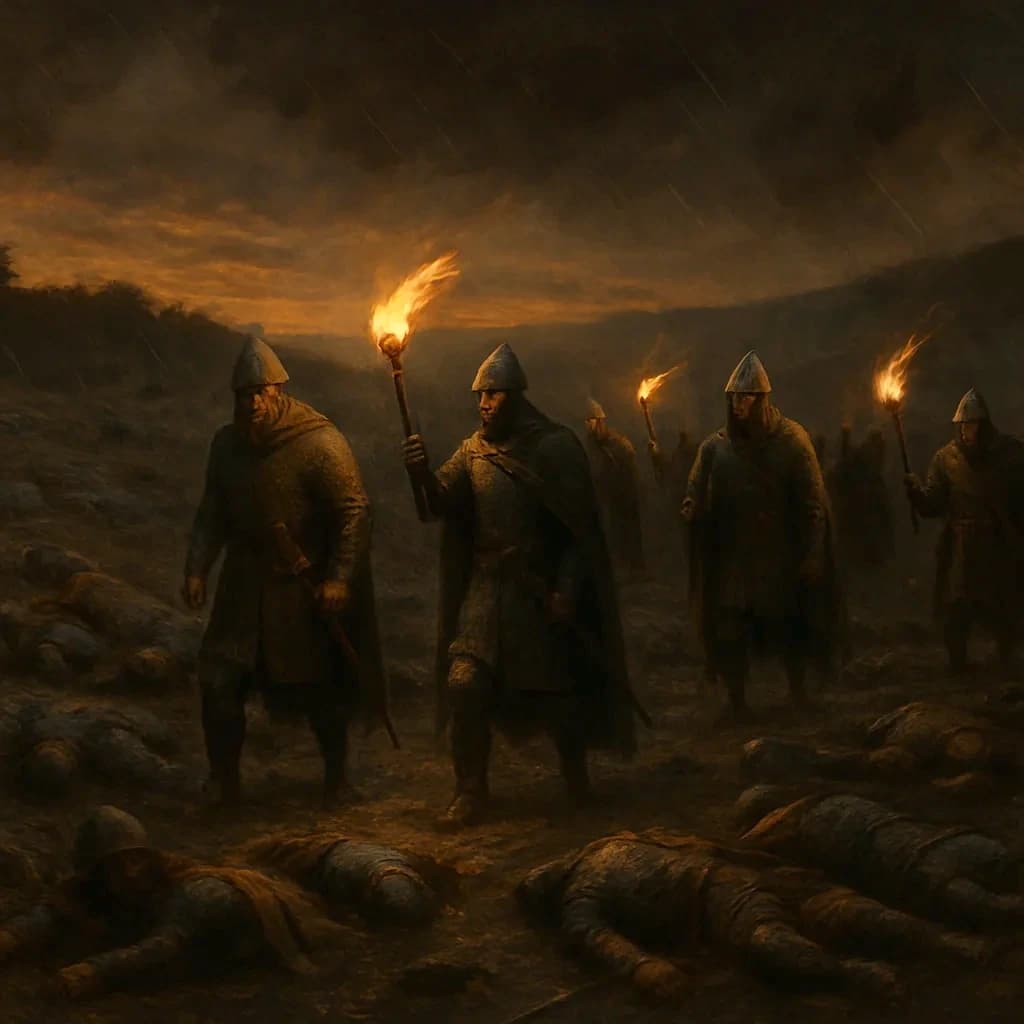
The Corpse at Hastings Was Never Found
Harold Godwinson died at the Battle of Hastings, or so we're told. The actual location of England's last Anglo-Saxon king has never been confirmed, and the story of how his body vanished may have been buried on purpose.
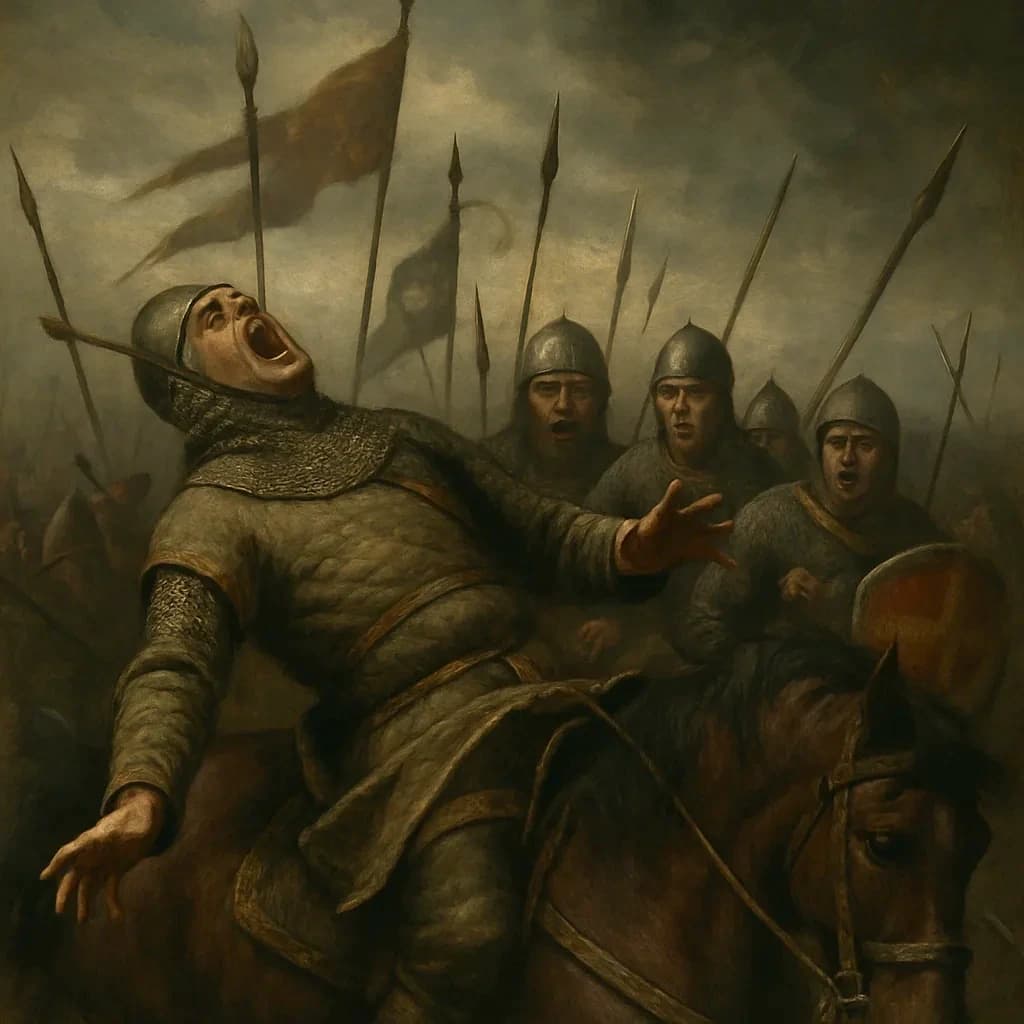
How a Dying Soldier's Scream Buried Latin
A soldier screamed in French at the Battle of Hastings, and a thousand-year-old language never recovered.
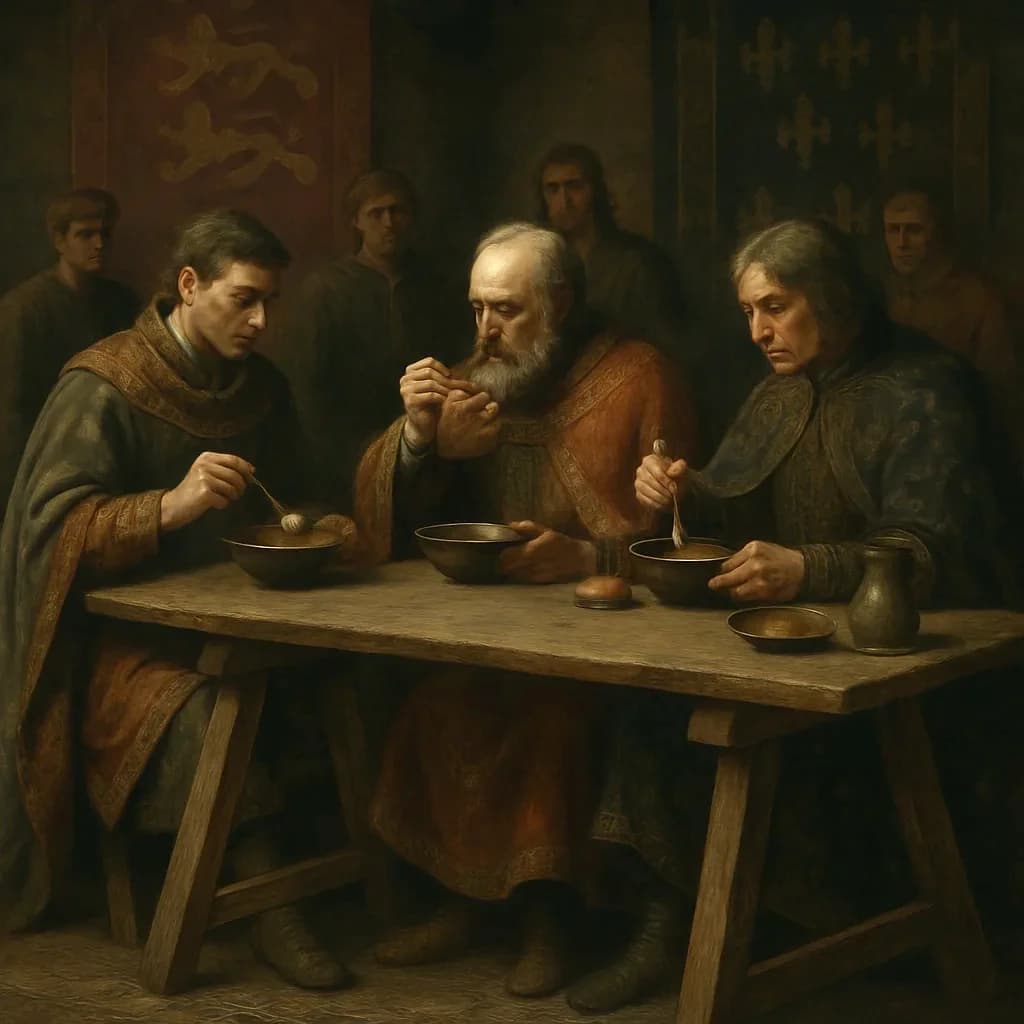
How a Soup Spoon Marked You as a Conquered Saxon
A single utensil crossing the English Channel in 1066 changed how an entire civilization ate, and thought about class.
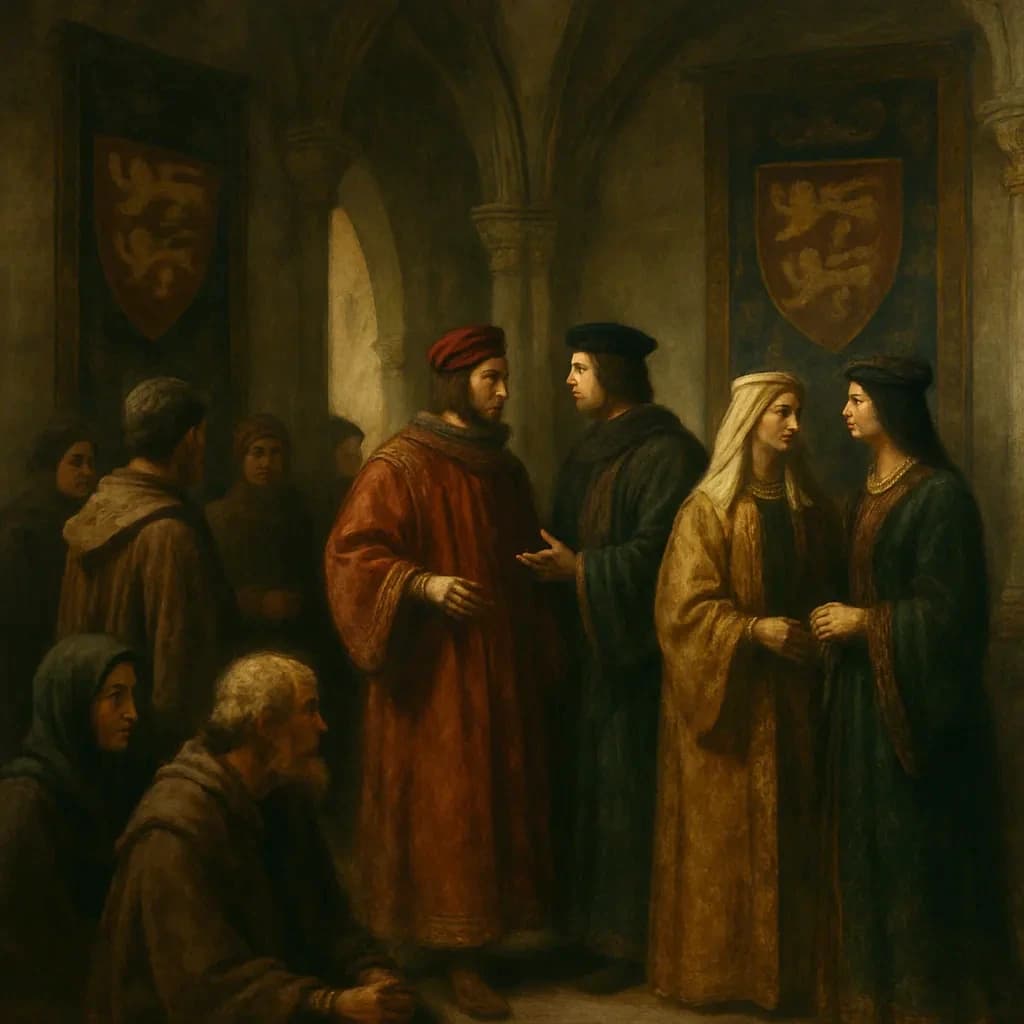
When the English Forgot How to Speak English
For three centuries after 1066, England's kings couldn't understand their own subjects.
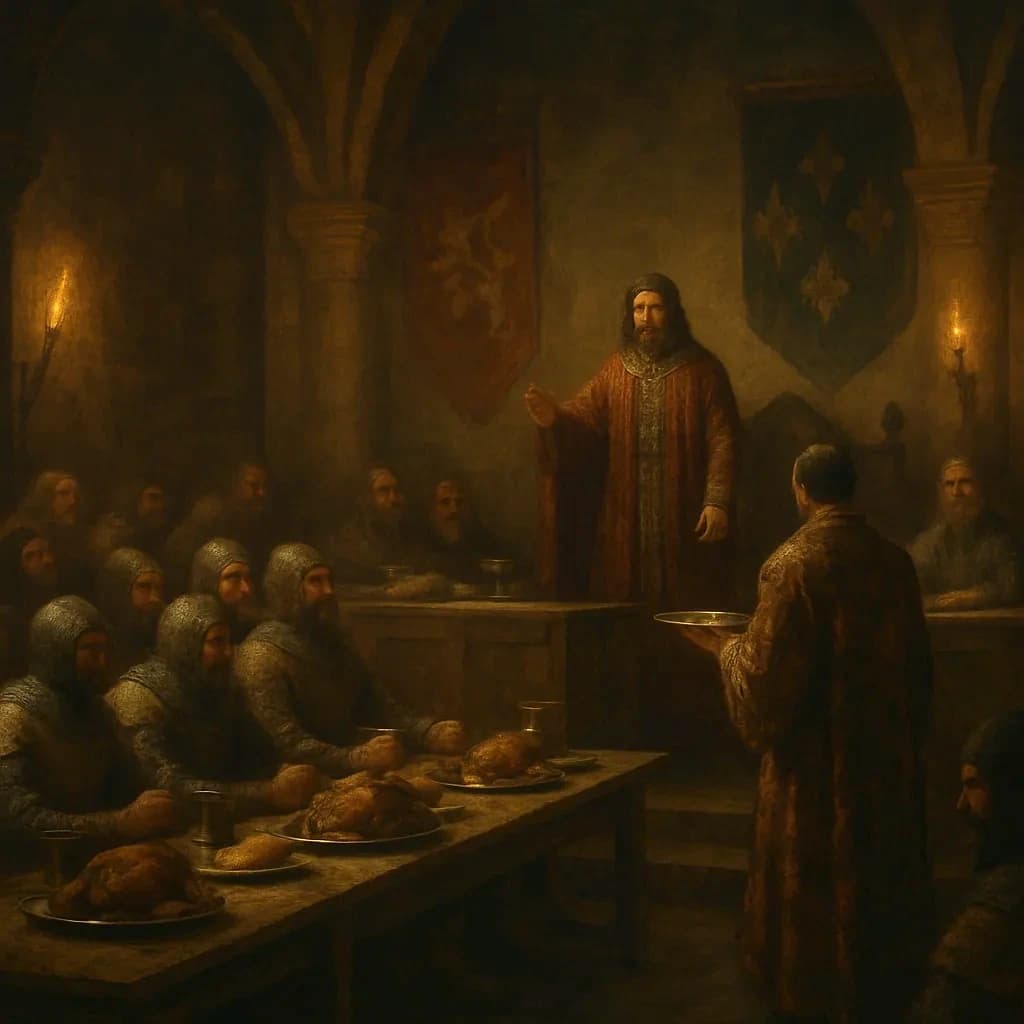
An English Manor Sold for a Handful of Cumin
The manor came cheap in 1066: one Norman lord owed the king nothing but a handful of seeds at every coronation, a debt his descendants paid for nearly a millennium.
- David Bates, William the Conqueror (Yale English Monarchs, 2016)
- Marc Morris, The Norman Conquest (Hutchinson, 2012)
- Elizabeth M. Hallam and David Bates, Domesday Book (Tempus Publishing, 2001)