
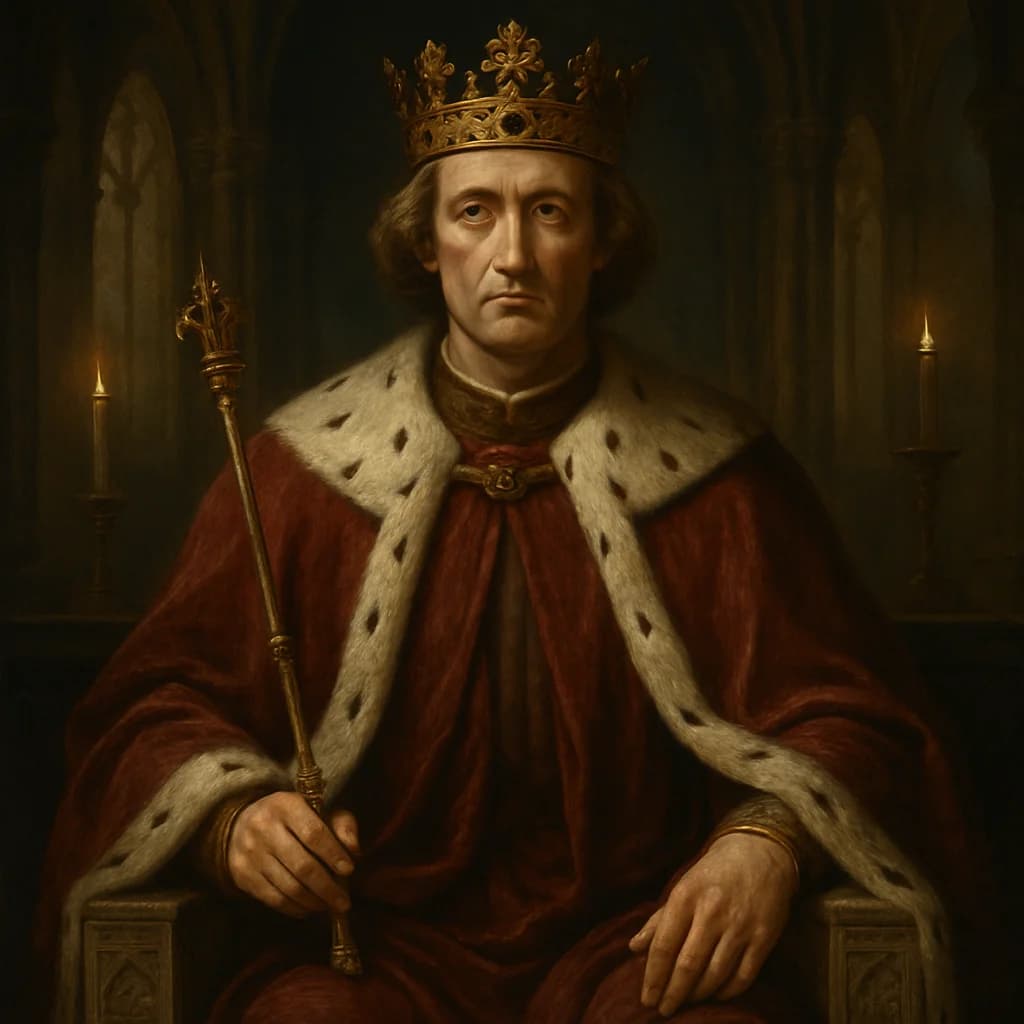
Henry III
He became King of England at nine years old, with no kingdom left to rule and no one entirely sure he was worth fighting for.
In October 1216, John I of England died of dysentery in the middle of a civil war he was losing. He left behind a nine-year-old heir, a country half-occupied by French troops, and a baronial rebellion that had literally invited the French prince Louis to come take the crown. What happened next is one of the stranger pivots in English history. The man who saved the Plantagenet dynasty wasn't a king or a general. It was a 70-year-old knight named William Marshal, who agreed to serve as regent for the boy not out of loyalty to John (he'd barely tolerated John) but out of something closer to professional obligation. When asked why he'd back such a hopeless cause, Marshal reportedly said he would carry the child on his shoulders across the sea if he had to.
Henry III ended up reigning for 56 years, the longest reign of any medieval English king. Almost none of those years were peaceful, and almost none are remembered. What tends to get lost is the specific texture of his failure, which was aesthetic as much as political. Henry was obsessed with rebuilding Westminster Abbey, which he redesigned in the French Gothic style he adored, pouring money into it for decades. He was devoted to the cult of Edward the Confessor with an intensity that bordered on mania. While his barons grew increasingly furious at him for filling his court with French relatives and ignoring English custom, Henry was commissioning mosaics and reliquaries. He named his firstborn son Edward specifically after the Confessor. The king was, in some ways, more interested in the England of legend than the England outside his window.
The political crisis this produced was real. By 1258, his barons had forced through the Provisions of Oxford, a document that went considerably further than Magna Carta in demanding structural limits on royal power. Henry spent the next decade trying to wriggle out of it. He eventually got Pope Urban IV to annul the Provisions, which triggered outright war. Simon de Montfort, his own brother-in-law, captured him at the Battle of Lewes in 1264. For over a year, Henry III was a king ruling under the supervision of his captor. His son Edward had to win him back.
The England that emerged from Henry's reign (with its embryonic Parliament, its tested and re-tested Magna Carta, its barons who had learned to organize) was more constitutionally developed than the one he'd inherited. He can't take credit for that. But he's not entirely innocent of it either.
Henry III reissued Magna Carta three times during his reign, beginning in 1216 when he was still a child-king, making it a living political instrument rather than a one-time document, and cementing its legal status largely through the administrative momentum his regents created.
Why untold: Henry III gets historically flattened between the drama of Magna Carta and John before him and the martial legend of Edward I after him, leaving his 56-year reign (where the constitutional machinery was actually stress-tested and made durable) treated as a long intermission rather than the main event.
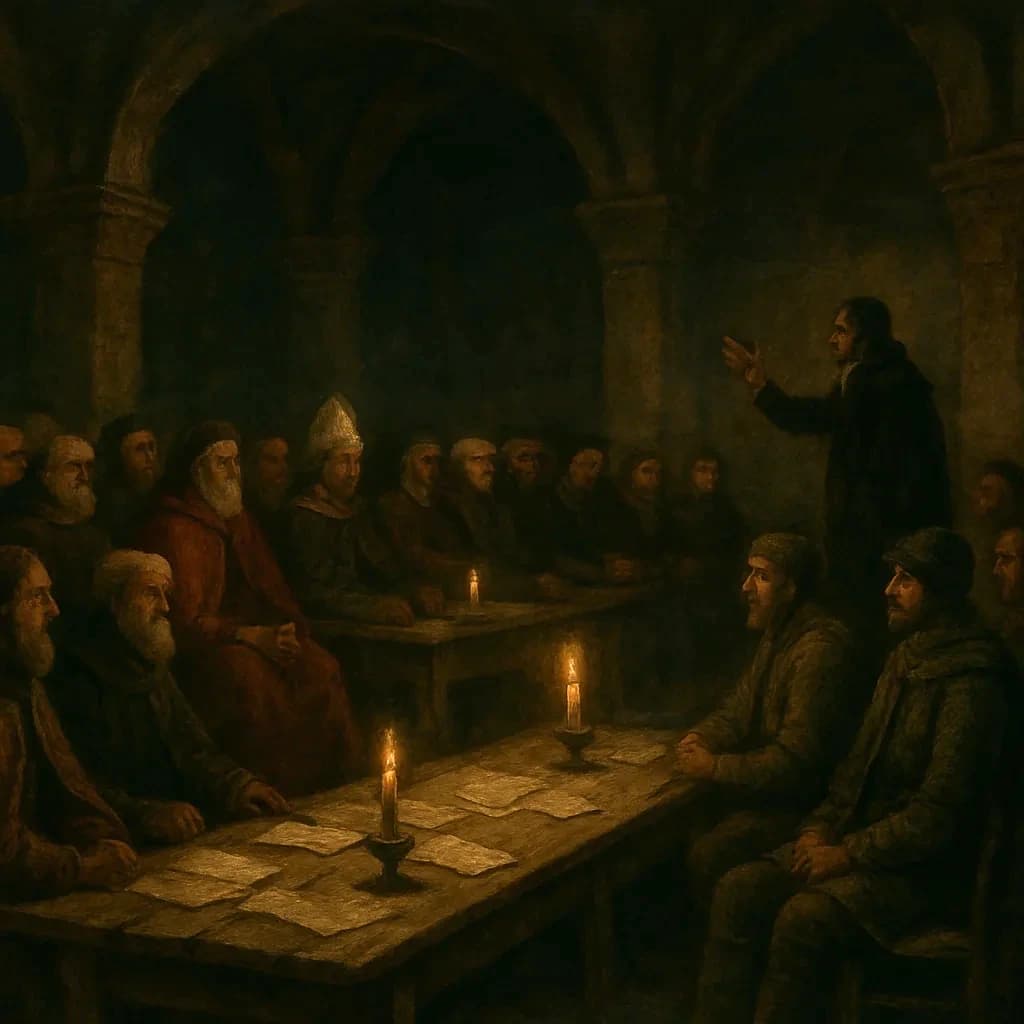
How a Losing Rebel Invented Parliament
A medieval English king needed cash so badly that the scramble for it stumbled into inventing representative government.
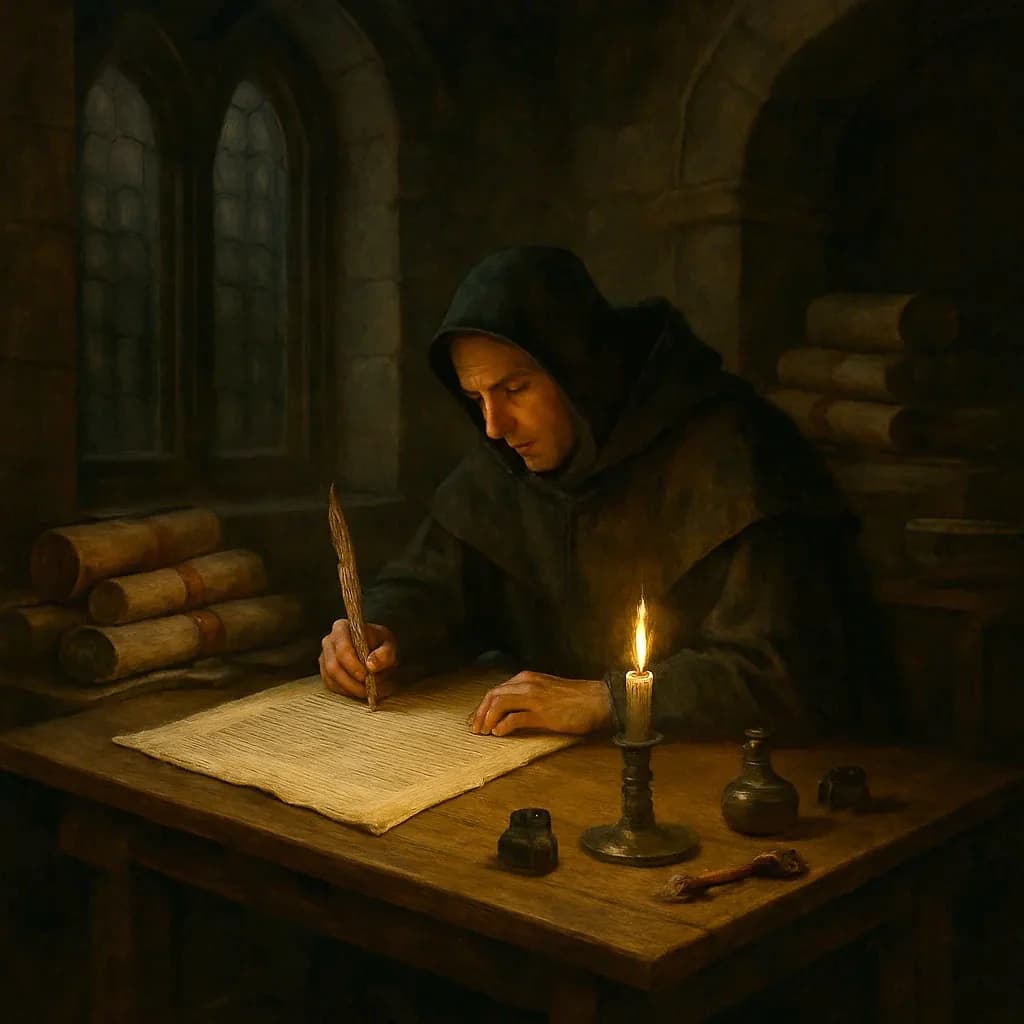
Magna Carta Survived Because a Clerk Kept Copying It
King John sealed Magna Carta in 1215, and the Pope annulled it almost at once. It survived because one man quietly kept making copies, and wasn't entirely honest about it.
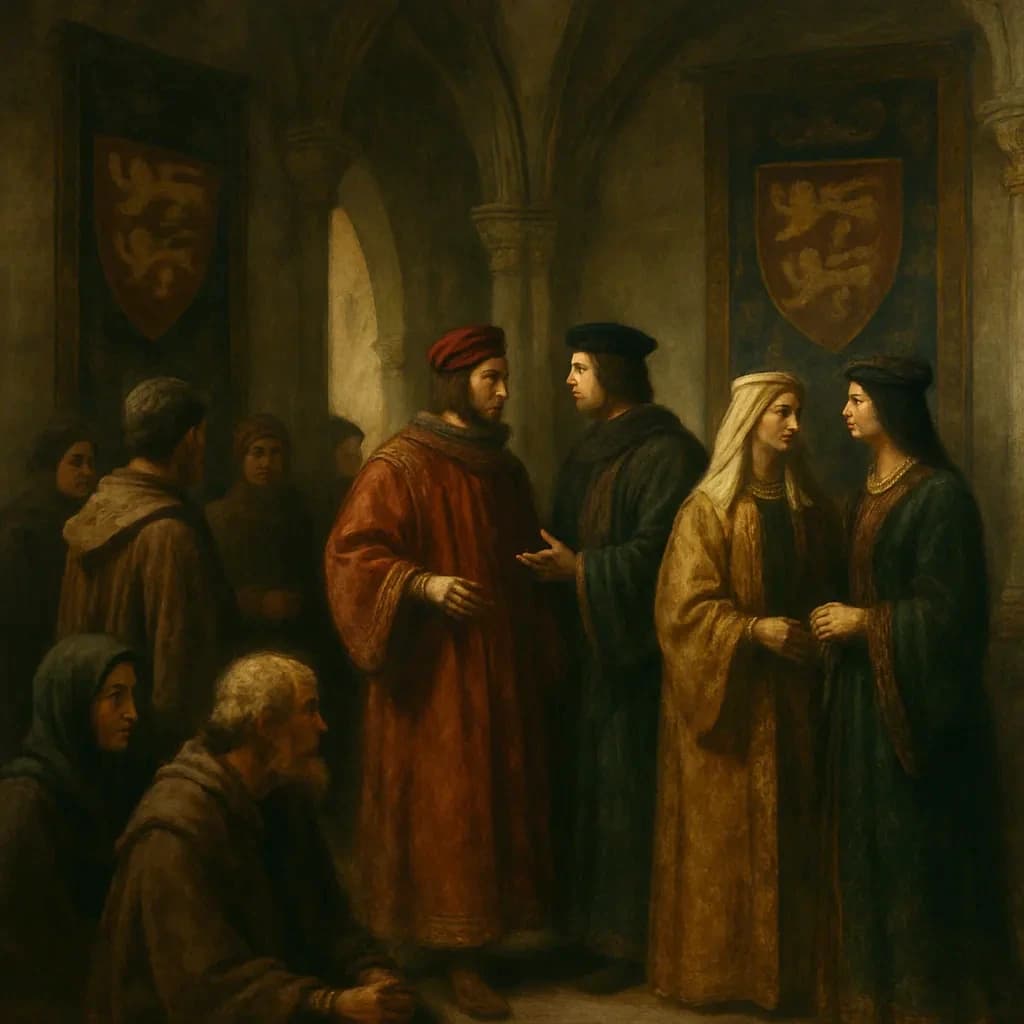
When the English Forgot How to Speak English
For three centuries after 1066, England's kings couldn't understand their own subjects.
- David Carpenter, 'The Reign of Henry III' (Hambledon Press, 1996)
- Huw Ridgeway, 'Henry III' in Oxford Dictionary of National Biography (Oxford University Press, 2004)
- Robert Stacey, 'Parliamentary Negotiation and the Expulsion of the Jews from England' in Thirteenth Century England VI, eds. Coss & Lloyd (Boydell Press, 1997)