
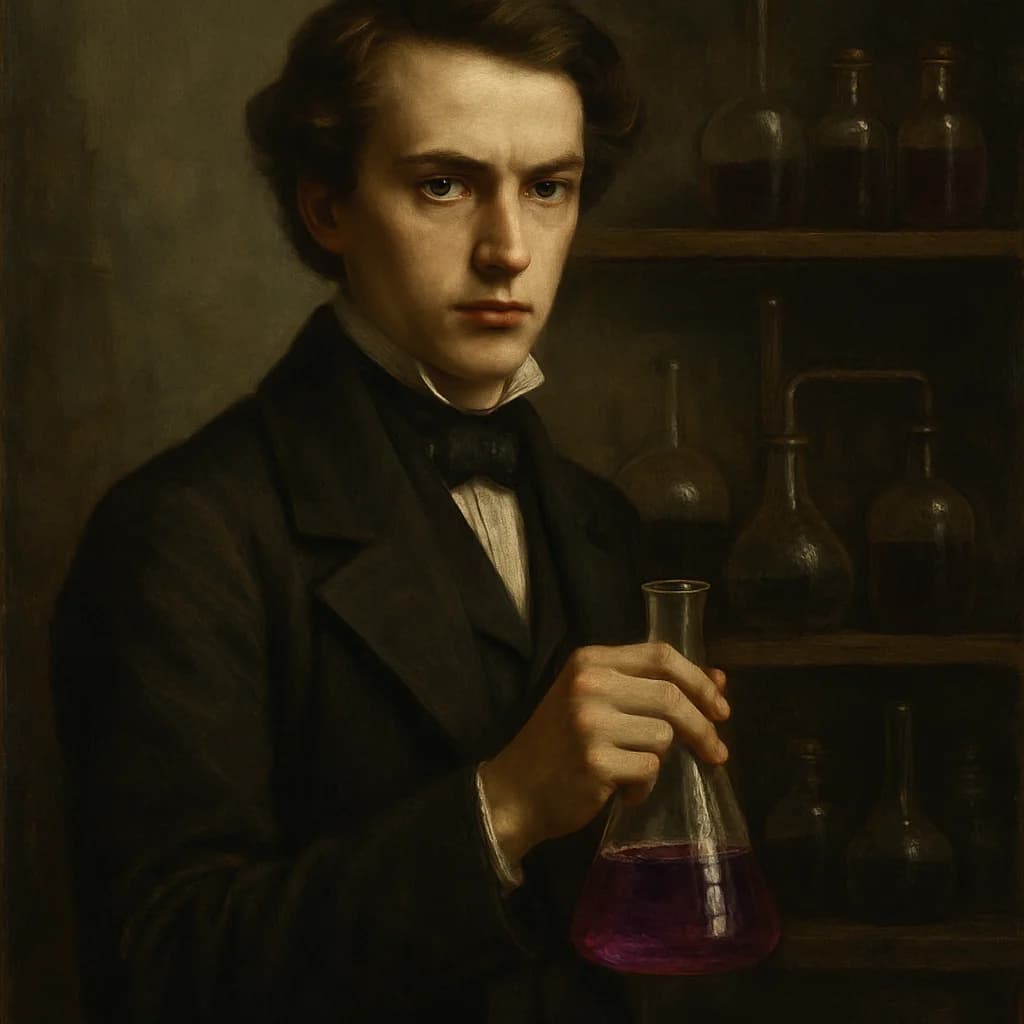
William Henry Perkin
The teenager who tried to cure malaria instead invented the color that would bankrupt empires and make peasants dress like royalty.
William Henry Perkin was supposed to be studying for his Easter exams in 1856, not conducting unauthorized experiments in the makeshift laboratory he'd built in his family's attic in East London. The eighteen-year-old chemistry student at the Royal College had been tasked by his professor with synthesizing quinine, the precious antimalarial drug that cost more than gold. Instead, while mixing aniline with potassium dichromate in a desperate attempt to create artificial quinine, Perkin produced a black, tarry mess that should have sent him straight back to his textbooks.
Most students would have cleaned up the failure and moved on. Perkin, however, noticed something extraordinary when he tried to wash out his flask with alcohol: the residue dissolved into the most brilliant purple anyone had ever seen. For three thousand years, purple had been the exclusive domain of emperors and popes, extracted drop by precious drop from tens of thousands of crushed murex shells. Tyrian purple cost more than its weight in silver. Now this teenager was staring at a beaker full of it, made from coal tar: industrial waste.
Within months, Perkin had dropped out of college, convinced his father to mortgage the family home, and built the world's first synthetic dye factory. His timing was perfect: synthetic chemistry was emerging, industrial textile production was booming, and Queen Victoria herself fell in love with his 'mauveine purple.' By age twenty-one, Perkin was a millionaire. By thirty-six, he had retired from dye manufacturing entirely, having founded an industry that would employ millions and fundamentally democratize fashion across the globe.
The boy who failed to cure malaria had accidentally triggered the modern chemical industry, proving that some of history's greatest revolutions begin not with grand plans, but with curious minds refusing to throw away their mistakes.
Perkin's purple dye was so revolutionary that it inspired chemists across Europe to experiment with coal tar derivatives, leading to the development of aspirin, photographic chemicals, and eventually the pharmaceutical industry.
Why untold: His story is overshadowed by more famous inventors because synthetic chemistry seems too technical and abstract compared to dramatic inventions like the telegraph or steam engine.
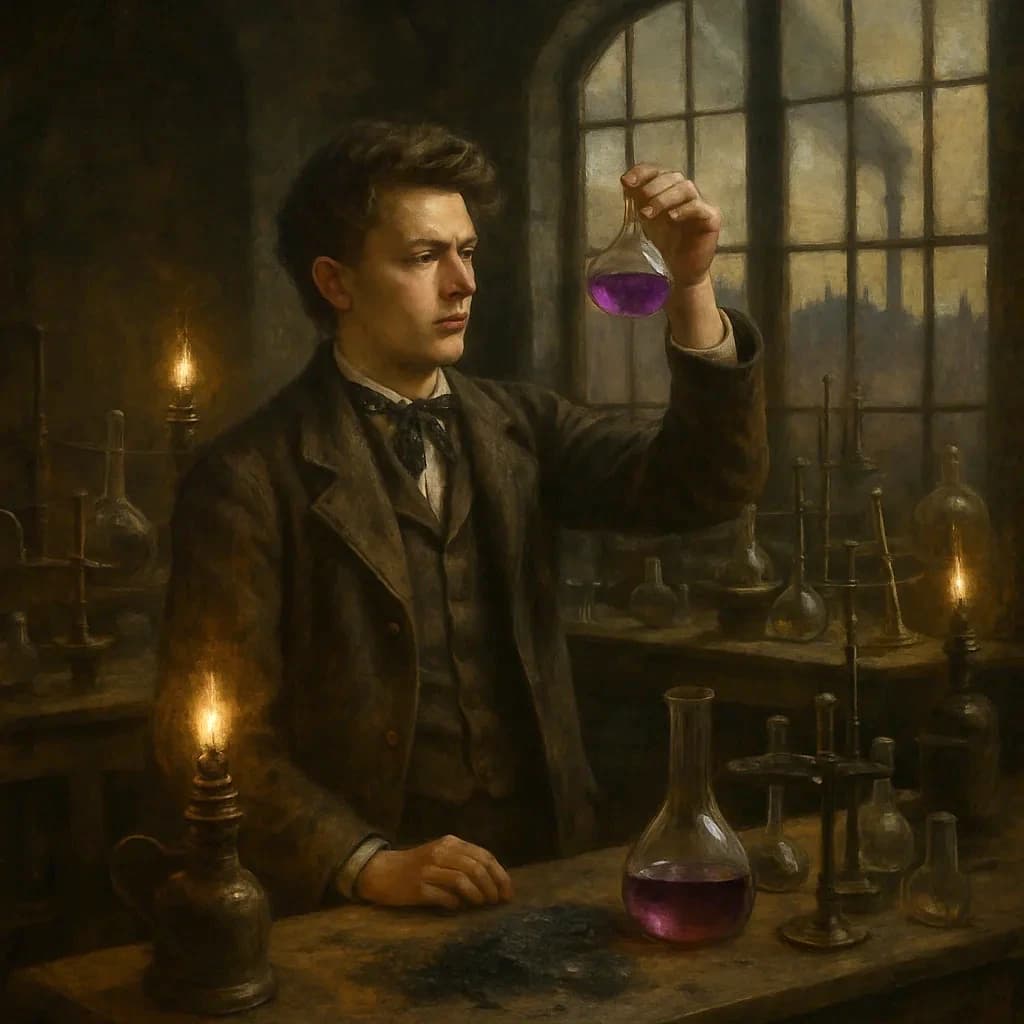
Hunting a Malaria Cure, He Made Purple from Coal
An 18-year-old chemistry student trying to synthesize quinine in 1856 produced the first artificial dye instead, and unknowingly triggered the chemical revolution that would reshape everything from medicine to warfare.
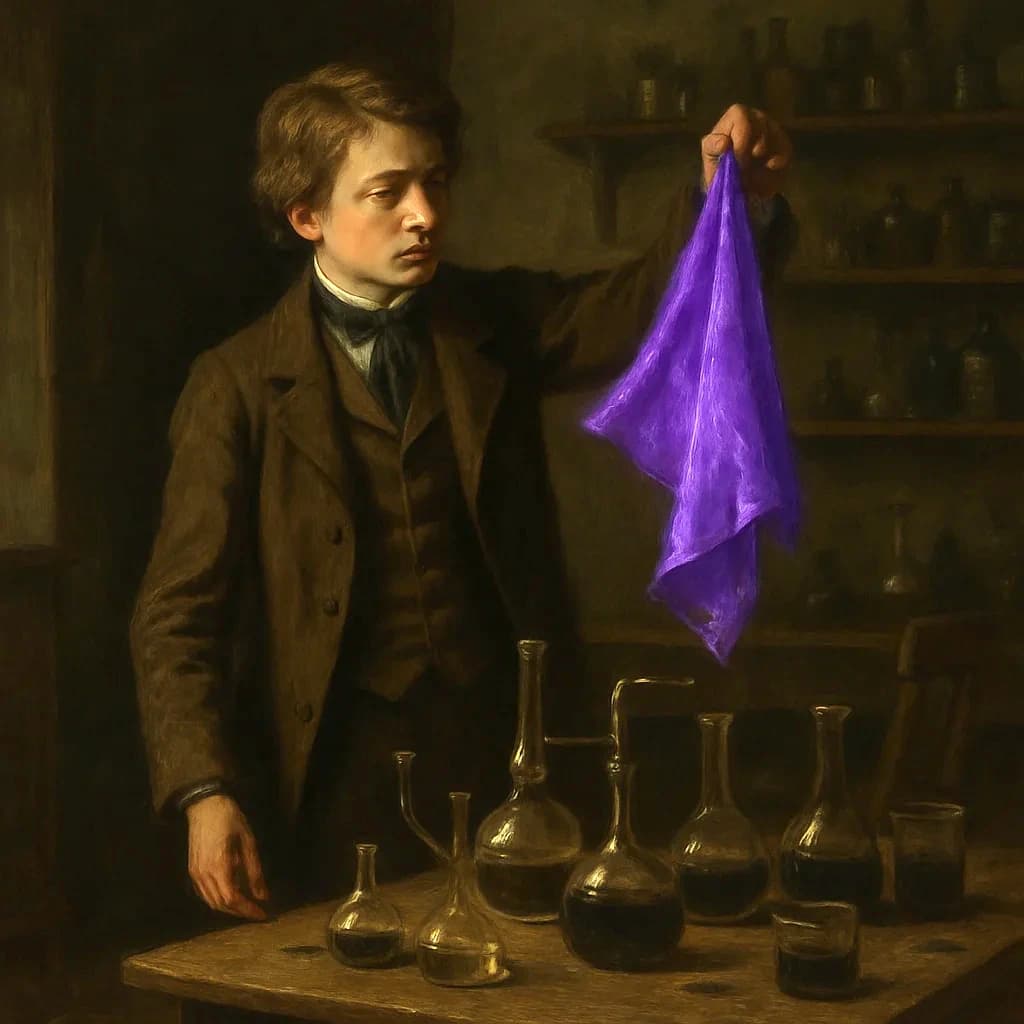
A Boy's Chemical Spill Created the Color That Bankrupted Empires
A twelve-year-old apprentice spilled the wrong chemicals and accidentally created the color that would bankrupt empires and democratize fashion.
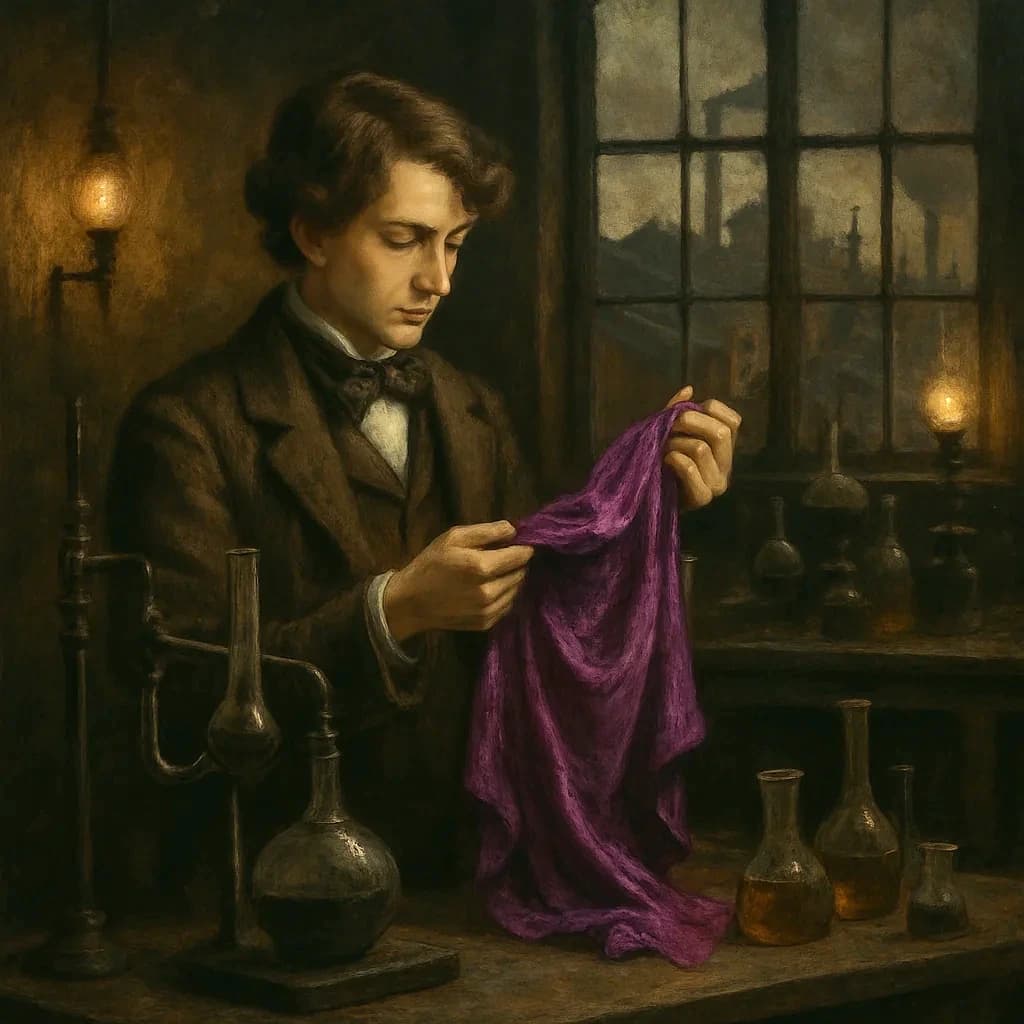
The Recipe That Turned Sheep Purple
A teenage chemistry student accidentally created the color that would clothe an empire and bankrupt an ancient industry overnight.
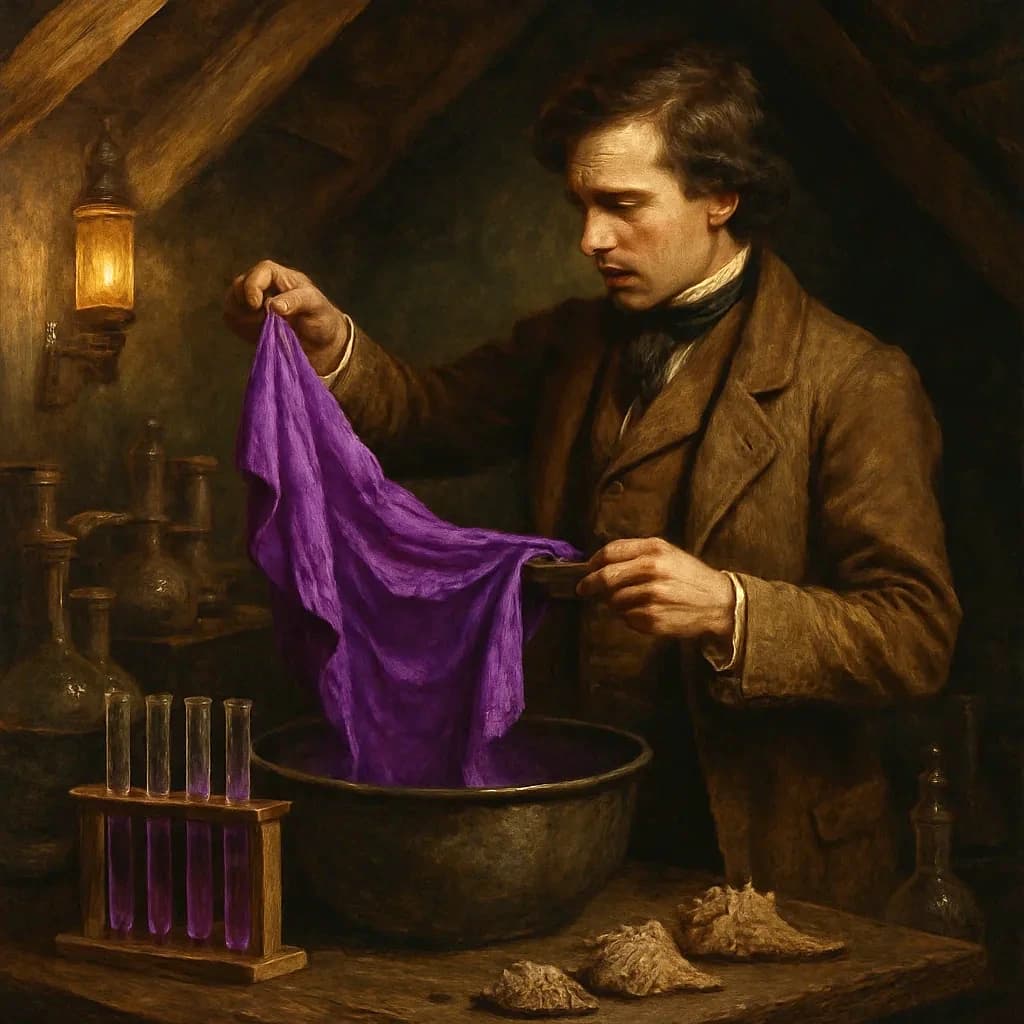
A Teenager's Attic Experiment Dethroned the Color of Kings
A single color toppled empires, started revolutions, and made peasants into kings, until one teenager found a way to make it from coal tar in his parents' attic.
- Garfield, Simon. 'Mauve: How One Man Invented a Color That Changed the World.' W. W. Norton & Company, 2001.
- Travis, Anthony S. 'The Rainbow Makers: The Origins of the Synthetic Dyestuffs Industry in Western Europe.' Lehigh University Press, 1993.
- Perkin, W.H. 'The Origin of the Coal-tar Colour Industry, and the Contributions of Hofmann and His Pupils.' Journal of the Chemical Society, 1896.