

Sebastião José de Carvalho e Melo
He saved Lisbon from rubble, expelled the Jesuits from an entire empire, and was eventually arrested for it, and somehow, none of that is the most interesting thing about him.
Before Sebastião José de Carvalho e Melo became the most feared man in the Portuguese empire, he was nobody in particular. Born in 1699 to a minor provincial family, he spent his thirties as a middling diplomat in London and Vienna, watching, mostly. He was forty-nine years old when King José I handed him a cabinet post, the kind of appointment that usually meant comfortable irrelevance. Then, on the morning of November 1st, 1755, the ground beneath Lisbon opened.
The earthquake, the fires, the tsunami that followed: between sixty thousand and one hundred thousand people dead, the capital of a global empire reduced to ash. What happened next is usually described as Carvalho e Melo's moment of genius. He organized rescue operations, froze food prices, prevented mass exodus from the city, and began rebuilding Lisbon on an entirely new grid, one of the earliest examples of urban earthquake-proofing in Western history. King José reportedly asked him what was to be done. His answer: 'Bury the dead and feed the living.' The line is probably apocryphal. The competence was not.
But the earthquake gave him something beyond a reputation. It gave him permission. In the chaos of reconstruction, with the king dependent and the old aristocracy discredited, Carvalho e Melo moved. He broke the Jesuit order's stranglehold on Brazilian education and trade, expelling them from the empire in 1759, twelve years before the Pope dissolved the Society of Jesus entirely. He restructured Portuguese commerce, created state monopolies, and systematically dismantled the power of the families who had run Portugal for generations. He had the Duke of Aveiro tortured and executed in 1759 over an assassination attempt that historians still argue about. He built the Pombaline Baixa (the reconstructed lower city of Lisbon) as a monument to rational order. He was, simultaneously, a modernizer and a monster.
When José I died in 1777, his daughter Maria I stripped Carvalho e Melo of his titles within days. He was put on trial, convicted of various abuses, and sentenced to exile from Lisbon. He died in 1782 in the provincial town of Pombal, the place that had given him his famous title (the Marquis of Pombal) and that had always been, quietly, where he belonged. He was eighty-two. The city he rebuilt is still standing.
The Pombaline Baixa, the grid of streets Carvalho e Melo built after the earthquake, was constructed using some of the earliest seismic-resistant building techniques ever deliberately employed. Engineers tested the new structures by having soldiers march around them in formation to simulate ground tremors.
Why untold: Because the earthquake is remembered as a natural disaster and a philosophical crisis (Voltaire wrote a poem about it, Kant wrote essays) while Carvalho e Melo's parallel political revolution, which reshuffled the power structure of an entire Atlantic empire, gets filed under 'reconstruction.'

How a Lisbon Earthquake Erased England's Trade Deal
A young Portuguese mapmaker's entire professional archive vanished in eighteen minutes in 1755, and the disaster that destroyed it freed an entire empire.
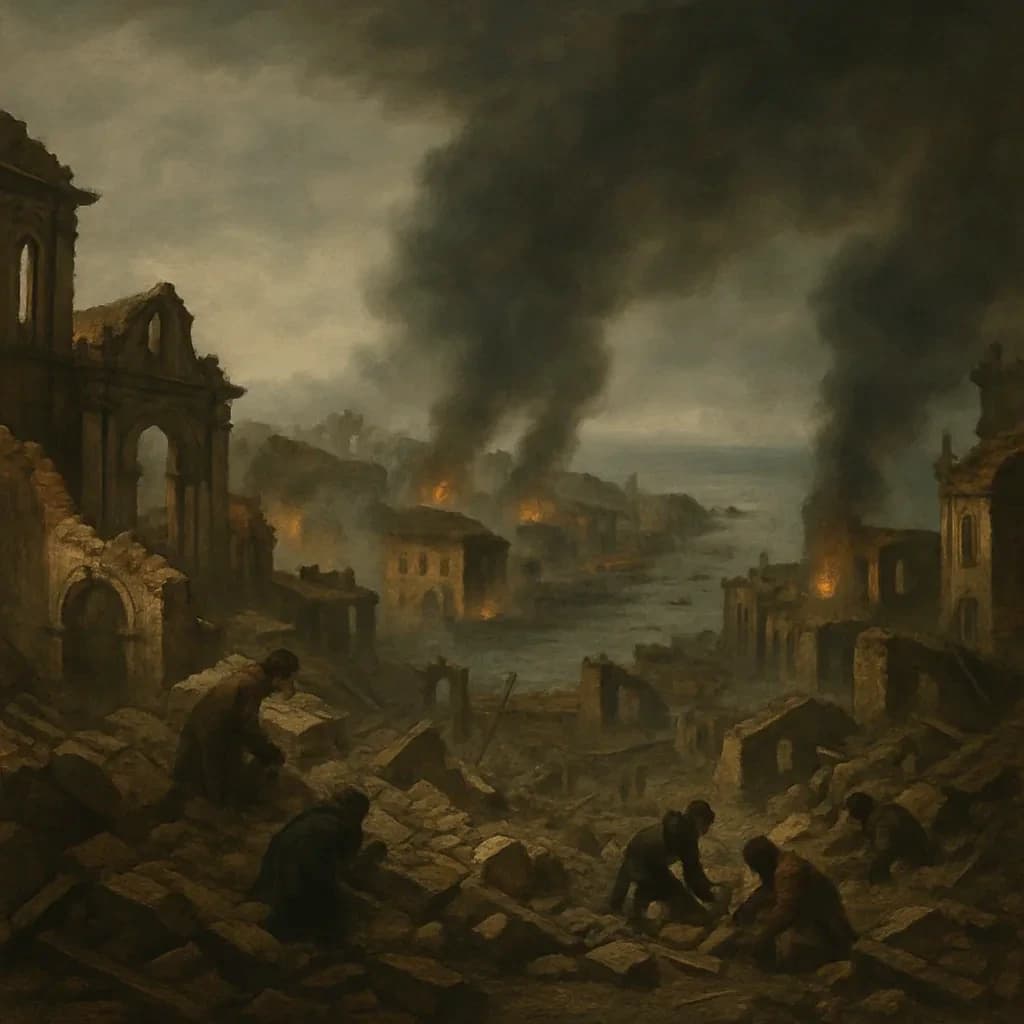
Pombal Burned the Papers That Proved Portugal's Empire
The 1755 earthquake gave Portugal a chance to destroy the one document that could have proven it owned half the world, and it took that chance on purpose.
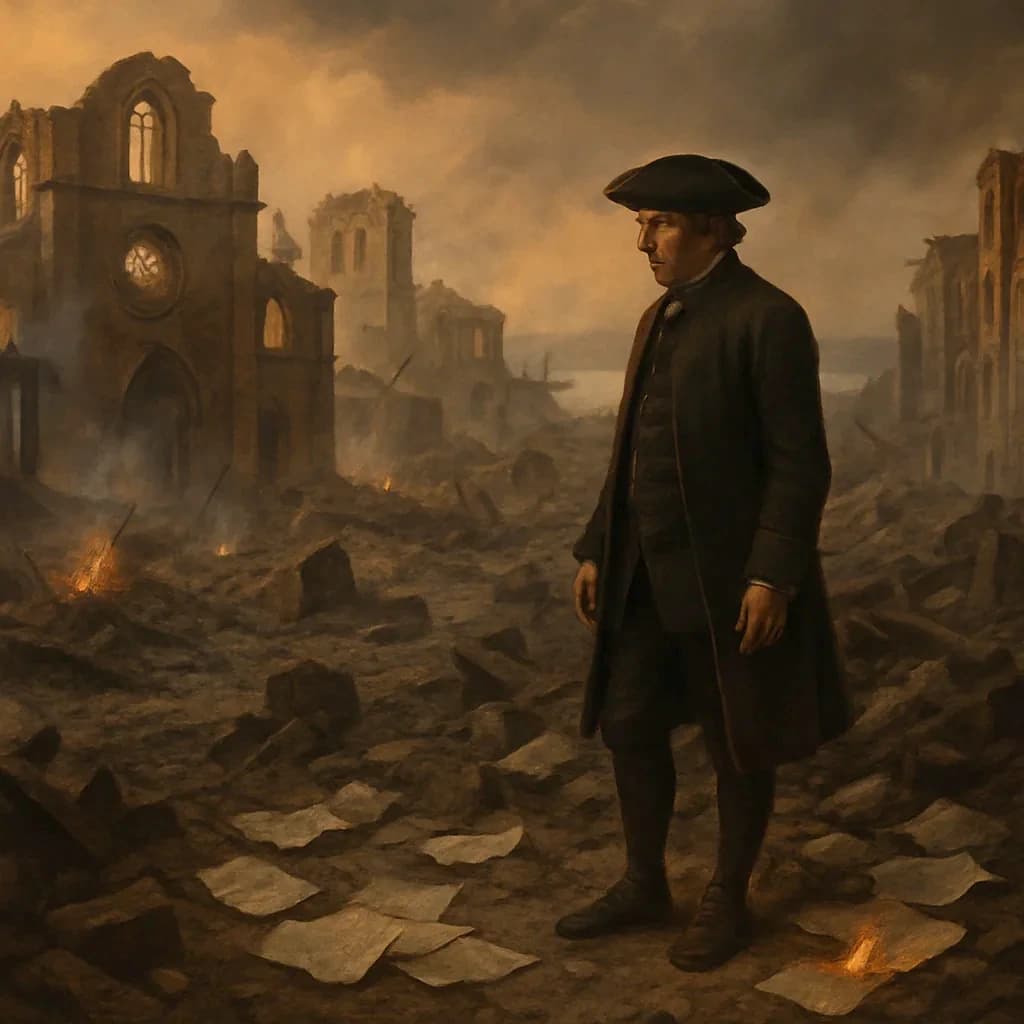
Lisbon Rebuilt the City but Never the Records
An earthquake destroyed Portugal's capital in six minutes, and the more interesting disaster took another century.
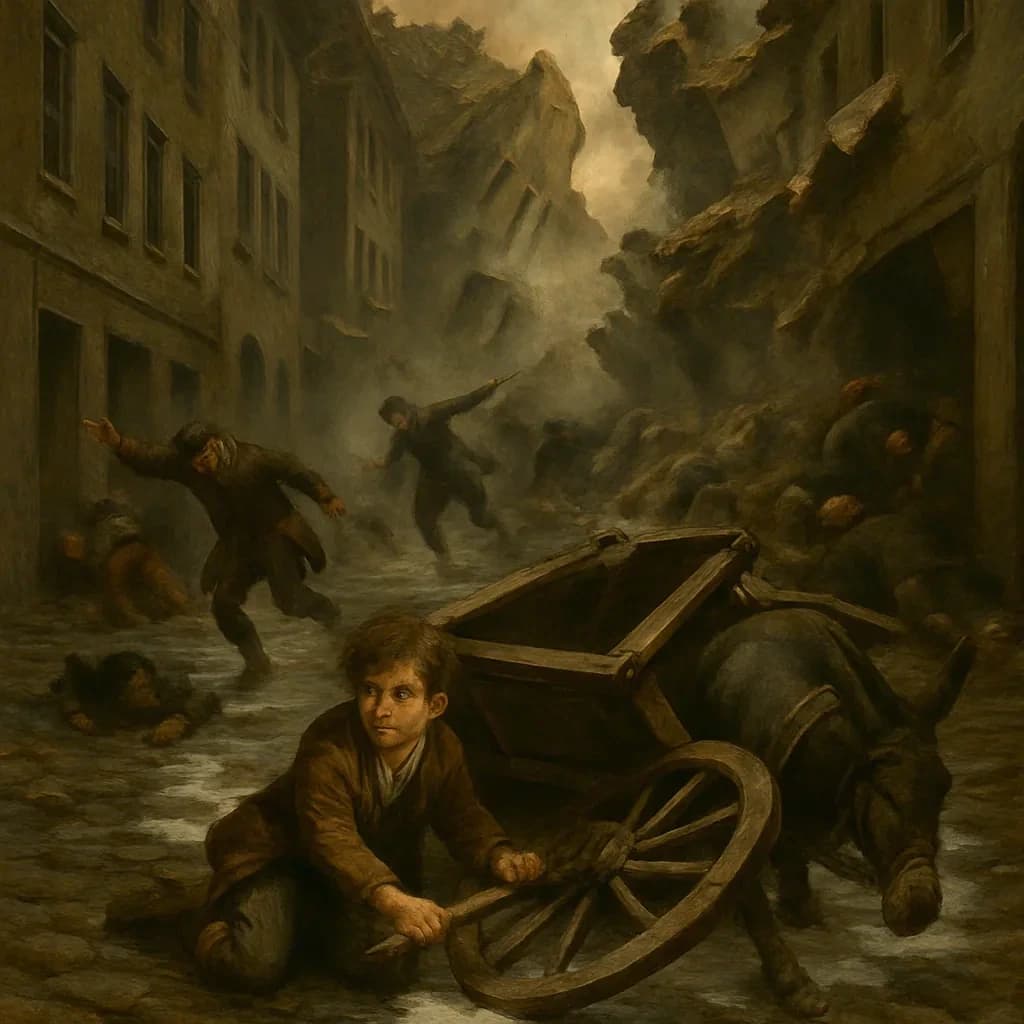
The Spilled Milk That Saved Lisbon's Crowd
A Portuguese nun's breakfast saved Lisbon from complete extinction in 1755.
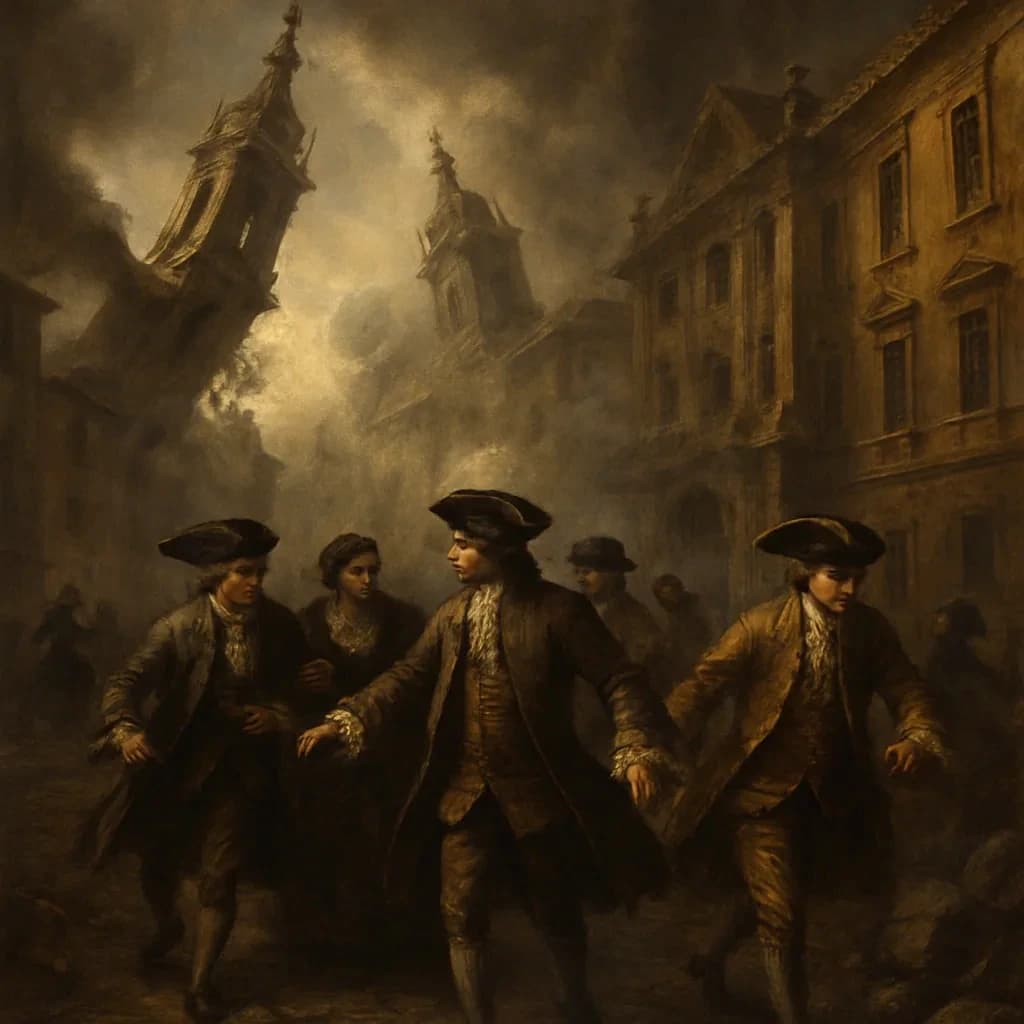
Lisbon's Earthquake and the Slow Loss of Brazil
The earthquake that leveled Lisbon also quietly ended Portugal's golden age, but not in the way anyone expected.
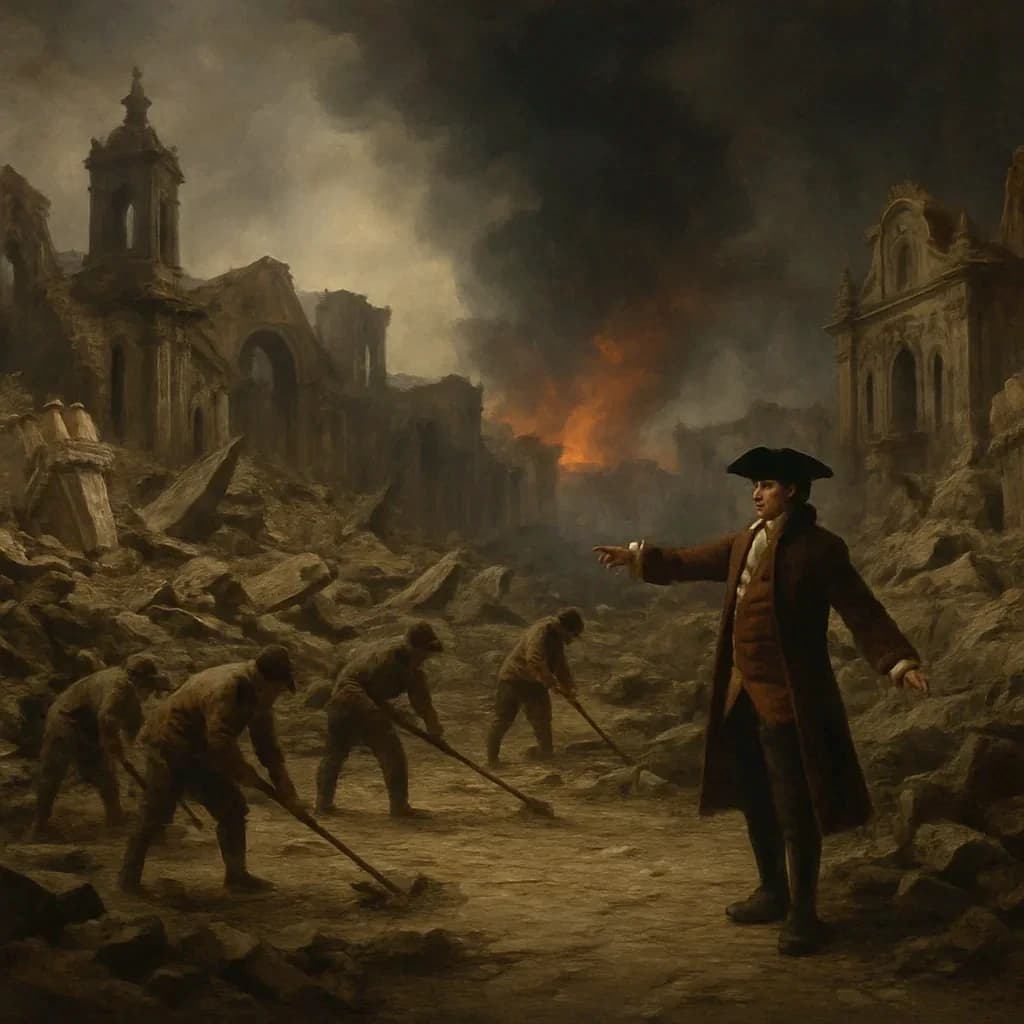
The Earthquake That Chose a King
When Lisbon shook for six minutes in 1755, it didn't just topple buildings. It toppled the most powerful minister in Europe and rewrote the rules of how nations survive catastrophe.
- Kenneth Maxwell, Pombal: Paradox of the Enlightenment (Cambridge University Press, 1995)
- Mark Molesky, This Gulf of Fire: The Destruction of Lisbon, or Apocalypse in the Age of Science and Reason (Knopf, 2015)
- Ana Cristina Araújo, 'The Lisbon Earthquake of 1755: Public Distress and Political Propaganda,' e-Journal of Portuguese History, Vol. 4, No. 1 (2006)