
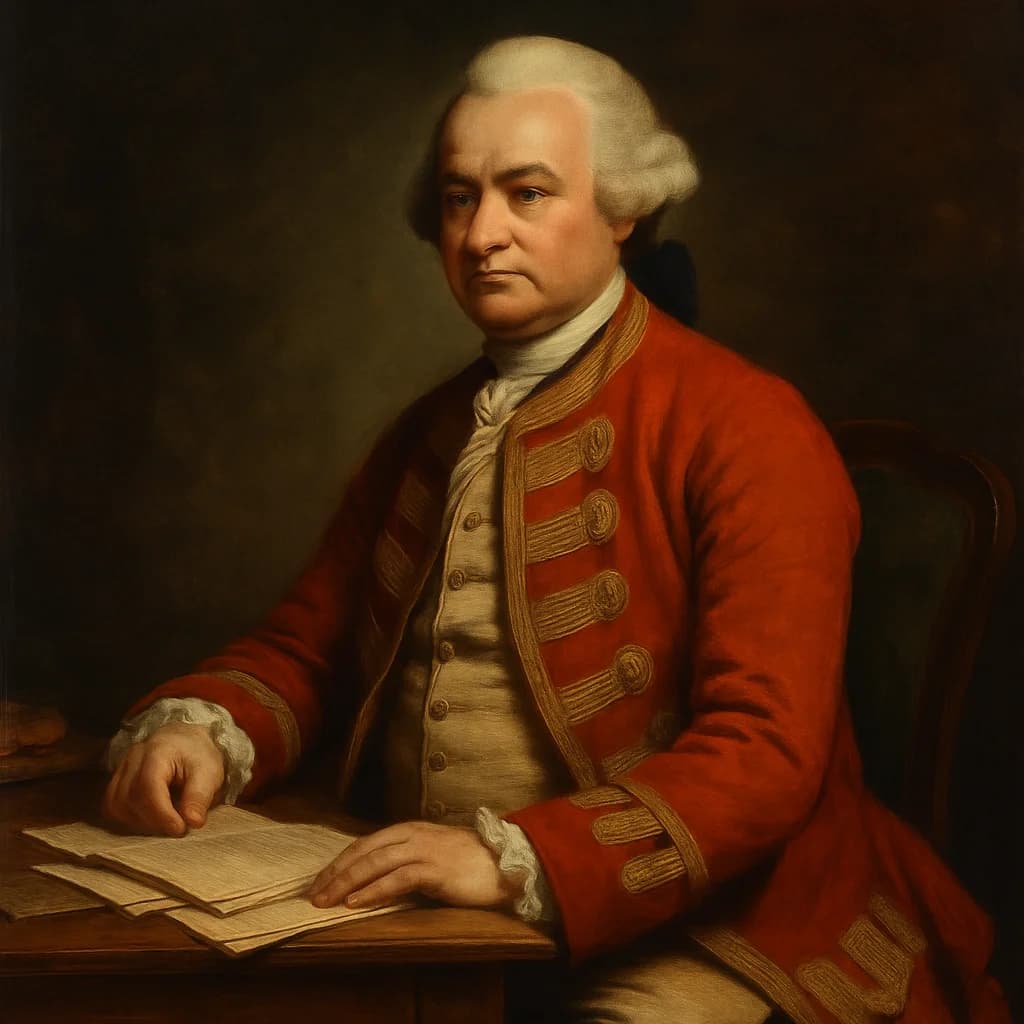
Robert Clive
The suicide attempts began in his twenties, long before Robert Clive conquered Bengal with just 3,000 men against an army of 50,000.
Robert Clive arrived in India in 1744 as a friendless eighteen-year-old clerk earning five pounds a year for the East India Company. His colleagues described him as morose and violent-tempered. Twice he tried to kill himself: once with a pistol that misfired, once by throwing himself from a window. The Company nearly sent him home in disgrace.
Then came Plassey in 1757. Clive's tiny force faced Siraj-ud-Daulah's massive army in what should have been a massacre. Instead, Clive had secretly bribed the Nawab's general, Mir Jafar, to switch sides mid-battle. When the fighting began, two-thirds of the Bengali army simply walked away. Clive won Bengal not through military genius but through what he cheerfully called "a scoundrel's trick."
The real shock came next. Traditional conquerors extracted tribute and left. Clive did something unprecedented: he made the East India Company the tax collector for 20 million Bengalis. The 1765 Treaty of Allahabad didn't just grant trading rights. It transferred the diwani, the Mughal right to collect revenue, from Emperor Shah Alam II to a London corporation. Clive had accidentally invented corporate governance.
Back in London, Clive faced Parliament's fury over his methods. They called him a criminal, a looter, a disgrace to British honor. He defended himself with typical bluntness: "I stand astonished at my own moderation." He had personally taken £234,000 from Bengal's treasury, roughly £30 million today. But his real crime wasn't theft. It was creating a precedent that would let a trading company rule a subcontinent.
Clive's victory at Plassey lasted only eight hours and involved almost no actual fighting. Most of the "battle" was negotiating which Bengali nobles would betray their Nawab.
Why untold: Military histories focus on his battlefield tactics while overlooking that his real innovation was bureaucratic: turning military conquest into corporate tax collection.
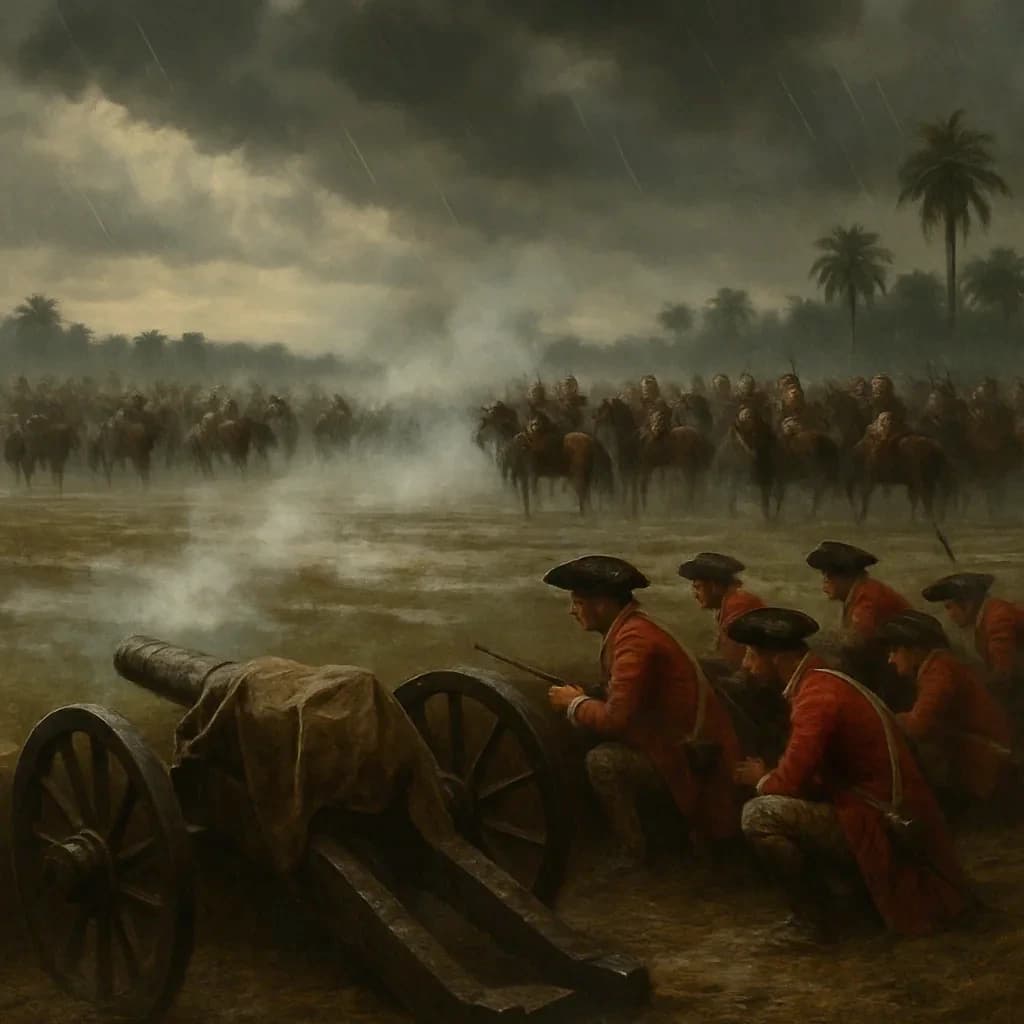
One Monsoon Ambush Handed India to a Trading Company
A single monsoon ambush didn't just kill a man. It ended two centuries of Mughal dominance and handed India to a trading company.

How a Bookkeeping Error Turned Traders Into Rulers
A simple bookkeeping mistake in London's counting houses turned a trading company into the ruler of 200 million people.
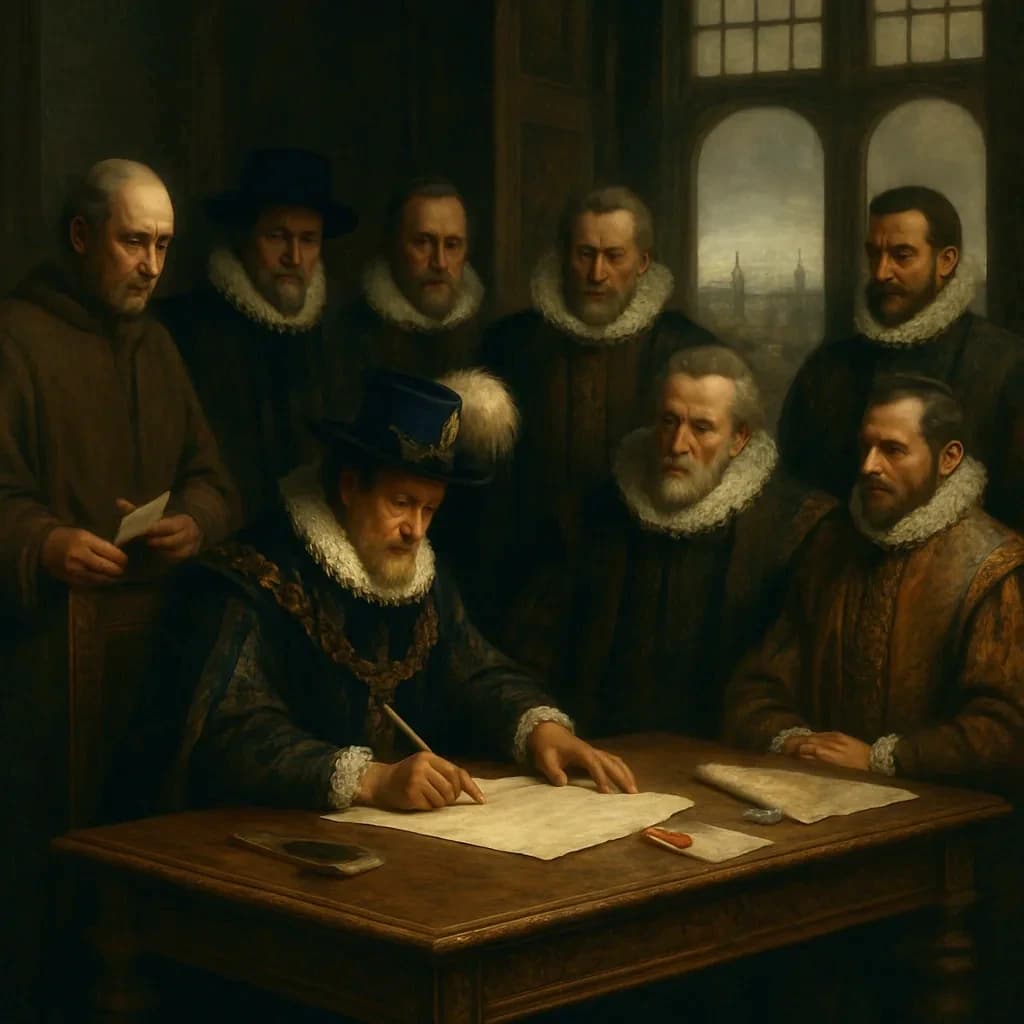
One Buried Clause Let a Company Rule India
A single page of correspondence created the most powerful corporation in human history.
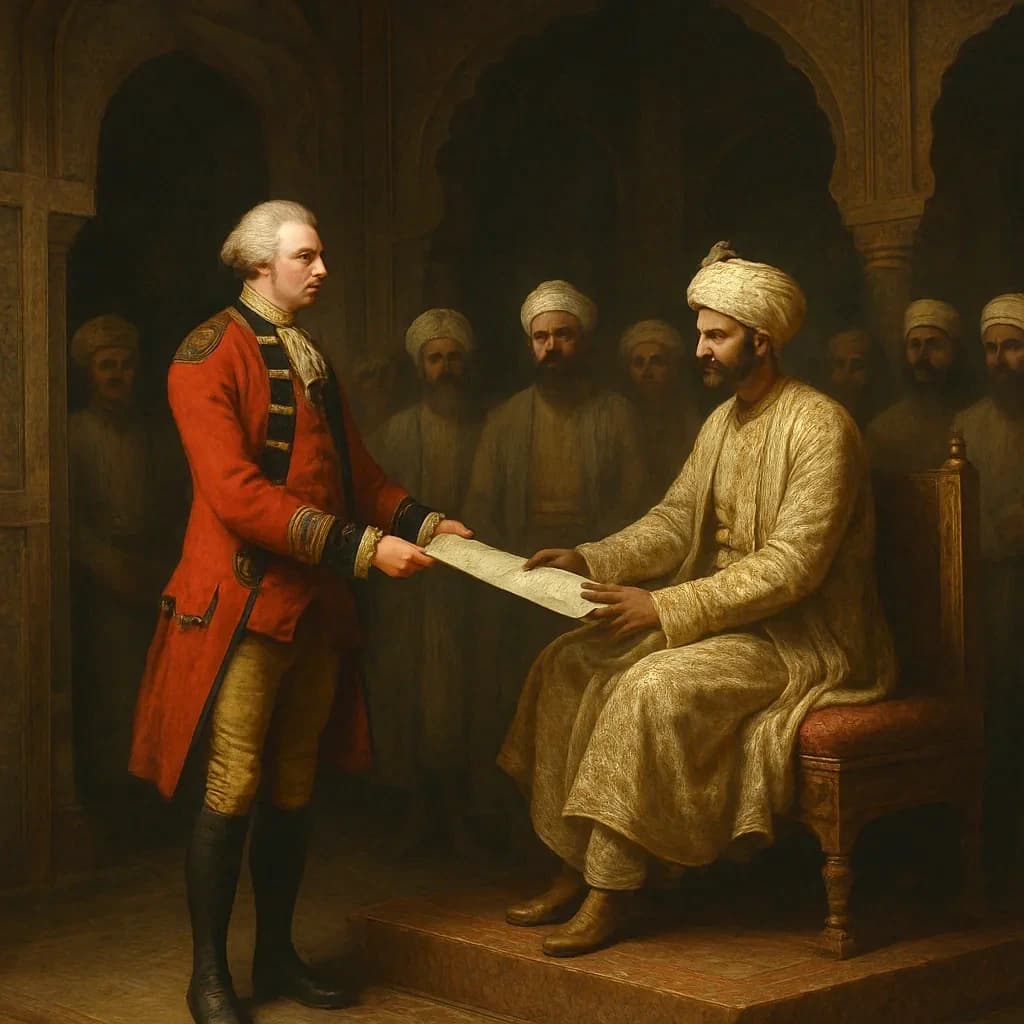
The Diwani: How a Company Took Over Bengal's Taxes
Robert Clive walked out of a Mughal court in 1765 carrying a document that handed taxation rights over 20 million people from an emperor to a trading company.
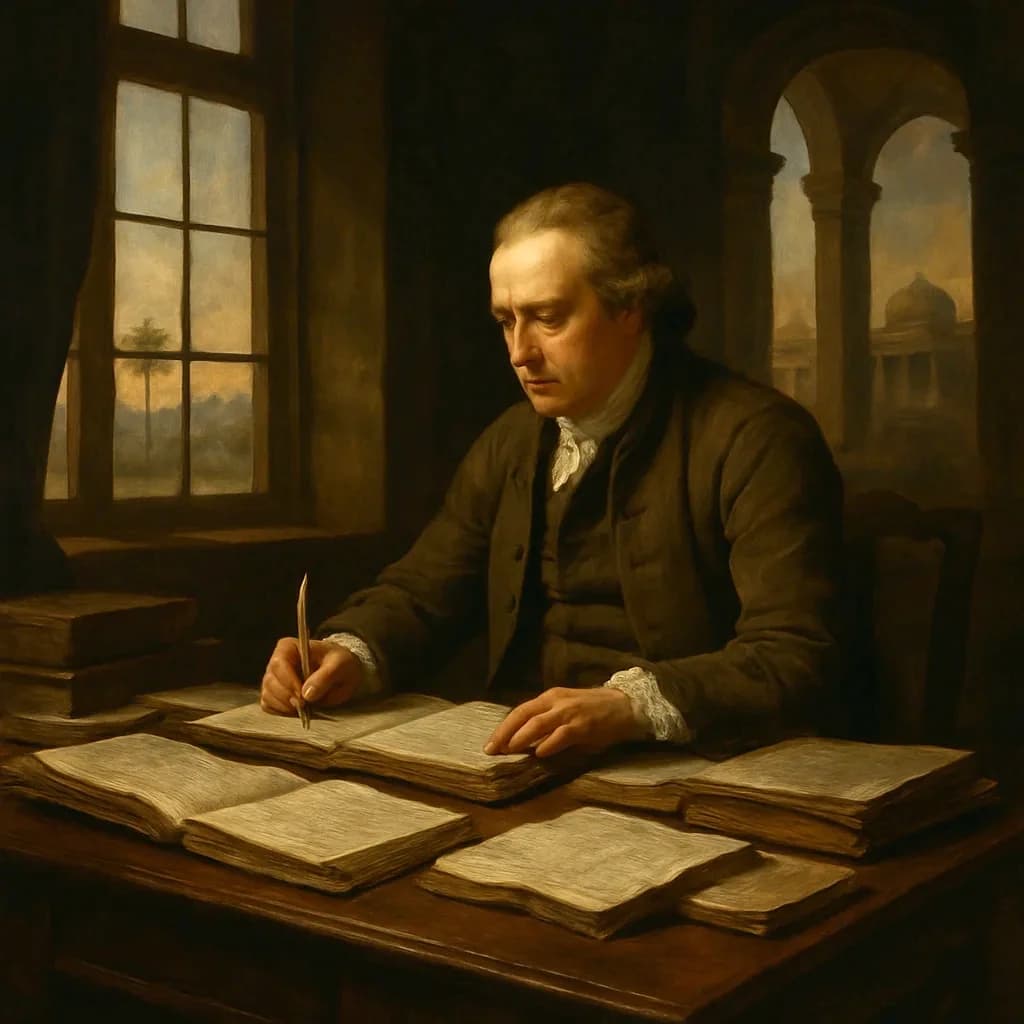
How a Trading Company Foreclosed on India
A failed silk merchant's bad debt became the blueprint for corporate colonialism.

Spices to Empire: How a London Company Conquered India
Goose-quill clerks in a London counting house weren't just keeping books. They were recording the swallowing of a subcontinent.
- Dalrymple, William. The Anarchy: The Relentless Rise of the East India Company. Bloomsbury, 2019.
- Lawson, Philip. The East India Company: A History. Longman, 1993.
- Marshall, P.J. Bengal: The British Bridgehead, Eastern India 1740-1828. Cambridge University Press, 1987.