
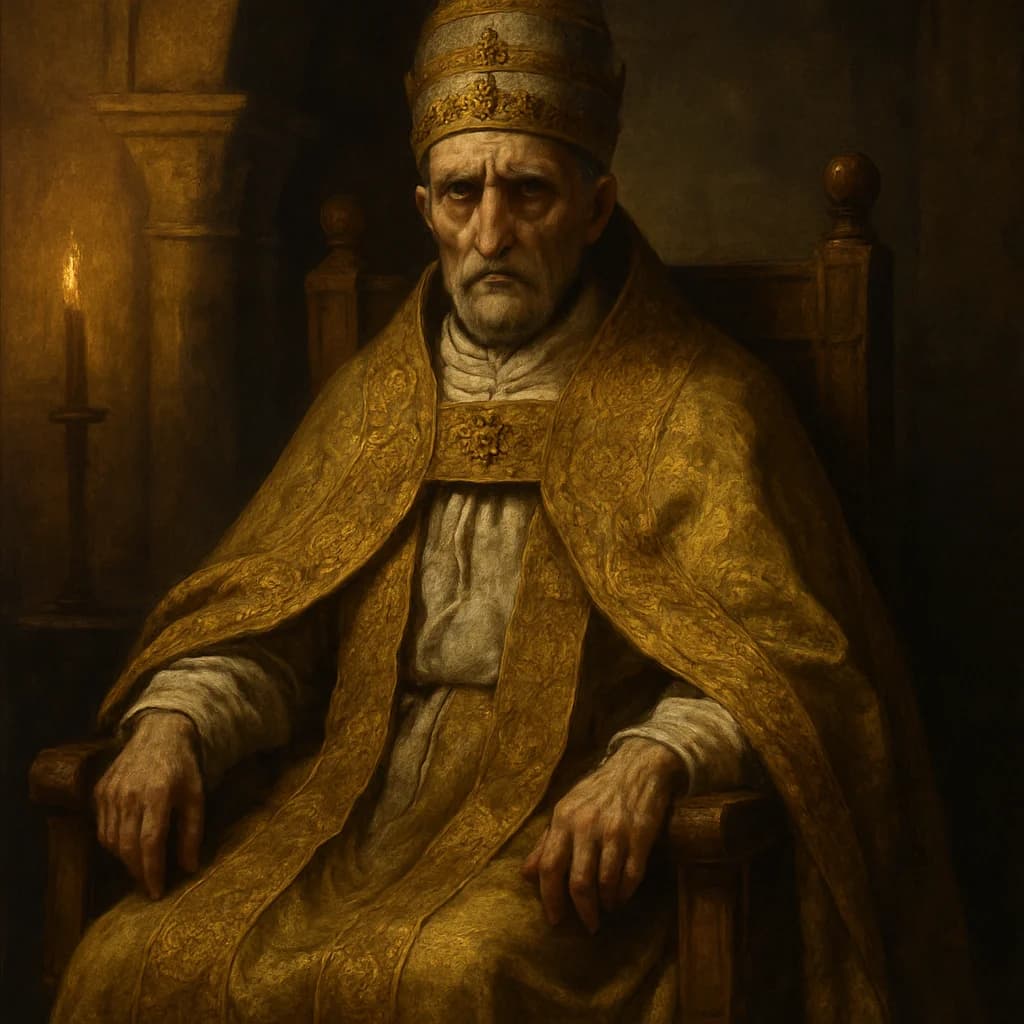
Pope Stephen VI
He put a corpse on trial, won the case, and was strangled in prison within the year, and somehow the corpse got the last laugh.
Before Stephen VI became the most theatrically unhinged pope in the history of the papacy, he was a nobody from a family of Roman clerics trying to navigate the most violent era the Church had ever seen. The late ninth century wasn't a spiritual crisis. It was a political one. The papacy had become a prize passed between Italian noble factions like a disputed inheritance, and Stephen got his throne in 896 not through holiness but through the patronage of Lambert of Spoleto, a duke who needed a pope he could use. Stephen was that pope.
What almost no one remembers is what drove him to exhume a body. Pope Formosus, who had died in April 896, had committed the unforgivable political sin of crowning Lambert's rival, the Frankish king Arnulf, as Holy Roman Emperor just months before his death. Lambert wanted that legitimacy annulled. Stephen wanted to keep his patron happy. The solution they landed on was, by any measure, extraordinary: dig up Formosus, dress the nine-month-old corpse in full papal vestments, prop it on a throne in the courtroom, and try it for perjury and for violating canon law by switching dioceses. A deacon was assigned to speak on the corpse's behalf. The verdict, predictably, went against the dead man. Formosus was stripped of his vestments, had the three fingers used for consecration cut from his right hand, and was thrown into the Tiber.
The Romans were horrified, not on principle, but on superstition. Earthquakes rattled the city shortly after the trial. The portico of Saint John Lateran collapsed. The population read the signs as divine fury, rose in revolt, deposed Stephen, stripped him of his vestments in a deliberate inversion of what he'd done to Formosus, and threw him in prison. He was strangled there in late 897, probably in August. He had been pope for less than a year.
Within months, the synod he convened was annulled. Formosus was rehabilitated. His waterlogged body was recovered from the Tiber, re-dressed in papal robes, and reburied at Saint Peter's with full honors. The man Stephen had destroyed outlasted him completely: in reputation, in legacy, and in the historical record. The corpse won.
The 'Cadaver Synod' of 897 was so traumatic to institutional memory that subsequent popes issued decrees explicitly prohibiting the posthumous trial of any future pope: a rule that exists, in some form, to this day.
Why untold: Stephen VI gets flattened into a single grotesque punchline (the pope who tried a corpse), which means the political machinery behind him, the Lambert of Spoleto patronage network that manufactured the entire episode, disappears entirely from popular memory.
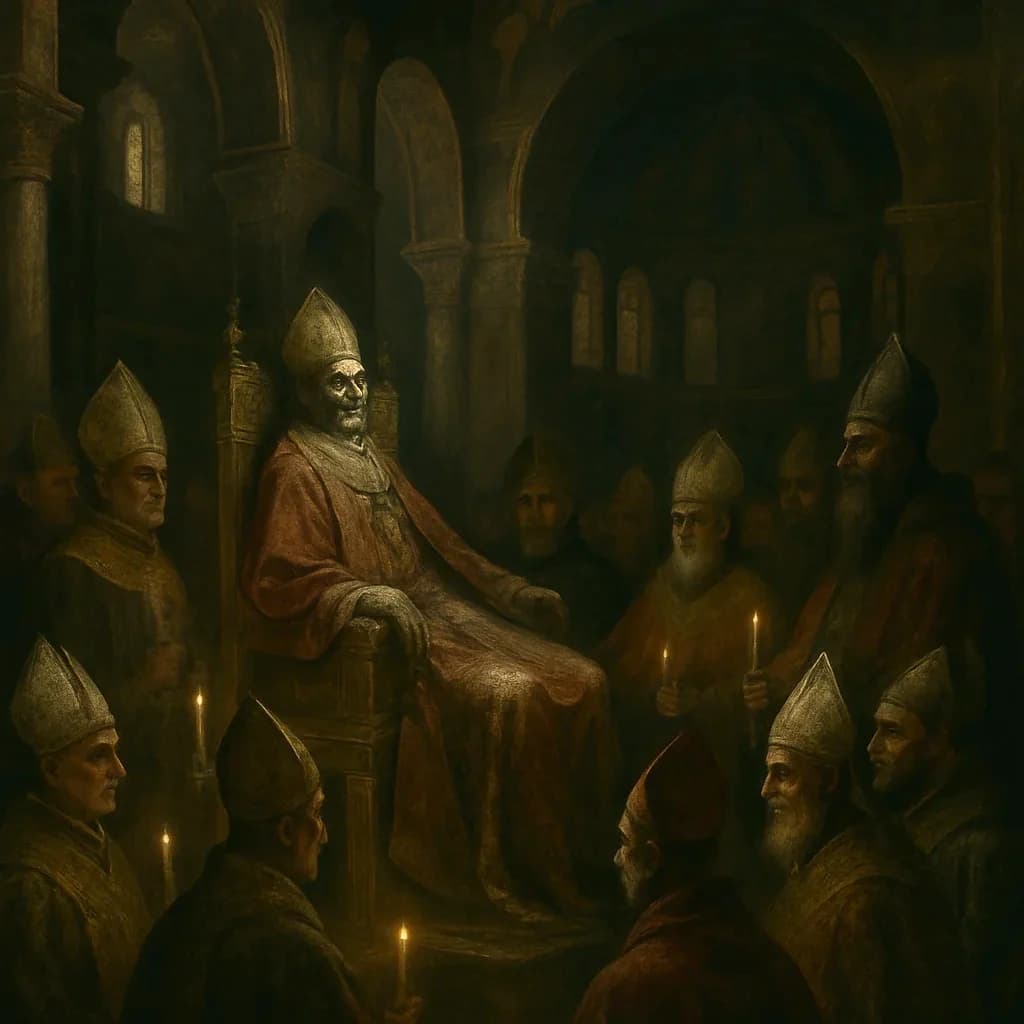
A Pope Put His Predecessor's Corpse on Trial
Pope Formosus had been dead for seven months when they dragged his body to trial for treason.
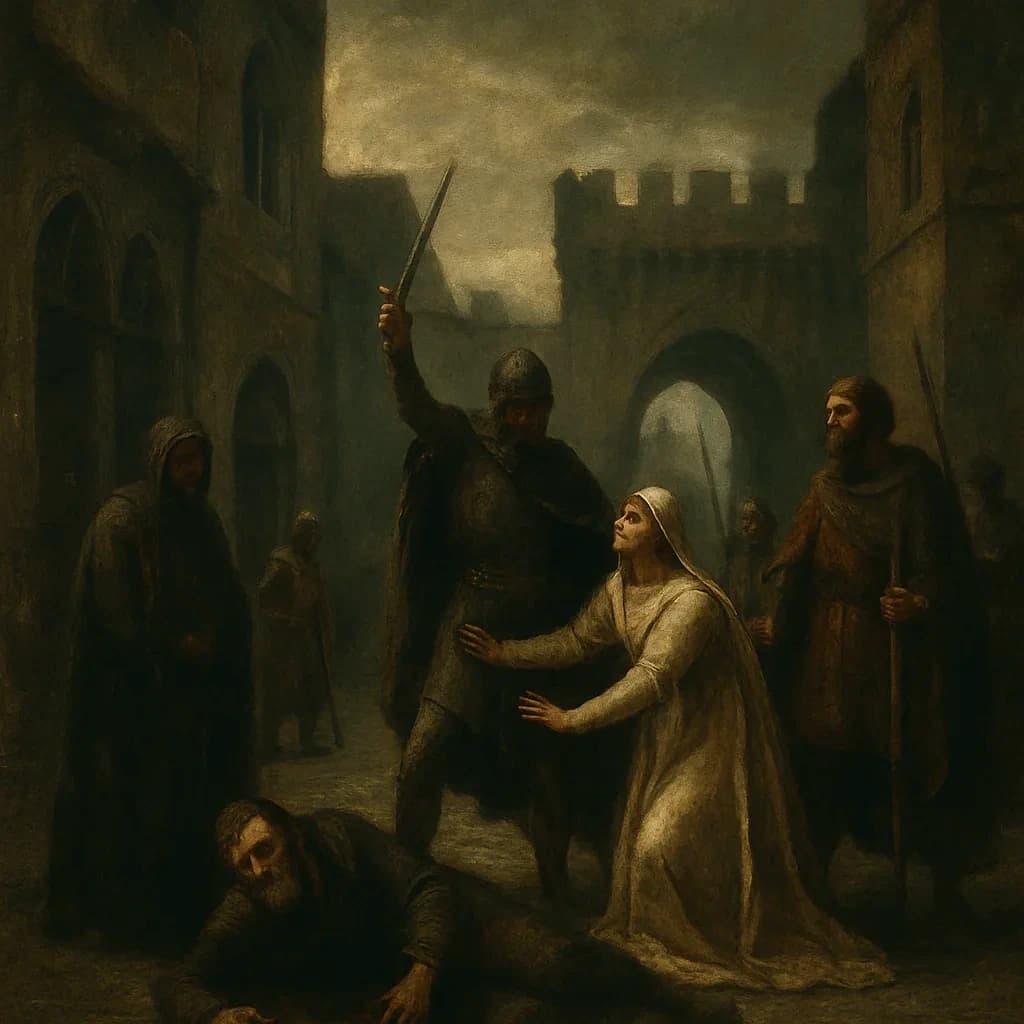
The Courtroom That Tried a Dead Pope
In 897 AD, Pope Stephen VI put his predecessor's corpse on trial for heresy, and the dead man lost.
- Edward Gibbon, 'The History of the Decline and Fall of the Roman Empire', Vol. 5 (various editions)
- Walter Ullmann, 'A Short History of the Papacy in the Middle Ages' (Routledge, 1972)
- Joanna Story, 'Carolingian Connections: Anglo-Saxon England and Carolingian Francia, c. 750-870' (Ashgate, 2003): for Frankish political context surrounding the Formosus controversy