
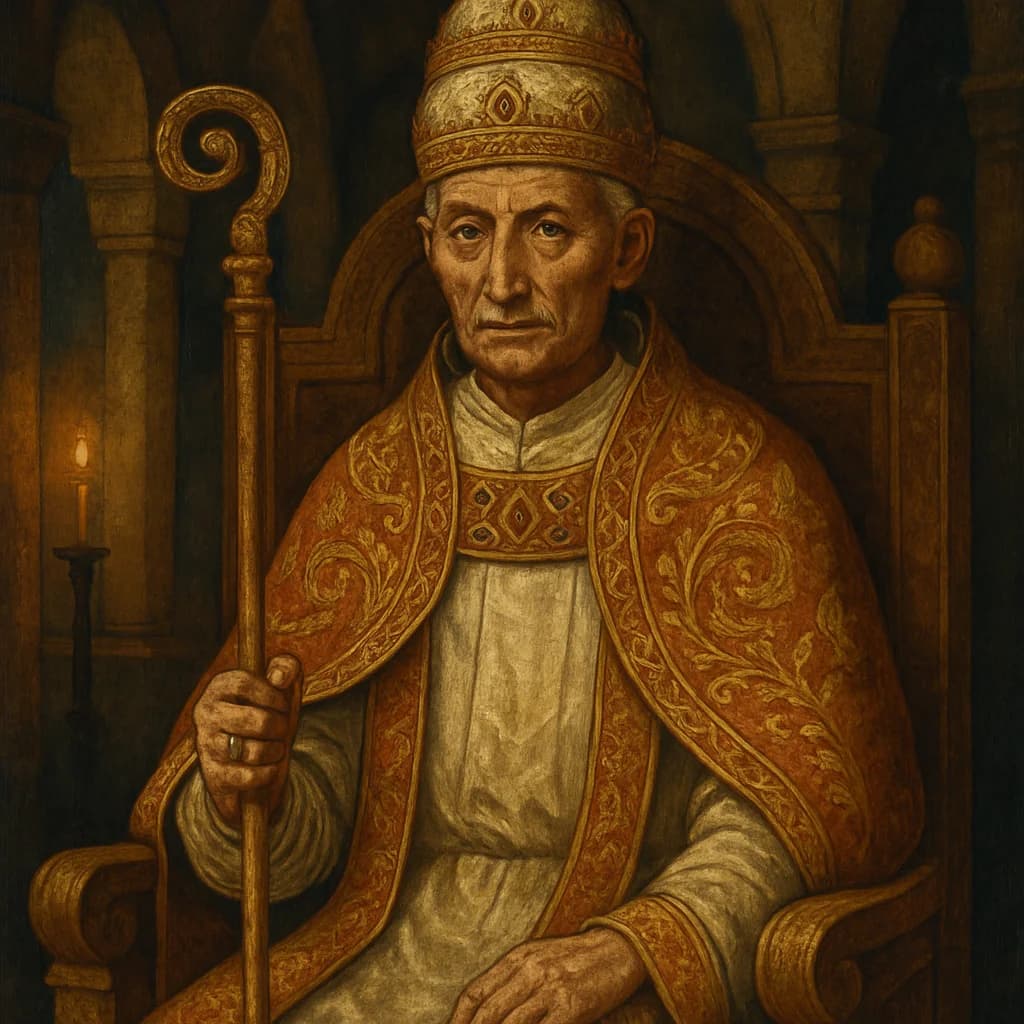
Pope Formosus
He was one of the most capable popes of the ninth century, and history remembers him entirely for what happened after he was already dead.
Before the corpse trial, before the ghoulish spectacle that would define his legacy for a thousand years, Formosus was something genuinely rare in ninth-century Rome: a pope who was good at his job. Elected in 891 AD at roughly seventy years old, he inherited a papacy that was less an institution than a battlefield: carved up between rival Roman noble families, bullied by Lombard warlords, and existentially anxious about who, exactly, was going to protect it. Formosus had spent decades as a diplomat and cardinal before the throne fell to him, and he understood power the way only someone who had survived several attempts to strip him of it could.
His real obsession was stabilizing Christendom's political architecture. In 896, he crowned Lambert of Spoleto's rival, the East Frankish king Arnulf of Carinthia, as Holy Roman Emperor, a move calculated to break Spoletan dominance over Rome. It worked, briefly. Arnulf marched on Rome, took it, and Formosus finally had a protector. Then Arnulf suffered a stroke. He retreated north, Lambert reasserted control, and Formosus died in April 897, probably of natural causes, probably exhausted. He had held the papacy for five years and stabilized almost nothing permanently. That was the tragedy of the era, not of the man.
What came next is where history gets genuinely deranged. Pope Stephen VI, backed by the Spoletan faction that Formosus had spent his career undermining, had the body exhumed, dressed in papal vestments, propped in a chair, and formally tried for perjury and for violating canon law by switching dioceses: a charge that, if upheld, would invalidate every ordination Formosus had ever performed. The verdict was never in doubt. The corpse lost. Its vestments were torn off, the three fingers of consecration on its right hand were cut away, and the body was thrown into the Tiber. It was politics dressed as theology, vengeance costumed as justice.
Formosus was posthumously rehabilitated within a year, when Roman mobs turned on Stephen VI, imprisoned him, and strangled him in his cell. The river fishermen reportedly found the body and returned it quietly to a papal tomb. History, though, kept the trial.
The Cadaver Synod (as the trial of Formosus's corpse became known) was so universally condemned that the Roman populace rioted, and Pope Stephen VI was subsequently imprisoned and strangled before the year 897 was out.
Why untold: The Cadaver Synod is so grotesque that it swallows the man whole. Formosus the skilled diplomat and ecclesiastical power broker disappears entirely behind Formosus the prop in someone else's political theater.
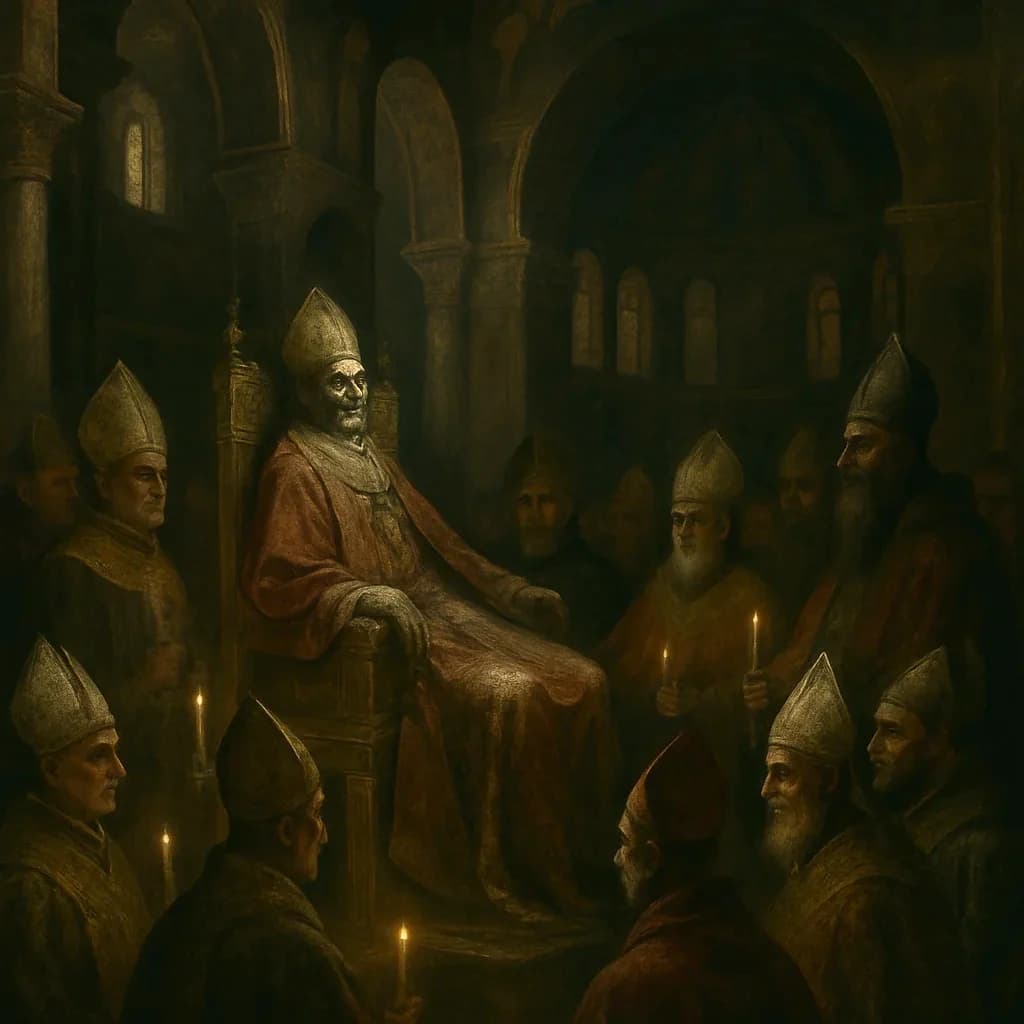
A Pope Put His Predecessor's Corpse on Trial
Pope Formosus had been dead for seven months when they dragged his body to trial for treason.
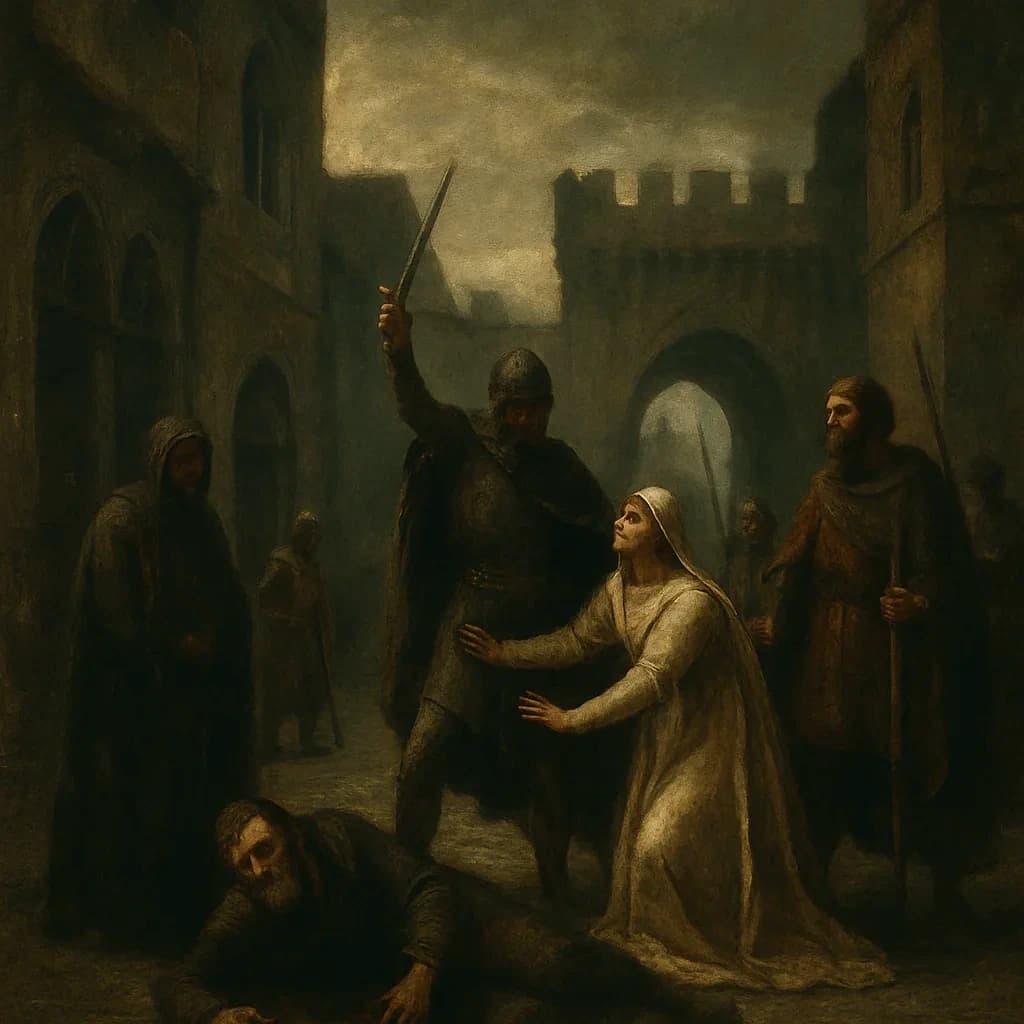
The Courtroom That Tried a Dead Pope
In 897 AD, Pope Stephen VI put his predecessor's corpse on trial for heresy, and the dead man lost.
- Edward Gibbon, 'The History of the Decline and Fall of the Roman Empire', Vol. 5
- Joanna Kathmann, 'The Cadaver Synod: A Study of Pope Stephen VI's Trial of Formosus', Medieval Studies Journal
- Frederick X. Ryan, 'The Papacy and the Political World of the Ninth Century' in The New Cambridge Medieval History, Vol. 3 (1999)