
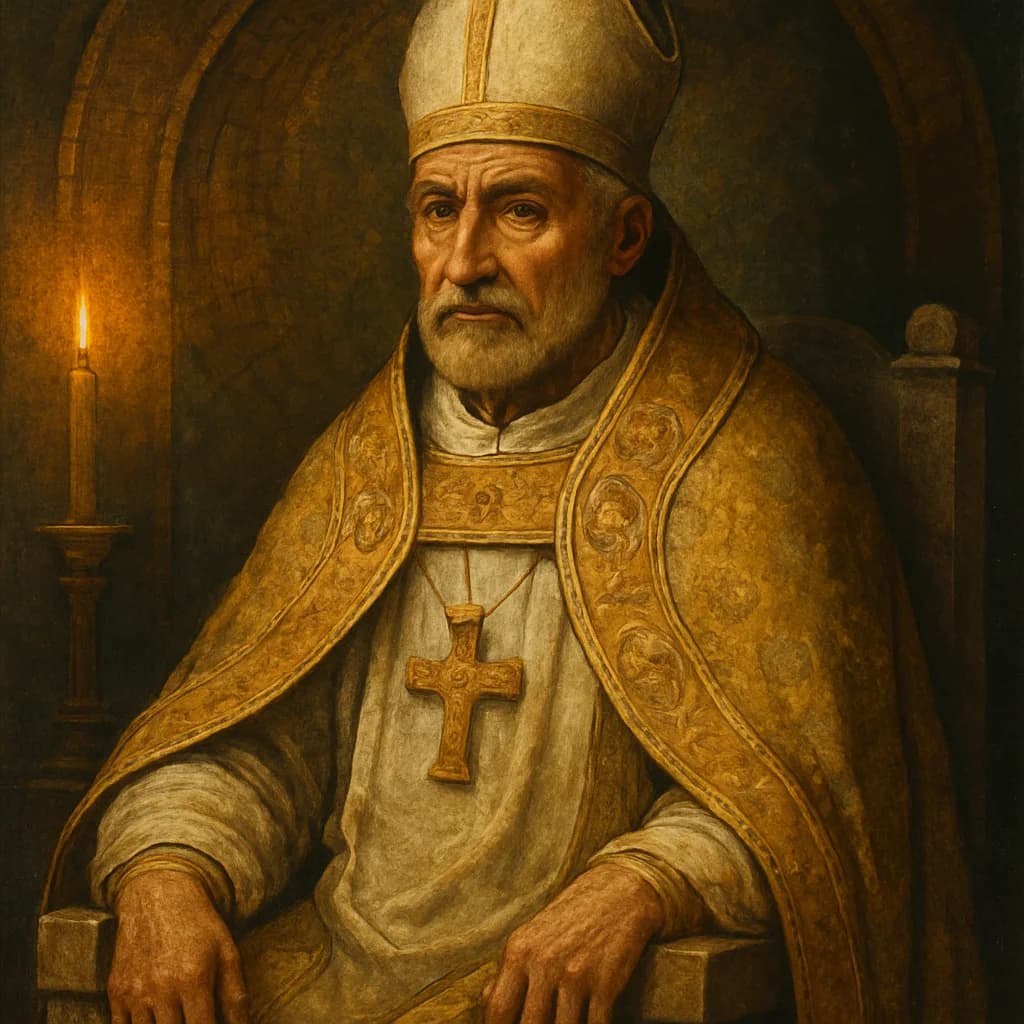
Pope Leo III
He was nearly beaten to death in the street, dragged before a kangaroo court, and accused of crimes he couldn't even legally answer, and then he crowned the most powerful man in the Western world, and everyone forgot he existed.
On April 25, 799, a gang of armed men ambushed Pope Leo III during a religious procession through Rome. They were nephews of his predecessor, Adrian I, and they had a specific agenda: gouging out his eyes and cutting out his tongue, rendering him canonically unfit to hold office. They failed (Leo escaped, or the mutilation was botched, or both), but the attack left him physically wrecked and politically radioactive. He fled north across the Alps to the court of Charlemagne, the one man in Europe with the muscle to protect him.
What followed was extraordinary and almost entirely glossed over. Leo's enemies formally accused him of perjury and adultery before an assembly at Paderborn. These weren't minor charges. They were the kind that could strip him of the papacy entirely. But here was the trap: no church council in Rome had jurisdiction over the pope. No earthly authority, technically, could try him. Leo walked into this legal void and through it, returning to Rome in November 800 under Frankish military escort, and then, days before Christmas, cleared himself of all charges simply by swearing an oath before God. A pope, judged by no one. That was the theory, anyway.
Then came December 25th, 800. Charlemagne was at Mass in St. Peter's Basilica when Leo produced a crown and placed it on his head, and the assembled crowd roared the imperial acclamation three times. Later, Charlemagne's biographer Einhard would record that the king claimed to have been blindsided, that had he known Leo's plan, he would never have entered the church that day. Scholars have argued about this for twelve centuries. What's harder to argue is who benefited most from the arrangement. Leo had just transformed the head of the Frankish military machine into a figure with sacred imperial legitimacy, while also reframing the papacy as the institution with the authority to bestow that legitimacy. Whatever Charlemagne wanted, Leo walked out of that basilica holding something new and astonishing: the claim that emperors ruled because popes allowed it.
He lived another fourteen years, navigating Frankish dominance, another plot against his life in 815, and the grinding bureaucratic reality of governing Rome. He died in June 816, quickly canonized, quickly forgotten, a footnote to the man he crowned.
The men who attacked Leo in 799 reportedly attempted to sever both his tongue and his eyes to permanently disqualify him from the papacy, but Leo later claimed to have miraculously regained full sight and speech, a convenient miracle that his enemies loudly disputed.
Why untold: Leo III is structurally erased by the coronation narrative itself: Charlemagne is the protagonist, the crown is the object, and the man who engineered the entire transaction gets reduced to the hand that held it.
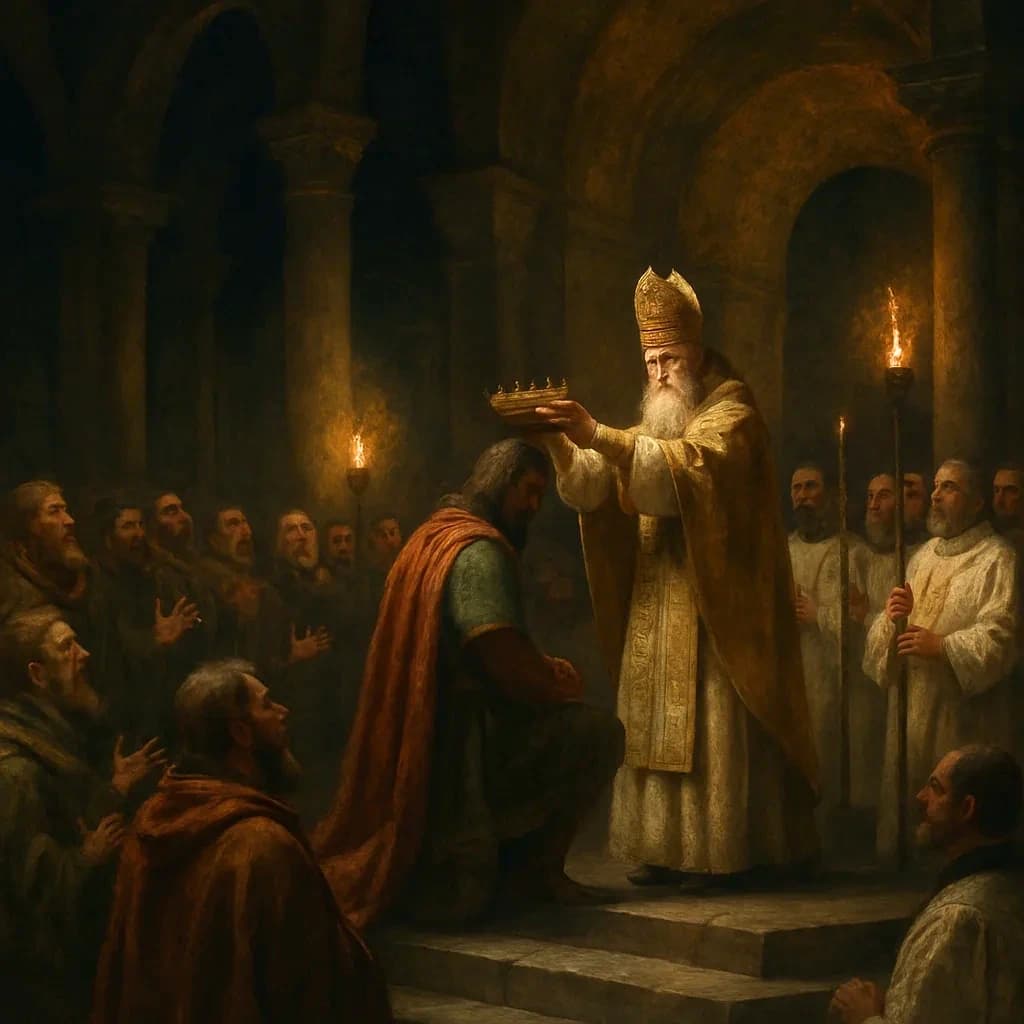
Charlemagne Said He Never Wanted the Crown
Charlemagne was crowned emperor of the West in 800 AD, and he later claimed it was the last thing he wanted.
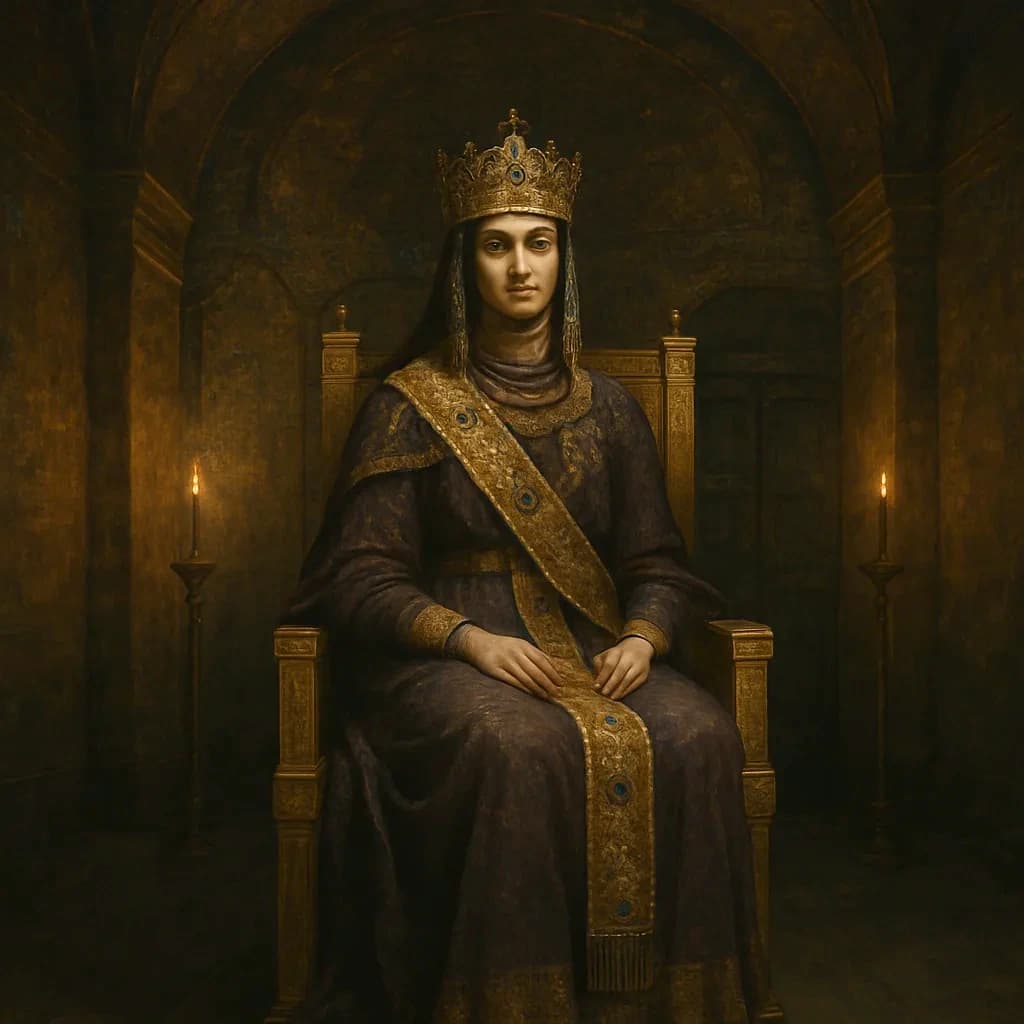
She Blinded Her Own Son to Rule Byzantium Alone
Irene of Athens became the first woman to rule Byzantium alone, and she did it by blinding her own son, which handed the West the excuse to crown a rival emperor and split the world in two.
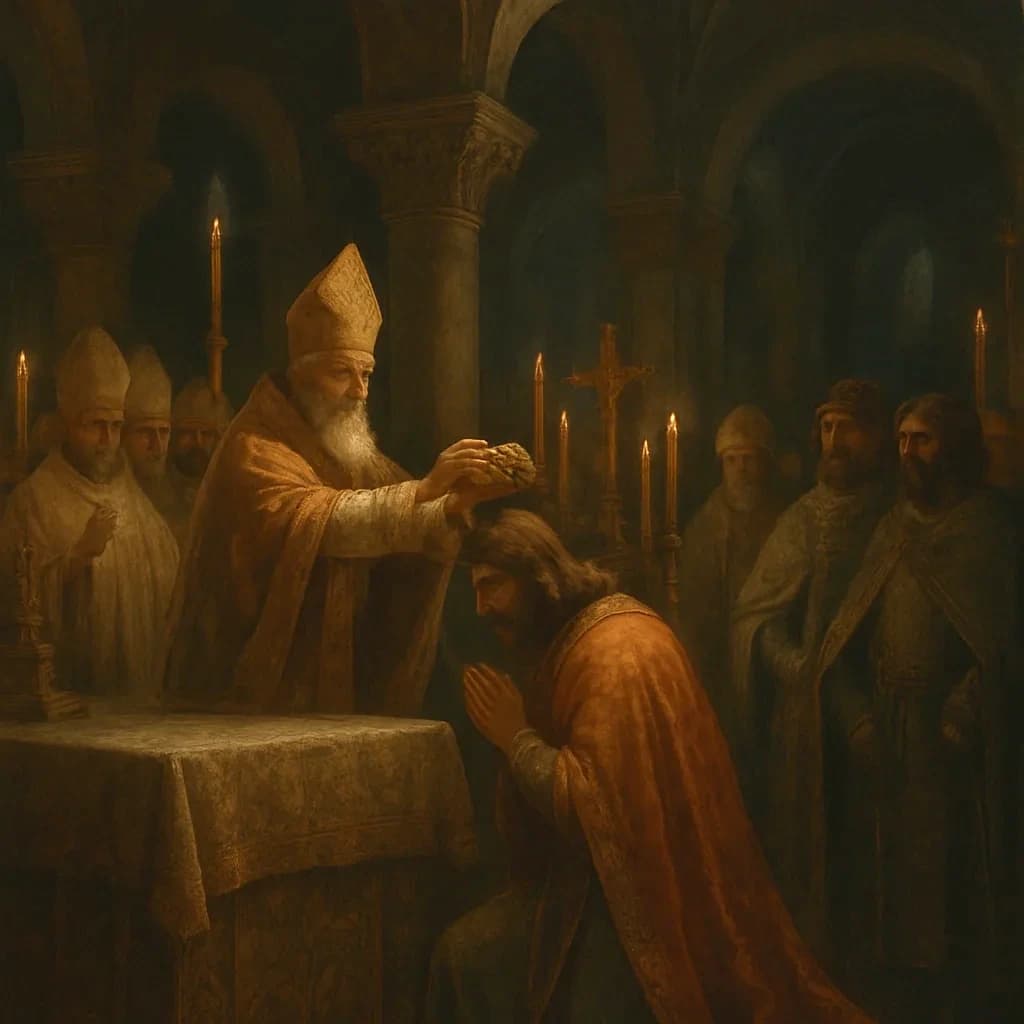
Charlemagne Came to Dinner and Left an Emperor
Invited to Rome as an ally, a minor Frankish nobleman accepted a dinner invitation and walked out as the founder of the Holy Roman Empire.
- Einhard, 'The Life of Charlemagne' (Vita Karoli Magni), c. 817-833
- Janet Nelson, 'King and Emperor: A New Life of Charlemagne' (2019), University of California Press
- Thomas F.X. Noble, 'The Republic of St. Peter: The Birth of the Papal State, 680-825' (1984), University of Pennsylvania Press