
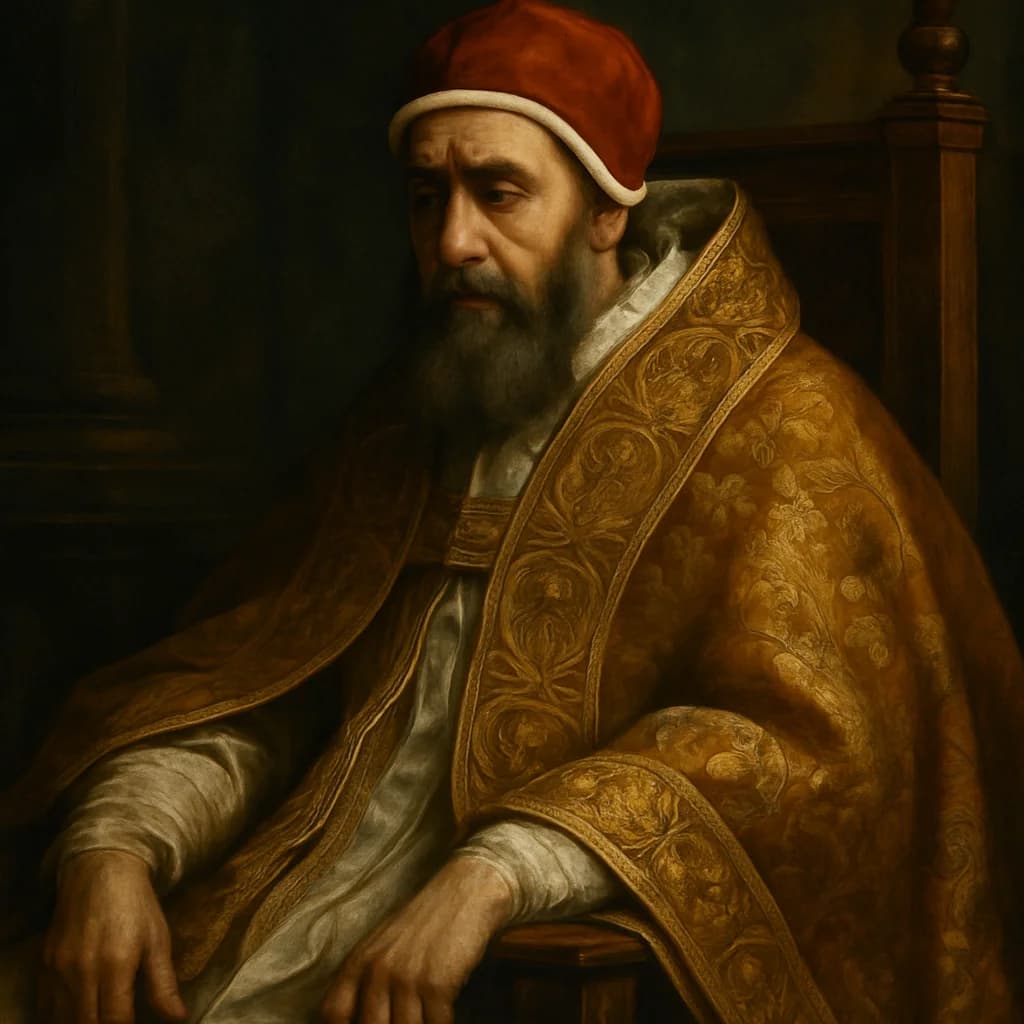
Pope Clement VII
The Pope who commissioned pornography and fled his own city dressed as a servant died claiming he'd rather have been a simple monk.
Giulio de' Medici never wanted to be Pope. Born illegitimate in 1478, he spent his youth studying canon law and dreaming of quiet scholarship. When his cousin Giovanni became Pope Leo X, Giulio found himself reluctantly dragged into papal politics. He proved surprisingly competent at managing the Vatican's finances, until 1523, when the College of Cardinals elected him Pope Clement VII. It was the worst possible timing.
Within four years, his indecision had triggered the most catastrophic event in papal history. Charles V's armies were marching on Rome, but Clement couldn't choose between supporting France or the Holy Roman Empire. He switched sides repeatedly, alienating everyone. When 20,000 Imperial soldiers finally breached Rome's walls in May 1527, Clement barely escaped through a secret passage to Castel Sant'Angelo, disguised as a merchant. For months, he watched from the fortress walls as soldiers sacked the eternal city, murdering priests and turning St. Peter's into a stable.
Strangely, this traumatized Pope became one of history's most paradoxical patrons. While publicly condemning moral decay, he privately commissioned Pietro Aretino's scandalously explicit "Sonetti Lussuriosi", complete with papal approval. He funded Michelangelo's "Last Judgment" in the Sistine Chapel while simultaneously refusing to annul Henry VIII's marriage, triggering England's break from Rome. Even his final commission revealed his contradictions: he ordered his tomb to show him not as a triumphant pontiff, but kneeling in humble prayer.
Clement died in 1534, reportedly saying he wished he'd remained "Brother Giulio" instead of becoming Pope. His papacy had lost England, traumatized Rome, and split Christianity. Yet somehow, this reluctant pontiff had also created some of Renaissance art's greatest masterpieces.
Clement VII was so indecisive that he once changed his military alliance three times in a single month, leading one ambassador to write that "His Holiness seems incapable of saying yes or no to anything."
Why untold: His artistic patronage and complex personality are overshadowed by the dramatic political failures of his papacy, particularly the Sack of Rome and the English Reformation.
A Renaissance Sex Manual With the Pope's Seal
The most obscene book in Renaissance history carried the Vatican's official seal of approval, and here's how.
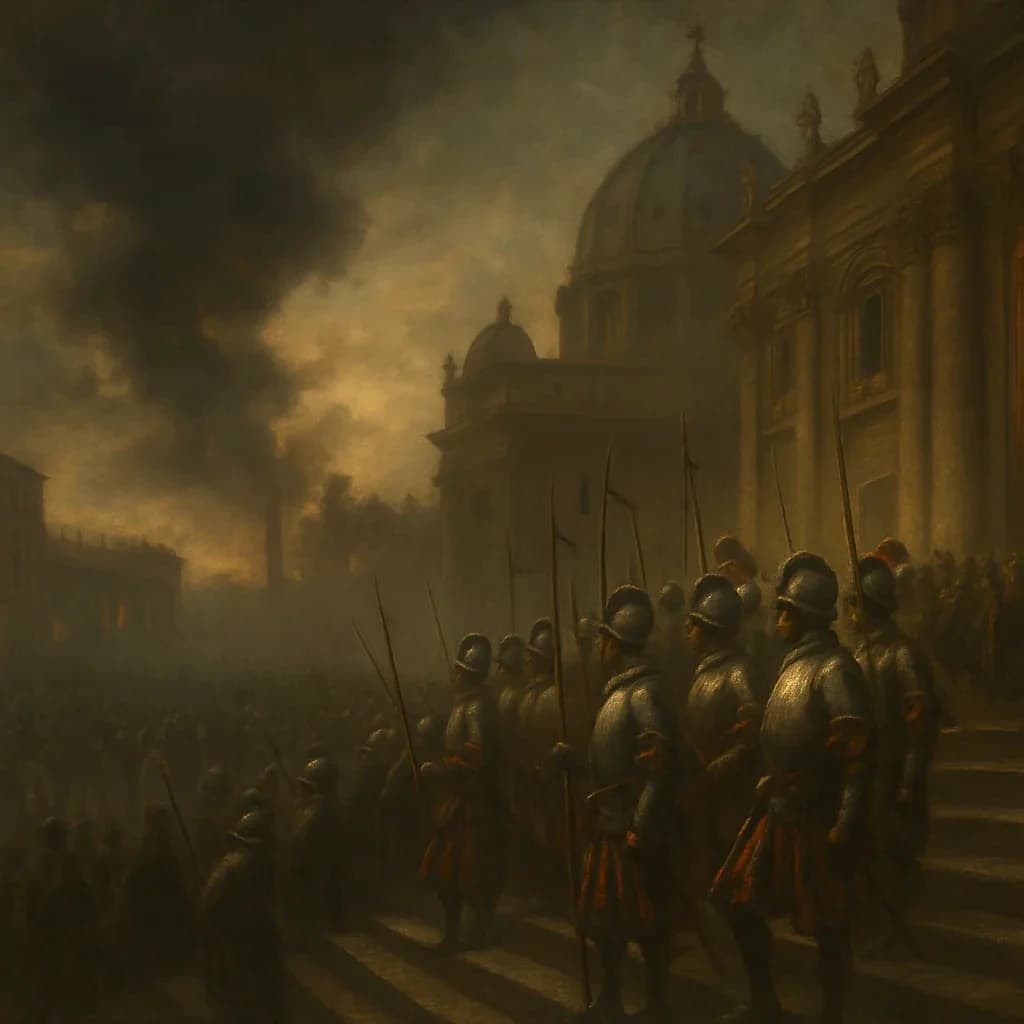
147 Unpaid Mercenaries Held Off 20,000 to Save the Pope
In 1527, 147 Swiss mercenaries held off 20,000 soldiers so the Pope could escape Rome, and most of them had never been paid.
- Judith Hook, The Sack of Rome, 1527 (2004)
- Kenneth Gouwens, Remembering the Renaissance: Humanist Narratives of the Sack of Rome (1998)
- Christine Shaw, Julius II: The Warrior Pope (1993)