
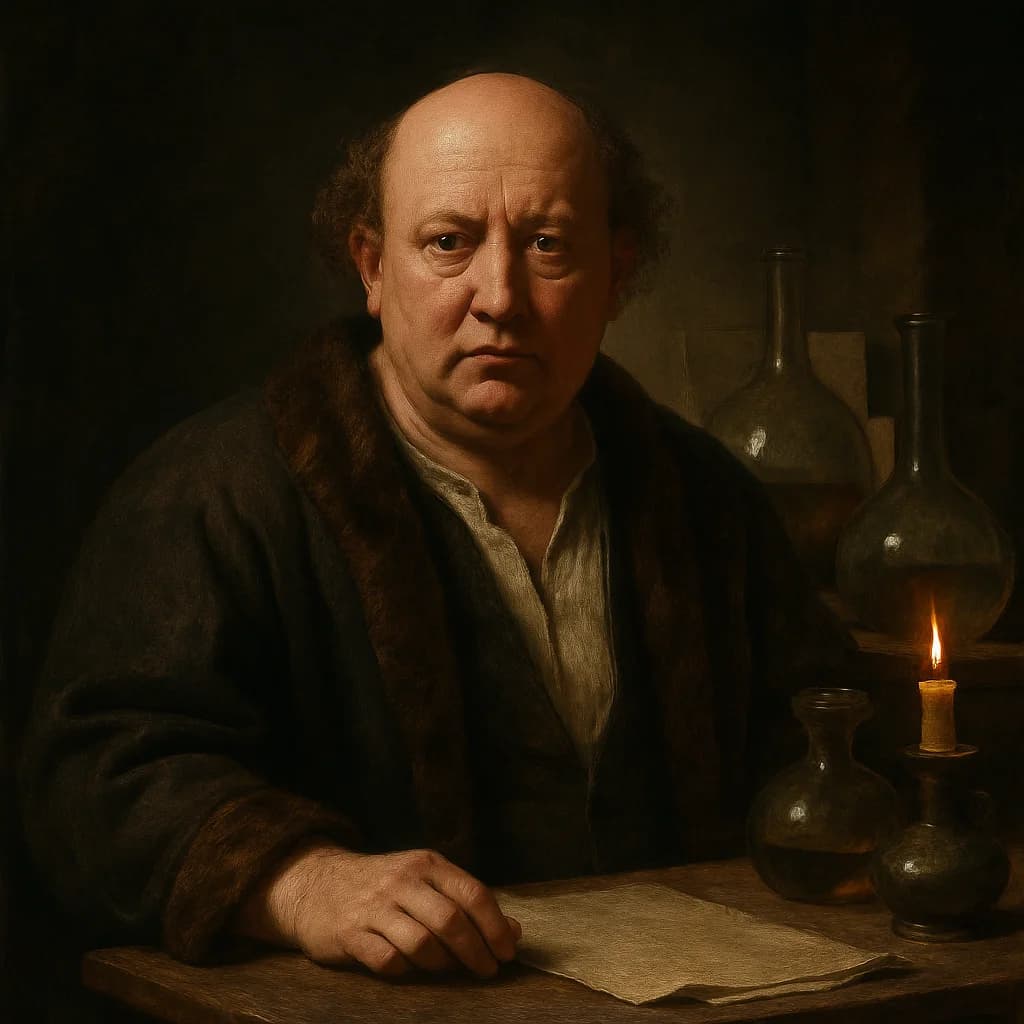
Paracelsus
He called every physician in Europe a fraud, burned their textbooks in public, and then turned out to be right about enough of it to matter.
Theophrastus Bombastus von Hohenheim (who renamed himself Paracelsus, meaning 'beyond Celsus,' a direct insult to the Roman medical authority every university still worshipped) spent the 1520s doing something that genuinely had not been done before: walking. He wandered through mines in the Tyrol, talked to barber-surgeons in Flemish towns, watched midwives work in village hovels, and concluded that these people, with their callused hands and empirical trial-and-error, understood the human body better than any scholar who had spent decades reading Galen in a comfortable chair. His medical degree, which he likely held from Ferrara, was essentially a license to ignore everyone who also held one.
His brief tenure as city physician in Basel in 1527 is the moment most histories treat as his peak. They're not wrong that it was dramatic. He lectured in German instead of Latin, which was roughly the academic equivalent of kicking down a cathedral door, and he invited barber-surgeons and apothecaries to attend alongside university students. What gets skipped is why it ended: he publicly insulted a magistrate over an unpaid fee for treating a patient, lost the resulting lawsuit, fled Basel at night, and spent the rest of his life as a wandering, frequently drunk, notoriously difficult itinerant physician who wrote furiously and published almost nothing during his lifetime. He died in Salzburg in 1541, aged 47, under circumstances that remain genuinely unclear.
His connection to mummy powder (the pulverized Egyptian corpse sold in European apothecaries at extraordinary prices) is a small masterpiece of historical irony. Paracelsus actually promoted a substance he called 'mumia,' a healing essence he believed resided in human remains and could transfer vitality from the dead to the living. He did not intend to validate the corpse trade, but his theoretical framework gave it a philosophical backbone it badly needed. The apothecaries sold the powder; Paracelsus supplied the rationale.
What genuinely deserves attention is how much of his chemistry held up. He pioneered the use of minerals (mercury, sulfur, iron compounds) as medicines at a time when the entire pharmacopeia ran on herbs and prayers. He identified occupational lung disease in miners decades before it had a name. He described what sounds unmistakably like zinc. The man who burned Avicenna's Canon at a Midsummer bonfire was, underneath the performance, running real experiments.
Paracelsus is often credited with coining the word 'zinc,' describing a new metal he called 'zincum' in his writings, making him possibly responsible for naming an element while simultaneously being too drunk and argumentative to hold a steady job.
Why untold: His reputation as a theatrical eccentric made it easy for later medical historians to treat him as a colorful footnote rather than a genuine methodological reformer, obscuring the degree to which his insistence on empirical observation over classical authority was structurally identical to what the Scientific Revolution later claimed as its own invention.
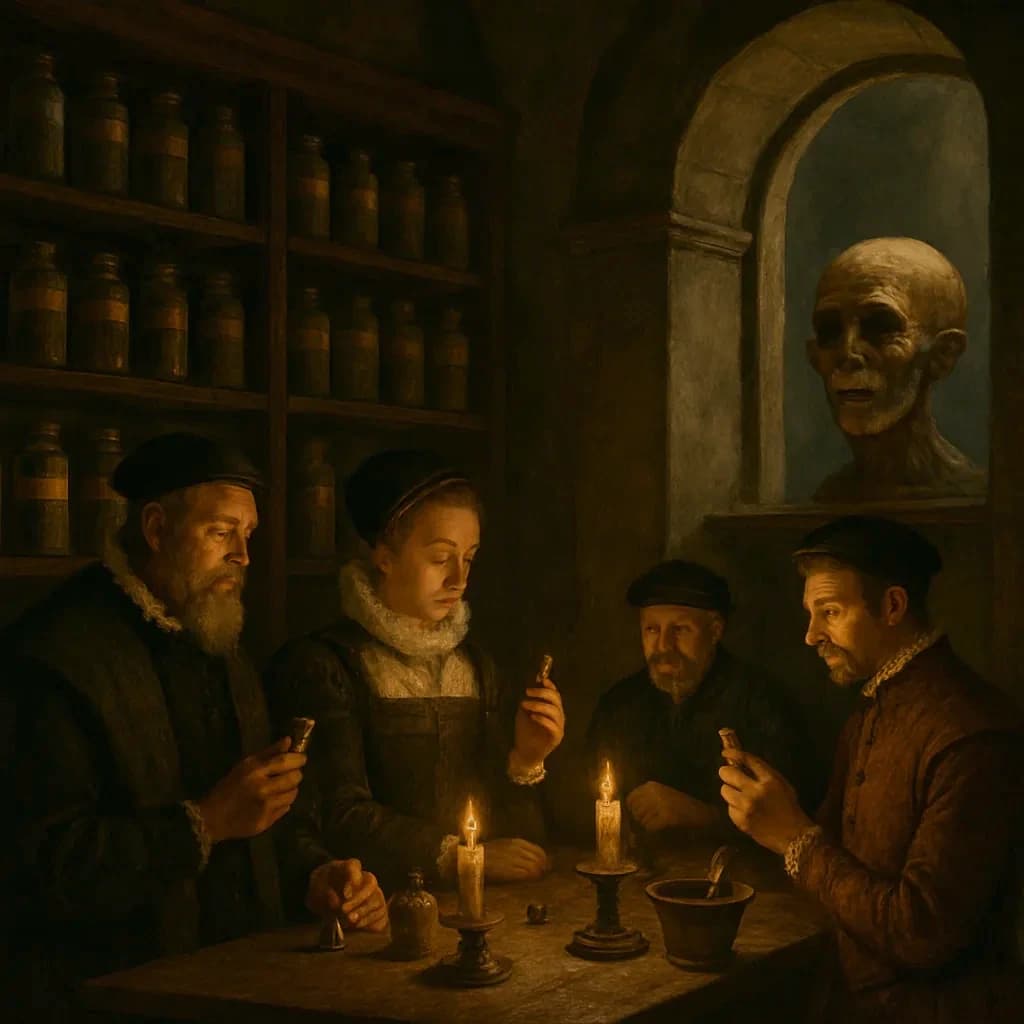
Powdered Mummy: Europe's Most Expensive Cure
For centuries, European apothecaries sold ground-up human remains as the most expensive cure in their shops.
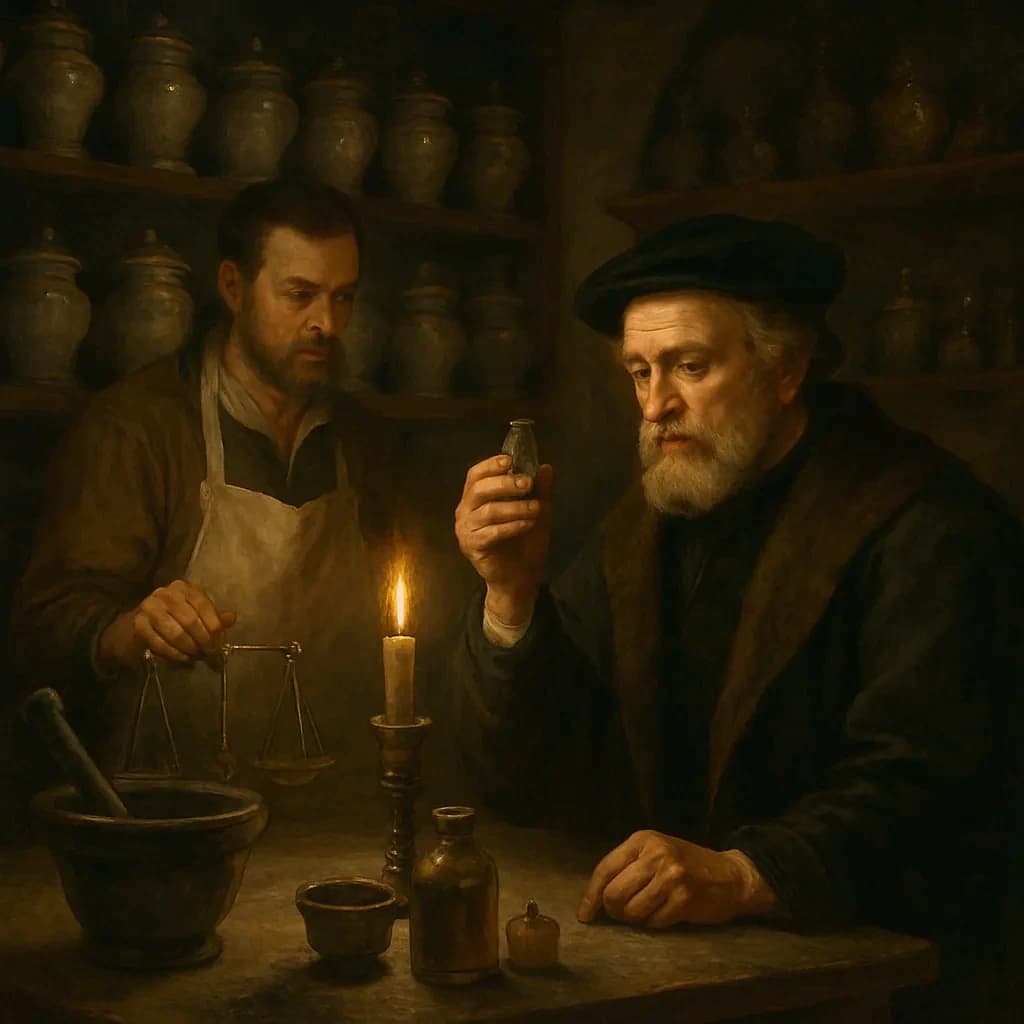
When Doctors Prescribed Mummy Powder
For three centuries, Europe's finest physicians crushed ancient Egyptian corpses into medicine, and charged a fortune for it.
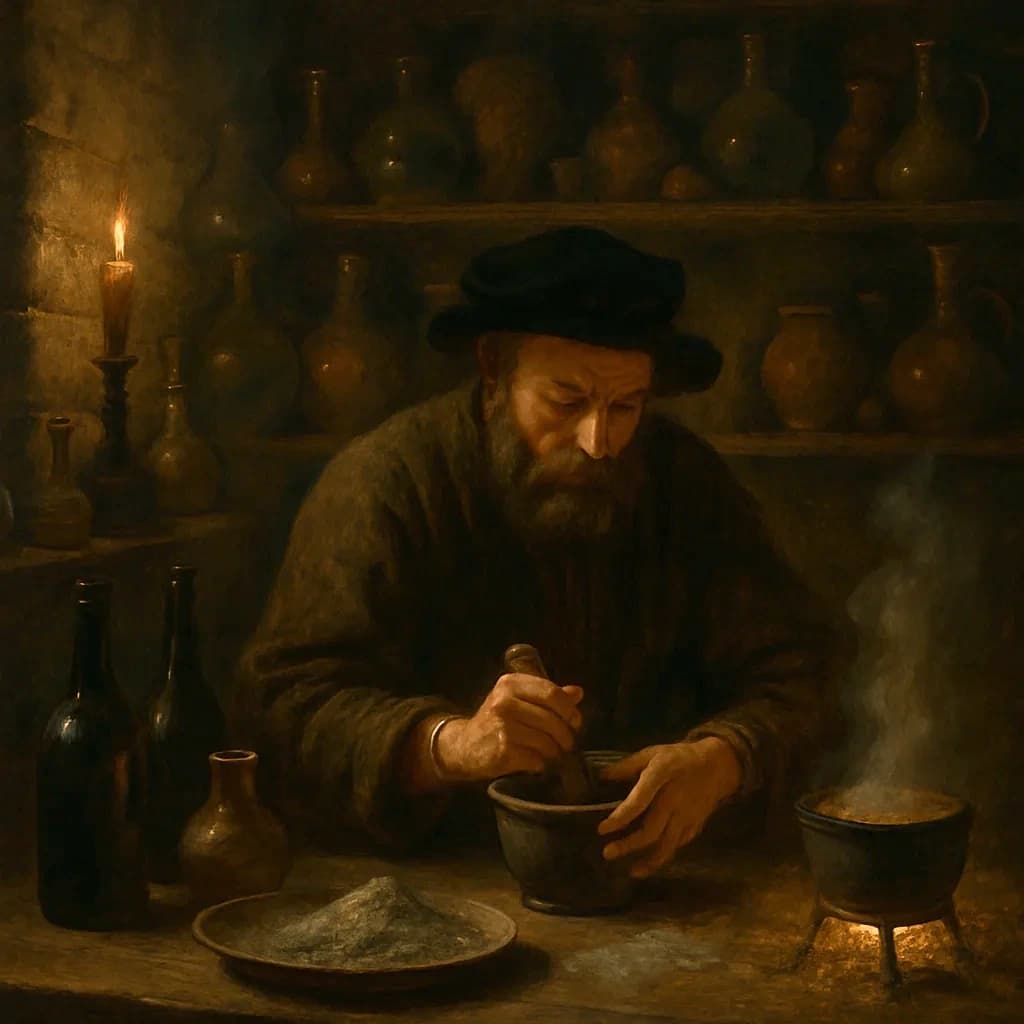
He Cured Syphilis With a Slow Poison
A Swiss physician's late-night fumble with mercury and antimony produced the first effective treatment for syphilis, and sparked a medical revolution that killed as many patients as it saved.
- Ball, Philip. The Devil's Doctor: Paracelsus and the World of Renaissance Magic and Science. Farrar, Straus and Giroux, 2006.
- Pagel, Walter. Paracelsus: An Introduction to Philosophical Medicine in the Era of the Renaissance. Karger, 1958.
- Webster, Charles. Paracelsus: Medicine, Magic and Mission at the End of Time. Yale University Press, 2008.