
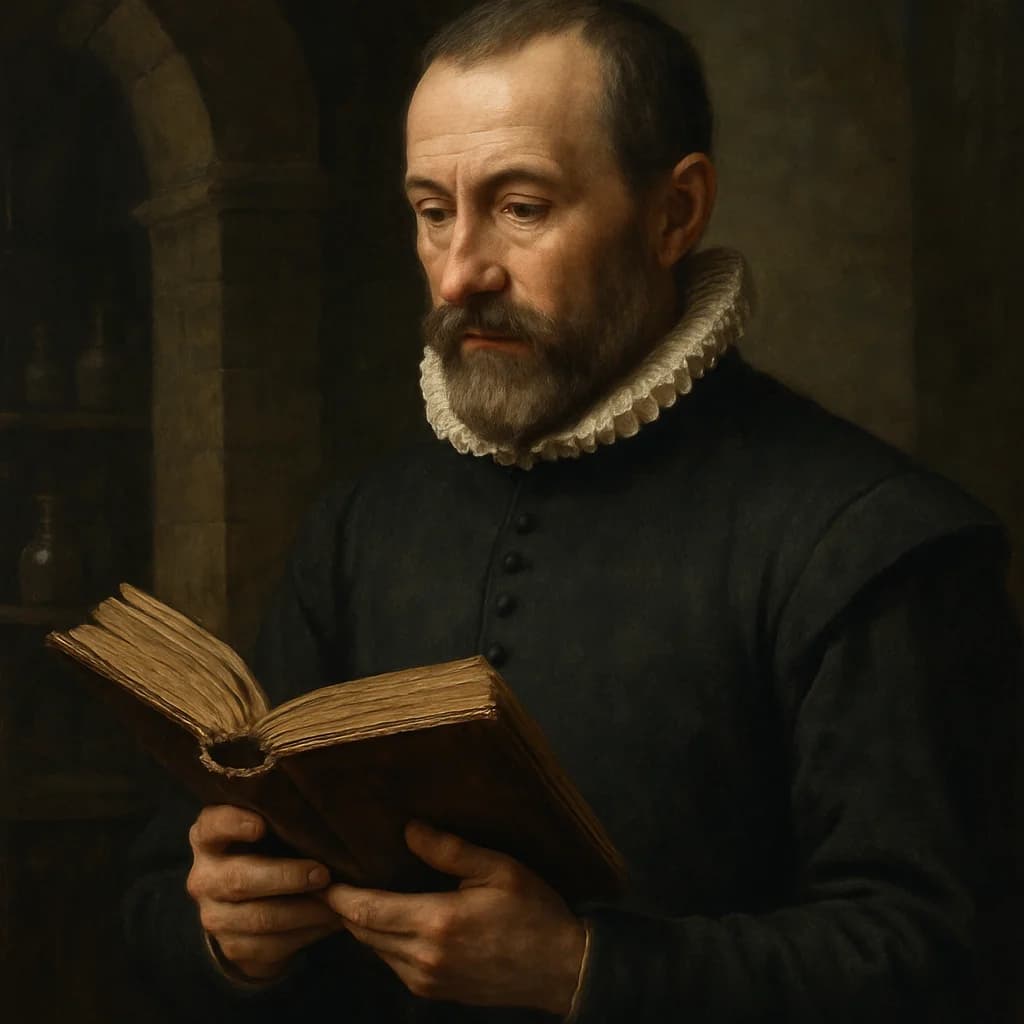
Guy de la Fontaine
The king's physician traveled to Egypt not to marvel at the ancient dead, but to catch someone selling fakes.
Guy de la Fontaine arrived in Alexandria in 1564 on what was, at its core, a quality-control mission. As physician to the King of Navarre, he had spent years prescribing mumia (the powdered remains of Egyptian mummies) to European patients who believed it cured everything from epilepsy to bruising to internal hemorrhage. The trade was enormous, the prices ruinous, and de la Fontaine, to his credit, wanted to know what he was actually giving people.
What he found in Alexandria should have collapsed the entire industry. A local merchant, apparently unbothered by the presence of a royal physician, walked him through the back-room operation without hesitation: freshly executed criminals, recently deceased slaves, anyone whose body could be obtained cheaply and without ceremony. The corpses were dried in heat, packed into casks, and shipped north to European apothecaries who would sell them as the authentic remains of ancient Egyptians, charging accordingly. The merchant had around thirty bodies in inventory when de la Fontaine visited. He seemed proud of the throughput.
De la Fontaine published what he'd witnessed. He named the merchant. He described the process in clinical, damning detail in his 1564 account, making the case that the mumia flooding European medicine cabinets was not ancient, not Egyptian, and almost certainly not therapeutic. The response from the European medical establishment was, essentially, a shrug. Physicians kept prescribing it. Apothecaries kept stocking it. The market kept growing. The demand for mummy as medicine wouldn't seriously decline for another hundred years, despite de la Fontaine having provided, in the sixteenth century, a firsthand account of industrial-scale fraud.
What makes de la Fontaine remarkable isn't that he blew the whistle. It's that he did so clearly, specifically, and early, and the world simply didn't care. He isn't remembered as the man who exposed one of medicine's longest-running cons. He's remembered, to the limited extent he's remembered at all, as a footnote in the history of a practice he tried to discredit.
The mumia trade was so lucrative that some European suppliers skipped Egypt entirely, sourcing bodies from local execution grounds and charnel houses while marketing the product as ancient.
Why untold: De la Fontaine's exposure of the mummy fraud was absorbed into the medical literature as a curiosity rather than a scandal, leaving him without the villain's notoriety or the hero's legacy, just a careful observer whose findings were inconvenient to a profitable consensus.
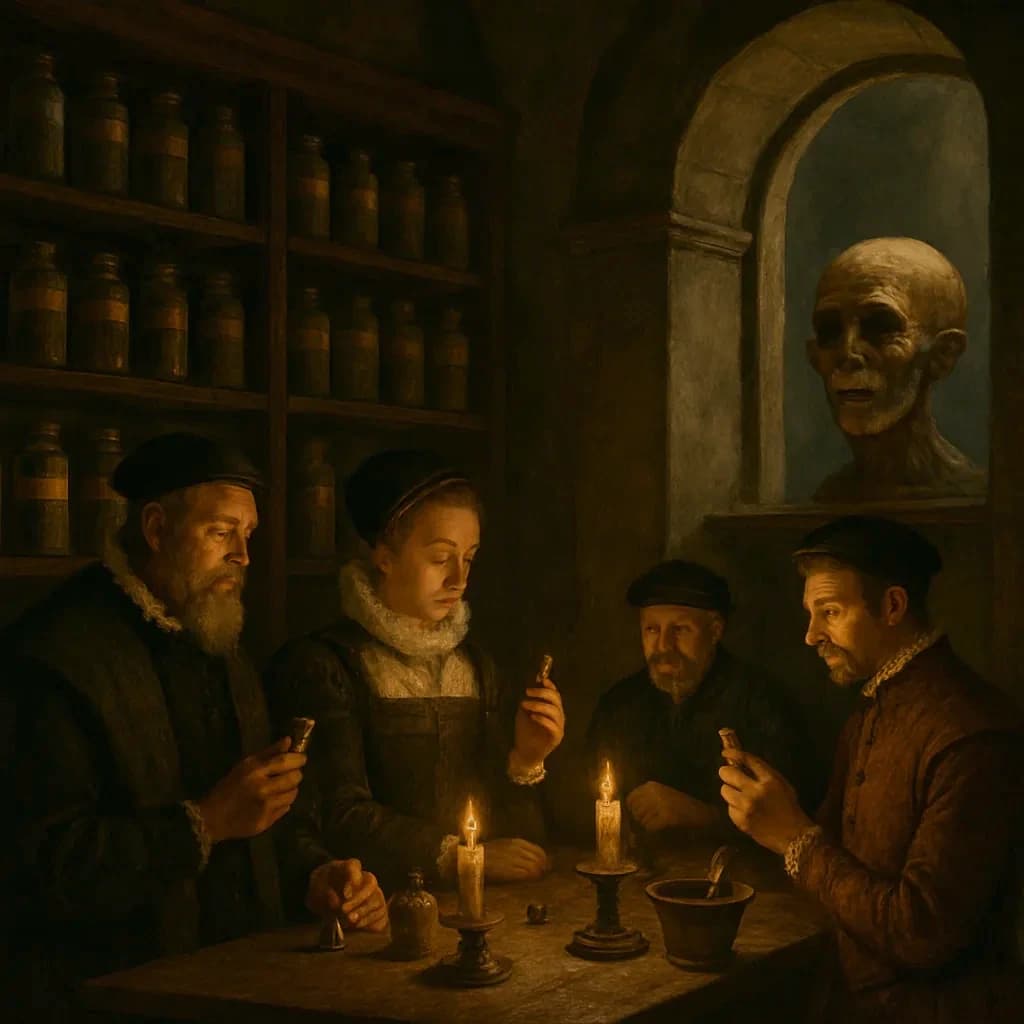
Powdered Mummy: Europe's Most Expensive Cure
For centuries, European apothecaries sold ground-up human remains as the most expensive cure in their shops.
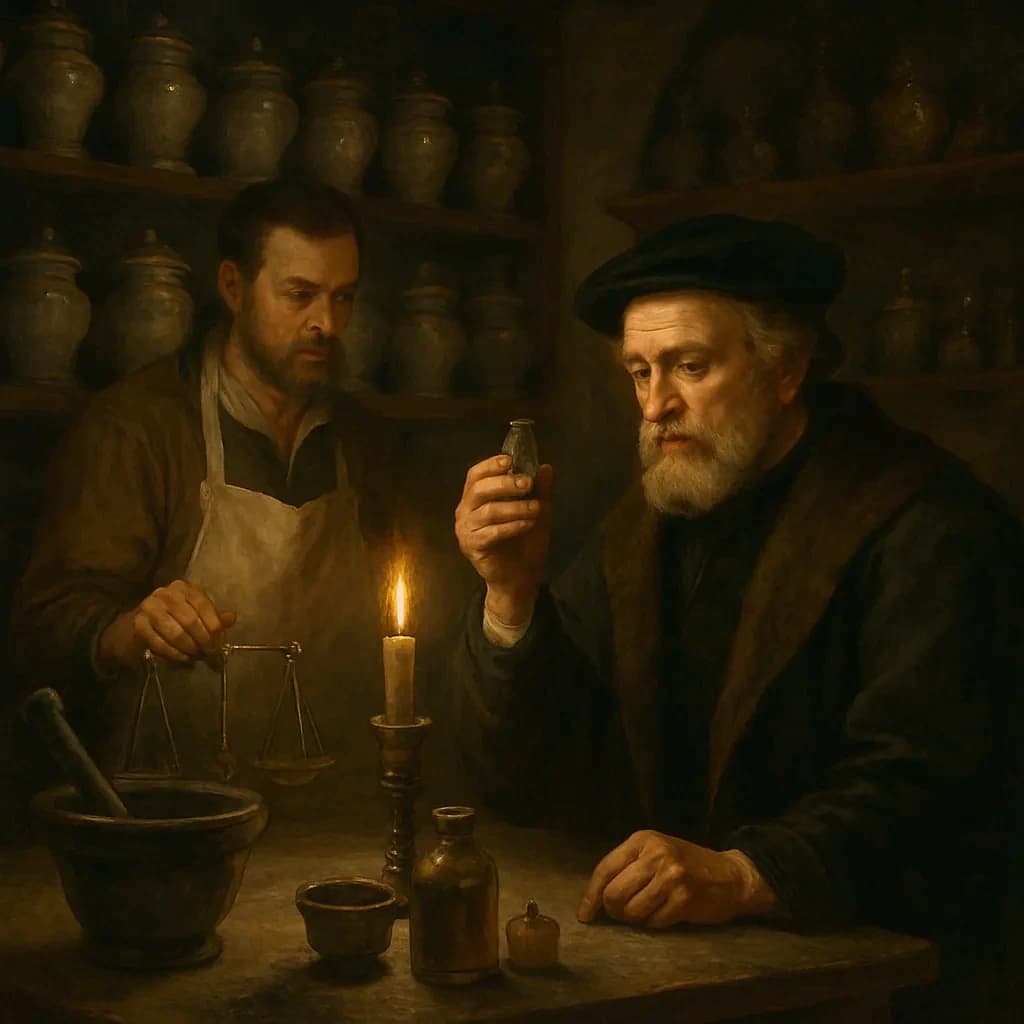
When Doctors Prescribed Mummy Powder
For three centuries, Europe's finest physicians crushed ancient Egyptian corpses into medicine, and charged a fortune for it.
- Sugg, Richard. Mummies, Cannibals and Vampires: The History of Corpse Medicine from the Renaissance to the Victorians. Routledge, 2011.
- Dannenfeldt, Karl H. 'Egyptian Mumia: The Sixteenth Century Experience and Debate.' Sixteenth Century Journal, vol. 16, no. 2, 1985, pp. 163-180.
- De la Fontaine, Guy. Account of the Alexandria mummy trade, referenced in Pomet, Pierre. A Compleat History of Druggs. London, 1712.