
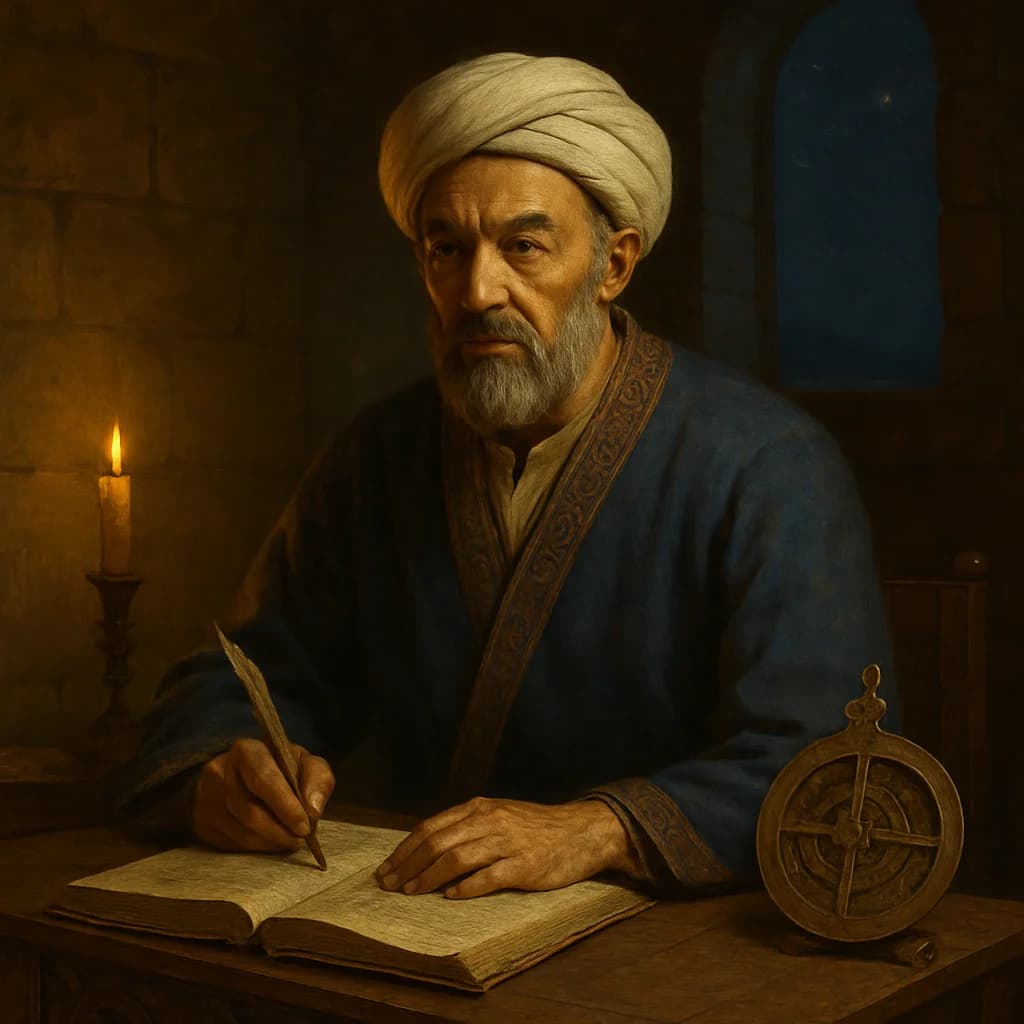
Omar Khayyam
He spent his life building the most accurate calendar in the world, and the West decided he was a poet.
Omar Khayyam was born in Nishapur, in the Khorasan province of Persia, around 1048 (the same year, roughly, that the Seljuk Turks were busy rewriting the political map of the Islamic world). He grew up to become one of the most gifted mathematicians of the medieval period, solved cubic equations using geometric methods that Europe wouldn't independently reach for another five centuries, and produced a calendar so precise that it drifted by only one day every 3,770 years. The Gregorian calendar, which the West adopted in 1582 and still uses, is less accurate. This is not a minor footnote. This is the headline.
In 1073, the Seljuk sultan Malik-Shah commissioned Khayyam to lead a team of astronomers at a newly built observatory in Isfahan. The task was to reform the Islamic calendar, which had drifted badly out of sync with the solar year. Khayyam delivered. The Jalali calendar, named for Malik-Shah's honorific Jalal al-Din, was adopted in 1079 and remained the official calendar of Persia for centuries. The computational work behind it required extraordinary observational precision. Khayyam measured the length of the solar year at 365.24219858156 days. Modern instruments put it at 365.242190 days. He was working with naked-eye astronomy and medieval instruments.
The trouble, historically speaking, is Edward FitzGerald. In 1859, the English poet published a loose translation (transformation, really) of a collection of Persian quatrains attributed to Khayyam, called the Rubaiyat. FitzGerald's version was a Victorian fever dream about wine, roses, and the beautiful futility of existence. It became enormously popular. It had almost nothing to do with Khayyam. Scholars still debate how many of the original quatrains Khayyam actually wrote, and whether the philosophical skepticism in them was genuine heresy or a recognized literary tradition. What got buried under all the wine and roses was the man who fixed time itself.
Khayyam died in Nishapur around 1131, reportedly mid-sentence in a philosophical discussion. He had spent his last years in relative quiet, the great observatory long since shuttered after Malik-Shah's death destabilized the patronage network he depended on. Brilliant work, wrong patron's lifespan. The calendar survived. The mathematician didn't.
Khayyam's geometric solution to cubic equations, outlined in his 1070 treatise Risala fi'l-barahin, predated European algebraic solutions to the same problem by nearly 500 years, yet it was almost entirely unknown in the West until modern historians of mathematics went looking.
Why untold: Edward FitzGerald's wildly popular 1859 Rubaiyat translation recast Khayyam as a hedonist poet for Victorian audiences, a persona so culturally sticky that it permanently displaced his actual legacy as a mathematician and astronomer.
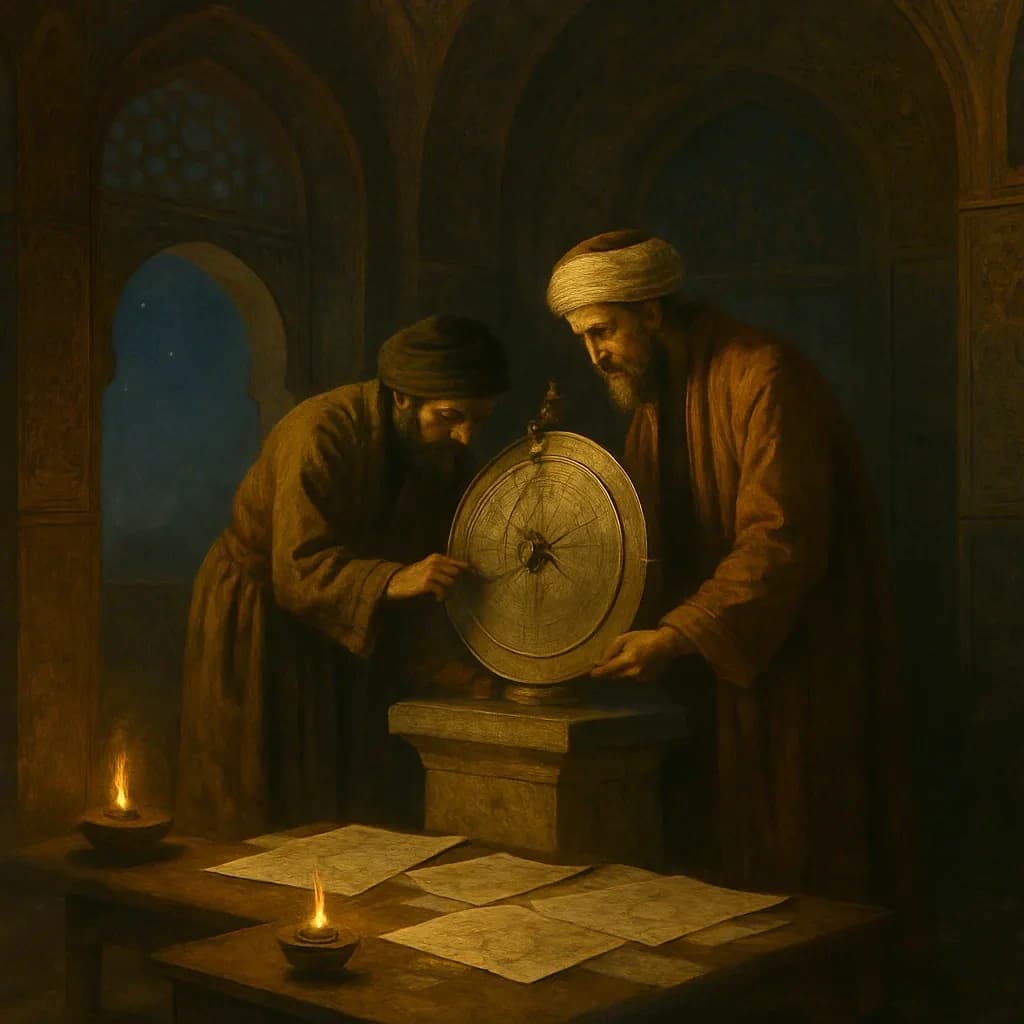
Omar Khayyam Built a Calendar Better Than Ours
A king decided the sun was wrong, and for sixteen years, everyone in his empire had to agree.
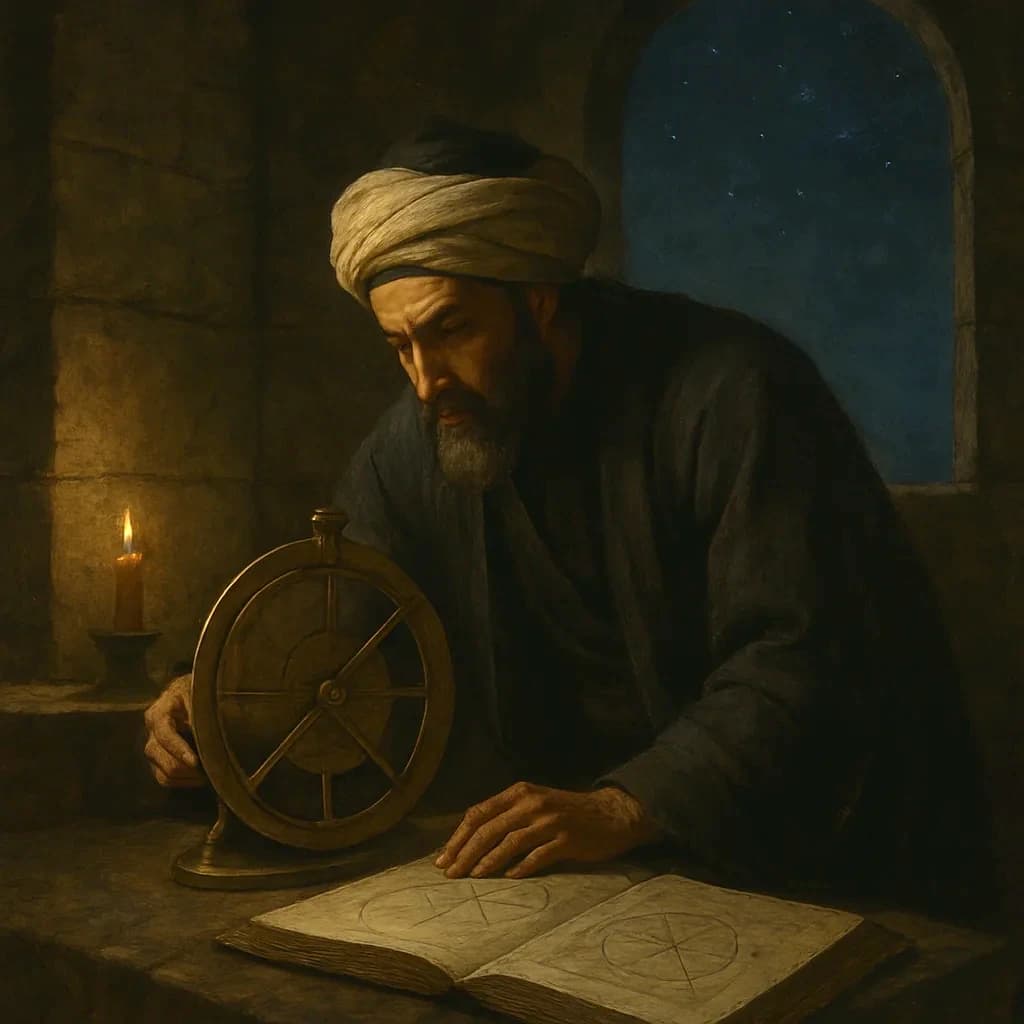
Omar Khayyam: The Calendar Was His Real Work
For forty years Nizam al-Mulk ran one of history's greatest empires, but the text that actually shaped medieval Islamic civilization came from his student, a man better known for drinking wine and doubting God.
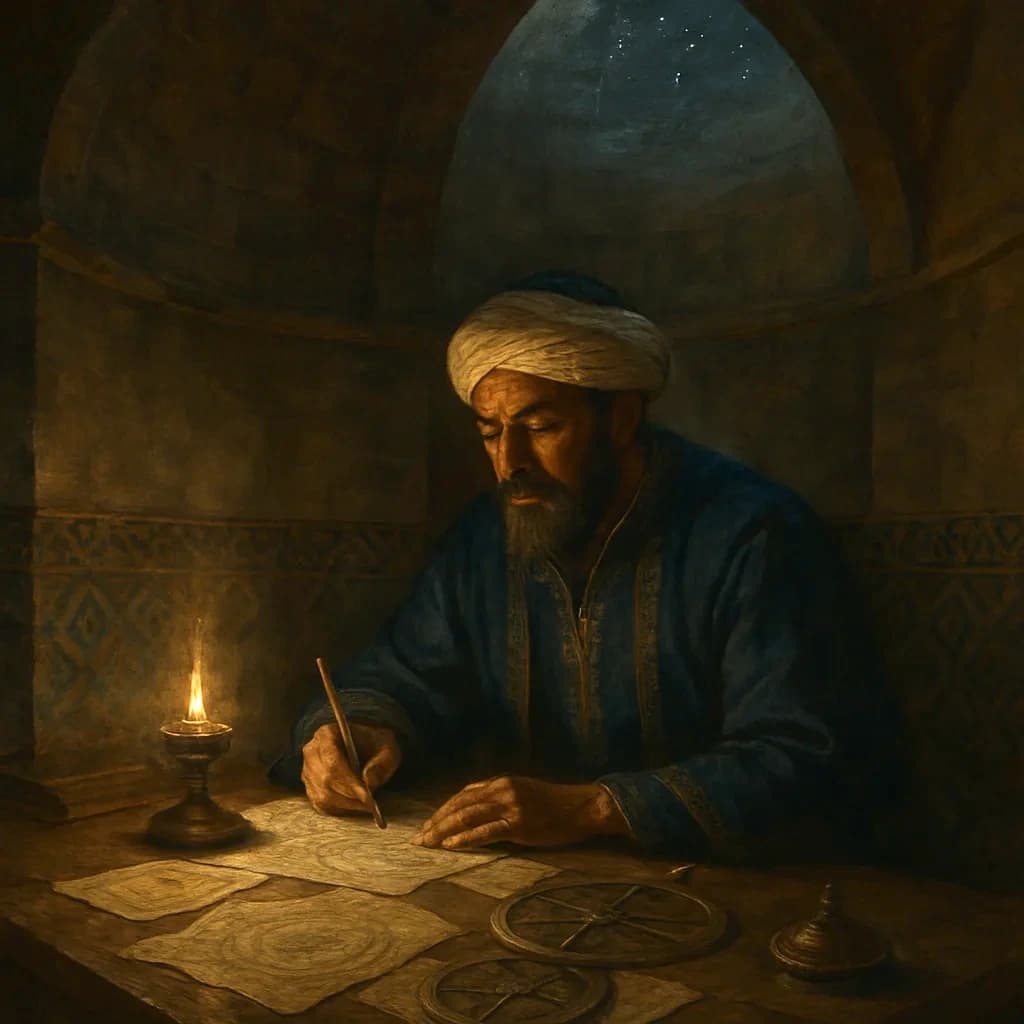
How a Persian Calendar Reform Misled Columbus
A medieval Persian mathematician set out to reform the Islamic calendar, and the mistake he made along the way became one of the most consequential errors in the history of navigation.
- Roshdi Rashed and Bijan Vahabzadeh, Omar Khayyam the Mathematician (Bibliotheca Persica Press, 2000)
- Eyval Doostdar, 'The Jalali Calendar and its Astronomical Foundations,' Journal for the History of Astronomy, Vol. 33 (2002)
- Ali Dashti, In Search of Omar Khayyam, trans. L.P. Elwell-Sutton (Columbia University Press, 1971)