
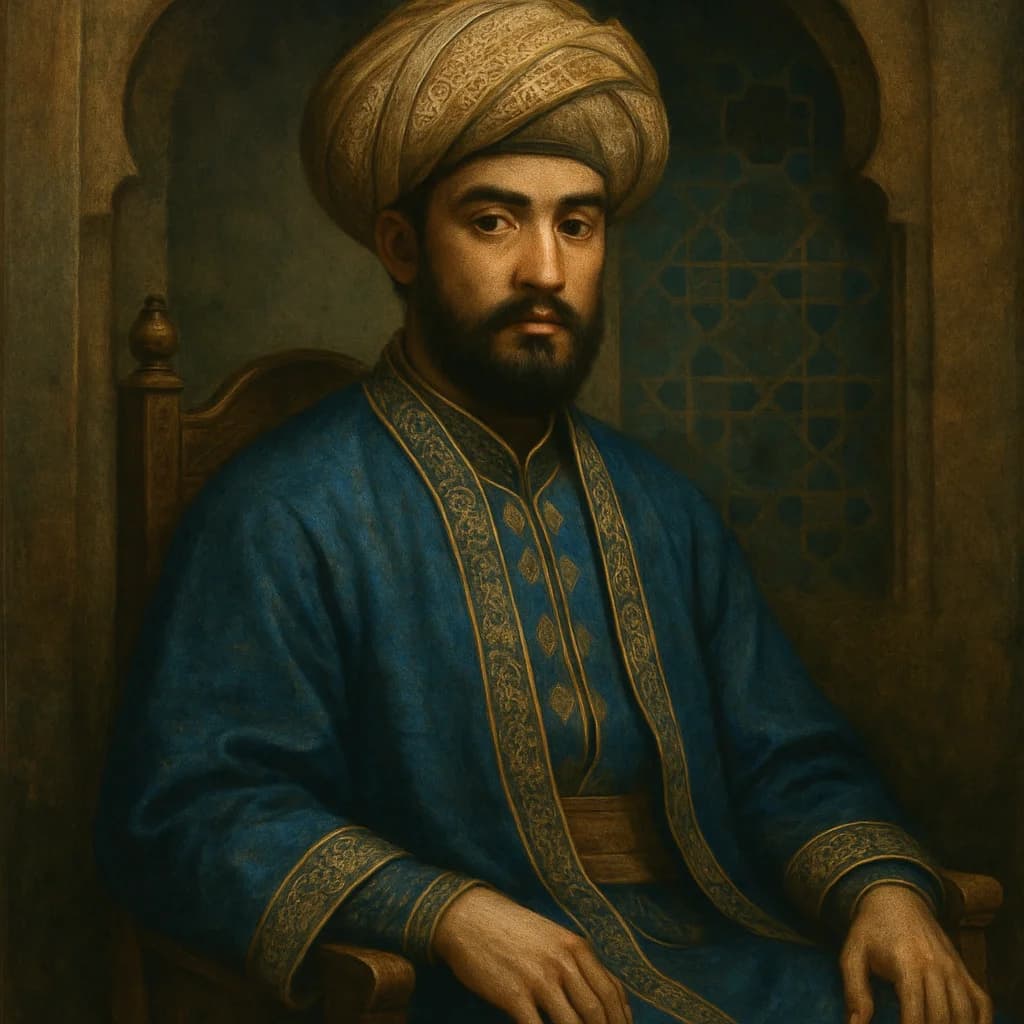
Malik Shah
He ruled the largest empire on earth and died because of a hunting trip he probably shouldn't have taken, but the calendar he commissioned outlasted everything.
Malik Shah I became sultan of the Seljuk Empire at nineteen, in 1072, after his father Alp Arslan was stabbed by a prisoner during what was supposed to be a routine execution. That is the kind of dynasty it was. Power arrived fast, violently, and with no guarantee of tenure. What followed, though, was something rarer in medieval history than battlefield glory: thirty years of deliberate, architecture-level civilization building.
The empire Malik Shah inherited stretched from Anatolia to the edges of Central Asia, a territory so vast that administering it required a bureaucratic mind as much as a military one. That mind belonged to his vizier, Nizam al-Mulk, who ran the actual machinery of the state while Malik Shah provided legitimacy and the sword. The relationship was functional, occasionally tense, and enormously productive. Between them, they funded madrasas, patronized scholars, and maintained enough internal stability to make something like intellectual culture possible. It was Malik Shah who commissioned the observatory at Isfahan in 1074, gathering a team of astronomers (including a young mathematician named Omar Khayyam) to do something no Islamic ruler had yet managed: fix the calendar.
The resulting Jalali calendar, completed around 1079, was genuinely remarkable. More accurate than the Julian calendar then dominating Europe, it tracked the solar year to within one day per 3,770 years. Khayyam got the credit, in poems and in history. Malik Shah, who ordered the project and paid for it, became a footnote in his own achievement. That is a recurring pattern. The sultan who builds the observatory rarely ends up in the story about the stars.
He died in 1092 during a hunting expedition near Baghdad, at thirty-seven. Nizam al-Mulk had been assassinated weeks earlier, almost certainly by Nizari Ismaili operatives, the group later romanticized in the West as the Assassins. Whether Malik Shah's death was natural or arranged has never been settled. His sons immediately went to war with each other. The empire fractured within a decade. The calendar survived.
The Jalali calendar Malik Shah commissioned in 1079 remained the official calendar of Persia for centuries and still forms the basis of the modern Iranian Solar Hijri calendar used today.
Why untold: Malik Shah is systematically overshadowed in his own story because the scholars he patronized (Khayyam in particular) left written legacies that travel through time in a way that sultanship does not, making the patron invisible behind the work he funded.
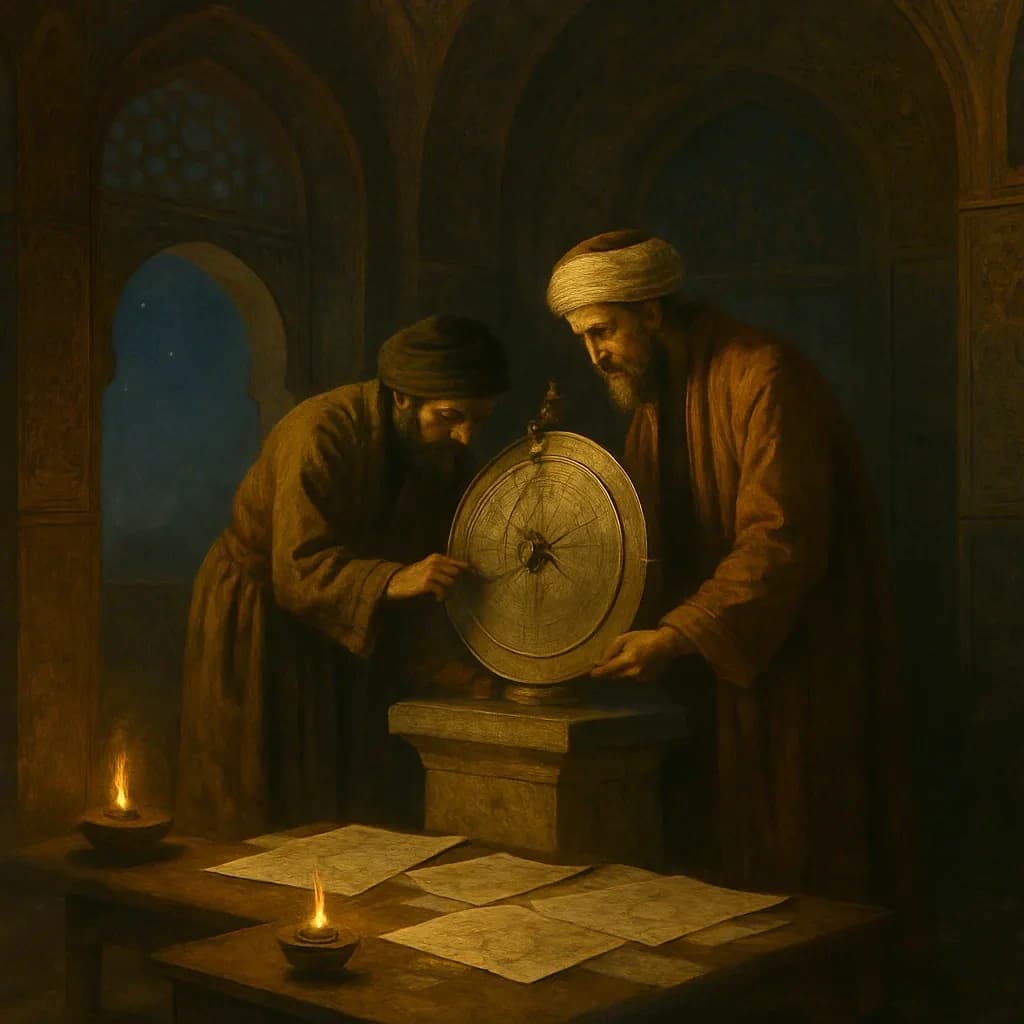
Omar Khayyam Built a Calendar Better Than Ours
A king decided the sun was wrong, and for sixteen years, everyone in his empire had to agree.
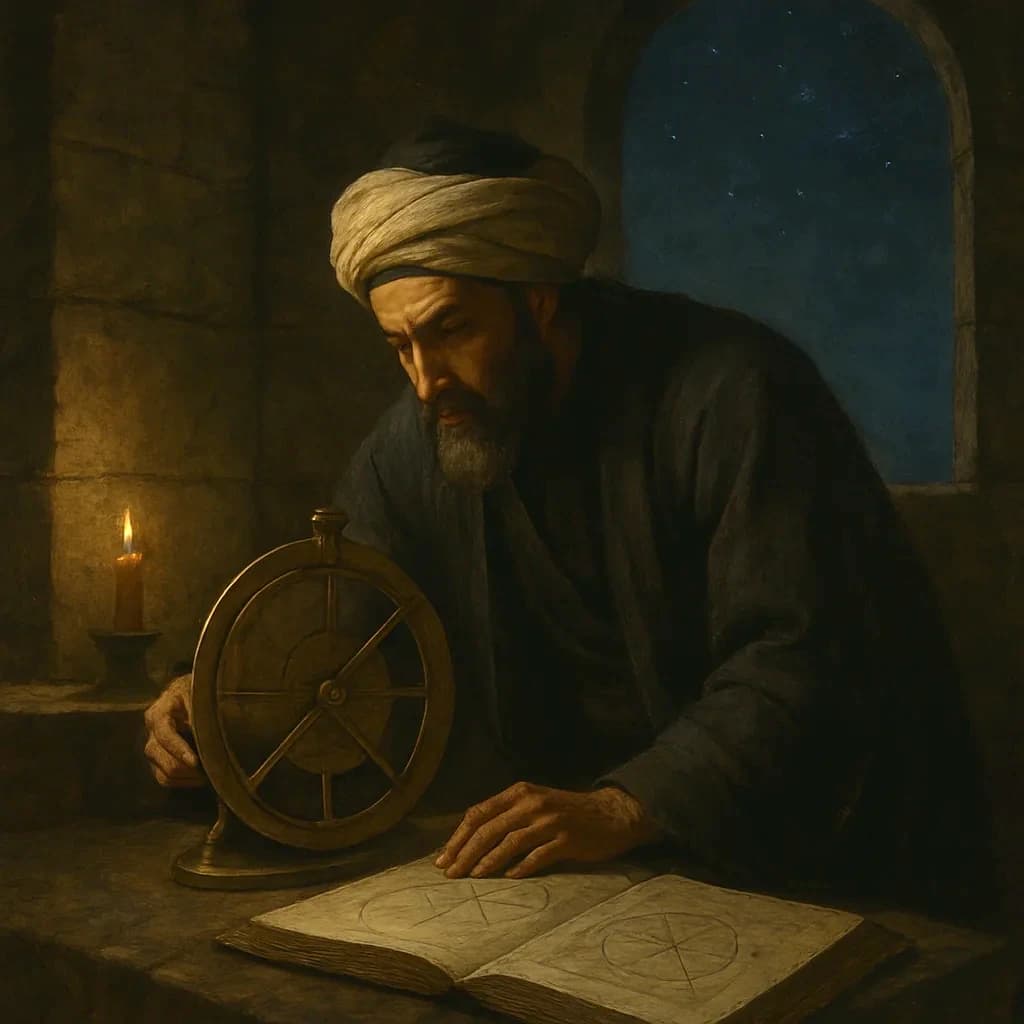
Omar Khayyam: The Calendar Was His Real Work
For forty years Nizam al-Mulk ran one of history's greatest empires, but the text that actually shaped medieval Islamic civilization came from his student, a man better known for drinking wine and doubting God.
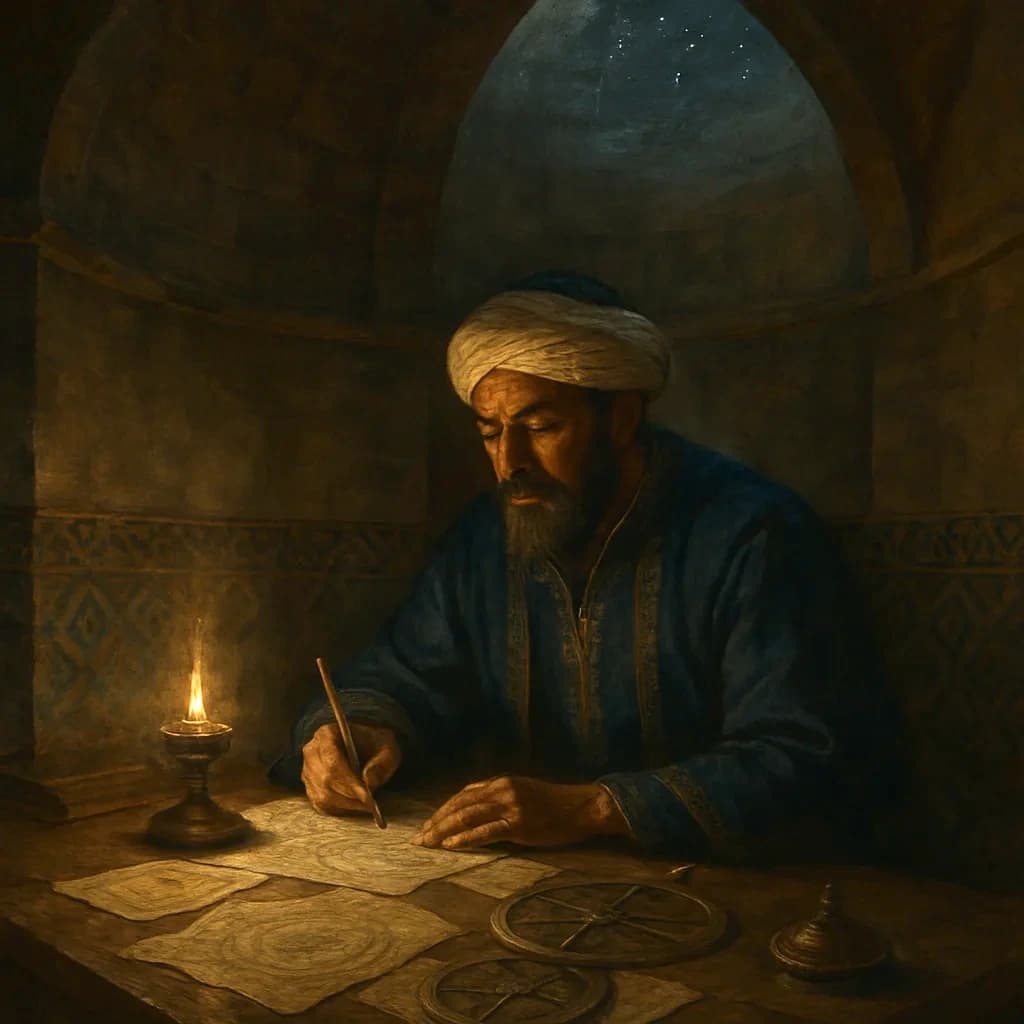
How a Persian Calendar Reform Misled Columbus
A medieval Persian mathematician set out to reform the Islamic calendar, and the mistake he made along the way became one of the most consequential errors in the history of navigation.
- Bosworth, C.E. 'The Political and Dynastic History of the Iranian World (A.D. 1000-1217)' in The Cambridge History of Iran, Vol. 5 (Cambridge University Press, 1968)
- Sayili, Aydin. The Observatory in Islam (Turkish Historical Society, 1960)
- Lambton, A.K.S. 'The Internal Structure of the Seljuk Empire' in The Cambridge History of Iran, Vol. 5 (Cambridge University Press, 1968)