
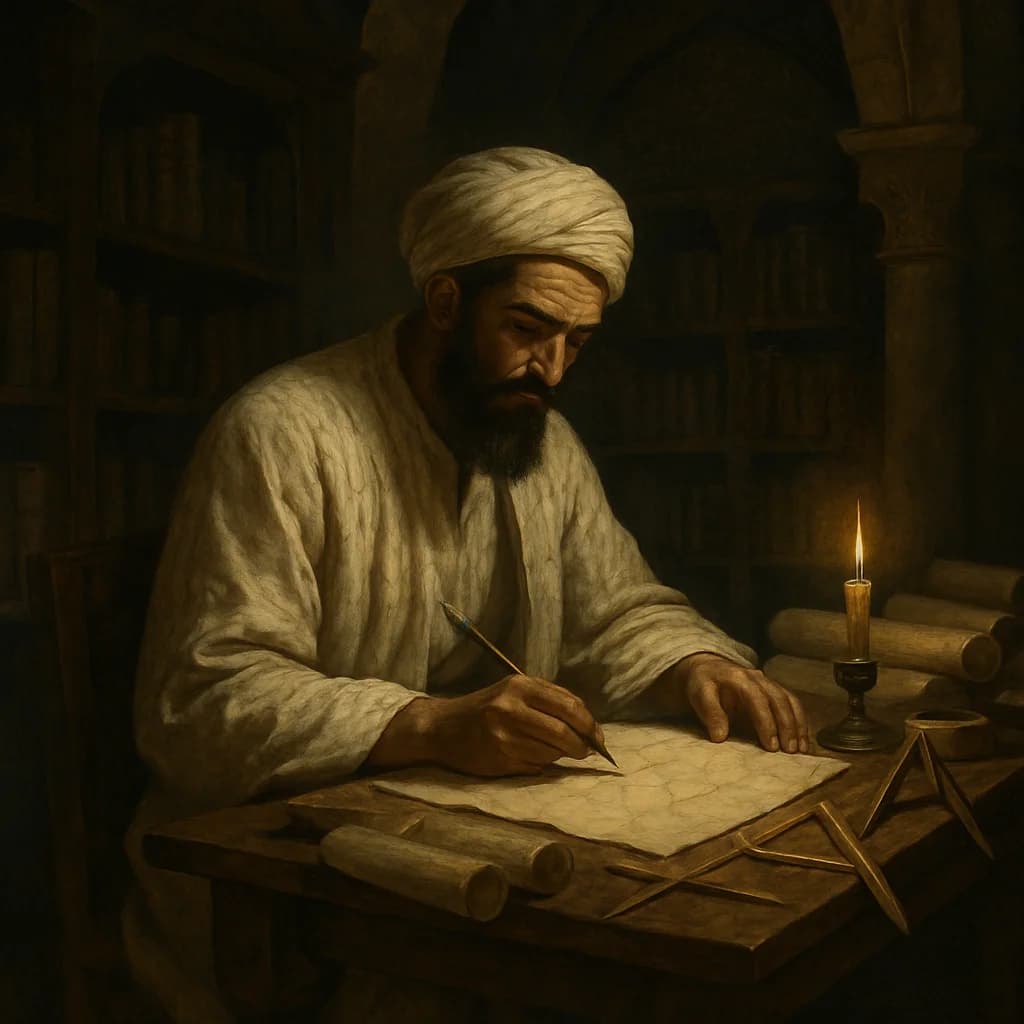
Muhammad ibn Musa al-Khwarizmi
The man who gave us the word 'algorithm' spent his life translating ancient Greek texts in a basement library, never knowing he was inventing the future.
Muhammad ibn Musa al-Khwarizmi worked by candlelight in the basement of Baghdad's House of Wisdom around 820 AD, wrestling with a battered Greek manuscript of Euclid's Elements. The Abbasid Caliph al-Ma'mun had commissioned him to translate mathematical works, but al-Khwarizmi kept getting frustrated by the Greeks' geometric proofs. They were elegant, sure, but impossibly cumbersome for practical problems.
So he started cheating. Instead of following Euclid's lengthy geometric demonstrations, al-Khwarizmi began writing out step-by-step procedures (recipes, really) for solving equations. Take this unknown quantity, perform these operations in this exact order, and you'll get your answer. He called his method 'al-jabr w'al-muqābala': restoration and completion. The Latin world would later butcher this as 'algebra.'
What al-Khwarizmi had accidentally invented was something far more revolutionary than a mathematical technique: he had created the first algorithms. His step-by-step procedures could be followed by anyone, regardless of mathematical genius or intuition. A clerk in Damascus could solve the same equation as a scholar in Córdoba, using identical steps.
The irony cuts deep. Al-Khwarizmi was essentially a civil servant, translating dusty manuscripts for government bureaucrats who needed to calculate taxes and inheritance disputes. He died around 850 AD, probably assuming his procedural shortcuts were minor improvements on ancient wisdom. He couldn't have imagined that twelve centuries later, every smartphone, every search engine, every piece of software would run on the same principle he pioneered in that candlelit basement: breaking complex problems into simple, repeatable steps.
Al-Khwarizmi's original manuscript introducing algebra contained no numerical examples, only word problems about dividing inheritances and calculating dowries, since Islamic law required precise mathematical solutions for family disputes.
Why untold: European scholars for centuries credited algebra's invention to later mathematicians while dismissing Islamic contributions as mere translation work.
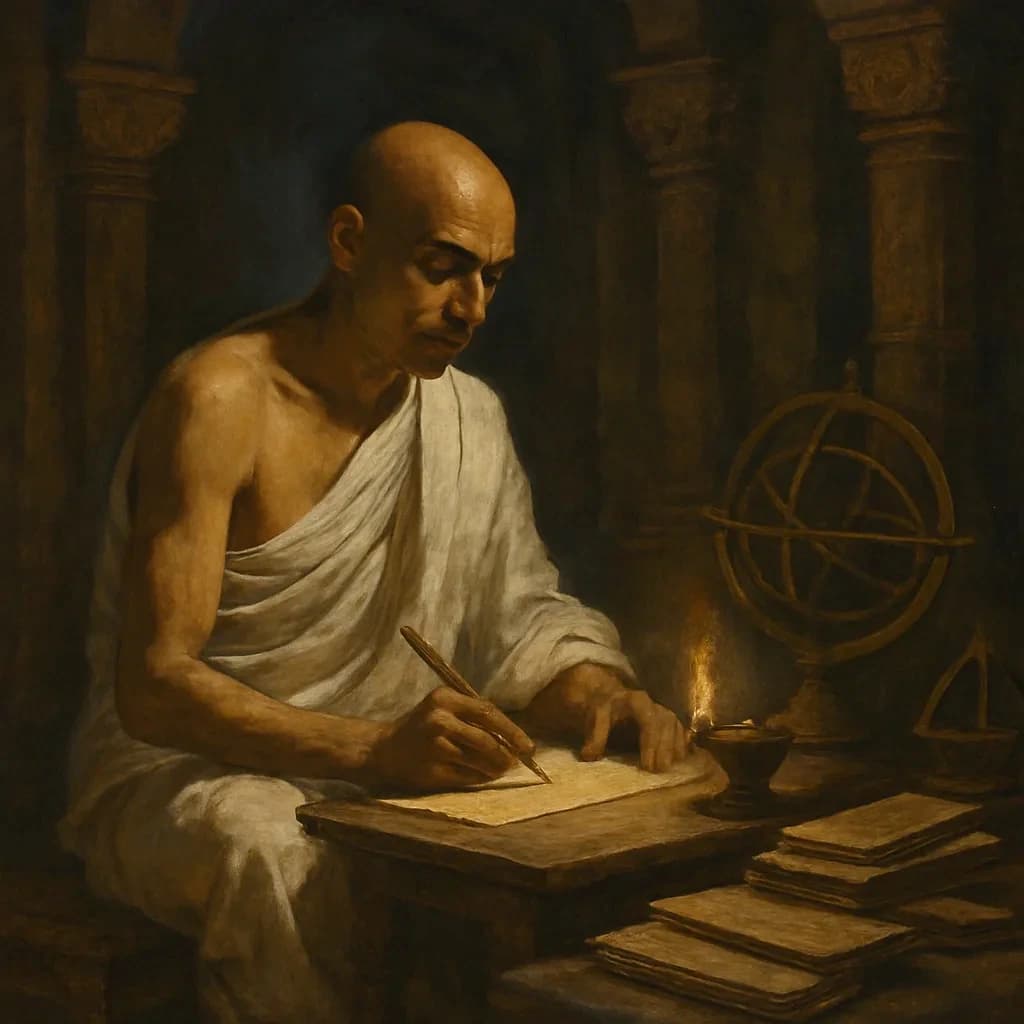
Zero: The Number Europe Tried to Ban
A scholar in 12th-century India made a calculation that would accidentally give birth to the modern world.
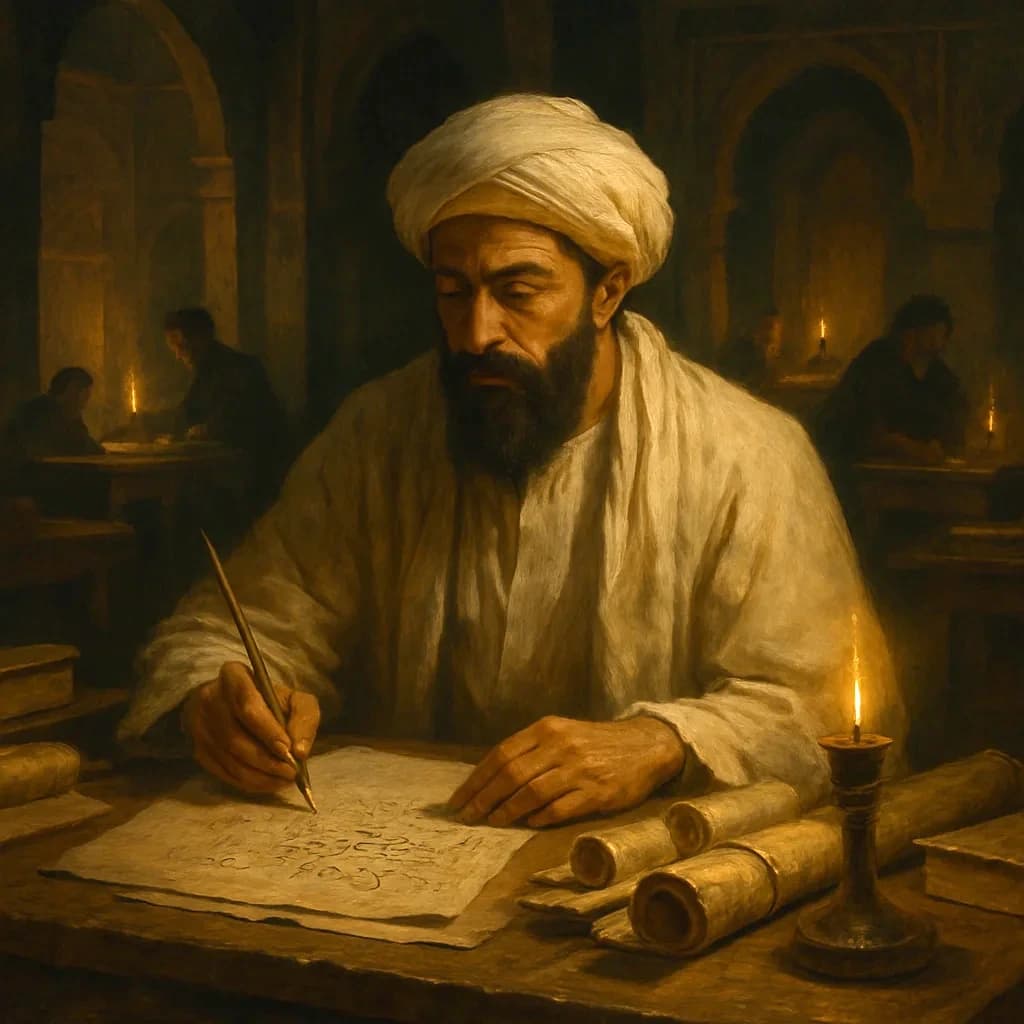
One Greek Geometry Translation Founded Modern Science
In 820 AD, a Persian scholar's obsession with translating a Greek geometry text accidentally created the foundation of modern science.
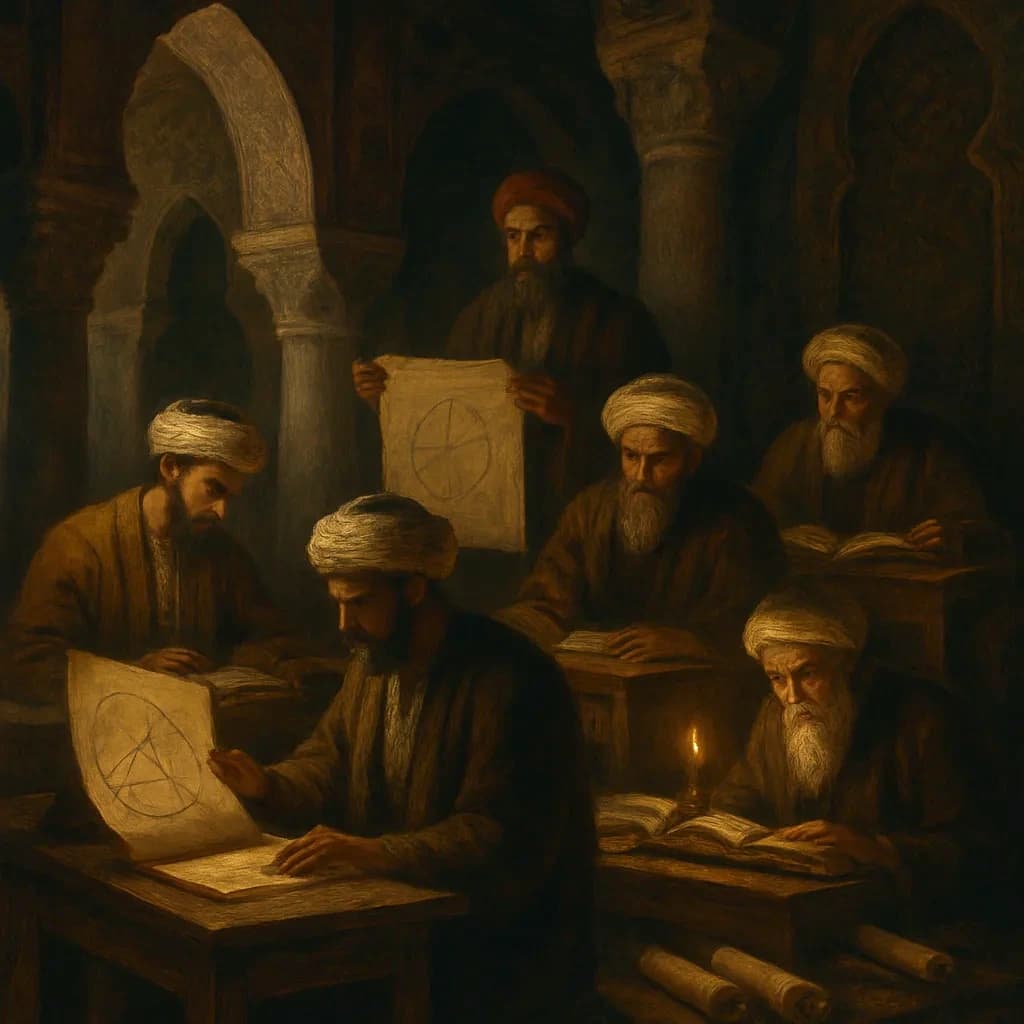
The Baghdad Scholar Behind Every Algorithm
A 9th-century Persian mathematician created the foundation of every computer program ever written, but European scholars deliberately buried his work for centuries.
- Rashed, Roshdi. 'The Development of Arabic Mathematics: Between Arithmetic and Algebra.' Boston Studies in the Philosophy of Science, 1994.
- Saliba, George. 'Islamic Science and the Making of the European Renaissance.' MIT Press, 2007.
- Berggren, J.L. 'Episodes in the Mathematics of Medieval Islam.' Springer, 1986.