
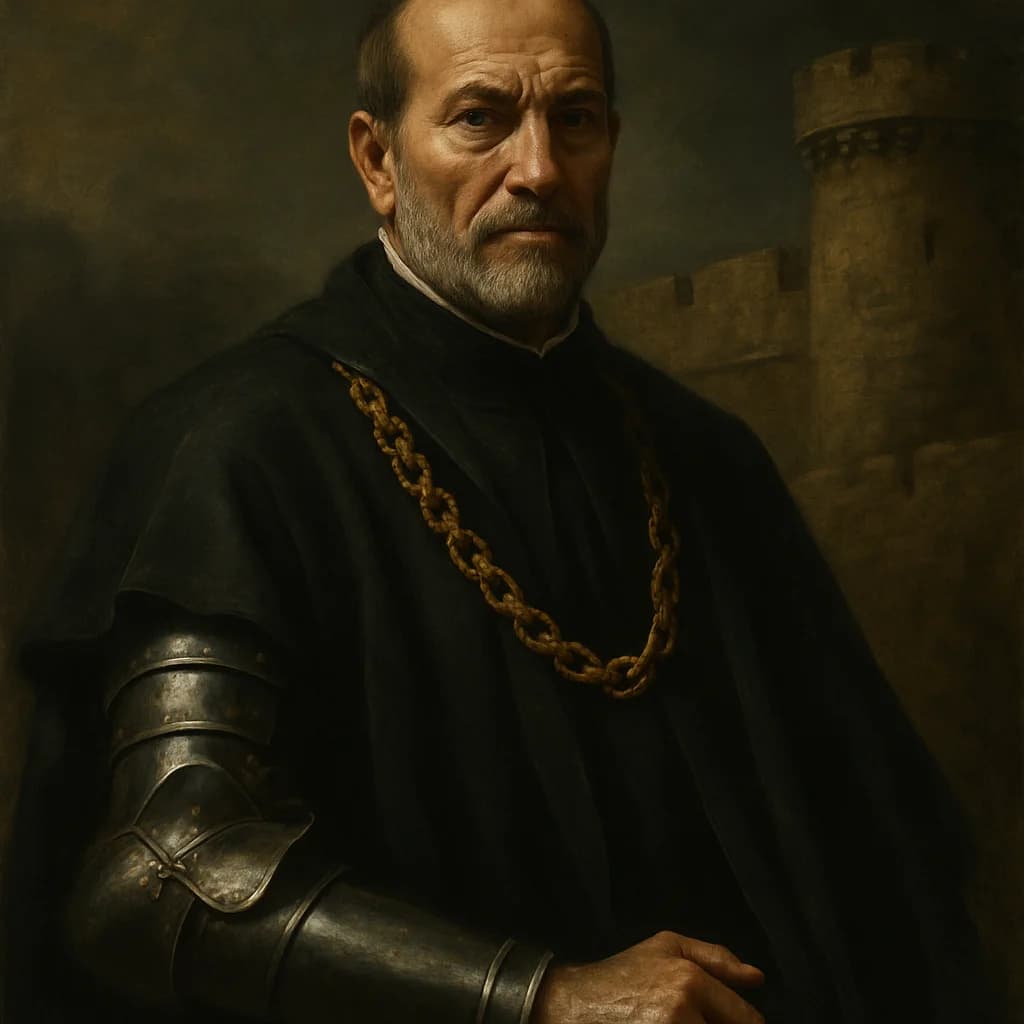
Marcantonio Bragadin
He bargained for his life, got a signed treaty, and then watched the Ottomans use it as kindling.
Marcantonio Bragadin was a Venetian lawyer before he was a soldier, which is perhaps the cruelest irony of his life. He understood contracts. He believed in the enforceability of written agreements. He had spent years in Venice's administrative machinery before being appointed Governor of Famagusta, the last Christian-held city on Cyprus, in 1569, just in time for the Ottoman fleet to arrive with roughly 200,000 men and the patience of an empire that had nowhere else to be.
What happened inside Famagusta between the summer of 1570 and August 1571 is one of the more extraordinary holding actions in military history, and almost none of it is Bragadin's famous story. He had fewer than 8,000 defenders. He had grain stores that a Venetian merchant had catastrophically miscalculated, months less than the garrison believed. He had cannon crews so depleted that a deaf gunner was still manning his post near the end, firing into the smoke without knowing the white flag had already gone up. Bragadin held the city for eleven months against an army that should have taken it in weeks. He rationed. He improvised. He wrote increasingly desperate letters to Venice that arrived too late for anyone to do anything useful.
When he finally surrendered on August 1, 1571, he had negotiated genuine terms: safe conduct for his garrison, his officers, himself. The Ottoman commander Lala Mustafa Pasha signed the agreement. Then, during the formal handover meeting three days later, Mustafa accused Bragadin of holding Muslim prisoners and breaking the ceasefire. Whether this was sincere anger or pretext has been debated for four centuries. Either way, Mustafa had Bragadin's ears and nose cut off on the spot. His officers were executed. Bragadin himself was kept alive for two weeks, made to carry heavy loads of earth in the heat, forced to kiss the ground before Mustafa each pass. Then, on August 17th, he was publicly flayed alive in the main square of Famagusta.
His skin was stuffed with straw, dressed in his own armor, and paraded through the streets before being sent to Constantinople as a trophy. It stayed there until 1580, when a Venetian merchant named Girolamo Polidori broke into the Arsenal and stole it. The skin eventually came home. It is interred, still, in the church of Santi Giovanni e Paolo in Venice.
Bragadin's stuffed skin was stolen from the Ottoman Arsenal in Constantinople nearly a decade after his death by a single Venetian merchant acting alone, and Venice quietly gave the man's family a pension for the service.
Why untold: The spectacular brutality of Bragadin's death has so completely consumed his story that the eleven-month siege he actually won (the strategic decisions, the logistics, the men) has been reduced to a footnote before an execution.
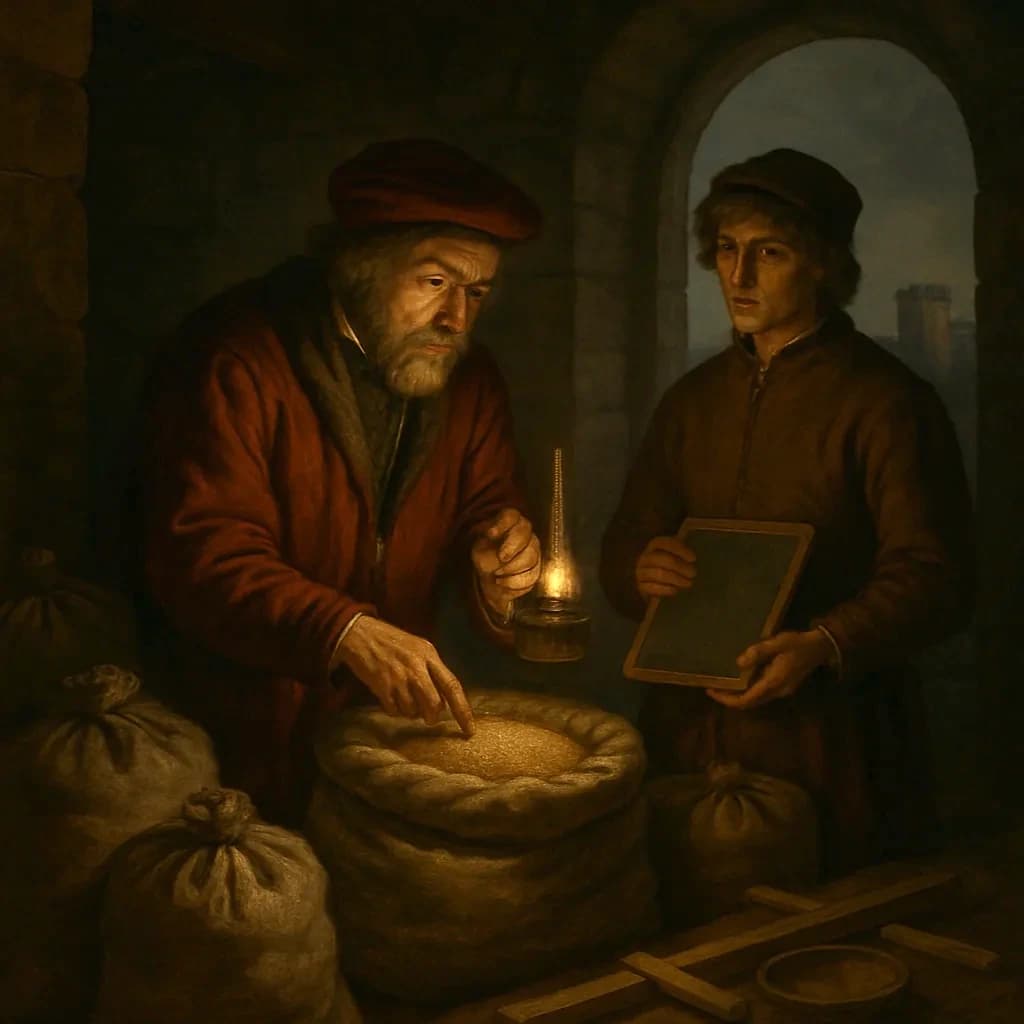
A Counting Error That Doomed Famagusta
A single miscalculation in a Venetian ledger book triggered the bloodiest siege of the Renaissance.
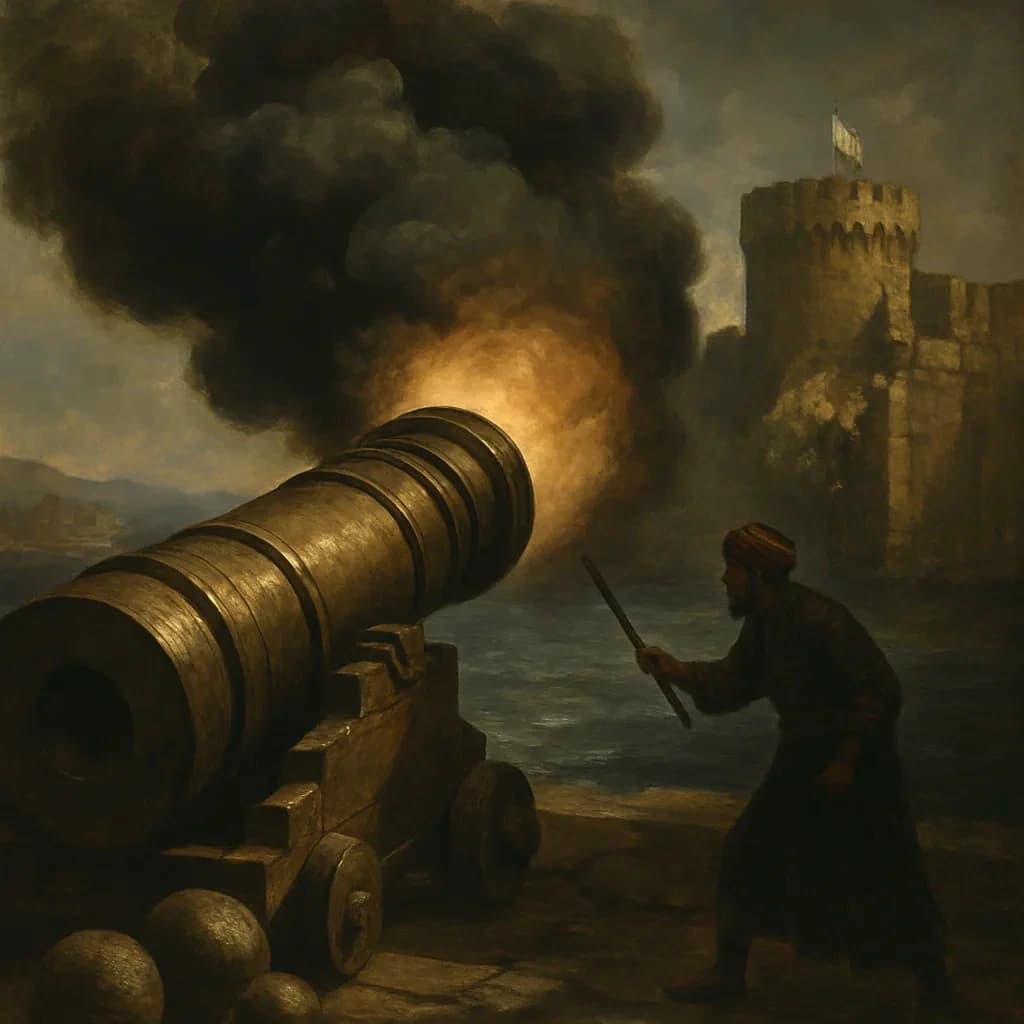
The Deaf Gunner Who Fired After the Surrender
An Ottoman siege cannon finished firing just as the defenders surrendered, but nobody heard the white flag go up over the roar.
- Capponi, Niccolò. Victory of the West: The Great Christian-Muslim Clash at the Battle of Lepanto. Macmillan, 2006.
- Gürkan, Emrah Safa. 'The Centre and the Frontier: Ottoman Cooperation with the North African Corsairs in the Sixteenth Century.' Turkish Historical Review, 2010.
- Setton, Kenneth M. The Papacy and the Levant, Vol. IV. American Philosophical Society, 1984.