
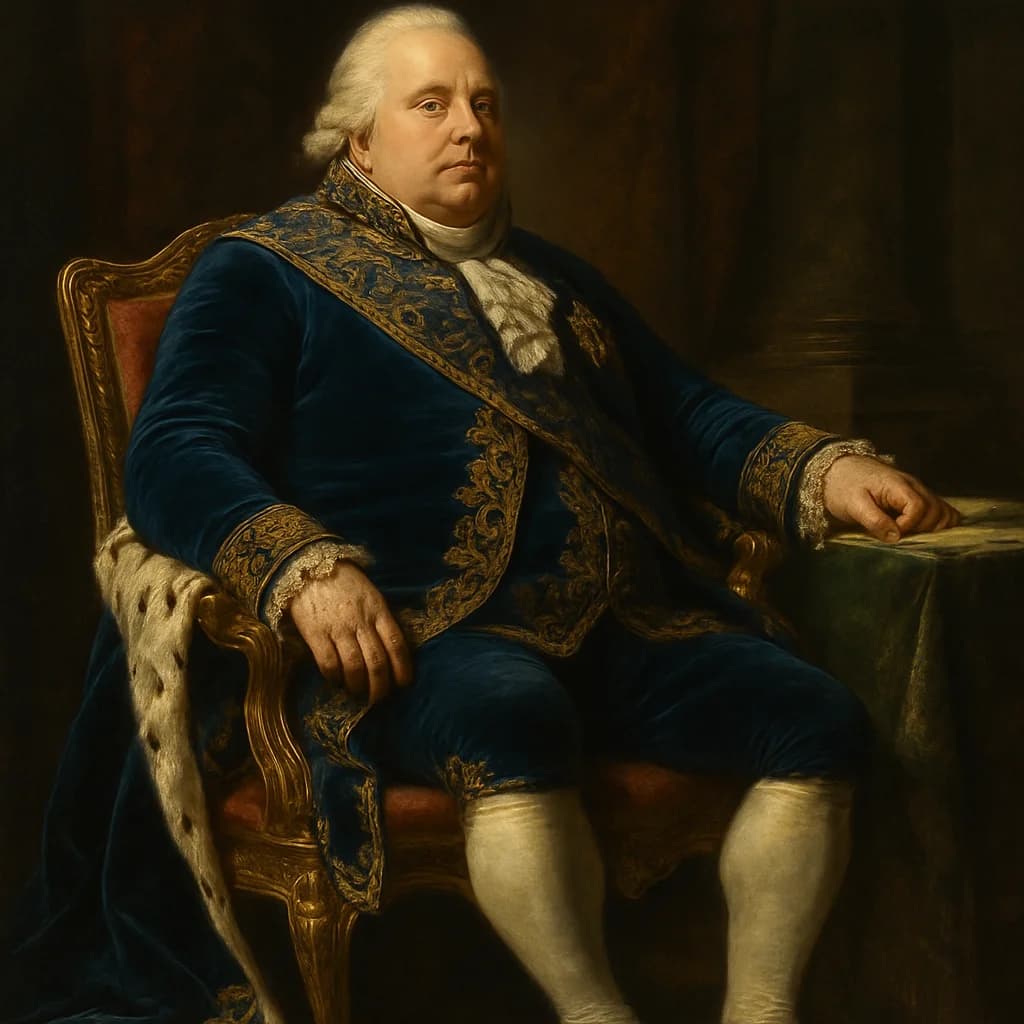
Louis XVIII
The man who waited twenty-three years in exile for his throne spent his first day back as King of France arguing with servants about the proper way to fold napkins.
Louis XVIII never expected to be king. Born the Count of Provence in 1755, he was the third son of the dauphin, comfortable, titled, but safely distant from the throne. He collected books, wrote poetry, and developed an encyclopedic knowledge of court etiquette that would serve him in ways no one could have predicted. When revolution erupted, he fled France in 1791, beginning an exile that would last longer than most reigns.
What followed was perhaps history's most pathetic royal road trip. Louis bounced between European courts like an unwanted houseguest, carrying fake passports and dodging creditors. He lived in a drafty castle in Prussia, a cramped apartment in England, and eventually a modest house in Buckinghamshire where he obsessed over French cooking and proper protocol. While Napoleon conquered Europe, Louis practiced being king to an audience of aging courtiers and unpaid servants.
When Napoleon finally fell in 1814, Louis returned to a France that had forgotten how monarchy worked. The revolution had killed not just his brother Louis XVI, but the entire institutional memory of royal governance. Louis found himself teaching reformed republicans how to bow, when to remove hats, and why certain doors could only be opened by certain people. His greatest political skill turned out to be his neurotic attention to ceremony. In a country traumatized by chaos, predictable rituals became oddly comforting.
Louis XVIII ruled for ten years, surviving Napoleon's return during the Hundred Days by simply outlasting him. He died in 1824, having restored the monarchy not through force or divine right, but through the simple power of showing up every day and knowing exactly which fork to use.
Louis XVIII was so obsessed with royal protocol that he compiled a 400-page manual detailing everything from how courtiers should sneeze in the king's presence to the precise angle for removing one's hat.
Why untold: His unglamorous survival story is overshadowed by the dramatic falls of Louis XVI and Napoleon, making him seem like a footnote rather than the man who actually restored the monarchy.
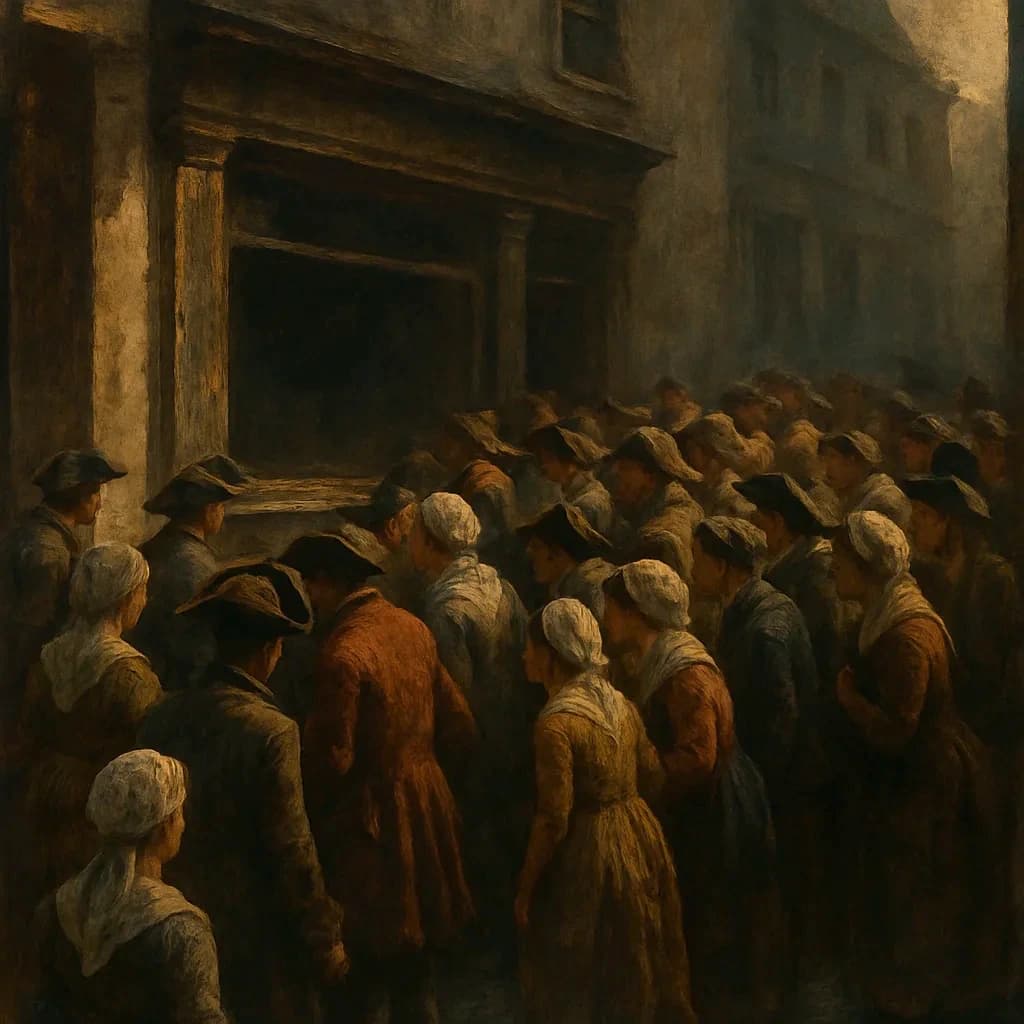
When Bread Became Bullets
A Parisian baker's morning routine accidentally triggered the deadliest day of the French Revolution.
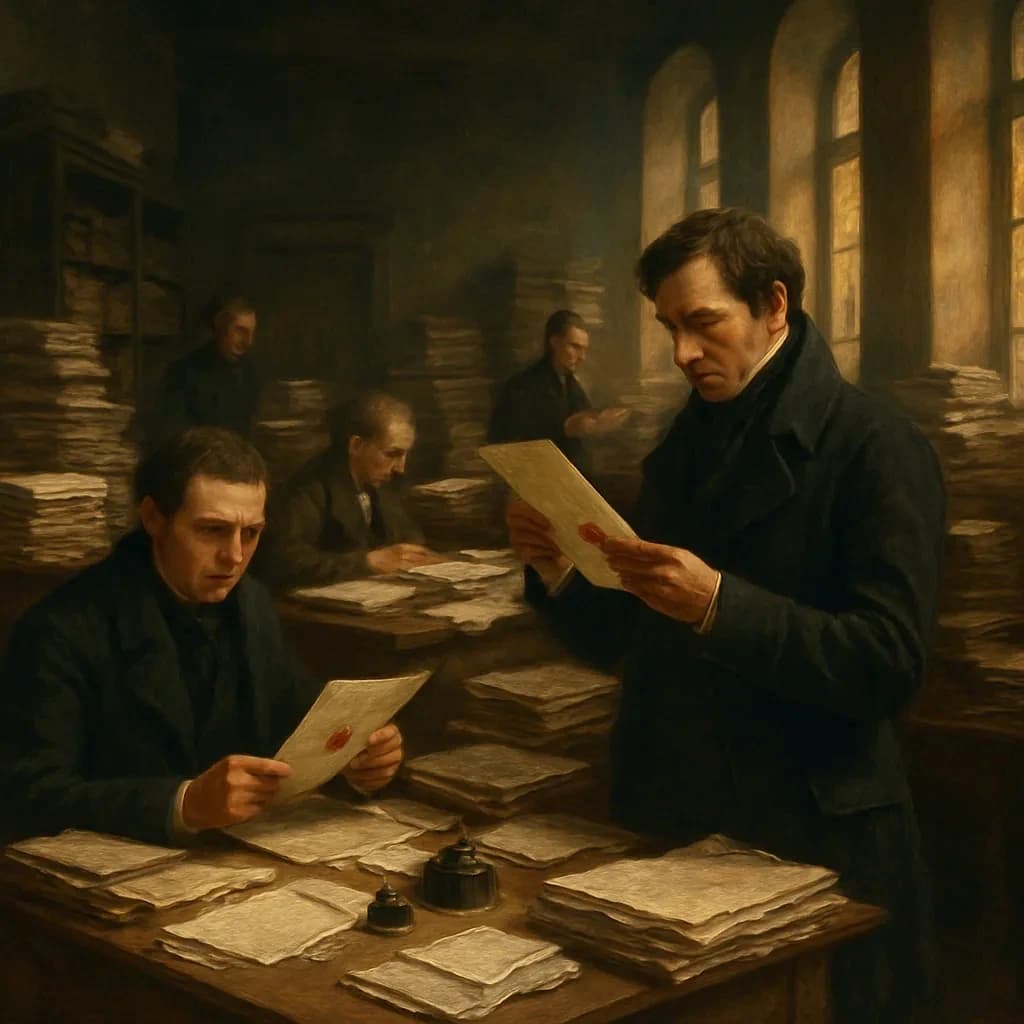
Jerome Bonaparte Was Emperor for Three Months and Missed It
A minor clerk's filing error in 1814 almost gave Europe a completely different emperor, and nobody noticed for three months.
- Vincent Cronin, Louis and Antoinette (1974)
- Philip Mansel, Louis XVIII (1981)
- Munro Price, The Perilous Crown: France Between Revolutions (2007)